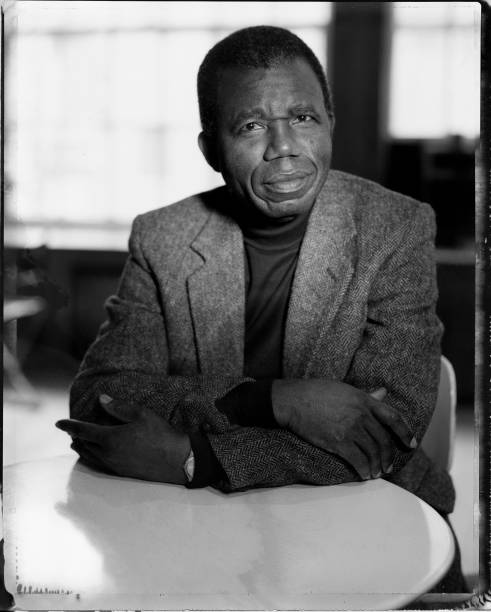
Nwando Achebe
 Nigeria
Birthday
March 7, 1970
Birth Sign
Pisces
Birthplace
Enugu, Nigeria
Age
56 years old
About
Nwando Achebe is a Nigerian-American historian, feminist scholar, and academic administrator. She holds the titles of University Distinguished Professor, Jack and Margaret Sweet Endowed Professor of History, and Associate Dean for Access, Faculty Development, and Strategic Implementation in the College of Social Science at Michigan State University. Achebe also founded and edits the Journal of West African History, a key publication in the field.
Her research focuses on 19th- and 20th-century West African cultural, political, social, and religious history, with a particular emphasis on women, gender, and sexuality. Known for pioneering oral history and distinctly African methodologies, she examines the shared power and authority of female-gendered entities, people, diviners, and deities, across Africa's interconnected physical and spiritual worlds. Her 2011 book, The Female King of Colonial Nigeria: Ahebi Ugbabe, won the Melville J. Herskovits Prize from the African Studies Association, and she is currently serving as the association's president through 2026.
Early Life & Background
Nwando Achebe was born on March 7, 1970, in Enugu, Nigeria, into a household steeped in intellectual life. Her father, Chinua Achebe, had already published Things Fall Apart in 1958, a novel that would go on to sell over 15 million copies and be translated into more than 60 languages. Her mother, Christie Chinwe Achebe, was a professor of English. Growing up in that environment, Nwando was surrounded by books, lively discussions about literature and politics, and a deep sense of African identity and pride.
She attended the University of Nigeria, Nsukka, earning a bachelor's degree in history. The university, founded in 1960, was a hub of intellectual ferment, and her studies there sparked a lasting interest in African history, particularly the roles of women. After completing her undergraduate degree, she moved to the United States for graduate work. At UCLA, she earned both a master's and a PhD in African history. Her doctoral dissertation explored the role of female monarchs in Igbo society, a topic that would become the foundation of her first book. During her graduate years, she also developed her distinctive approach to oral history, learning to center the voices and experiences of African women in her research.
Career Growth
Nwando Achebe's breakthrough came with the 2011 publication of The Female King of Colonial Nigeria: Ahebi Ugbabe, a biography of a woman who became a warrant chief and was crowned king by the British in colonial Nigeria. The book, based on her doctoral research, earned her the Melville J. Herskovits Prize from the African Studies Association, one of the most prestigious awards in African studies. That recognition helped establish her as a leading voice in the field.
In 2021, she co-authored Farmers, Traders, Warriors, and Kings: Female Power and Authority in Northern Igboland, 1900–1960 with fellow historian Claire Robertson, expanding her examination of female authority in Igbo communities. Around the same time, she founded the Journal of West African History, serving as its editor and shaping the scholarly conversation. At Michigan State University, she has held the Jack and Margaret Sweet Endowed Professorship and later became University Distinguished Professor, one of the university's highest honors. She also took on administrative roles, including Associate Dean for Access, Faculty Development, and Strategic Implementation in the College of Social Science. In 2024, she was elected president of the African Studies Association, a position she serves through 2026. Her work has been supported by fellowships from the Woodrow Wilson Center and the National Endowment for the Humanities, and she has held visiting professorships in the United States, Nigeria, and South Africa. She has also served as Faculty Excellence Advocate for the College of Social Science and has mentored numerous graduate students and PhD candidates.
Career Timeline
Public Image & Style
Nwando Achebe is known for centering African women's experiences and agency in historical scholarship, challenging Western-centric assumptions about African history. Her work is characterized by a commitment to the decolonization of knowledge and the use of oral history and indigenous African methodologies. In academic circles, she is respected as a multi-award-winning historian and a mentor to many graduate students. On social media, particularly on X, she shares scholarly insights, updates on her father's legacy, and professional announcements. Fans and colleagues alike appreciate her dedication to preserving African heritage and her efforts to bring African women's history to a wider audience.
Fame & Fandom
Nwando Achebe commands a dedicated following among scholars, students, and readers of African history who deeply appreciate her rigorous yet accessible approach to centering women's agency in the past. Her audience consists primarily of academics and engaged citizens rather than a pop-culture fanbase with rituals or organized campaigns. While she is celebrated for her work on West African queens and her role as the daughter of Chinua Achebe, there is no documented official fandom name or specific fan-driven projects associated with her public life. The community surrounding her work engages through scholarly citation, classroom adoption of her texts, and respectful engagement on social media platforms where she shares historical insights. In terms of global celebrity metrics, Nwando Achebe is currently evaluated by the iFANN Global Fame Engine but does not hold a placement in the published rankings such as the Global Top 1,000 or any scope-specific top lists. This status reflects her profound impact within academic circles without crossing into the mass-market fame that generates ranked visibility for entertainers or mainstream figures. Her influence remains concentrated in the fields of history and gender studies, where her contributions are measured by citations and institutional recognition rather than viral trends or commercial consumption. Despite the absence of a formal ranking, her standing as a University Distinguished Professor and award-winning historian places her firmly among the most respected voices in her discipline. The lack of a numeric rank does not diminish her stature; it simply indicates that her reach, while deep and transformative, operates outside the parameters of the general public fame scale. iFANN continues to monitor her profile as her career evolves, ensuring that future assessments capture any shifts in her public prominence.
Interesting Facts and Legends
Nwando Achebe's name is pronounced "Wan-do Ah-chě-bě," with the "ě" sounding like the vowel in "pet." She has held visiting professorships across the United States, Nigeria, and South Africa, reflecting her international academic reach. Her research uniquely extends beyond human actors to explore the spiritual worlds of female deities and diviners in Africa. Achebe has received prestigious fellowships from both the Woodrow Wilson Center and the National Endowment for the Humanities. She is the daughter of the legendary novelist Chinua Achebe, whose novel Things Fall Apart has been translated into over 60 languages. On X (formerly Twitter) under the handle @NwandoAchebe, she actively shares scholarly content and commemorates her father's literary legacy. Her X profile explicitly highlights her identity as the renowned historian and daughter of the legendary Prof. A widely retold story in academic circles involves her appointment as one of the youngest professors at Michigan State University. Another notable moment was her receipt of the NYASA Distinguished Africanist Award. These professional achievements form the core of her public narrative, distinguishing her as a scholar who bridges personal heritage with groundbreaking research.
Notable Quotes
“My name is Nwando Achebe, and I am the Jack and Margaret Sweet Endowed Professor of History at Michigan State University (MSU) and I'm also the Associate Dean for Diversity, Equity and Inclusion, Faculty Development, and Strategic Implementation in the College of Social Science.”
“I draw from distinctly African source materials and methods to examine the shared power, influence, and authority that uniquely African, female-gendered entities, people, diviners, and deities, exert across Africa's interconnected physical and spiritual worlds.”
Family & Personal Life
Nwando Achebe is the daughter of Chinua Achebe, the celebrated Nigerian novelist, and Christie Chinwe Achebe, a professor of English. Her father passed away in 2013, and she has been active in preserving his literary legacy, participating in commemorations of Things Fall Apart and related heritage initiatives. Her mother, who was a professor of English, also played a significant role in her intellectual upbringing. Achebe keeps her personal life private, and public records do not detail her own household, spouse, or children. She often speaks about the influence of her parents and the importance of family in shaping her scholarly identity.
Notable Connections
Nwando Achebe is the daughter of Chinua Achebe, the renowned Nigerian novelist, and Christie Chinwe Achebe, a professor of English. She has collaborated with historian Claire Robertson on her 2021 book. Her father's literary legacy is a significant part of her public identity, and she actively works to preserve it.
Relationships & Dating History
Nwando Achebe has kept her personal life largely private, and public records do not document any romantic relationships or marriages. As of 2026, no credible sources report on a current partner or spouse. Her professional biography focuses exclusively on her academic work, and she has not publicly shared details about her dating history or family life.
Salary, Net Worth In 2026
$2 Million
iFANN Editorial Team estimate
As of 2026, per iFANN's editorial analysis, Nwando Achebe's net worth is estimated at $2 Million. Her income primarily stems from her salary as a University Distinguished Professor and endowed chair holder at Michigan State University, alongside stipends derived from her administrative roles and book royalties. She has also accumulated wealth through various fellowships and speaking fees throughout her distinguished career. While specific financial figures remain private, the combination of her prestigious positions at a major research university and her extensive publication record supports this valuation. Her net worth has grown steadily over the years, reflecting the sustained value of her academic contributions and her unique position in the field of African history.
Awards Won (1)
Nwando Achebe has won the Melville J. Herskovits Prize from the African Studies Association for her book The Female King of Colonial Nigeria: Ahebi Ugbabe. This is one of the most prestigious awards in African studies, recognizing outstanding scholarly work on Africa.
2011 · African Studies
The Female King of Colonial Nigeria: Ahebi Ugbabe
Known For
The Female King of Colonial Nigeria: Ahebi Ugbabe
2011 · Author
Farmers, Traders, Warriors, and Kings: Female Power and Authority in Northern Igboland, 1900–1960
2021 · Co-author
Keywords
Sources
Quick Facts
- Profession
- historian, university teacher
- Born
- March 7, 1970
- Birthplace
- Enugu, Nigeria
- Gender
- Female
- Birth Sign
- Pisces
- Education
- University of Nigeria, Nsukka; UCLA
- Title
- University Distinguished Professor
Personal Details
- Full Name
- Nwando Achebe
- Education
- University of Nigeria, Nsukka (BA); University of California, Los Angeles (MA, PhD)
Frequently Asked Questions
Who is Nwando Achebe?
Is Nwando Achebe related to Chinua Achebe?
What did Nwando Achebe win the Herskovits Prize for?
Where does Nwando Achebe teach?
What is Nwando Achebe's research about?
Social Media
Similar People
Join the community
fans discussing