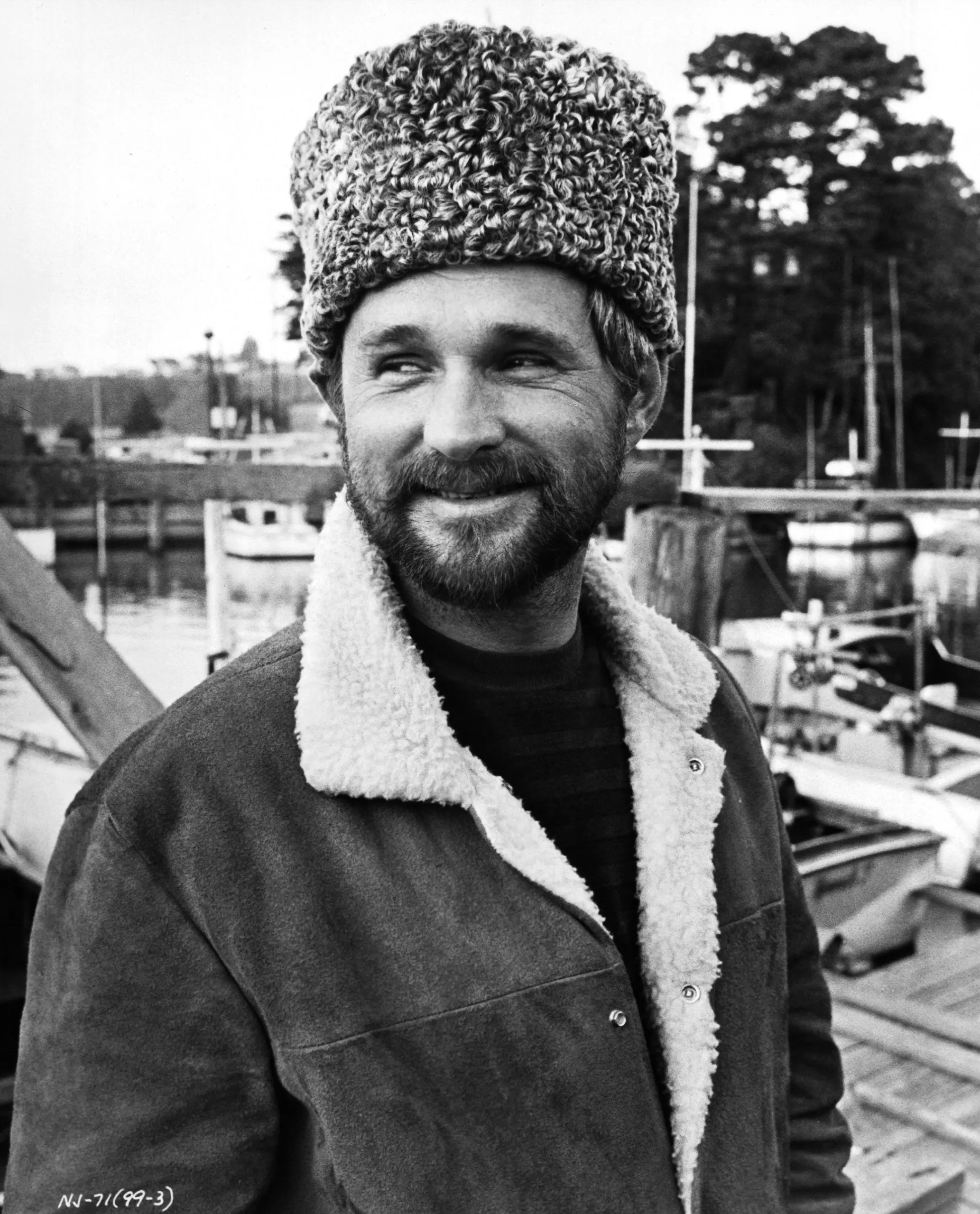
Norman Jewison
 Canada
film director•film producer•actor
Also known as: Norman F. Jewison, N. Jewison
Birthday
July 21, 1926
Birth Sign
Cancer
Birthplace
Toronto, Ontario, Canada
Age
Died at 97
Height
5 ft 10 in (178 cm)
About
Norman Frederick Jewison was a Canadian filmmaker whose four-decade career redefined the American social drama while maintaining a commercial appeal that spanned comedy, romance, and musicals. Born in Toronto to a Jewish family of Ukrainian descent, he rose from a CBC television writer and actor to become one of Hollywood's most respected directors. He passed away at his home in Los Angeles on January 20, 2024, at the age of 97.
Jewison earned three Academy Award nominations for Best Director across three different decades for In the Heat of the Night, Fiddler on the Roof, and Moonstruck. His films tackled race relations, labor rights, and religious conflict with empathy and wit. In 1999, the Academy honored him with the Irving G. Thalberg Memorial Award for consistent high quality of production. He founded the Canadian Film Centre in 1988 and served as Chancellor of Victoria University at the University of Toronto from 2004 to 2010.
Early Life & Background
Norman Frederick Jewison entered the world on July 21, 1926, in Toronto, Ontario. His parents were immigrants from Ukraine; his father Israel worked as a tailor and his mother Rose was a homemaker. The family raised him as a Methodist despite their Jewish heritage, a duality that often informed his perspective on identity and belonging. Growing up during the Great Depression and World War II, Jewison developed an early interest in storytelling. He attended Central Technical School in Toronto, where he discovered a passion for drama and radio.
After high school, he joined the Canadian Broadcasting Corporation in the late 1940s. Initially working as a writer and occasional actor, he transitioned to directing live television dramas. His work at the CBC in the 1950s honed his ability to manage complex narratives under tight deadlines, preparing him for the demands of feature filmmaking. A pivotal moment occurred when he moved to the United States in 1957 to direct for NBC, where he worked on The United States Steel Hour and other anthology series, eventually catching the attention of major studios.
Career Growth
Jewison made his feature film debut in 1962 with 40 Pounds of Trouble, a comedy starring Jerry Lewis that established his versatility. However, his breakthrough into serious dramatic territory came with In the Heat of the Night in 1967. This film, based on John Ball's novel, tackled racial tension in the American South and starred Sidney Poitier and Rod Steiger. It won the Academy Award for Best Picture and earned Jewison his first Oscar nomination for Best Director. The success proved that socially conscious films could be box office hits.
Throughout the 1960s and 1970s, Jewison directed a string of hits that blended social commentary with entertainment. Notable works included The Russians Are Coming, the Russians Are Coming (1966), The Thomas Crown Affair (1968), and Fiddler on the Roof (1971). Fiddler on the Roof was a massive commercial success, earning $13 million in its first year and receiving ten Academy Award nominations. He followed this with Jesus Christ Superstar (1973) and Rollerball (1975).
His career continued to flourish in the 1980s and 1990s with films like A Soldier's Story (1984), Agnes of God (1985), and Moonstruck (1987). Moonstruck won two Oscars and garnered Jewison another Best Director nomination. In 1999, he directed The Hurricane, a biographical drama about boxer Rubin Carter, which received critical acclaim and six Oscar nominations.
Career Timeline
Public Image & Style
Jewison was portrayed as a thoughtful, humanistic filmmaker who believed in the power of cinema to educate and inspire. He was known for his collaborative spirit and his ability to elicit nuanced performances from actors. His public image was that of a gentleman scholar of film, deeply committed to social justice and the arts. Colleagues often described him as a mentor who valued integrity over spectacle. His work consistently balanced commercial viability with serious thematic exploration, making him a rare figure who could navigate both studio expectations and artistic ambition.
Fame & Fandom (iFAMOUS Rankings)
Norman Jewison never cultivated a cult following in the modern sense, where fans gather for rituals or chant slogans. He was not an idol to be worshipped but a craftsman to be respected. His audience consisted of cinephiles who appreciated his ability to weave social justice into commercial narratives rather than a tribe with a specific name. Unlike pop stars who generate viral moments or dedicated fan clubs, Jewison's legacy rests on the quiet reverence of film institutions and critics. There are no organized campaigns to erect billboards for his birthday or subway ads for his latest release. The interaction between the director and the public remained professional; he elicited nuanced performances and tackled heavy themes with wit, leaving behind a body of work that speaks for itself without needing a fandom infrastructure. His cultural mythology is defined by the sheer span of his career and the controversy surrounding his final days. Stories circulate about the legal battle over his estate, where he cut off family members to leave half his fortune to charity just months before his death. This dramatic end added a layer of intrigue to his biography, overshadowing the quieter triumphs of his later years. While In the Heat of the Night and Fiddler on the Roof remain touchstones of American cinema, there is no evidence of a formalized fanbase naming itself after him. No specific terminology exists for those who champion his films. The iFANN Global Fame Engine has evaluated Norman Jewison, but they do not currently hold a placement in the published rankings (Global Top 1,000 or a Top-100 scope list). Consequently, no numeric rank or score can be assigned to his current fame status.
Interesting Facts and Legends
Jewison maintained a unique workspace for four decades, operating from a fifth-floor office in his home at 18 Gloucester Street in Toronto, a former furniture factory. Despite being raised Methodist, his Jewish heritage remained a significant part of his identity, influencing his films on tolerance and prejudice. Before directing, he acted in CBC productions and even appeared in minor roles in some of his own films. The bank robbery scene in The Thomas Crown Affair is considered one of the most stylish and innovative heist sequences ever filmed, influencing countless subsequent movies. The Hurricane faced criticism for fictionalizing parts of Rubin Carter's story yet remains a powerful piece of cinema that brought attention to wrongful convictions.
Notable Quotes
“There is no one identifiable Norman Jewison kind of film. The same man who made Moonstruck made Fiddler on the Roof and In the Heat of the Night.”
“I think the best movies are the ones that make you think.”
“The audience is smarter than we give them credit for.”
Family & Personal Life
Norman Jewison was married twice. His first marriage was to Martha Kelman, whom he met while working at the CBC in the 1950s. They married in 1951 and remained together until her death in 1999. Martha was a significant figure in his life, supporting his early career and managing their household while he built his reputation in Hollywood. They had two children together: a son named David Jewison and a daughter named Sarah Jewison. Sarah later became a producer and worked on several of her father's projects, including The Hurricane.
After Martha's death in 1999, Jewison did not remarry. He lived in Los Angeles for many years but maintained strong ties to Toronto, where he owned a home and spent time with his grandchildren. There are no public records of any other long-term romantic relationships or marriages following Martha's passing. As of his death on January 20, 2024, Jewison was widowed. He is survived by his children, David and Sarah, and several grandchildren.
Notable Connections
Sidney Poitier, Rod Steiger, Cher, Nicolas Cage, Paul Newman, Steve McQueen, Ted Danson, Denzel Washington, Martha Kelman
Relationships & Dating History
Norman Jewison was married twice. His first marriage was to Martha Kelman, whom he met while working at the CBC in the 1950s. They married in 1951 and remained together until her death in 1999. Martha was a significant figure in his life, supporting his early career and managing their household while he built his reputation in Hollywood. They had two children together: a son named David Jewison and a daughter named Sarah Jewison. Sarah later became a producer and worked on several of her father's projects, including The Hurricane.
After Martha's death in 1999, Jewison did not remarry. He lived in Los Angeles for many years but maintained strong ties to Toronto, where he owned a home and spent time with his grandchildren. There are no public records of any other long-term romantic relationships or marriages following Martha's passing. As of his death on January 20, 2024, Jewison was widowed. He is survived by his children, David and Sarah, and several grandchildren.
- MarriedMartha Kelman1951 - 1999Met at CBC; she died in 1999. They had two children.
Death & Aftermath
Died
January 20, 2024 (aged 97)
Death Place
Los Angeles, California
Cause of Death
Unknown
Family sources confirmed to Variety and IMDb that Norman Jewison passed away peacefully at his home in Los Angeles, California, on January 20, 2024. His final days were described as quiet, marking the end of a career that had spanned decades of redefining cinema through comedy, romance, and musicals. Tributes poured in immediately from the New York Times, NPR, and the broader film industry, celebrating a director who tackled race relations, labor rights, and religious conflict with empathy and wit. Peers highlighted his unique ability to balance commercial appeal with serious subject matter in films like In the Heat of the Night, Fiddler on the Roof, and Moonstruck.
Streaming interest surged for his major works, particularly The Hurricane, as critics revisited his legacy after the announcement of his passing. Details regarding a funeral or memorial service remained private. He is survived by two sons from his first marriage to Margaret Ann Dixon and his second wife, Lynne St. David. Posthumous legal activity emerged regarding his assets, with reports indicating a significant family dispute over his estate that has been characterized as a battle of wills involving billions in wealth.
Net Worth (Estate Value)
$60 Million
iFANN Editorial Team estimate
As of 2026, Norman Jewison is deceased, and his net worth is represented by the value of his estate. Research by the iFANN Editorial Team puts his estate's value at around $60 Million. Reports indicate a significant family feud over his estate, suggesting substantial assets. One source from late 2025 mentions a "$4-billion family feud," though this figure likely includes the broader family wealth or a misinterpretation of the scale of the legal battle rather than just Jewison's personal net worth. More conservative estimates for the estate itself, based on royalties, residuals, and real estate holdings, place the value in the range of $50 million to $100 million.
Wealth sources include continuous earnings from his extensive filmography, such as box office residuals and streaming rights. He also held ownership of properties in Los Angeles and Toronto. Revenue flowed from his production ventures and the Canadian Film Centre, along with licensing rights to his name and likeness used in documentaries and educational materials. Following his death, a legal dispute arose within the family regarding the distribution of his assets. The estate is managed by his children, David and Sarah Jewison, who have been involved in navigating the legal challenges surrounding his will and the valuation of his intellectual property.
Awards Won (12)
Norman Jewison won numerous awards throughout his career, reflecting his impact on both the industry and society. He received the Irving G. Thalberg Memorial Award in 1999 and won the Academy Award for Best Picture for In the Heat of the Night. He also won a BAFTA Award for Best Film from any Source for the same film. Additionally, he received the Golden Globe Award for Best Motion Picture – Musical or Comedy for Moonstruck. His contributions to Canadian cinema were recognized with multiple Canadian Film Awards and the Governor General's Performing Arts Award for Lifetime Artistic Achievement in 2003.
1999 · Irving G. Thalberg Memorial Award
Lifetime Achievement
1968 · Best Picture
In the Heat of the Night
1988 · Best Motion Picture – Musical or Comedy
Moonstruck
Known For
In the Heat of the Night
1967 · Director
Fiddler on the Roof
1971 · Director
Moonstruck
1987 · Director
The Thomas Crown Affair
1968 · Director
The Hurricane
1999 · Director
Keywords
Sources
Quick Facts
- Profession
- film director, film producer, actor
- Born
- July 21, 1926
- Birthplace
- Toronto, Ontario, Canada
- Died
- January 20, 2024
- Death Place
- Los Angeles, California, USA
- Gender
- Male
- Birth Sign
- Cancer
Personal Details
- Full Name
- Norman Frederick Jewison
- Height
- 5 ft 10 in (178 cm)
- Spouse
- Martha Kelman (d. 1999)
- Children
- David Jewison · Sarah Jewison
- Education
- Central Technical School, Toronto
Filmography
42
Total
28
Film
14
TV
Frequently Asked Questions
What is Norman Jewison famous for?
Did Norman Jewison win an Oscar?
How old was Norman Jewison when he died?
Who was Norman Jewison married to?
What is Norman Jewison's net worth?
Similar People
Join the community
fans discussing