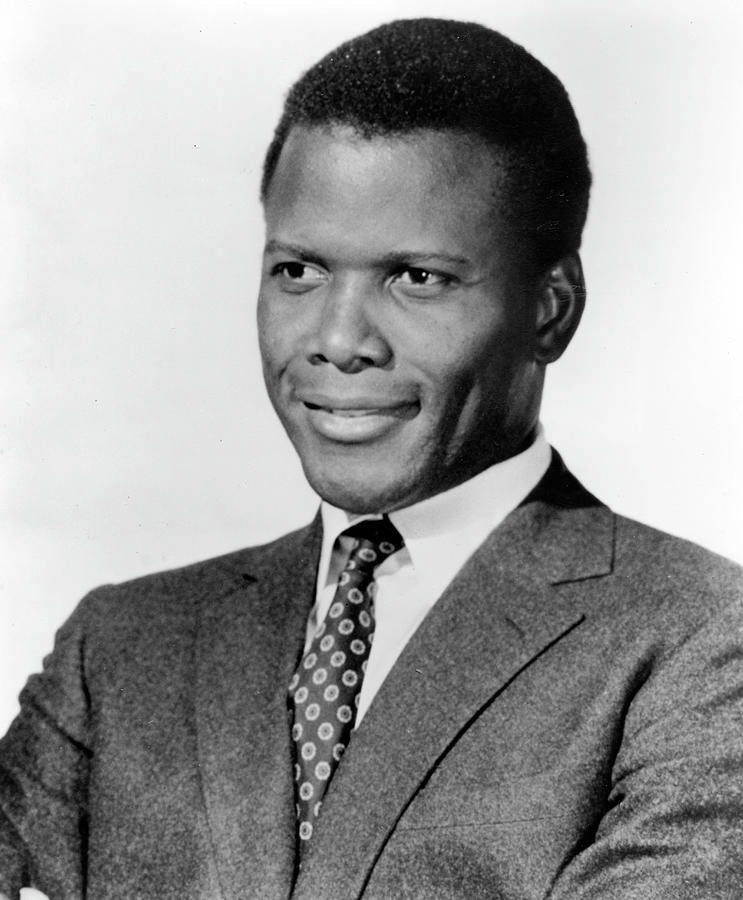
Sidney Poitier
 United States
film actor•film director•diplomat
Birthday
February 20, 1927
Birth Sign
Pisces
Birthplace
Miami, Florida, USA
Age
Died at 94
Height
6 ft 2 in (188 cm)
About
Sidney Poitier was a Bahamian-American actor, director, and diplomat who broke racial barriers in Hollywood and became one of the most important figures in the history of American cinema. In 1964 he made history as the first Black actor to win the Academy Award for Best Actor, a landmark achievement at the height of the civil rights era that carried significance far beyond the film industry. With his dignity, intelligence, and commanding screen presence, he redefined how Black characters could be portrayed in mainstream films. Poitier's body of work in the 1950s and 1960s, including The Defiant Ones, Lilies of the Field, In the Heat of the Night, and Guess Who's Coming to Dinner, gave him a platform to challenge the demeaning stereotypes that had long limited Black performers. He insisted on roles of substance and self-respect, becoming a symbol of progress and a major box-office star at a time when that was almost unheard of for a Black actor. Beyond acting, he moved into directing and later served as a diplomat representing the Bahamas. Honored with a knighthood and lifetime achievement awards, he was celebrated as a trailblazer and a model of grace under pressure. Poitier is remembered as an artist whose career helped change the culture itself.
Early Life & Background
Poitier grew up in deep poverty on Cat Island in the Bahamas, a place with no electricity or running water. He was the youngest of seven children born to Evelyn and Reginald Poitier, farmers who grew tomatoes and other produce. When the U.S. embargo on Bahamian tomatoes destroyed their livelihood around 1937, the family moved to Nassau. There Poitier saw his first motion pictures and idolized cowboy stars like Roy Rogers and Gene Autry. He left school at twelve to work as a laborer, helping support his family. At fifteen, after minor trouble with the law, his father sent him to live with his brother in Miami. There he experienced severe racism for the first time, including a terrifying encounter with the Ku Klux Klan after he delivered groceries to a white woman's front door. In 1943, at sixteen, he lied about his age to enlist in the U.S. Army during World War II. After his discharge he moved to New York City and worked as a dishwasher. He answered an ad for the American Negro Theatre in Harlem, but his thick Bahamian accent and difficulty reading led to immediate rejection. Determined, he spent six months practicing his accent by listening to the radio and having a coworker help him read. He was accepted into the theatre on his second try and made his Broadway debut in 1946.
Career Growth
Poitier's first film role came in the Army Signal Corps film From Whence Cometh My Help (1949), but his breakout arrived with No Way Out (1950), a racially charged drama. His star-making performance as Gregory Miller in The Blackboard Jungle (1955) made him a household name. In 1958 he earned his first Academy Award nomination for The Defiant Ones. He won the Best Actor Oscar in 1964 for Lilies of the Field, becoming the first Black actor to win a competitive Oscar for a leading role. The year 1967 was extraordinary: he starred in three landmark films released within months of each other, To Sir, With Love, In the Heat of the Night, and Guess Who's Coming to Dinner. In 1968 he became the number one box office star in the United States. He directed his first film, the western Buck and the Preacher (1972), co-starring Harry Belafonte. In 1980 he directed Stir Crazy, starring Gene Wilder and Richard Pryor, which became the year's biggest financial success. Later he portrayed Supreme Court Justice Thurgood Marshall in the Emmy-winning miniseries Separate but Equal (1991). From 1997 to 2007 he served as Bahamian Ambassador to Japan and UNESCO. He received an Honorary Academy Award in 2002 and the Presidential Medal of Freedom in 2009.
Career Timeline
Public Image & Style
Poitier was known for his dignity, intelligence, and commanding screen presence, with a deep resonant voice that became his signature. He deliberately chose roles that portrayed Black characters with substance and self-respect, challenging the demeaning stereotypes prevalent in mid-century Hollywood. Media often described him as the man in between, between Black and white, between representing the system and subverting it. He was celebrated as a trailblazer and a model of grace under pressure. Fans across generations revere him as a pioneering figure who opened doors for Black actors. There is no official fandom name, but his legacy is honored through the Sidney Poitier New American Film School at Arizona State University.
Fame & Fandom (iFAMOUS Rankings)
Sidney Poitier remains a towering figure in global cinema, though the iFANN Global Fame Engine has evaluated his current standing and determined he does not hold a placement in the published rankings for the top 1,000 most famous people worldwide as of August 2026. While modern metrics often chase viral immediacy, Poitier's influence operates on a different scale, anchored by decades of institutional respect rather than fluctuating search trends. His legacy is sustained through the enduring power of his filmography and his historic role as a diplomat, creating a form of fame that transcends standard celebrity cycles. The absence of a specific numeric rank reflects a status so established it exists outside the competitive churn of current pop culture charts. Fans who revere his work do not organize under a formal banner or engage in coordinated social media campaigns; there is no documented fandom name to unite them. Instead, the audience maintains his memory through academic institutions like the ASU Sidney Poitier New American Film School and curated screenings during Black History Month. This is a quiet devotion, focused on the substance of his career rather than the spectacle of fandom rituals. The cultural mythology surrounding him relies on verified historical moments, such as his groundbreaking 1964 Academy Award win for *Lilies of the Field* and his iconic portrayal of Virgil Tibbs in *In the Heat of the Night*. These stories are retold with reverence, serving as the primary connection between the living audience and the late actor's monumental contributions to art and civil rights.
Interesting Facts and Legends
Born two months premature and not expected to survive, his father purchased a small casket shortly after his birth, only to see him grow into one of Hollywood's greatest stars. A fortune-teller once predicted his mother that he would travel widely and walk with kings, a prophecy realized through his diplomatic service and global acclaim. He learned to read while working as a dishwasher, guided by a coworker, before eliminating his Bahamian accent through radio practice. On set, he insisted that the crew for his film *The Lost Man* (1969) be at least 50 percent African-American, setting a precedent for representation. His directorial debut, the comedy *Stir Crazy*, became the year's biggest box office hit in 1980. Beyond these facts, a defining legend persists regarding his 1964 Oscar victory, where he became the first Black actor to win Best Actor for *Lilies of the Field*, transforming the industry's image of African Americans. Another cornerstone of his lore involves his performance in *In the Heat of the Night*; despite the film achieving near-perfect critical scores, he was notably snubbed for an Academy Award nomination for this role, a fact often discussed alongside his earlier triumph. His service as the Bahamian Ambassador to Japan and France further cemented his status as a man who walked among kings, leaving a legacy described by tributes as a guiding light.
Notable Quotes
“I am not a politician, but I am a man of principle.”
“The best way to understand the legacy of Sidney Poitier is that he is the man in between.”
“I have always been a man who believes in the dignity of the individual.”
“I have chosen to live by the dictates of my own conscience.”
“I am a Bahamian. I am an American. I am a citizen of the world.”
Family & Personal Life
Poitier was the youngest of seven children. His parents, Evelyn and Reginald James Poitier, were Afro-Bahamian farmers on Cat Island. He had six daughters: four with his first wife Juanita Hardy, Beverly, Pamela, Sherri, and Gina, and two with his second wife Joanna Shimkus, Sydney Tamiia and Anika. His daughter Sydney Tamiia Poitier became an actress. He lived with Joanna in Beverly Hills until his death.
Notable Connections
Poitier frequently collaborated with Harry Belafonte, co-starring in Buck and the Preacher and Uptown Saturday Night. He directed Gene Wilder and Richard Pryor in Stir Crazy. He had a long-term relationship with actress Diahann Carroll. He married Canadian-born actress Joanna Shimkus, who co-starred with him in The Lost Man. Oprah Winfrey presented him with the American Academy of Achievement Gold Medal. President Barack Obama awarded him the Presidential Medal of Freedom.
Relationships & Dating History
Poitier married Juanita Hardy in 1950. They had four daughters together, Beverly, Pamela, Sherri, and Gina, before divorcing in 1965. During his marriage, he had a long-term romantic relationship with actress Diahann Carroll from 1959 to 1968, one of the most high-profile interracial relationships of the era. In 1976, he married Canadian-born actress Joanna Shimkus, whom he met on the set of The Lost Man (1969). They had two daughters, Sydney Tamiia and Anika. The couple remained married for 46 years until Poitier's death in 2022.
- MarriedJuanita Hardy1950 - 1965First wife; four daughters together. Divorced after 15 years.
- DatedDiahann Carroll1959 - 1968Long-term romantic relationship with the acclaimed actress and singer.
- MarriedJoanna Shimkus1976 - 2022CurrentCanadian-born actress; met on set of The Lost Man. Two daughters. Married until Poitier's death.
Death & Aftermath
Died
January 6, 2022 (aged 94)
Death Place
Bel Air, Los Angeles, California
Cause of Death
Natural causes
Sidney Poitier spent his final years residing in Bel Air, Los Angeles. On January 6, 2022, the actor, director, and diplomat passed away peacefully at his home at the age of 94. The news of his death prompted an immediate and widespread outpouring of tributes from across Hollywood, government circles, and civil rights organizations. Peers and institutions alike hailed him as a trailblazer who fundamentally transformed the image of African Americans in cinema and broke racial barriers that had stood for decades. The Academy of Achievement highlighted his international fame, while Britannica emphasized his historic role in overcoming segregation. Moments of silence and tributes appeared across media outlets, reflecting his status as a beloved cultural icon and father figure in the industry.
Specific details regarding the funeral service, burial location, or private memorial gatherings have not been made public in available records.
His legacy remains anchored by his groundbreaking filmography and diplomatic service. The New American Film School at Arizona State University, named in his honor, recognized his enduring impact as an ambassador and mentor. While administrative specifics of his aftermath remain unrecorded in the current text, his historical significance stands firmly established through his career achievements and the immediate recognition he received from global institutions upon his passing.
Net Worth (Estate Value)
$20 Million
iFANN Editorial Team estimate
Per iFANN's editorial analysis, Sidney Poitier's estate is valued at approximately $20 million as of 2026. This wealth accumulated from a storied career spanning acting, directing, and producing roles that redefined Hollywood. He commanded substantial salaries for landmark films including *The Defiant Ones*, *Lilies of the Field*, and *In the Heat of the Night*. His success behind the camera with hits like *Stir Crazy* (1980) added significant income to his portfolio. Additional revenue streams included authoring several books, such as his autobiography *This Life*, and his diplomatic salary earned while serving as the Bahamian Ambassador to Japan and UNESCO. Posthumous residuals from his extensive film catalog continue to generate revenue for his heirs. The estate is managed by his family, including his widow Joanna Shimkus.
Awards Won (16)
Poitier won the Academy Award for Best Actor for Lilies of the Field (1964), the first Black actor to win a competitive Oscar for a leading role. He also received an Honorary Academy Award in 2002. He won the Golden Globe Cecil B. DeMille Award for lifetime achievement, the BAFTA Fellowship, and the Screen Actors Guild Life Achievement Award. He received multiple NAACP Image Awards and a Grammy for Best Spoken Word Album. In 1995 he was honored with the Kennedy Center Honor.
1964 · Best Actor
Lilies of the Field
2016 · Lifetime Achievement
Known For
Lilies of the Field
1963 · Homer Smith
In the Heat of the Night
1967 · Detective Virgil Tibbs
Guess Who's Coming to Dinner
1967 · Dr. John Prentice
To Sir, With Love
1967 · Mark Thackeray
The Defiant Ones
1958 · Noah Cullen
Keywords
Sources
Quick Facts
- Profession
- film actor, film director, diplomat
- Born
- +1927-02-20
- Birthplace
- Miami
- Died
- +2022-01-06
- Death Place
- Los Angeles
- Gender
- Male
- Spouse
- Joanna Shimkus, Juanita Hardy
- Birth Sign
- Pisces
- Height
- 6 ft 2 in (188 cm)
- Children
- 6
Personal Details
- Full Name
- Sidney Poitier
- Height
- 6 ft 2 in (188 cm)
- Spouse
- Joanna Shimkus, Juanita Hardy
- Children
- 6
Filmography
50
Total
45
Film
5
TV
Frequently Asked Questions
How did Sidney Poitier die?
Was Sidney Poitier the first Black actor to win an Oscar?
How many children did Sidney Poitier have?
What was Sidney Poitier's net worth at death?
Did Sidney Poitier serve in the military?
Similar People

Join the community
fans discussing