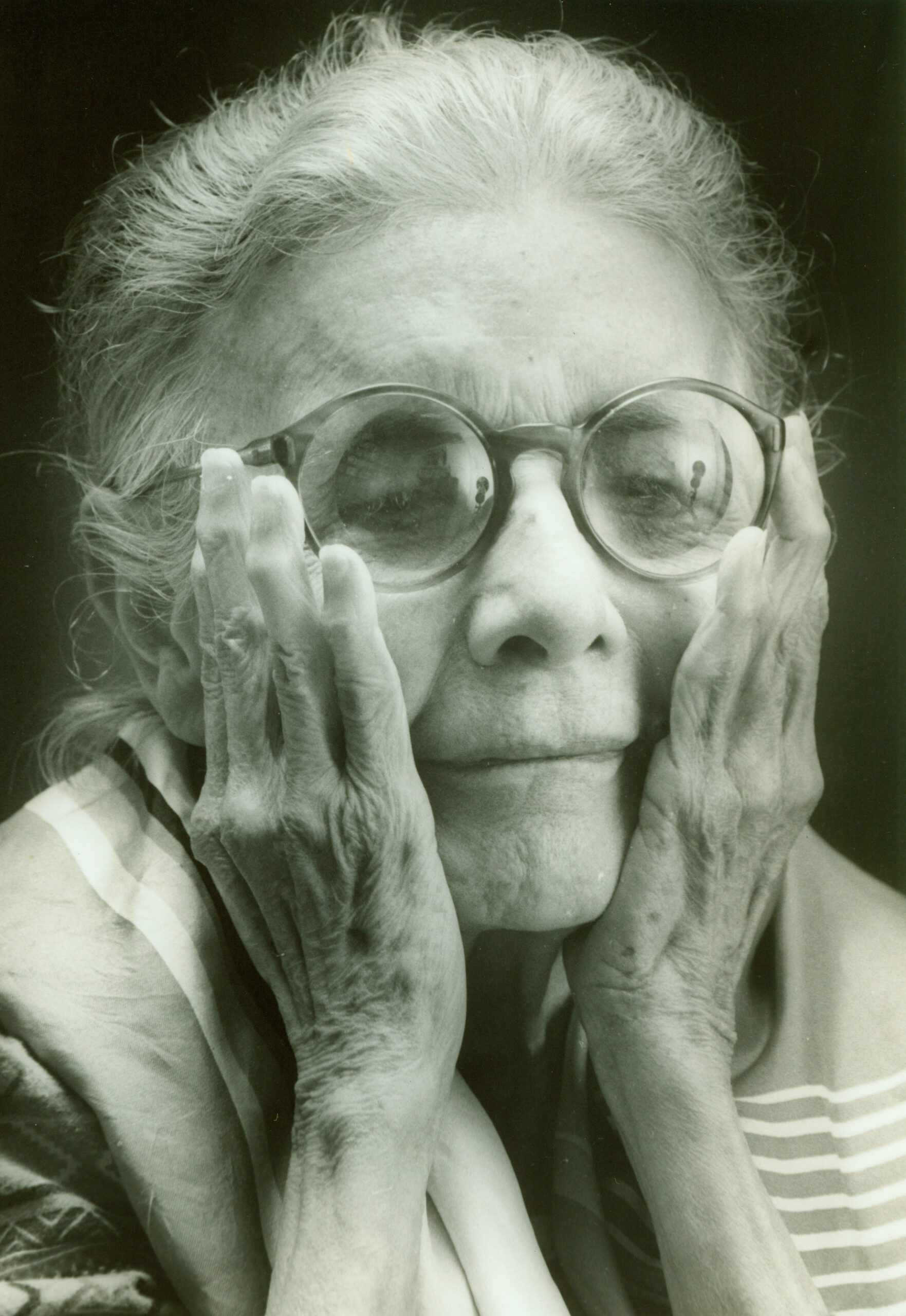
Nise da Silveira
 Brazil
Psychiatrist•Artist•Humanitarian
Also known as: Nise Magalhães da Silveira, A Dama das Imagens do Inconsciente
Birthday
February 15, 1905
Birth Sign
Aquarius
Birthplace
Maceió, Alagoas, Brazil
Age
Died at 94
About
Nise Magalhães da Silveira (February 15, 1905 – October 30, 1999) was a pioneering Brazilian psychiatrist, artist, and humanitarian whose career fundamentally altered the landscape of mental health treatment in Brazil and influenced global psychiatry. She is best known for establishing the first museum in the world dedicated to the art of the mentally ill and for championing art therapy as a legitimate clinical method during an era dominated by aggressive biological interventions. Her professional life was defined by a steadfast refusal to rely on electroconvulsive therapy, insulin shock therapy, or lobotomies. Instead, she integrated the theories of Carl Jung into her practice, encouraging patients to express their inner worlds through painting, clay, and music. This approach led to the creation of the Museu das Imagens do Inconsciente, which houses over 350,000 works created by patients under her care. Despite facing suspension and imprisonment by Brazil's military dictatorship for her "subversive" methods, she continued her work until her death, leaving behind a legacy of dignity and humanized care that continues to influence psychiatry today.
Early Life & Background
Born in Maceió, Alagoas, Nise Magalhães da Silveira entered the world on February 15, 1905. Her father, Nilo da Silveira, worked as a mathematics professor and journalist, while her mother, Maria de Fátima Magalhães da Silveira, was a pianist. This artistic and intellectual household fostered a deep appreciation for creativity and learning from an early age. She attended an exclusive convent school before pursuing higher education, eventually enrolling in the Faculty of Medicine at Bahia. There, she distinguished herself as the only woman in her class, navigating a male-dominated field with determination. After completing her studies, she moved to Rio de Janeiro to work at the National Psychiatric Hospital (Hospital Nacional dos Alienados). It was here in the 1940s that she encountered the rigid orthodoxies of the era. The prevailing medical consensus relied heavily on institutionalization and harsh treatments like lobotomies to manage mental illness. Da Silveira found these methods dehumanizing and ineffective. Her pivotal moment arrived after meeting Carl Jung during a trip to Europe, where she became his student. She returned to Brazil with a new perspective, ready to challenge the status quo. She began experimenting with art therapy, providing patients with materials like paint and clay to help them communicate their experiences. This period marked the beginning of her revolutionary work, setting the stage for the founding of her museum and the transformation of psychiatric care in Brazil.
Career Growth
In 1946, da Silveira established the Museum of Images of the Unconscious within the National Psychiatric Hospital. This institution became the first of its kind globally, amassing over 350,000 works created by patients under her supervision. Throughout the 1950s and 1960s, she faced intense opposition from conservative medical circles who viewed her methods as unscientific. Her refusal to comply with government mandates to use lobotomies and electroconvulsive therapy resulted in her suspension and eventual imprisonment by Brazil's military dictatorship in the 1960s. Authorities detained her for her "subversive" psychiatric practices, yet she remained undeterred in her mission to protect her patients' dignity. Despite these setbacks, she continued her work, founding the Instituto Nise da Silveira, which remains a center for psychiatric rehabilitation based on her humanized methodologies. Her legacy gained international recognition with the release of the documentary Nise: The Heart of Madness in 2015. The film won the Grand Prix at the Tokyo International Film Festival and secured distribution in the United States, bringing her radical approach to global audiences. Academic papers continue to analyze her clinical methods, with significant publications appearing as late as 2024 discussing her radical legacy in Brazilian psychiatry.
Career Timeline
Public Image & Style
Nise da Silveira is widely regarded as a visionary, a defiant humanitarian, and a bridge between science and art. Media portrays her as a woman who challenged the status quo with quiet courage. She had no formal fandom in the pop-culture sense; her admirers are psychiatrists, historians, and mental health professionals who study her methods. Their devotion manifests through the continued operation of the institutions she built rather than fan rituals or campaigns. She is remembered for her refusal to compromise on ethical grounds, even when it cost her freedom. Her public image is one of resilience and compassion, standing as a testament to the power of empathy in medical practice. Iconic moments include her founding of the Museum of Images of the Unconscious in 1946, a feat unprecedented in the world of medicine at the time, and her imprisonment during the Brazilian military dictatorship for refusing to perform lobotomies. These stories are verified historical events, central to her identity as "The Lady of the Images of the Unconscious." A famous quote attributed to her, "It is necessary to be amazed, to be indignant, and to catch fire, only then is it possible to change reality," is frequently cited in contemporary Brazilian discourse on social justice and mental health.
Fame & Fandom (iFAMOUS Rankings)
The iFANN Global Fame Engine evaluated Nise da Silveira's profile in September 2026 and determined that she currently holds no placement in the published rankings, meaning she does not appear in the Global Top 1,000 or any specific scope list. This absence of a numeric rank reflects her status as a historical icon rather than a contemporary entertainment figure; her fame is measured in the enduring existence of institutions and the preservation of patient art, not in viral metrics or chart positions. There is no documented fandom name associated with her following. Her admirers are not organized crowds pushing for chart success or buying billboards, but rather psychiatrists, historians, and mental health professionals who study her methods. These individuals do not perform fan rituals or create inside jokes; their devotion manifests through the continued operation of the Instituto Nise da Silveira and the Museum of Images of the Unconscious. While the world often celebrates stars with massive fanbases, Nise da Silveira's audience is defined by academic respect and institutional adoption. She did not have fans who fainted at her appearances or organized charity drives, yet her impact remains profound. The lack of a formal fanbase underscores the unique nature of her career: she was a scientist and humanitarian whose work transcended the typical celebrity-fan dynamic. Her story is one of quiet defiance against medical orthodoxy, preserved in museums and taught in schools rather than shouted from social media feeds.
Interesting Facts and Legends
Nise da Silveira is affectionately known as 'A Dama das Imagens do Inconsciente' (The Lady of the Images of the Unconscious), a title that summarizes her unique contribution to connecting art with the psyche. Multiple healthcare centers across Brazil, including CAPS facilities, bear her name, signaling ongoing state-level support for her methodologies. The most notable posthumous honor she received was a Google Doodle celebrating her 115th birthday in 2020, recognizing her as a figure of global historical significance. The documentary about her life, Nise: The Heart of Madness, won the Tokyo Grand Prix, a major honor that indirectly honored her life's work. There are no "Greatest of All Time" rankings in pop culture lists applicable to her, as her impact is measured in academic and medical history rather than commercial entertainment metrics. Physical attributes such as height are not recorded in available biographical data. Since she passed away in 1999, there are no current projects, social media presence, or recent news updates regarding her active life. However, her legacy remains active through the ongoing operation of the Instituto Nise da Silveira and the Museum of Images of the Unconscious in Rio de Janeiro.
Notable Quotes
“It is necessary to be amazed, to be indignant, and to catch fire, only then is it possible to change reality.”
Family & Personal Life
Biographical sources consistently describe Nise da Silveira as a woman entirely devoted to her profession and her patients. There is no documented evidence in credible historical records of her having any public romantic relationships, marriages, or children. She lived a life focused on her work at the hospital and the museum, often described as ascetic in her dedication. While her parents, Nilo da Silveira and Maria de Fátima Magalhães da Silveira, provided a supportive upbringing, she did not establish a household of her own later in life. Her siblings are not mentioned in available biographical data, suggesting a private family life that did not extend beyond her immediate childhood circle. Her 'family' was largely considered to be her patients and the artistic community she cultivated. As of her death on October 30, 1999, she remained unmarried and childless, dedicating her entire existence to the scientific and artistic advancement of mental health care.
Notable Connections
Carl Jung, Patients whose art she curated and exhibited
Relationships & Dating History
There is no documented evidence in credible historical records of Nise da Silveira having any public romantic relationships, marriages, or children. Biographical sources consistently describe her as a woman entirely devoted to her profession and her patients. She lived a life focused on her work at the hospital and the museum, often described as ascetic in her dedication. Consequently, there are no dates of relationships, partners' names, or details regarding children to report. As of her death on October 30, 1999, she remained unmarried and childless. Her 'family' was largely considered to be her patients and the artistic community she cultivated. Her relationship with her mentor, Carl Jung, was professional and intellectual, influencing her shift toward art therapy, but there were no romantic entanglements. Her primary emotional connections were formed with the patients whose art she curated and exhibited, creating a surrogate family bond that defined her personal life.
Death & Aftermath
Died
October 30, 1999 (aged 94)
Death Place
Rio de Janeiro, Brazil
Cause of Death
Natural causes
Nise Magalhães da Silveira passed away on October 30, 1999, in Rio de Janeiro at the age of 94. Official records state her death resulted from natural causes, though the specific location within the city and the circumstances of her final days remain unreported in public archives. There are no detailed accounts of her last public appearance or the immediate medical events leading to her passing. Public reaction centered on honoring her legacy as a pioneer of humanized care rather than traditional celebrity mourning. Tributes from peers highlighted her resistance to orthodox institutionalization practices and her refusal to use lobotomies despite political pressure. The museum she founded, the Museu das Imagens do Inconsciente, continued its operations as a center for psychiatric rehabilitation based on her methods. Specific details regarding her funeral service, burial rites, or attendees are absent from the historical record. Her personal estate was not publicly reported, and no financial figures regarding her assets or estate value have been disclosed. Posthumously, her work generated recognition through the museum's ongoing operations, licensing of her archives, and the sale of patient art, but these financial streams were managed privately by the institution. A Google Doodle celebrated her 115th birthday in 2020, and academic papers continued to analyze her clinical methods well into 2024, ensuring her radical approach to psychiatry remained part of global discourse.
Net Worth (Estate Value)
$0
iFANN Editorial Team estimate
As Nise da Silveira passed away in 1999, there is no current net worth figure or estate value available for calculation. Documentation does not disclose her personal assets, nor are there financial reports regarding her estate's management or earnings since her death. The museum she founded operates as a non-profit institution, and while it generates revenue through the sale of patient art and licensing, these funds are reinvested into the institution's operations rather than distributed to heirs. No legal settlements or major financial events involving her estate have been publicly reported. Consequently, iFANN cannot provide a monetary estimate for her fortune or estate value. Posthumously, her work has generated revenue through the museum's operations, licensing of her archives, and the sale of patient art, but specific financial figures regarding the estate's earnings are not disclosed in public sources. Her personal estate was not publicly reported, and thus there is no net worth figure or estate value available for calculation.
Awards Won (2)
Nise da Silveira did not receive traditional entertainment industry awards such as Oscars, Grammys, or Emmys, as she was a scientist and medical pioneer rather than an entertainer. However, she received significant posthumous honors and distinctions. The most notable is the Google Doodle celebrating her 115th birthday in 2020. The documentary about her life, Nise: The Heart of Madness, won the Tokyo Grand Prix, a major honor that indirectly honored her life's work. Multiple healthcare centers across Brazil, including CAPS facilities, bear her name, signaling state-level recognition of her contributions.
2015 · Best Documentary
Nise: The Heart of Madness
2020 · Honorary Recognition
115th Birthday Celebration
Known For
Nise: The Heart of Madness
2015 · Subject of Documentary
Keywords
Sources
Quick Facts
- Profession
- Psychiatrist, Artist, Humanitarian
- Born
- February 15, 1905
- Birthplace
- Maceió, Alagoas, Brazil
- Died
- October 30, 1999
- Death Place
- Rio de Janeiro, Brazil
- Gender
- Female
- Birth Sign
- Aquarius
Personal Details
- Full Name
- Nise Magalhães da Silveira
- Children
- Education
- Faculty of Medicine at Bahia; Convent school education
Filmography
1
Total
1
Film
0
TV
Frequently Asked Questions
Who was Nise da Silveira?
Did Nise da Silveira have children?
What is the Museum of Images of the Unconscious?
Why was Nise da Silveira imprisoned?
How did Nise da Silveira die?
Similar People

Join the community
fans discussing