Nintendo DS
"Touch. Blow. Play."
Overview
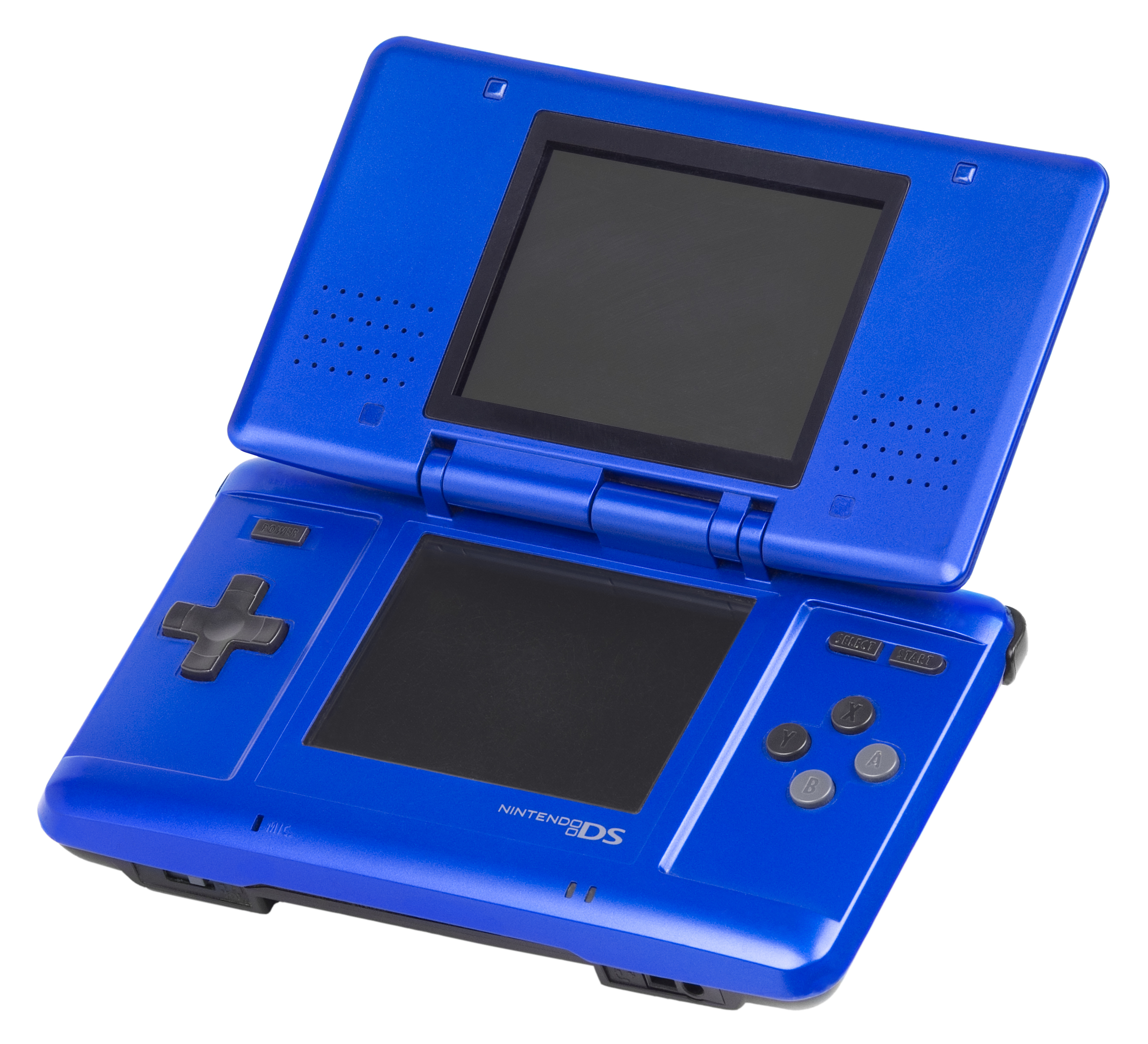
The Nintendo DS hit North American shelves on November 21, 2004, and the handheld world hasn't been the same since. Its clamshell design hid two screens, with the bottom one being a resistive touchscreen that you poked with a plastic stylus. That simple twist let players tap, drag, draw, and even blow into the microphone, turning gameplay into something far more physical than pressing buttons. The system's wireless support allowed up to 16 players to link up locally, and the Nintendo Wi-Fi Connection, launched in 2005, brought online play to games like Mario Kart DS. Sony's PlayStation Portable offered beefier graphics, but the DS countered with a library that leaned into creativity and accessibility.
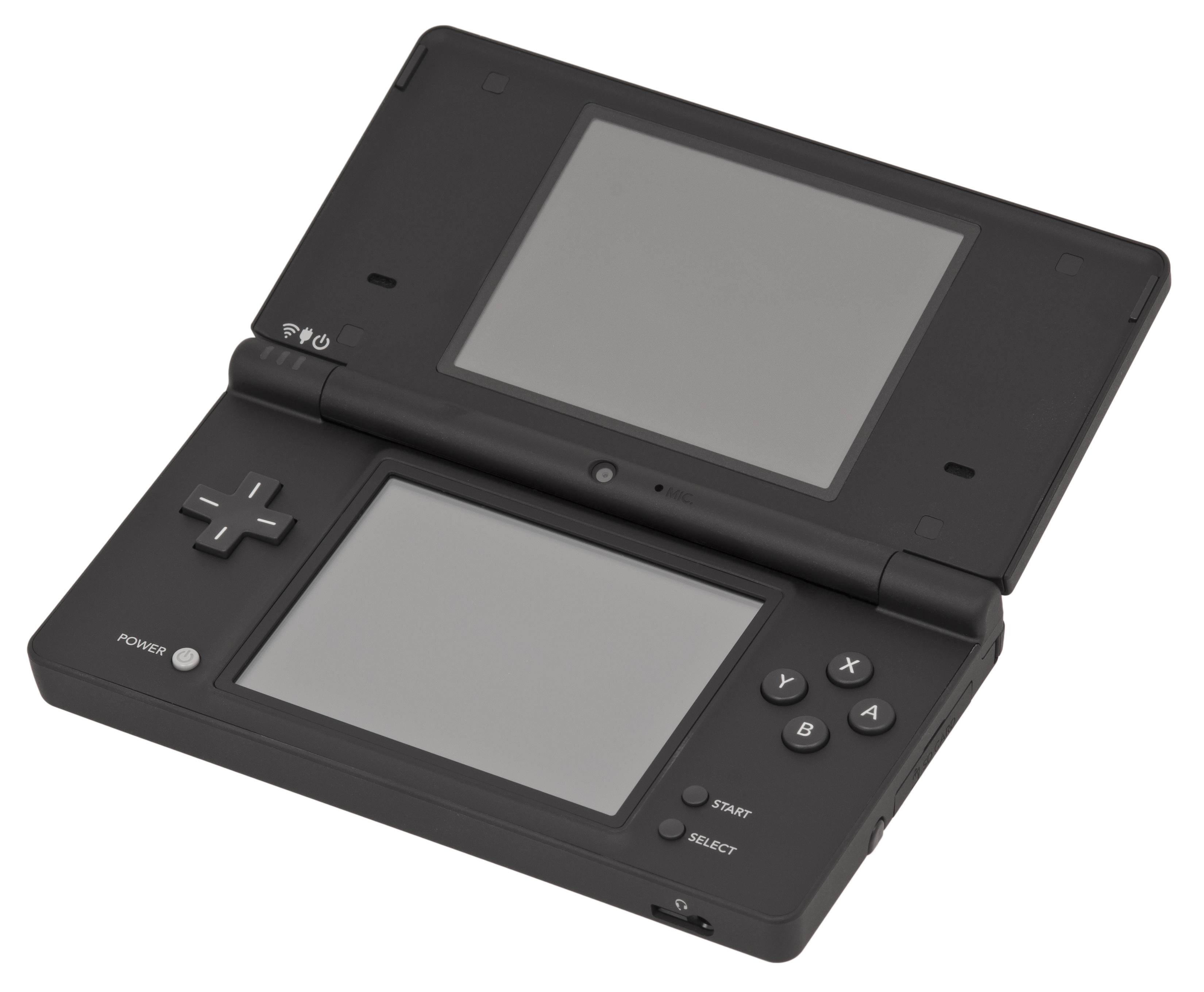
Nintendo pitched the DS as a "third pillar" alongside the Game Boy Advance and GameCube, but its instant success made it the de facto Game Boy successor. The DS Lite arrived in 2006, slimming the body and brightening the screens. The DSi followed in 2008, adding two cameras, larger displays, and the DSi Shop for downloadable games, though it dropped the GBA cartridge slot. The DSi XL came a year later with even bigger screens. The family line ended with the 3DS in 2011, but not before the DS family moved over 154 million units, making it the best-selling handheld ever and the third best-selling console behind the PlayStation 2 and Switch. The DS Lite alone accounted for more than half of those sales. Its software library topped 940 million copies, with New Super Mario Bros. selling over 30 million and Nintendogs close behind at 24 million.
Beyond the numbers, the DS changed who played games. Brain Age and Nintendogs pulled in seniors, commuters, and folks who'd never touched a console. The touchscreen and microphone opened doors for games like WarioWare: Touched!, which used every input method at once. The system also spawned a thriving homebrew scene, with flashcarts letting tinkerers run custom software. Even today, the DS lingers in the culture, from a lost Pokémon event cartridge that sold for over $10,000 on eBay in 2026 to a remaster of the Japan-only tank RPG Metal Saga: Season of Steel announced for the Switch 2. Its influence echoes in every modern handheld that tries to balance power with play.
Gameplay
The DS's dual screens work in tandem, often showing the main action on top and maps or inventory below. The touchscreen responds to a stylus, letting players draw paths in games like Kirby: Canvas Curse or tap commands in strategy titles. The microphone adds another layer, with Nintendogs responding to voice commands and WarioWare: Touched! using blowing and shouting. The clamshell design protects the screens when closed, and the system's 67 MHz ARM9 and 33 MHz ARM7 processors, along with 4 MB of RAM, handle the 256x192 pixel displays. Wireless play supports up to 16 players locally via Download Play, which lets a single cartridge share a demo version of the game with other DS units. The now-defunct Nintendo Wi-Fi Connection enabled online matches in Mario Kart DS and Pokémon Diamond and Pearl until its shutdown in May 2014.
Story
Hardware evolution defined the narrative here rather than plot. The original model, with its chunky build and two screens, gave way to the sleeker DS Lite in 2006, which sold over 90 million units alone. The DSi added cameras and digital distribution, but removed the GBA slot, a move that irked some fans. The DSi XL targeted older players with its larger screens and bundled Brain Age. Each revision refined the formula, and the DS's success paved the way for the 3DS and the Switch's hybrid design. The system's legacy is also marked by its community, from speedrunners to homebrew developers who kept the hardware alive long after its commercial run ended.
Keywords
Sources
Game Info
- Developer
- Nintendo
- Publisher
- Nintendo
- Release Date
- November 21, 2004
- Age Rating
- E (Everyone)
- Modes
- Single-player, Multiplayer
- Platforms
- Nintendo DS
- Units Sold
- 154 million
- Best-Selling Game
- New Super Mario Bros. (30 million)
Join the community
fans discussing