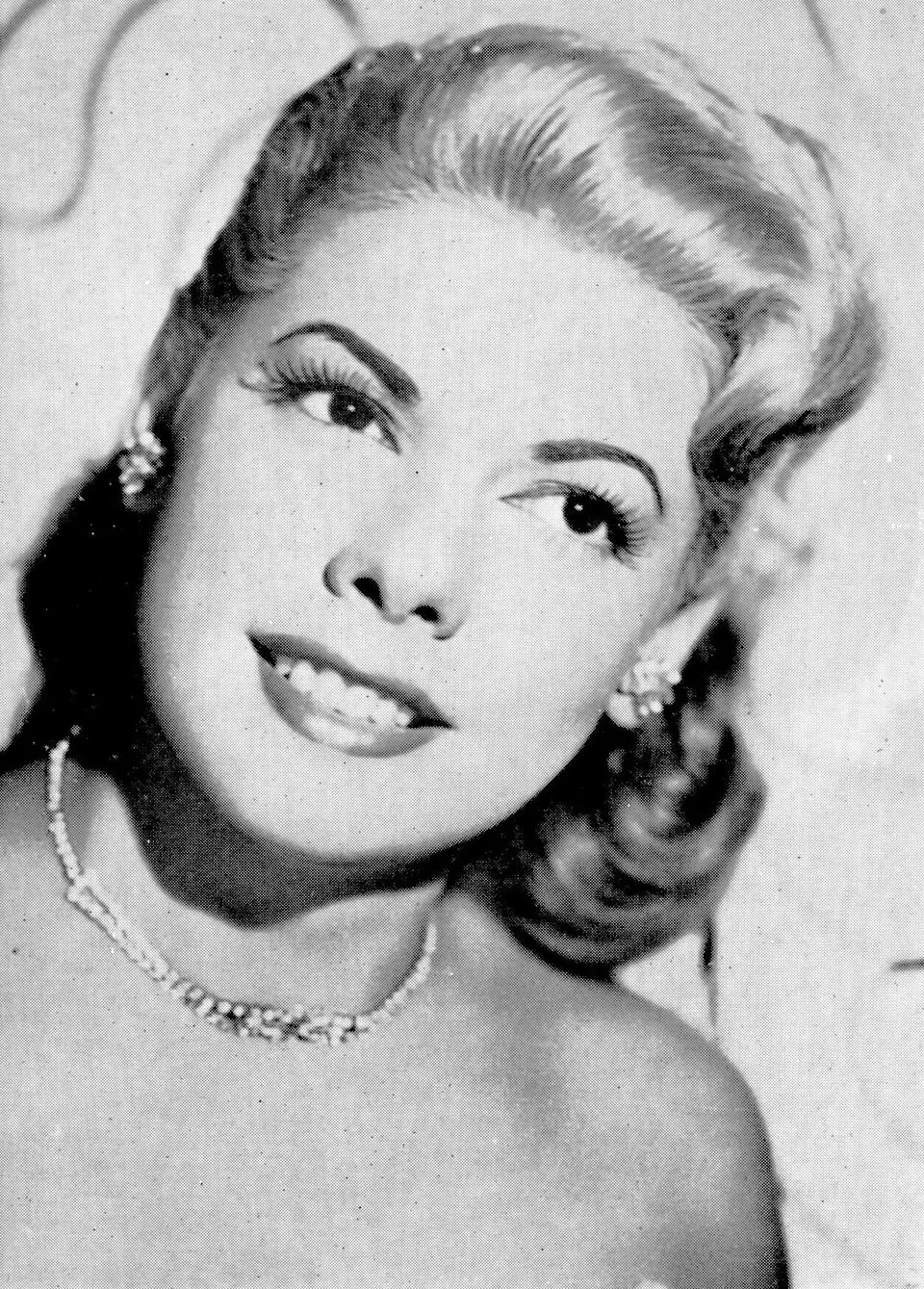
Ninón Sevilla
 Mexico
Also known as: La Venus Dorada
Birthday
November 10, 1929
Birth Sign
Scorpio
Birthplace
Havana, Cuba
Age
Died at 85
About
Ninón Sevilla was a Cuban-Mexican actress and dancer whose magnetic presence lit up the Golden Age of Mexican cinema. Born Emelia Pérez Castellanos in Havana on November 10, 1929, she became famous for her roles in the rumbera genre, a blend of music, dance, and melodrama that thrilled audiences across Latin America.
Sevilla's films, like Victims of Sin (1951), showcased her explosive energy and fiery charisma. She often played passionate, independent women who danced their way through dramatic plots, leaving a lasting impression on viewers. Her work has been rediscovered by new generations through retrospectives like the Criterion Channel's "Queen of the Mexican Cabaret" series, cementing her status as a cult icon of world cinema.
She passed away on January 1, 2015, in Mexico City at the age of 85, but her legacy lives on through her films and the enduring fascination with her artistry.
Early Life & Background
Ninón Sevilla grew up in Havana's Centro Habana district, raised by an aunt who instilled in her a strong sense of independence. As a child, she dreamed of becoming a nun, a surprising ambition for someone who would later captivate audiences with her sensuous dancing.
Her path took a different turn when she discovered dance. Sevilla began performing as an exotic dancer in Havana's nightclubs, where her raw talent and striking looks quickly set her apart. This early experience on stage gave her the confidence and polish that would later define her screen presence.
In the late 1940s, she moved to Mexico, drawn by the booming film industry. Her first film appearances were small, but her energy was impossible to ignore. Directors took notice, and it wasn't long before she landed leading roles that would make her a star.
Career Growth
Ninón Sevilla's breakthrough came in the late 1940s when she became the reigning queen of the rumbera genre. Her performance in Victims of Sin (1951), directed by Emilio Fernández, is considered a classic. She played Violeta, a dancer who sacrifices everything for a baby she rescues, and her raw emotional depth stunned audiences.
Throughout the 1950s, she starred in a string of hits, including Cry of the Bewitched (1957), directed by Roberto Gavaldón. Her films often paired her with legendary actors and directors like Julio Bracho and Luis Buñuel, who admired her unique blend of vulnerability and fire.
As the Golden Age waned, Sevilla adapted, moving into television and later films that showcased her versatility. She continued working into the 1990s, appearing in telenovelas and movies that introduced her to a new generation. In recent years, her work has been celebrated in retrospectives, including the 2023 Criterion Channel series "Queen of the Mexican Cabaret," which brought her films to a global audience.
Career Timeline
Public Image & Style
Ninón Sevilla's public image was that of a fiery, passionate performer who brought a unique blend of sensuality and strength to her roles. She was often compared to a feline, with her slinky movements and intense gaze.
In the press, she was celebrated as a symbol of female independence, a woman who danced and loved on her own terms. Her style, both on and off screen, influenced fashion trends, with her form-fitting dresses and bold makeup becoming iconic.
Fans adored her for her authenticity; she never seemed to be playing a part, but rather living it. This connection with audiences has endured, and today she is revered as a pioneer of Latin American cinema.
Fame & Fandom
While Ninón Sevilla never cultivated a formal, named fan club or organized digital following in the modern era, her legacy persists through the intense, visceral reactions of working-class audiences who once flocked to her cabaret performances and film screenings. Contemporary accounts describe crowds so overcome by her feline dance style that they would faint or riot during showings, a phenomenon that cemented her status as a cultural force rather than a mere celebrity. This raw, unmediated connection with the public remains the primary vessel for her enduring reputation, sustained today by academic rediscoveries and film restoration societies rather than active fandom structures.
In the landscape of global entertainment metrics, Ninón Sevilla holds specific standing within the industry's historical records. She is currently ranked as the 90th most famous person in Telenovelas, a position she has maintained from the previous cycle according to the iFANN Global Fame Rankings. These placements reflect a measured assessment of her lasting impact across media coverage and consumption signals worldwide, acknowledging her unique role in Latin American cinema history without relying on transient social trends.
Interesting Facts and Legends
Ninón Sevilla's nickname was "La Venus Dorada" (The Golden Venus), reflecting her radiant stage presence and exceptional dancing abilities. Despite her glamorous on-screen persona, she maintained a deep religious faith rooted in her childhood aspiration to become a nun. She distinguished herself among rumbera stars by performing her own complex dance routines without the aid of doubles in films like Victims of Sin.
Her career is also marked by legendary crowd reactions that blurred the line between performance and public disorder. Historical records note that her 1951 performance of "La Boda de la Negrita" in Victims of Sin caused such an uproar that it reportedly led to riots and theater disruptions due to the scandalous nature of her dance with a snake. Contemporary newspapers frequently documented instances where her sensual energy caused men to faint in the front rows, transforming her shows into events of near-chaotic intensity. Another defining moment occurred in Cry of the Bewitched (1957), where her fusion of Afro-Caribbean rhythms created a visual language that influenced generations of filmmakers.
Sevilla was a favorite of surrealist director Luis Buñuel, who praised her natural screen presence. Her film Victims of Sin was restored and screened at the Film Forum in New York in 2018, sparking renewed interest among cinephiles.
Family & Personal Life
Ninón Sevilla was raised by an aunt in Havana, though details about her parents and siblings remain scarce. She never publicly discussed her family much, preferring to keep that part of her life private.
She later moved to Mexico City, where she lived for most of her adult life. There is no public record of her having a spouse or children, and she seems to have dedicated herself entirely to her career.
Notable Connections
Ninón Sevilla worked with some of the most celebrated directors of Mexico's Golden Age, including Emilio Fernández, Roberto Gavaldón, Julio Bracho, and Luis Buñuel. Her collaborations with these filmmakers produced some of the most memorable films of the era, and her performances continue to be studied by film historians.
Relationships & Dating History
Ninón Sevilla was famously private about her romantic life. Despite her on-screen romances, she never publicly confirmed any long-term relationships or marriages. Some tabloids linked her to co-stars, but she never addressed these rumors.
She remained single throughout her life, focusing on her career and her faith. At the time of her death, she was not married.
Death & Aftermath
Died
January 1, 2015 (aged 85)
Death Place
Mexico City
Cause of Death
Pneumonia or complications
Tributes from the film industry and cultural institutions soon followed, with outlets like Remezcla publishing retrospectives that remembered her as a Cuban bombshell who conquered Mexico's Golden Age of Cinema. Her legacy was further cemented in 2026 when the Criterion Channel featured her work in a global release titled Queen of the Mexican Cabaret, bringing renewed attention to films such as Victims of Sin. These posthumous honors highlighted her unique contribution to Afro-Caribbean dance and cinema while ensuring her artistry reached new generations through streaming platforms like Apple TV. Emelia Pérez Castellanos, professionally known as Ninón Sevilla, passed away on January 1, 2015, at the age of 85 within a hospital in Mexico City.
The cause of death was reported as pneumonia or complications arising from it, information disseminated by news agencies including EFE and cited in the San Diego Union-Tribune shortly after the event. She had been largely retired from active performance for many years prior to this final event. Details regarding the specific date, location, or nature of her funeral service were not explicitly provided in available records, suggesting the send-off may have been a private family affair rather than a public spectacle., family statements focused on preserving her memory as a pioneer of exotic dance and cinema.
Net Worth (Estate Value)
$5 Million
iFANN Editorial Team estimate
iFANN currently estimates Ninón Sevilla's net worth at the time of her death in 2015 to be $5 Million. While she did not accumulate the vast fortunes of some Hollywood contemporaries, her extensive career in film and television provided a comfortable living throughout her life. Her income was derived primarily from acting roles, alongside appearances in stage shows and television productions. In her later years, she also earned revenue from reruns and licensing agreements for her films. Since her passing, her estate has continued to receive royalties from screenings and retrospectives of her work.
Awards & Accolades
View 1 records, honours and achievementsKnown For
Victims of Sin
1951 · Violeta
Cry of the Bewitched
1957 · Lead
Keywords
Sources
Quick Facts
- Profession
- Actress, dancer
- Born
- November 10, 1929
- Birthplace
- Havana, Cuba
- Died
- January 1, 2015
- Death Place
- Mexico City, Mexico
- Gender
- Female
- Birth Sign
- Scorpio
Personal Details
- Full Name
- Emelia Pérez Castellanos
Filmography
40
Total
35
Film
5
TV
Frequently Asked Questions
Who was Ninón Sevilla?
What was Ninón Sevilla known for?
When and where was Ninón Sevilla born?
When did Ninón Sevilla pass away?
What is Ninón Sevilla's legacy?
Similar People

Join the community
fans discussing