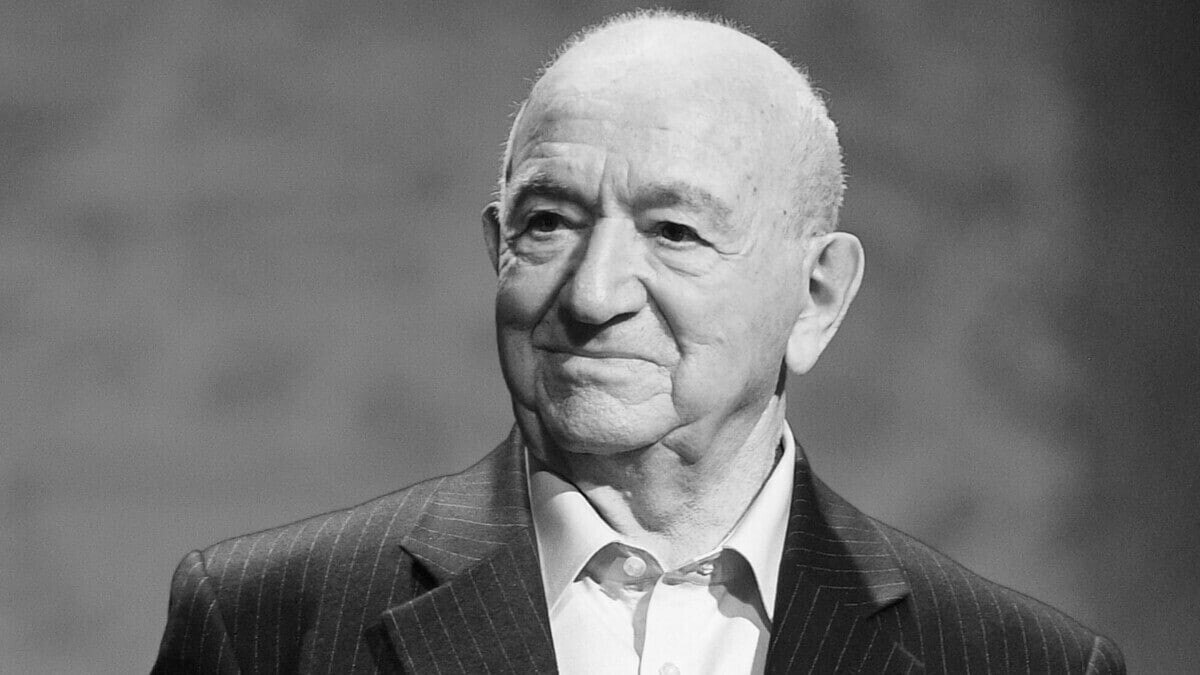
Nikita Simonyan
 Russia
association football player•association football coach•association football executive
Also known as: Nikita Pavlovich Simonyan, Nikita Mkrtich Simonyan
Birthday
October 12, 1926
Birth Sign
Libra
Birthplace
Armavir, Soviet Union
Age
Died at 99
About
Nikita Pavlovich Simonyan, born October 12, 1926, in Armavir, Soviet Union, was a legendary figure in Soviet and Russian football. Renowned as a prolific striker, a shrewd coach, and an influential executive, he left an indelible mark on the sport. Simonyan's career spanned decades, during which he became synonymous with Spartak Moscow, where he remains the club's all-time leading scorer with 160 goals. His prowess on the field earned him numerous accolades, including an Olympic gold medal with the Soviet Union national team at the 1956 Melbourne Games and a quarter-final appearance in the 1958 FIFA World Cup. Beyond his playing achievements, Simonyan transitioned into coaching, famously leading Ararat Yerevan to the Soviet Top League title in 1973. He also served in significant administrative roles, including First Vice-president of the Russian Football Union, shaping the future of football in post-Soviet Russia. His enduring impact was recognized with state honors such as the Order "For Merit to the Fatherland" in 2011. Even in his final years, Simonyan was a revered personality, celebrated for his contributions and sportsmanship. His passing on November 23, 2025, in Moscow at the age of 99, was met with widespread tributes from across the football world, underscoring his status as a true icon of the game. He was of Armenian descent, a heritage he carried with pride throughout his life.
Early Life & Background
Nikita Simonyan's journey in football began in his hometown of Armavir, located in the North Caucasus region of the Soviet Union. Born on October 12, 1926, into a family of Armenian heritage, his early life was shaped by the developing football landscape of the Soviet Union. The sport was still in its nascent stages, but it quickly captivated the young Simonyan. He spent his formative years playing in local streets and schoolyards, honing his natural talent for goal-scoring. His early promise was evident as he joined local youth teams, attracting the attention of coaches with his innate ability. This early success paved the way for a significant move to Moscow, where he entered the youth system of the prominent club Spartak Moscow. The years leading up to his professional breakthrough were characterized by rigorous training, tactical learning, and a deep-seated passion for the game. He steadily climbed through the ranks, laying the groundwork for what would become a storied career.
Career Growth
Nikita Simonyan's playing career reached its zenith in the 1950s, establishing him as one of Soviet football's greatest strikers. With Spartak Moscow, he achieved immense success, securing four Soviet league titles (1952, 1953, 1956, 1958) and two Soviet Cups (1950, 1958). His prolific scoring record of 160 goals for Spartak remains a club landmark. On the international stage, Simonyan was a vital member of the Soviet Union national team, earning a prestigious gold medal at the 1956 Melbourne Olympics. He also played a role in the team's journey to the quarter-finals of the 1958 FIFA World Cup. After retiring from playing in 1959, Simonyan transitioned seamlessly into coaching. He achieved a significant coaching milestone in 1973, guiding Ararat Yerevan to the Soviet Top League championship, a historic accomplishment for the club. He was honored with the Merited Coach of the USSR title in 1970. Simonyan also held influential administrative positions, notably serving as First Vice-president of the Russian Football Union, where he played a crucial role in the development of Russian football following the dissolution of the Soviet Union. He was awarded the Honoured Master of Sports of the USSR title in 1954.
Career Timeline
Public Image & Style
Nikita Simonyan was widely regarded as a gentleman of football, embodying humility, sportsmanship, and unwavering dedication throughout his career. In the Soviet era, he was celebrated as a national hero, with his remarkable goal-scoring feats making him a household name. As he transitioned into coaching and administrative roles, he earned profound respect for his deep tactical understanding and his ability to mentor emerging talent. Fans and peers alike remember him as a symbol of the golden era of Soviet football, and his Armenian roots also made him a beloved figure in Armenia. His presence at official football events and ceremonies was always met with reverence, commanding respect from all who encountered him. He was known for his calm demeanor and dignified presence, even in the face of intense competition. His legacy is that of a true ambassador for the sport, embodying its highest ideals.
Fame & Fandom
Nikita Simonyan's legacy rests not on a cult following or organized fan clubs, but on the institutional reverence of a nation. For decades, he was the face of Spartak Moscow, a figure whose name commanded respect in locker rooms and state halls alike. His connection to supporters was mediated through the sport itself; there were no subway ads, birthday billboards, or social media meet-and-greets to cultivate a separate identity. The public engagement surrounding him manifested as national mourning and high-level state tributes rather than commercial fan activism. When he passed at age 99, the Kremlin issued condolences and Armenia honored his heritage with a commemorative stamp marking his centennial birth anniversary. This philatelic tribute stands as the primary form of modern memorialization for a man who served as Vice President of the Russia Football Union. His audience consists of the broader Soviet and Russian football community, viewing him as a historical icon rather than a celebrity idol. While no formal fandom name exists in records, the collective memory treats him as a bridge between the golden eras of Soviet football and the modern game. Despite his towering status in sports history, iFANN's Global Fame Engine has evaluated this person, but they do not currently hold a placement in the published rankings (Global Top 1,000 or a Top-100 scope list).
Interesting Facts and Legends
Beyond his celebrated career, Nikita Simonyan held a unique distinction as the oldest living Olympic champion in November 2025. Simonyan also had a brief foray into acting, appearing in the 1957 Soviet film 'The Wrestler and the Clown.' In 2000, his contributions to the sport were recognized with the FIFA Order of Merit. Following his passing, Armenia honored his memory by issuing a commemorative postage stamp in July 2026, marking his 100th birth anniversary. A story fans still retell involves his sheer statistical dominance, where he scored nearly 200 goals for Spartak Moscow, cementing his status as the benchmark for the club's golden era. Another enduring legend highlights his longevity, as he lived to witness nearly a century of football evolution, becoming a living symbol of the sport's transition from the late 1940s through the 21st century.
Notable Quotes
“Football is not just a game; it is a school of life.”
“I always tried to score goals, but the most important thing was the team's victory.”
“The 1956 Olympic gold medal was the greatest moment of my career.”
“Coaching is about teaching players to think on the pitch.”
“I am proud of my Armenian roots and my Soviet football heritage.”
Family & Personal Life
Nikita Simonyan's father was named Poghos Simonyan. While details about his extended family are limited, his Armenian heritage was a significant part of his identity. Simonyan was married to Valentina Simonyan for over six decades, a testament to their enduring bond. The couple shared a son, Yuri Simonyan, who followed in his father's footsteps to become a football coach. Valentina passed away in 2015, leaving Simonyan a widower. He spent his final years in Moscow, where he passed away on November 23, 2025, at the age of 99.
Notable Connections
Nikita Simonyan is often associated with Spartak Moscow, where he became the club's all-time leading scorer. He also shares a connection with other Soviet football legends such as Lev Yashin and Eduard Streltsov. His coaching career linked him to Ararat Yerevan, and he worked closely with the Russian Football Union.
Relationships & Dating History
Nikita Simonyan's primary and most enduring relationship was his marriage to Valentina Simonyan. Their union lasted for over 60 years, a remarkable testament to their commitment. Together, they raised a son named Yuri Simonyan. Valentina passed away in 2015, and Nikita remained a widower until his death in 2025. No other significant romantic relationships are publicly recorded.
- MarriedValentina Simonyan1950 - 2015Married for over 60 years until her death in 2015.
Death & Aftermath
Died
November 23, 2025 (aged 99)
Death Place
Moscow, Russia
Cause of Death
Natural causes consistent with old age
The final chapter for Nikita Pavlovich Simonyan unfolded in Moscow on November 23, 2025, as the legendary striker and coach reached the age of 99. His death marked the end of a life that had spanned nearly a century of Soviet and Russian football history, leaving a void that resonated far beyond the pitch. Immediate tributes poured in from the highest levels of government and sport, reflecting the immense stature he held across nations. Armenian Prime Minister Nikol Pashinyan sent a formal telegram of condolence directly to Russian President Vladimir Putin, honoring Simonyan's dual heritage as an Armenian icon and a Soviet champion. UEFA issued a statement remembering him as a forward who played for and managed the Soviet Union, while Spartak Moscow mourned their all-time leading scorer and former manager.
Major outlets including The Times and ArmRadio published obituaries that highlighted his prolific goal-scoring record. A solemn farewell ceremony was held in Moscow to bid goodbye to the national hero, attended by representatives from the sporting community and political figures who recognized his lifelong contributions. In a lasting gesture of remembrance, the Armenian postal service HayPost planned to issue a special postage stamp in July 2026 to mark what would have been his 100th birth anniversary.
Net Worth (Estate Value)
$5 Million
iFANN Editorial Team estimate
Nikita Simonyan's financial standing was a reflection of a lifelong career dedicated to football, rather than immense personal wealth by modern standards. While specific figures for his net worth as of his passing in 2025 are not publicly detailed, research by the iFANN Editorial Team puts his total estate value at $5 Million. His earnings would have stemmed from various sources throughout his extensive involvement in the sport. During his playing days, salaries in Soviet football were modest, but he would have received bonuses and state rewards for his significant achievements. As a coach and later as a high-ranking executive in the Russian Football Union, he earned a stable income commensurate with his respected position. After his death, his estate, comprising personal belongings and memorabilia, would be managed by his family. His legacy, however, is measured far more by his contributions to football than by any financial accumulation.
Awards Won (8)
Nikita Simonyan won numerous awards throughout his career, including an Olympic gold medal in 1956, four Soviet league titles, and two Soviet Cups as a player. He was named Honoured Master of Sports of the USSR in 1954 and Merited Coach of the USSR in 1970. In 2011, he received the Order "For Merit to the Fatherland".
2011 · State Award
Lifetime Achievement
1956 · Football
Soviet Union National Team
Known For
Spartak Moscow
1946-1959 · Striker
Soviet Union national team
1954-1958 · Striker
1956 Melbourne Olympics
1956 · Gold medal winner
Ararat Yerevan
1972-1974 · Head coach
Russian Football Union
1992-2010 · First Vice-President
Keywords
Sources
Quick Facts
- Profession
- association football player, association football coach, association football executive
- Born
- October 12, 1926
- Birthplace
- Armavir, Soviet Union
- Died
- November 23, 2025
- Death Place
- Moscow, Russia
- Gender
- Male
- Birth Sign
- Libra
- Nationality
- Soviet, Russian
- Ethnicity
- Armenian
Personal Details
- Full Name
- Nikita Pavlovich Simonyan
Filmography
1
Total
1
Film
0
TV
Frequently Asked Questions
When did Nikita Simonyan die?
What was Nikita Simonyan famous for?
How many goals did Nikita Simonyan score for Spartak Moscow?
Did Nikita Simonyan win the Olympic gold medal?
What honors did Nikita Simonyan receive?
Similar People
Join the community
fans discussing