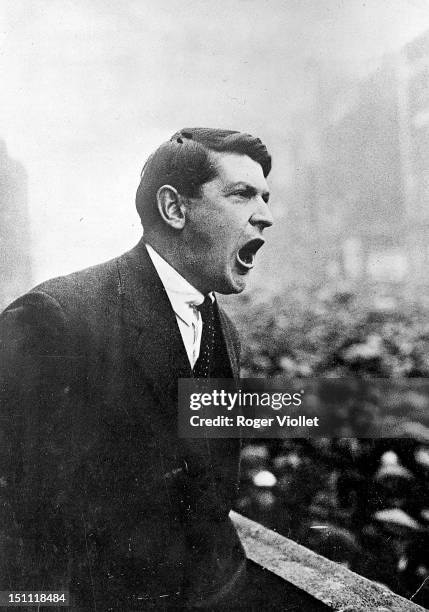
Michael Collins
 Italy
Italymilitary officer•astronaut•test pilot
Birthday
October 31, 1930
Birth Sign
Scorpio
Birthplace
Rome, Kingdom of Italy
Age
Died at 90
Height
5 ft 10 in (178 cm)
About
Michael Collins was an American astronaut and Air Force test pilot who played an essential, if often overlooked, role in the first crewed Moon landing as the command module pilot of Apollo 11. While his crewmates Neil Armstrong and Buzz Aldrin descended to the lunar surface in 1969, Collins remained in orbit aboard the command module Columbia, alone, circling the Moon and keeping the spacecraft ready for the crucial rendezvous that would bring the mission safely home. His was the indispensable supporting role in humanity's greatest journey. Collins flew around the far side of the Moon out of all radio contact with Earth, a period of solitude unlike any experienced by another human being, a moment he later reflected on with characteristic grace and humor. Far from resenting that he never walked on the surface, he wrote movingly about the privilege of his role and the fragile beauty of the Earth seen from afar. Before Apollo he had flown on the Gemini program and conducted spacewalks, and after his spaceflight career he led the National Air and Space Museum. Modest, eloquent, and self-deprecating, he became one of the most thoughtful chroniclers of the space age through his acclaimed memoir. Michael Collins is remembered as a quietly heroic figure and one of the finest writers among the astronauts.
Early Life & Background
Michael Collins was born in Rome, Italy, where his father, a U.S. Army officer, was serving as military attaché. The family moved frequently, living in Oklahoma, New York, and Puerto Rico. He attended Saint Albans School in Washington, D.C., and then entered the United States Military Academy at West Point, graduating in 1952 with a Bachelor of Science degree. He chose an Air Force career and became an experimental flight test officer at Edwards Air Force Base, testing jet fighters and logging about 5,000 flight hours. In October 1963, he was selected as one of NASA's third group of astronauts.
Career Growth
Collins first flew in space as pilot of Gemini X in July 1966, alongside command pilot John Young. The mission achieved the first rendezvous and docking with an Agena target vehicle, used the Agena's engine to reach a record altitude of 475 miles, and Collins performed a spacewalk to retrieve a micrometeorite experiment. His most famous role came as command module pilot of Apollo 11 in July 1969, the first lunar landing mission. He remained in lunar orbit aboard Columbia while Armstrong and Aldrin descended to the surface, executing the critical re-docking maneuvers that enabled their return. After retiring from NASA in 1970, Collins served as Assistant Secretary of State for Public Affairs, then as director of the National Air and Space Museum from 1971 to 1978, overseeing its opening. He later became undersecretary of the Smithsonian Institution, vice president of LTV Aerospace, and founded his own consulting firm in 1985.
Career Timeline
Public Image & Style
Collins was known for his modesty, eloquence, and self-deprecating humor. He was often described as the forgotten astronaut of Apollo 11, a label he embraced with characteristic grace. He was one of the finest writers among the astronauts, producing thoughtful reflections on space exploration. His public image is that of a quiet hero who played an indispensable supporting role in humanity's greatest journey. Fans and historians alike admire his humility and the lyrical quality of his memoir.
Fame & Fandom
The legacy of Michael Collins rests on a unique paradox: he is the man who stayed behind while history moved forward, creating a following defined not by adoration for a celebrity, but by reverence for a specific kind of solitude. Space enthusiasts and historians alike revere his narrative of isolation during the Apollo 11 mission, where he circled the Moon alone while his crewmates walked on its surface. This story has cemented his status as the archetypal unsung hero, drawing admirers who value the quiet dignity of his service over the flashier exploits of his peers. Unlike modern pop culture figures with organized campaigns or branded hashtags, Collins's following is organic, sustained by memoirs like Carrying the Fire and the enduring cultural mythos of the "loneliest man in history." His admirers interact with his memory through academic study and space exploration advocacy rather than fan clubs or merchandise drives. The fanbase has no formal name. iFANN has evaluated this figure within its Global Fame Engine framework. The assessment confirms that Michael Collins is currently unranked in the Global Top 1,000 and holds no placement on any Top-100 scope list. While he remains a towering figure in aerospace history, his current global fame metrics do not place him within the published ranking tiers at this time.
Interesting Facts and Legends
Michael Collins was the only member of the Apollo 11 crew to remain in orbit around the Moon, never stepping foot on the lunar surface itself. He piloted the command module Columbia and executed the critical re-docking maneuvers that allowed Neil Armstrong and Buzz Aldrin to return safely to Earth. His father served as a major general in the U.S. Army, and an uncle also held the rank of general. Collins wrote the acclaimed memoir Carrying the Fire, published in 1974, which is widely considered one of the finest astronaut autobiographies ever produced. A compelling legend from the weeks before the launch involves the astronauts signing hundreds of autographs; they did so not for fans, but to ensure their families could sell them if the mission ended in tragedy, as insurance would not cover the risk. Another iconic moment occurred after the mission when massive ticker-tape parades swept through New York City and Chicago, shutting down streets under a deluge of confetti. Fans often retell the story of his time on the far side of the Moon, completely cut off from radio contact with Earth, describing it as a period of profound solitude unlike any other human experience.
Notable Quotes
“I am alone now, truly alone, and absolutely isolated from any known life. I am it.”
“I really believe that if the leaders of the world could see their planet from a distance of 100,000 miles, their outlook would be fundamentally changed.”
“We came in peace for all mankind.”
“I felt that the Moon was a place I had visited, not a place I had conquered.”
Family & Personal Life
Collins married Patricia M. Finnegan of Boston, Massachusetts. The couple had three children: two daughters and one son. His father, James Lawton Collins, was a career U.S. Army officer who rose to major general, and his mother, Virginia C. Collins, was of British descent. He had an older brother, James Lawton Collins Jr., and two older sisters, Virginia and Agnes. Collins's hobbies included fishing and handball.
Notable Connections
Relationships & Dating History
Michael Collins married Patricia M. Finnegan of Boston, Massachusetts, in the late 1950s. The couple had three children together: two daughters and one son. They remained married until Collins's death on April 28, 2021, in Naples, Florida. No other public romantic relationships are documented. As of 2026, Collins is deceased, and his widow Patricia survives him.
- MarriedPatricia Finnegan1957 - 2021They had three children together; remained married until his death.
Death & Aftermath
Died
April 28, 2021 (aged 90)
Death Place
Potomac, Maryland, USA
Cause of Death
Complications from a fall
Michael Collins's family announced that the former astronaut passed away peacefully in his sleep at his home in Potomac, Maryland, on April 28, 2021. The official statement attributed the death to complications arising from a fall he had suffered several months earlier, confirming that no foul play or criminal investigation was required under Maryland law. At ninety years old, Collins left behind a legacy of quiet service after a life defined by solitary orbit and precise command. The reaction to his passing resonated deeply within the space community and government circles.
NASA Administrator Bill Nelson honored him as a true American hero who remained humble despite his pivotal role in the first moon landing. His crewmates Neil Armstrong and Buzz Aldrin offered their own tributes, with Armstrong specifically noting that Collins was the most important person on the mission for keeping the command module operational while the others walked on the lunar surface. Local communities in Maryland and Virginia held small gatherings, and social media campaigns using hashtags like #Apollo11 rallied around his memory without the frenzy seen for pop culture icons.
A private funeral ceremony took place shortly after his death, limited to immediate family and close friends due to pandemic restrictions. He received full military honors befitting his rank as a U.S. Air Force colonel before being laid to rest at Arlington National Cemetery in Virginia. In the years following his death, his estate has continued to manage his literary works, including Carrying the Fire and Return to Earth, while a scholarship fund established in his name supports students pursuing careers in aerospace engineering and science.
Net Worth (Estate Value)
$5 Million
iFANN Editorial Team estimate
iFANN currently estimates Michael Collins's estate value at $5 Million. As a NASA astronaut and government employee, he earned a modest salary during his career, estimated at $17,000 to $20,000 annually during the Apollo era. His military pension as a retired major general in the Air Force Reserve provided ongoing income. Royalties from his memoir Carrying the Fire, first published in 1974, continue to generate revenue, as does posthumous licensing of his name and likeness for documentaries, books, and commemorative items. After leaving NASA, he earned income as Assistant Secretary of State, director of the National Air and Space Museum, undersecretary of the Smithsonian Institution, and vice president of LTV Aerospace. He later founded his own consulting firm. His estate is managed by his surviving family members.
Awards Won (5)
Collins received the Presidential Medal of Freedom in 1969 along with his Apollo 11 crewmates, and the Congressional Gold Medal in 2011. He also earned the NASA Exceptional Service Medal, the Air Force Distinguished Flying Cross, and Air Force Command Pilot Astronaut Wings.
2011 · Government
Apollo 11
1969 · Government
Apollo 11
Known For
Apollo 11
1969 · Command Module Pilot
Gemini X
1966 · Pilot
Keywords
Sources
Quick Facts
- Profession
- military officer, astronaut, test pilot
- Born
- +1930-10-31
- Birthplace
- Rome
- Died
- +2021-04-28
- Death Place
- Naples
- Gender
- Male
- Spouse
- Patricia Finnegan
- Birth Sign
- Scorpio
Personal Details
- Full Name
- Michael Collins
- Height
- 5 ft 10 in (178 cm)
- Spouse
- Patricia Finnegan
- Children
- 3 (two daughters, one son)
- Education
- Saint Albans School; United States Military Academy at West Point (BS, 1952); Harvard Business School (advanced management program)
Frequently Asked Questions
Why didn't Michael Collins walk on the Moon?
How old was Michael Collins when he died?
Did Michael Collins have children?
What was Michael Collins' net worth?
Was Michael Collins married?
Social Media
Similar People
Join the community
fans discussing