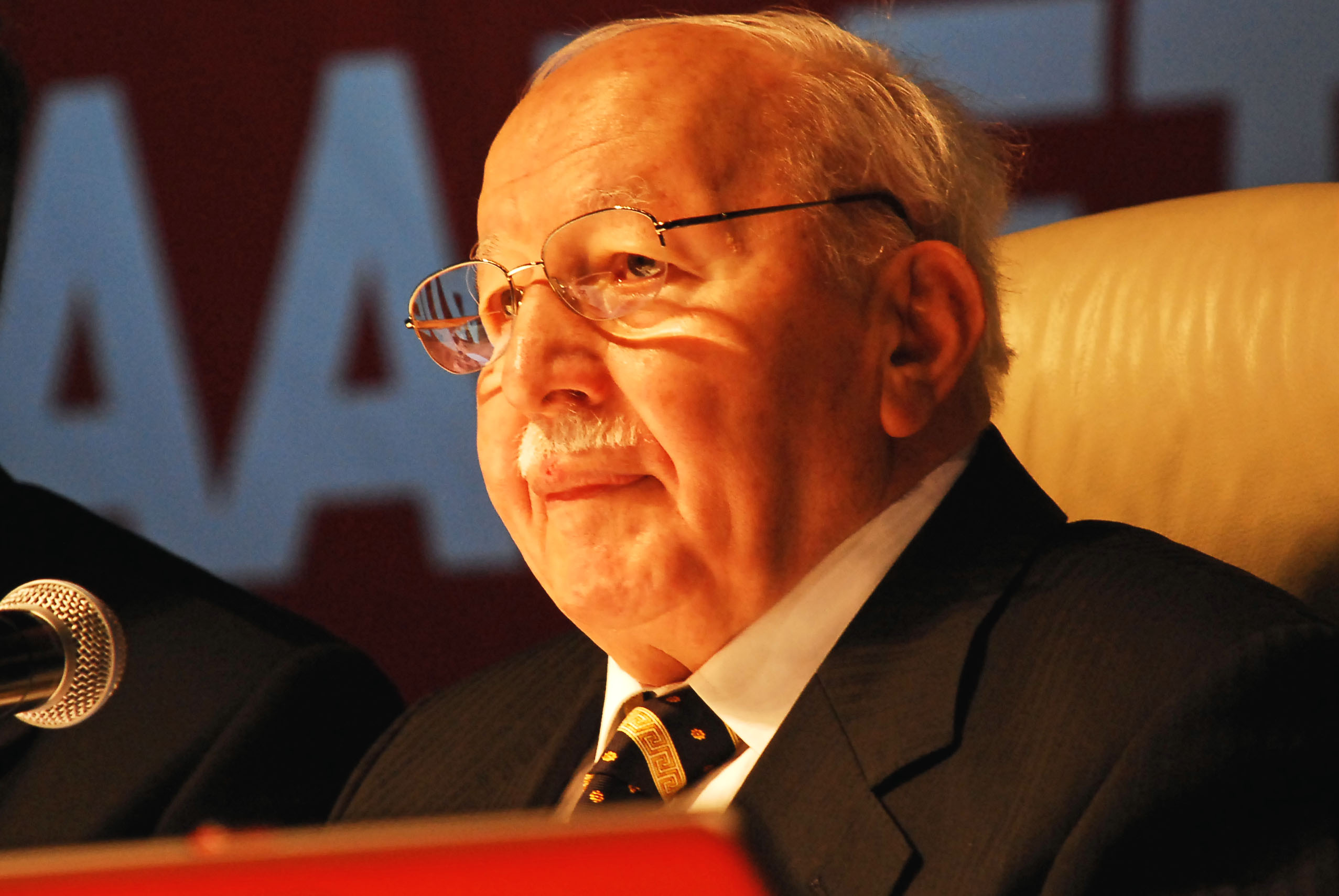
Necmettin Erbakan
 Turkey
politician•mechanical engineer•academic
Also known as: Hoca, Necmettin Erbakan
Birthday
October 29, 1926
Birth Sign
Sagittarius
Birthplace
Sinop, Turkey
Age
Died at 84
Height
5 ft 9 in (175 cm)
About
Necmettin Erbakan was a Turkish politician, mechanical engineer, and academic who served as the 23rd Prime Minister of Turkey from June 1996 to June 1997. He is historically significant as Turkey's first Islamist prime minister and the founder of the Millî Görüş (National View) movement, an ideology that sought to integrate Islamic values into the political and social fabric of the secular republic. Born in Sinop, Turkey, Erbakan earned a doctorate in engineering before transitioning into academia and eventually politics, where he founded a series of political parties over four decades.
His tenure as Prime Minister lasted exactly one year, ending in 1997 when the military issued a memorandum known as the "February 28 Process," demanding the government abandon its Islamist policies. Under intense pressure, Erbakan resigned, marking the end of his time in office. Despite being banned from politics again by the Constitutional Court in 1998, Erbakan remained a powerful figure within the Millî Görüş movement until his death in 2011.
Early Life & Background
Necmettin Erbakan entered the world on October 29, 1926, in Sinop, a city situated on the Black Sea coast of northern Turkey. His father worked as a railway employee, and his mother managed the household. The family faced financial hardships during his childhood, which instilled in him a strong work ethic and a focus on self-reliance from an early age. Erbakan attended primary and secondary schools in his hometown before moving to Istanbul to pursue higher education.
He enrolled in the Department of Mechanical Engineering at Istanbul Technical University (ITU), graduating in 1950 with a degree in mechanical engineering. He continued his studies at the same institution, earning his master's degree in 1951 and his Ph.D. in 1954 with a thesis titled "The Development of Turkey's Industrial Infrastructure." His early academic career was marked by a fascination with technology and industrialization, believing that Turkey's economic independence was tied to its technological prowess. Before entering full-time politics, he worked as a university lecturer and researcher, contributing to the development of Turkey's industrial policies. This period established his reputation as an intellectual who valued both technical expertise and moral guidance.
Career Growth
Erbakan's entry into politics began in the late 1950s, driven by his belief that the existing political parties were failing to address the spiritual and moral needs of the Turkish people. In 1962, he co-founded the National Order Party (MSP), which was banned by the military junta in 1971 following the 1971 coup d'état. Undeterred, he established the National Salvation Party (MSP) in 1972, which became a significant political force in the 1970s. The party formed coalition governments in 1974 and 1977, with Erbakan serving as Deputy Prime Minister and Minister of Industry in both administrations.
In 1983, after the 1980 military coup, all political parties were dissolved, and Erbakan was banned from politics for five years. Following the lifting of the ban, he founded the Welfare Party (RP) in 1983, which grew to become one of the largest parties in Turkey. The Welfare Party achieved its greatest electoral success in the 1994 local elections, winning control of major municipalities like Istanbul and Ankara. This victory paved the way for Erbakan to form a coalition government in 1996, making him the first Islamist prime minister in Turkish history.
Despite being banned from politics again by the Constitutional Court in 1998, Erbakan remained a powerful figure within the Millî Görüş movement. He founded the Virtue Party (FP) in 1998, which was also banned in 2001. In 2003, he established the Felicity Party (SP), continuing his political activism until his death. Throughout his career, Erbakan advocated for closer ties with Muslim nations, promoting initiatives such as the Organization of Islamic Cooperation (OIC) and the D-8 (Developing Eight) group of countries, which he helped launch in 1997.
Career Timeline
Public Image & Style
Necmettin Erbakan was portrayed by supporters as a pious, intellectual leader who fought for the rights of religious Turks in a secular state. Critics, however, viewed him as an extremist who sought to undermine Turkey's secular foundations. His signature style included traditional Turkish attire, including a fez or a turban, which reinforced his image as a devout Muslim. Media coverage of Erbakan varied depending on the political leanings of the outlet, with state-run media often portraying him negatively and independent outlets providing more balanced perspectives. His intellectual approach to politics, grounded in engineering principles, set him apart from many of his contemporaries.
Fame & Fandom (iFAMOUS Rankings)
Erbakan commanded a global presence that extended far beyond his national borders, with attention tracked across media coverage, search activity, and consumption signals worldwide. As of September 2026, the iFANN Global Fame Rankings have evaluated this person, but they do not currently hold a placement in the published rankings (Global Top 1,000 or a Top-100 scope list). His enduring status as a pivotal figure in modern Turkish history ensures he remains a subject of significant historical interest rather than transient celebrity.
His supporters do not organize under a formal fandom name; instead, they function as political constituents and ideological adherents aligned with the Millî Görüş movement. This base, historically channeled through parties such as the Welfare Party and the Felicity Party, engages with his legacy through electoral participation and parliamentary representation rather than fan-driven social media metrics or charity drives. The title "Hoca" (Teacher) remains a mark of respect for his academic background, distinguishing his relationship with followers from the adoration reserved for entertainers. While no fan-funded projects or viral campaigns exist in his name today, the movement he founded persists through his son, Fatih Erbakan, ensuring his influence remains a defining force within Turkey's conservative political sphere.
Interesting Facts and Legends
Supporters referred to Erbakan as "Hoca," meaning "Teacher," reflecting his dual identity as an engineer and religious scholar. This title distinguished him from typical politicians and highlighted his academic background. In a 1992 televised appearance on Açık Oturum, Erbakan outlined a geopolitical strategy involving Turkey, Iran, and Pakistan to counter Western influence, frequently citing the term "Zionist vision." This moment became a defining element of his political mythology, often referenced by supporters as a visionary strategy.
Before entering full-time politics, Erbakan contributed significantly to Turkey's industrial infrastructure, designing machinery and advocating for technological self-sufficiency. His resignation in 1997 is often described as a "soft coup," where the military pressured him to step down without direct intervention, a moment that remains controversial in Turkish political history. The founding of the D-8 organization stands as another iconic achievement, showcasing his commitment to global Muslim unity and economic cooperation among developing nations.
Notable Quotes
“We must turn our backs on the West and look to the East.”
“The separation of religion and state is a Western concept that does not fit our culture.”
“Our goal is to establish a just society based on Islamic values.”
Family & Personal Life
Necmettin Erbakan was married to Nermin Erbakan. They met during their early years in Istanbul, though specific details about their courtship are not widely documented in public records. Nermin Erbakan supported her husband throughout his political career, often appearing alongside him at public events and rallies. The couple had several children, including Fatih Erbakan, who later became a prominent politician and leader of the Felicity Party. Fatih Erbakan has been a key figure in carrying forward his father's political legacy, leading the Felicity Party and running for various offices. Other children include Ahmet Erbakan and others whose names are less publicly prominent. There is no public record of any other romantic relationships or marriages prior to or after his marriage to Nermin. As of his death in 2011, he was widowed; Nermin Erbakan passed away in 2019, leaving Fatih as the primary heir and successor to his father's political influence.
Notable Connections
Fatih Erbakan, Recep Tayyip Erdoğan, Abdullah Gül, Ali Bardakoğlu.
Relationships & Dating History
Necmettin Erbakan was married to Nermin Erbakan. They met during their early years in Istanbul, though specific details about their courtship are not widely documented in public records. Nermin Erbakan supported her husband throughout his political career, often appearing alongside him at public events and rallies. The couple had several children, including Fatih Erbakan, who later became a prominent politician and leader of the Felicity Party. Fatih Erbakan has been a key figure in carrying forward his father's political legacy, leading the Felicity Party and running for various offices. Other children include Ahmet Erbakan and others whose names are less publicly prominent. There is no public record of any other romantic relationships or marriages prior to or after his marriage to Nermin. As of his death in 2011, he was widowed; Nermin Erbakan passed away in 2019, leaving Fatih as the primary heir and successor to his father's political influence.
- MarriedNermin Erbakan1950 - 2011Met in Istanbul; she supported his political career until his death in 2011.
Death & Aftermath
Died
February 27, 2011 (aged 84)
Death Place
Ankara, Turkey
Cause of Death
Heart failure
Necmettin Erbakan spent his final weeks in Ankara receiving medical care at the Çankaya District Military Hospital, where he had been treated for respiratory issues and a chronic vein infection in his left leg. The former Prime Minister passed away on Sunday, February 27, 2011, at approximately 08:30 local time while under hospital supervision. Official statements from attending physicians confirmed that the cause of death was heart failure, a natural occurrence following a documented decline in health. His passing marked the conclusion of a political career that had spanned decades. Tributes flowed immediately from across the Turkish political spectrum, including formal statements from President Abdullah Gül and Prime Minister Recep Tayyip Erdoğan, who honored his legacy as a defining figure of the nation's Islamist movement.
Thousands of mourners gathered in the days following the announcement to pay respects at his home and various locations in Ankara and Istanbul, reflecting the deep impact of his Millî Görüş ideology on the country's social fabric. Media outlets published retrospective analyses of his engineering background and political philosophy, re-evaluating his role in shaping modern Turkey's religious and national discourse. A state funeral took place on Monday, February 28, 2011, with prayers led by Diyanet İşleri Başkanı Ali Bardakoğlu at the Grand National Assembly Mosque before his body was interred at Cebeci Asri Cemetery. High-ranking government officials and military leaders attended the service alongside thousands of supporters from the Felicity Party and other groups.
Following the burial, his estate was managed privately by his family without public record of wills or disputes, while his son Fatih Erbakan continued to lead the political movement founded by him. Posthumous recognition included the establishment of the Necmettin Erbakan University in Konya, which serves as a primary tribute to his contributions as an educator and engineer. A scholarship foundation bearing his name continues to operate to support students, ensuring his legacy in academia remains active.
Net Worth (Estate Value)
$0
iFANN Editorial Team estimate
As a politician and academic, Necmettin Erbakan's net worth was not derived from commercial ventures, endorsements, or entertainment contracts. His wealth came from salaries as a university professor, income from political activities, and potential real estate holdings. Specific figures regarding his net worth are not publicly disclosed, as he was not a public figure in the traditional sense of celebrity wealth. Estimates suggest his estate was modest compared to modern celebrities, consisting mainly of personal property and savings accumulated over his long career. Posthumously, his estate has been managed privately by his family, with no public record of wills or disputes. The primary revenue sources for his legacy come from the Necmettin Erbakan University and the scholarship foundation bearing his name, which continue to operate and support educational initiatives.
Awards & Accolades
View 6 records, honours and achievementsKnown For
Prime Minister of Turkey
1996 · 23rd Prime Minister
Millî Görüş Movement
1962 · Founder
D-8 Organization
1997 · Founding Member
Keywords
Sources
Quick Facts
- Profession
- politician, engineer, university teacher
- Born
- October 29, 1926
- Birthplace
- Sinop, Turkey
- Died
- February 27, 2011
- Death Place
- Ankara, Turkey
- Gender
- Male
- Spouse
- Nermin Erbakan
- Birth Sign
- Sagittarius
Personal Details
- Full Name
- Necmettin Erbakan
- Height
- 5 ft 9 in (175 cm)
- Spouse
- Nermin Erbakan
- Children
- Fatih Erbakan, Ahmet Erbakan
- Education
- Istanbul Technical University (Ph.D. Mechanical Engineering)
Frequently Asked Questions
What was Necmettin Erbakan's profession?
When did Necmettin Erbakan die?
Who succeeded Necmettin Erbakan politically?
What was the February 28 Process?
Did Necmettin Erbakan have any children?
Similar People
Join the community
fans discussing