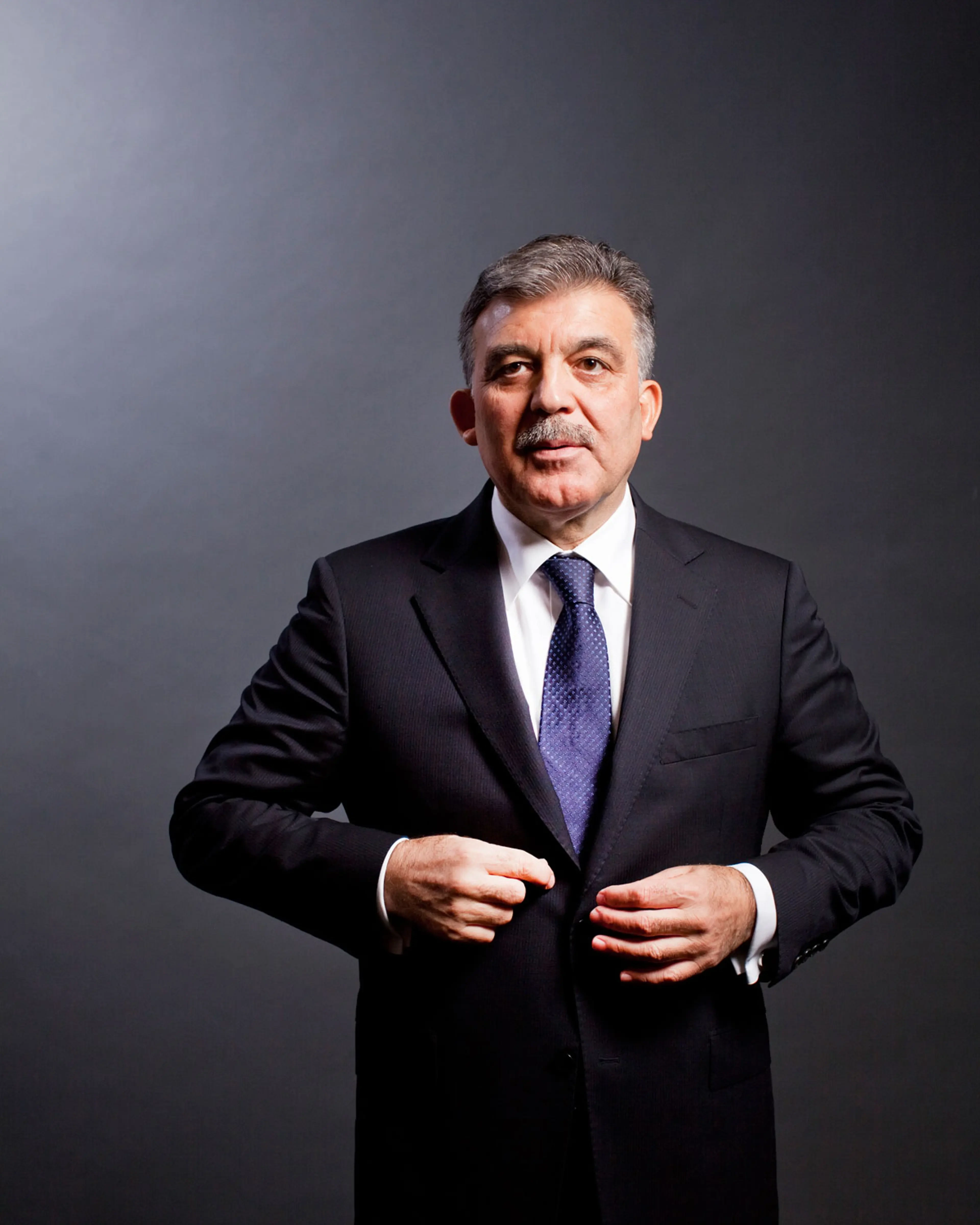
Abdullah Gül
 Turkey
Also known as: Abdullah Gül, Tayyar Gül
Birthday
October 29, 1950
Birth Sign
Sagittarius
Birthplace
Kayseri, Turkey
Age
75 years old
Height
5 ft 10 in (1.78 m)
About
Abdullah Gül is a distinguished Turkish politician, economist, and diplomat who served as the 11th President of Turkey from 2007 to 2014. As of 2026, he remains an active elder statesman engaged in international diplomacy and academic discourse. His career is defined by his pivotal role in transitioning Turkey's political landscape from Islamist roots to a more moderate, reformist stance, culminating in the founding of the Justice and Development Party (AKP). He previously held key roles including Prime Minister for four months in 2002 and Foreign Minister from 2003 to 2007. Gül is widely recognized for his calm demeanor, intellectual depth, and diplomatic tact, often serving as a bridge between secular and religious factions. Unlike celebrity figures, his public image is built on political legacy rather than entertainment fame, with supporters consisting of political constituencies and global observers. His recent activities include criticizing unilateral military actions and fostering regional dialogue, cementing his status as a transformative figure in modern Turkish history.
Early Life & Background
Abdullah Gül was born on October 29, 1950, in Kayseri, a city in central Anatolia known for its industrial history and distinct cultural identity. He grew up in a family of modest means where his father worked as a civil servant and his mother managed the household. Growing up in a religious environment, he developed a dual interest in Islamic theology and economics early on. While many politicians of his generation pursued law or military careers, Gül chose the path of academia, driven by a fascination with economic policy and its intersection with social stability. He completed his primary and secondary schooling in his hometown before moving to Istanbul to pursue higher education.
In 1971, he enrolled at Istanbul University, one of the oldest and most prestigious institutions in Turkey. There, he immersed himself in the study of economics, graduating with a Bachelor of Arts degree in 1983. His academic curiosity did not stop there; he continued his research at the same university, earning a Ph.D. in Economics in 1986. His doctoral thesis examined the economic implications of the European Economic Community, signaling his early engagement with international relations and the complex dynamics of regional integration. Before stepping onto the national political stage, Gül built a reputation as a serious scholar.
He worked as a university lecturer and researcher, teaching economics at both Istanbul University and Bilkent University. This period allowed him to refine his theoretical framework and develop a pragmatic approach to governance. His time in academia provided him with the intellectual tools necessary to navigate the turbulent waters of Turkish politics, which were characterized by frequent coups and shifting alliances. He also began contributing to policy discussions, laying the groundwork for his future role as a bridge between secular and religious factions. His physical stature stands at approximately 1.78 meters (5 feet 10 inches) with grey hair and brown eyes, reflecting the dignified appearance that would later characterize his public persona.
Career Growth
Gül's entry into public service began in 1991 when he was elected as a Member of Parliament for Kayseri, representing the Welfare Party. He maintained his seat through re-elections in 1995, 1999, 2002, and 2007, establishing himself as a steady presence within the party's parliamentary bloc. A turning point arrived in 2001 following the split of the Virtue Party. Alongside Recep Tayyip Erdoğan, Gül championed a new political direction, co-founding the Justice and Development Party (AKP) in August 2001. The AKP positioned itself as a conservative democratic party, distancing itself from overtly Islamist rhetoric while retaining support among religious conservatives.
In the 2002 general election, the AKP secured a landslide victory. Although Erdoğan was initially barred from running due to a prior conviction, Gül was appointed Prime Minister for a brief four-month period in November 2002. He stepped down in March 2003 when Erdoğan assumed the premiership. Following this transition, Gül served as Deputy Prime Minister and Minister of Foreign Affairs from 2003 to 2007. In this capacity, he played a crucial role in Turkey's EU accession negotiations and managed complex foreign policy challenges, including the country's decision not to allow US troops to use Turkish soil during the 2003 invasion of Iraq.
His political ascent reached its zenith in 2007 when he was elected as the President of Turkey. The election was marked by a significant constitutional crisis known as the "e-memorandum," where the Turkish military issued a statement opposing his candidacy. Despite this pressure, Gül won the presidency in the third round of voting, becoming the first observant Muslim to hold the office in the secular Republic of Turkey. As President, he navigated domestic and international challenges, including the Gezi Park protests in 2013. His presidency concluded in 2014, after which he returned to academia and international diplomacy, serving on advisory panels for international financial institutions. Recent developments in late 2026 include his criticism of US strikes on Iran and meetings aimed at improving regional security with Armenian officials.
Career Timeline
Public Image & Style
Gül is portrayed in the media as an elder statesman, a moderate voice, and a bridge between secular and religious factions in Turkey. His public image is characterized by a dignified demeanor, intellectual depth, and a reputation for diplomatic tact. Unlike pop stars, he does not have a formal fandom; his supporters are political constituencies and observers of global affairs. He is known for his calm demeanor and intellectual approach to diplomacy, often described as a "moderate" voice within the AKP. His speeches and statements are typically measured, focusing on dialogue and consensus rather than confrontation. In 2026, his online presence on platforms like X and Facebook reflects a focus on diplomatic communication and academic initiatives rather than celebrity engagement.
Fame & Fandom
According to the iFANN Global Fame Rankings, Abdullah Gül currently holds the 28th most famous person from Turkey. This placement reflects his enduring legacy as a former president and his continued relevance in regional diplomacy. It is a rank that speaks to his sustained presence in the public eye, even as he has stepped back from the political frontline. His fame is not the stuff of celebrity culture. There is no formal fandom name, no organized fan campaigns, and no birthday billboards. His supporters are political constituencies, his engagement is that of an elder statesman commenting on regional crises, meeting with international figures, and championing his namesake university in Kayseri. His X feed reads like a diplomatic dispatch rather than a celebrity's social media. Yet the numbers tell a story of sustained public interest. In a world where fame is often fleeting, Gül's place in the rankings reflects a career that has been anything but ordinary. From his role as a founding member of the AK Party to his presidency from 2007 to 2014, his journey has been chronicled by media worldwide, and his opinions are still sought on matters of global consequence. His social media accounts maintain a dedicated audience interested in Turkish and Middle Eastern politics, distinguishing his digital footprint from typical celebrity trends.
Interesting Facts and Legends
Abdullah Gül holds the distinction of being the first observant Muslim to serve as President of Turkey, breaking an 80-year tradition of secular leadership. This achievement is often cited as a watershed moment in the country's modern history. Another notable fact is his brief tenure as Prime Minister; he held the position for only four months in 2002 before handing it over to Recep Tayyip Erdoğan. This graceful transition is frequently discussed in political circles as a masterclass in pragmatism and loyalty to the party's broader goals. Additionally, Abdullah Gül University in Kayseri, named in his honor, has gained recognition and was recently ranked among the world's top 1000 universities by Times Higher Education. He has received numerous state honours, including the Presidential Medal of Honour and various international diplomatic awards from nations like Saudi Arabia and Pakistan. He also holds honorary doctorates from several universities for his contributions to economics and political science. His legacy includes iconic moments such as the 2007 presidential election crisis and his moderate responses during the 2013 Gezi Park protests.
Notable Quotes
“The e-memorandum was a challenge to our sovereignty, but we stood firm.”
“Regional stability requires dialogue, not unilateral actions.”
“We must ensure that our democracy is robust and inclusive.”
Family & Personal Life
Abdullah Gül has been married to Hayrünnisa Gül since 1974. Their long-standing marriage has been a constant in his personal life, providing stability throughout his rapid rise in politics. The couple has three children: two daughters and one son. They reside in Turkey, maintaining a private family life despite their high public profile. Hayrünnisa Gül, who wears the Islamic headscarf, became a cultural symbol during his presidency, challenging traditional norms regarding the attire of the First Lady of Turkey. Her presence in the presidential palace sparked commentary reflecting deep societal divides. There are no publicly documented romantic relationships outside of his marriage to Hayrünnisa Gül, and no reports of divorce or separation exist. The couple's enduring partnership is viewed as a foundational element of Gül's personal resilience.
Notable Connections
Recep Tayyip Erdoğan, Hayrünnisa Gül, Bülent Arınç, Ahmet Davutoğlu.
Relationships & Dating History
Abdullah Gül has maintained a consistent and stable personal life centered around his marriage to Hayrünnisa Gül. The couple wed in 1974, marking the beginning of a partnership that has lasted over five decades. As of 2026, Abdullah Gül remains married to Hayrünnisa Gül. Their union is characterized by mutual support and privacy, with no publicly documented romantic relationships outside of their marriage. There are no reports of divorce or separation existing in any public record. Hayrünnisa Gül, who wears the Islamic headscarf, became a cultural symbol during his presidency, challenging traditional norms regarding the attire of the First Lady of Turkey. Their long-standing marriage has been a constant in his personal life, providing stability throughout his rapid rise in politics. The couple has raised three children together, navigating the complexities of public life while maintaining a strong family unit.
- MarriedHayrünnisa Gül1974 - presentCurrentMarried since 1974; she is known for wearing the Islamic headscarf during his presidency.
Salary, Net Worth In 2026
$6 Million
iFANN Editorial Team estimate
iFANN Editorial Team estimates Abdullah Gül's net worth at approximately $6 million as of 2026, with some projections placing the range between $5 million and $10 million. This figure is derived from his extensive career in public service, academic positions, and advisory roles. His income streams include substantial government salaries earned during his tenure as Prime Minister and President. Following his presidency, he has continued to earn through lectureships and research positions at universities such as Bilkent University and his own institution in Kayseri. Additionally, Gül serves on advisory panels for international financial institutions, including the Islamic Development Bank, which provides further compensation. He owns real estate in Turkey, likely in Istanbul and Kayseri, contributing to his asset base. Unlike some high-profile celebrities, he has not engaged in major business ventures or endorsement deals. His wealth is primarily accumulated through steady public service and academic contributions, reflecting a career dedicated to politics and economics rather than commercial enterprise.
Awards & Accolades
View 5 records, honours and achievementsKnown For
President of Turkey
2007-2014 · 11th President
Minister of Foreign Affairs
2003-2007 · Diplomat
Prime Minister of Turkey
2002 · Prime Minister
Keywords
Sources
Quick Facts
- Profession
- politician, diplomat, economist
- Born
- October 29, 1950
- Birthplace
- Kayseri, Turkey
- Gender
- Male
- Spouse
- Hayrünnisa Gül
- Birth Sign
- Sagittarius
Personal Details
- Full Name
- Abdullah Gül
- Height
- 5 ft 10 in (1.78 m)
- Spouse
- Hayrünnisa Gül
- Children
- 3
- Education
- Istanbul University (B.A. Economics 1983, Ph.D. Economics 1986)
Frequently Asked Questions
Who is Abdullah Gül?
How old is Abdullah Gül?
Is Abdullah Gül still alive?
Who is Abdullah Gül's wife?
What is Abdullah Gül's net worth?
Similar People
Join the community
fans discussing