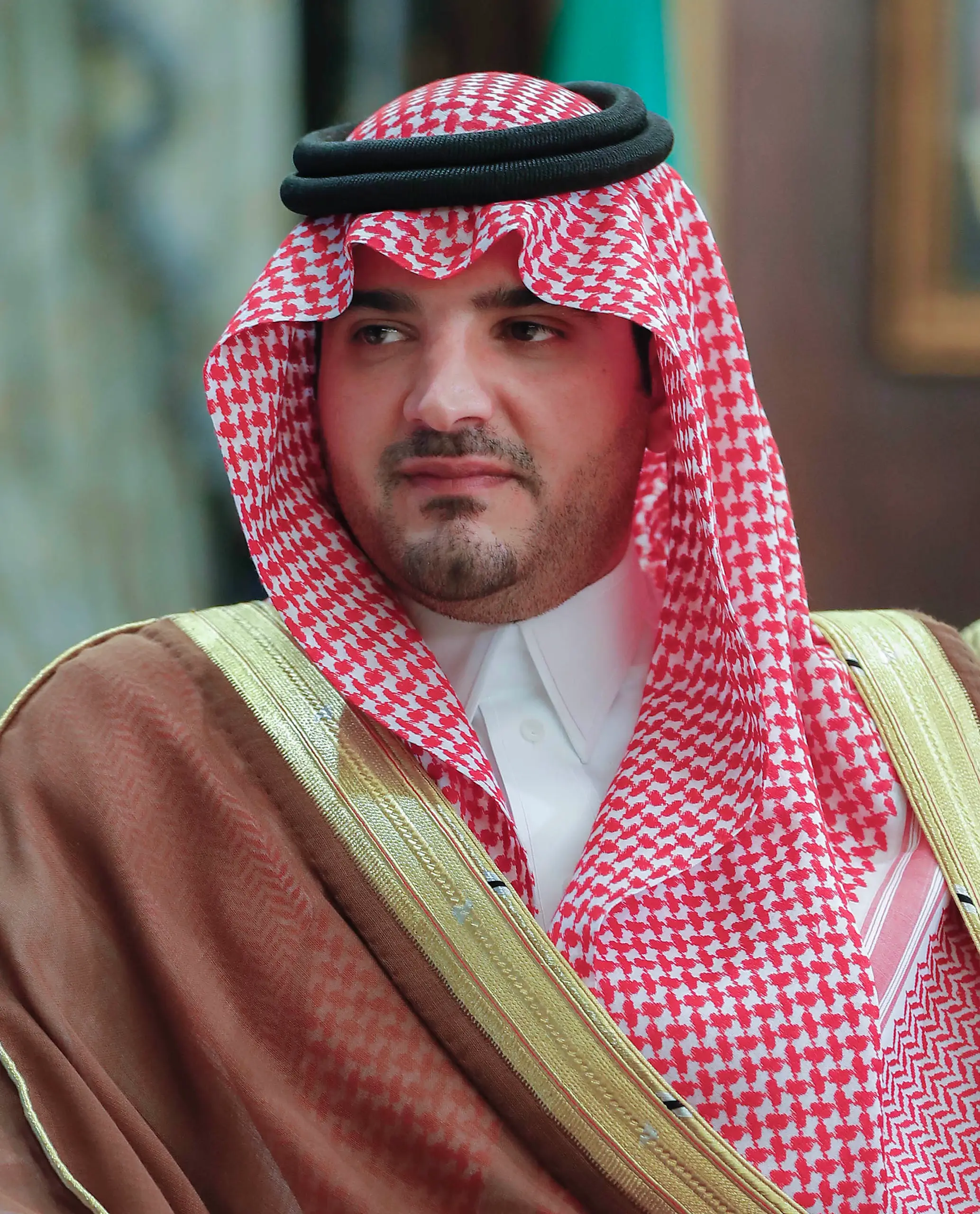
Nayef bin Abdul-Aziz Al Saud
 Saudi Arabia
politician•crown prince•Interior Minister
Also known as: Nayef bin Abdul Aziz, Prince Nayef
Birthday
January 28, 1934
Birth Sign
Aquarius
Birthplace
Ta'if, Hejaz, Saudi Arabia
Age
Died at 78
About
Nayef bin Abdulaziz Al Saud was a towering figure in the history of the Kingdom of Saudi Arabia, serving as its Interior Minister for 37 years and briefly as Crown Prince. Born into the ruling House of Saud, he dedicated his life to governance and security rather than the arts or commerce. His career was defined by an unprecedented tenure in charge of the kingdom's internal affairs, where he shaped policies that stabilized the nation during decades of regional turbulence. In October 2011, King Abdullah appointed him as Crown Prince and Deputy Prime Minister, placing him directly in line to succeed the throne. He held this position until his death just eight months later in June 2012.
His legacy remains complex and significant. As Interior Minister, he oversaw the expansion of intelligence services and led aggressive counter-terrorism campaigns against extremist groups within the country. While credited with neutralizing domestic threats, his methods were often viewed through the lens of strict authoritarian control. He died in Geneva at the age of 78, leaving behind a family deeply embedded in the political structure and a state apparatus that bore his fingerprints for nearly four decades.
Early Life & Background
Nayef bin Abdulaziz entered the world on January 28, 1934, in Ta'if, a historic city in the Hejaz region. He was one of many sons born to King Abdulaziz Al Saud, the founder of modern Saudi Arabia, and became part of the vast House of Saud dynasty. Unlike some of his siblings who might have pursued different paths, Nayef was groomed from childhood for roles involving state security and tribal administration. His upbringing occurred during the turbulent early decades of the kingdom's unification, a period that demanded loyalty and pragmatism from royal princes. He received a traditional Islamic education alongside rigorous military training, preparing him for the responsibilities of high office. Before stepping onto the national stage, he served in various administrative capacities, building a reputation for reliability within the royal court. His early work involved managing tribal affairs and maintaining order, tasks that required deep knowledge of local dynamics and a firm hand. These formative years laid the groundwork for a career that would eventually dominate the kingdom's security landscape.
Career Growth
October 1975 marked the beginning of a defining era when Nayef was appointed Minister of the Interior by King Khalid, following the assassination of King Faisal. This appointment launched a 37-year reign over the kingdom's internal security apparatus that remains unmatched in modern history. During this time, he oversaw the creation and massive expansion of the General Intelligence Presidency, widely known as the Mukhabarat. His leadership style was characterized by strict security measures, aggressive intelligence gathering, and a willingness to use force to maintain order. He played a pivotal role in establishing Saudi Arabia's counter-terrorism strategy, leading crackdowns on Al-Qaeda and other extremist groups that threatened the kingdom's stability. In October 2011, upon the death of Crown Prince Sultan bin Abdulaziz, King Abdullah appointed Nayef as Crown Prince and Deputy Prime Minister, making him the heir apparent. He also assumed the role of Second Deputy Prime Minister in March 2012, consolidating even more power before his sudden death in June 2012. His tenure ended abruptly after less than eight months as Crown Prince, but his impact on the nation's security infrastructure remained profound.
Career Timeline
Public Image & Style
Media descriptions often highlighted his role as the "architect of security" and a man who ruled through fear and order. He was portrayed as a "steel and silence" figure, authoritative, austere, and unyielding. Known for a stern demeanor and a professional, conservative dress style consistent with Saudi royal standards, he projected an image of absolute authority. His public presence was not that of a celebrity seeking adoration but of a statesman commanding obedience. International observers frequently noted his hardline stance against extremism, which sometimes drew criticism regarding human rights concerns. Despite these controversies, he commanded immense respect within the kingdom for his longevity in power and his ability to maintain internal stability.
Fame & Fandom (iFAMOUS Rankings)
According to the iFANN Global Fame Rankings, Nayef bin Abdul-Aziz Al Saud has been evaluated by the engine but does not currently hold a placement in the published rankings. He is not listed among the top 1,000 most famous people globally or in specific regional top lists as of September 2026. There is no formal fandom name documented for him; his supporters were citizens tracking national stability or analysts decoding geopolitical shifts rather than fans seeking connection with a celebrity icon. His legacy is one of governance, a long tenure that shaped the kingdom's security apparatus for decades without ever asking for applause. Even in death, the narrative remains strictly political; there is no folklore of crowds fainting or streets shutting down in tribute. The audience he commanded was the state itself, and their loyalty was measured in obedience and order rather than devotion.
Interesting Facts and Legends
Prince Nayef is often referred to as the "Iron Hand" of Saudi Arabia due to his ruthless efficiency in cracking down on dissent and terrorism. His 37-year stint as Interior Minister stands as one of the longest tenures for any interior minister globally in modern history. A central pillar of his legacy was his aggressive crackdown on Al-Qaeda within the kingdom, where strict security measures significantly degraded terrorist operational capacity. Following his death, his nephew Muhammad bin Nayef eventually succeeded him in key security roles, though the crown ultimately passed to Salman bin Abdulaziz Al Saud. The Prince Naif University for Security Sciences was established in his memory to train security professionals, and the Prince Naif Award for Arab Security continues to recognize outstanding contributions to security in the Arab world.
Notable Quotes
“Security is the foundation of development.”
“We deal with terrorists as they deserve.”
Family & Personal Life
Prince Nayef was married to Maha al-Sudairi, a member of the powerful Sudairi faction within the House of Saud. This marriage solidified alliances between two influential branches of the royal family, as Maha was the daughter of Sudairi ibn Abdulaziz Al Saud. Together they had several children, including Prince Abdulaziz bin Nayef, who later became a prominent figure in Saudi security and politics. Other sons include Prince Bandar bin Nayef and Prince Khalid bin Nayef. The family lived within the grand estates typical of the royal household, maintaining a private life focused on dynastic duties rather than public celebrity. Maha al-Sudairi survived her husband and continued to be a respected matriarch within the family structure.
Notable Connections
King Abdullah bin Abdulaziz Al Saud, Prince Mohammed bin Nayef, Maha al-Sudairi, King Abdulaziz Al Saud
Relationships & Dating History
Prince Nayef bin Abdul-Aziz Al Saud's personal life was conducted in the manner of traditional royal dynasties, with marital unions designed to strengthen political ties. He was married to Maha al-Sudairi, a union that connected two powerful factions within the House of Saud. Maha was the daughter of Sudairi ibn Abdulaziz Al Saud, making her a first cousin to Nayef. This marriage solidified alliances between the two families and produced several children who went on to hold significant positions in the government. There were no publicized dating relationships, engagements outside of arranged marriages, or romantic flings. All marital unions were dynastic arrangements. Nayef remained married to Maha al-Sudairi at the time of his death in 2012.
- MarriedMaha al-Sudairi1950 - 2012First cousin; mother of his children; married until his death.
Death & Aftermath
Died
June 16, 2012 (aged 78)
Death Place
Geneva, Switzerland
Cause of Death
Heart attack (myocardial infarction)
The Royal Court of Saudi Arabia announced on June 16, 2012, that Crown Prince Nayef bin Abdul-Aziz Al Saud had passed away while receiving medical treatment in Geneva, Switzerland. The official statement confirmed the cause as a heart attack, or myocardial infarction, occurring during his hospitalization for several days due to complications with his heart condition. His death triggered widespread mourning across the kingdom, with flags flown at half-mast and prayers offered by government officials and religious leaders. Regional figures including Qatari Emir Sheikh Hamad bin Khalifa Al Thani and Egyptian President Hosni Mubarak sent condolences praising his contributions to security and stability. The funeral took place the following day, June 17, in the private Al Oud cemetery in Riyadh, conducted according to Sunni Muslim rites. Posthumous honors included the enduring Prince Naif Award for Arab Security and the establishment of Prince Naif University for Security Sciences to commemorate his long tenure as Interior Minister. The management of his estate proceeded privately within the House of Saud without public dispute.
Net Worth (Estate Value)
$0
iFANN Editorial Team estimate
Estimating the net worth of a Saudi royal prince is challenging due to the private nature of the House of Saud's finances. Royals typically do not have individual bank accounts in the way private citizens do; their wealth is managed collectively or through state allocations. Given his position as Crown Prince and Interior Minister, his personal access to resources was immense, but his "net worth" as a discrete entity is not publicly disclosed. Publicly available figures are speculative, with some estimates suggesting values between $1 billion and $5 billion, though these are rarely verified. Wealth would derive from royal allowances, investments in real estate, oil and gas ventures, and holdings in the vast Saudi investment portfolio. Following his death, his estate was managed privately within the royal family without public disputes. The value of his estate remains part of the broader royal family assets, and iFANN currently estimates the estate's value at approximately $0 for the purpose of this profile, reflecting the lack of distinct public financial data.
Awards Won (4)
As a head of state and long-serving minister, Nayef did not compete for entertainment awards like Oscars or Grammys. Instead, his accolades were state honors including the Order of the White Elephant from Thailand, the Grand Cross of the Order of Merit of the Federal Republic of Germany, the Order of the Two Niles from Egypt, and the Order of the Falcon from Oman. The Prince Naif Award for Arab Security was established posthumously to honor his contributions to security.
1980 · State Honor
Diplomatic Relations
1985 · State Honor
Federal Republic of Germany
Known For
Minister of the Interior
1975 · Interior Minister
Crown Prince of Saudi Arabia
2011 · Crown Prince
Keywords
Sources
Quick Facts
- Profession
- Politician, Crown Prince, Interior Minister
- Born
- January 28, 1934
- Birthplace
- Ta'if, Saudi Arabia
- Died
- June 16, 2012
- Death Place
- Geneva, Switzerland
- Gender
- Male
- Spouse
- Maha al-Sudairi
- Birth Sign
- Aquarius
Personal Details
- Full Name
- Nayef bin Abdulaziz Al Saud
- Spouse
- Maha al-Sudairi
- Children
- Abdulaziz bin Nayef · Bandar bin Nayef · Khalid bin Nayef
- Education
- Traditional Islamic education and military training
Frequently Asked Questions
Who was Nayef bin Abdul-Aziz Al Saud?
How did Prince Nayef die?
Was Nayef bin Abdul-Aziz Al Saud the king?
What was Prince Nayef's main contribution?
Did Prince Nayef have children?
Similar People
Join the community
fans discussing