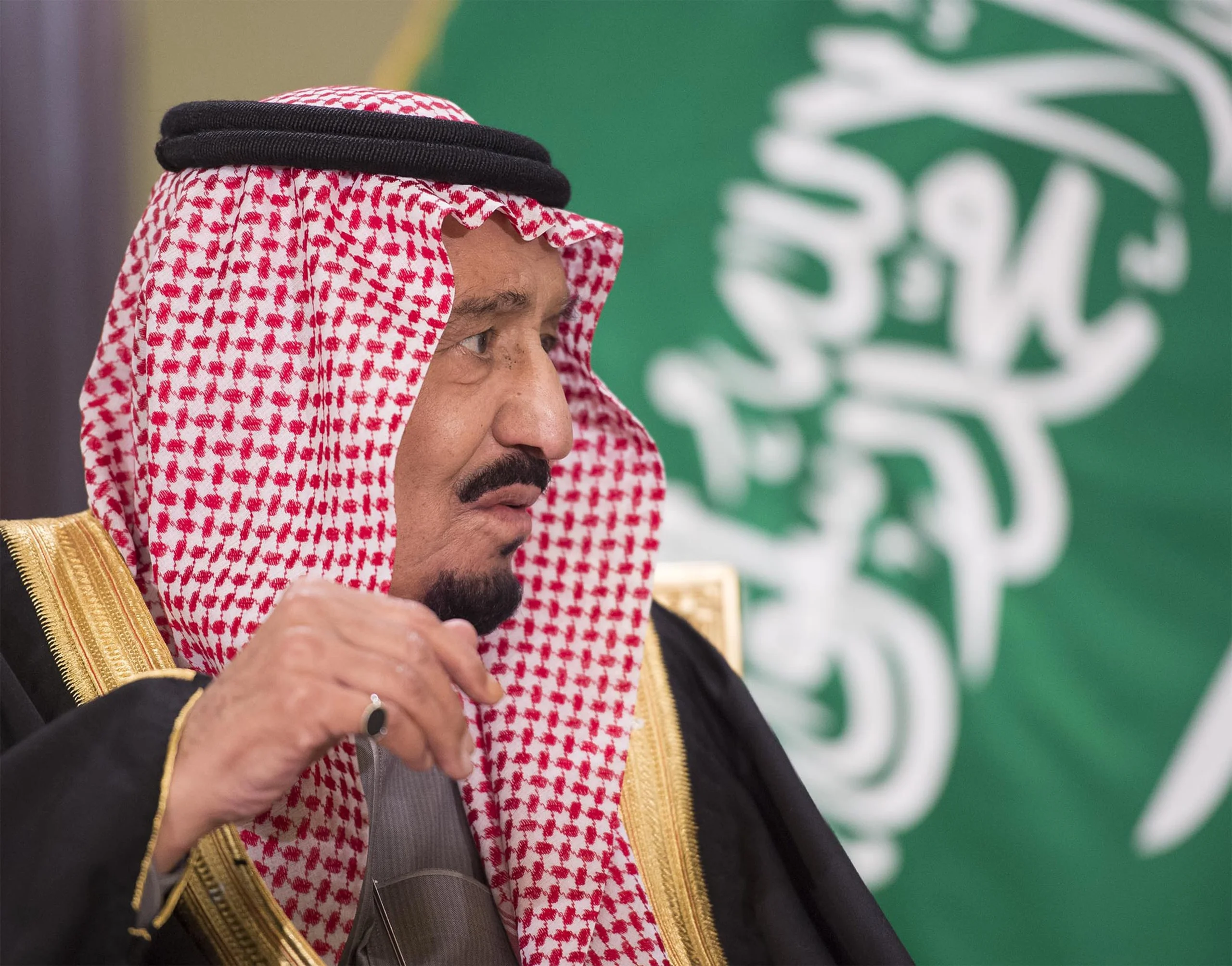
Salman bin Abdulaziz Al Saud
 Saudi Arabia
Also known as: King Salman, Salman Al Saud, Salman bin Abdul-Aziz al-Saud
Birthday
December 31, 1935
Birth Sign
Sagittarius
Birthplace
Riyadh, Saudi Arabia
Age
90 years old
Height
5 ft 9 in (175 cm)
About
Salman bin Abdulaziz Al Saud is the King of Saudi Arabia and the seventh ruler of the modern Kingdom. Born on December 31, 1935, in Riyadh, he is a son of the nation's founder, King Abdulaziz (Ibn Saud), and a prominent member of the ruling House of Saud. His lineage traces back to his mother, Hassa bint Ahmed Al Sudairi, placing him among the influential Sudairi Seven. At the time of his accession in January 2015, he became the oldest reigning monarch in the world.
As of 2026, he continues to serve as the head of state while his son, Crown Prince Mohammed bin Salman, manages the day-to-day governance of the kingdom. His reign has been marked by significant policy shifts including the launch of Saudi Vision 2030 and the historic decision to allow women to drive. Despite his advanced age and health challenges, he remains a central figure in regional geopolitics and the global energy market.
Early Life & Background
Salman was born just three years after the unification of Saudi Arabia in 1932, making him the first Saudi head of state born after the country's formation. His early life unfolded within the royal family compound in Riyadh, where he received a traditional Islamic education and training in governance. Unlike some of his siblings who pursued military careers or diplomatic roles abroad, Salman remained deeply involved in the domestic administration of the kingdom. He was known for his quiet demeanor and administrative focus rather than public flamboyance. His upbringing prepared him for a long career in public service, beginning with his appointment as deputy governor of Riyadh in 1963. This early role set the stage for an unprecedented tenure that would define his political identity for decades.
His path to power was paved through steady accumulation of experience rather than sudden discovery. While other princes sought glory in battle or diplomacy, Salman focused on the intricate details of running the capital city. He learned the ropes of local administration, infrastructure development, and tribal relations from the ground up. By the time he took over as Governor of Riyadh later in 1963, he had already spent years mastering the art of royal governance. This period of preparation allowed him to build a reputation as a capable administrator who understood the needs of the kingdom better than anyone else.
Career Growth
Salman's political career is defined by an unprecedented tenure in the governorship of Riyadh. Appointed Deputy Governor in 1963, he succeeded his brother Sultan as Governor later that same year. He served as the Governor of Riyadh for 48 years, from 1963 until July 2011. This extended period allowed him to oversee massive infrastructure projects, urban planning, and economic development in the capital, earning him a reputation as a capable administrator. In 2011, he was appointed Minister of Defense, a role that placed him at the center of the kingdom's security apparatus.
Following the death of Crown Prince Nayef in June 2012, Salman was named Crown Prince, positioning him as the heir apparent. On January 23, 2015, upon the death of King Abdullah, Salman ascended to the throne. As King, his most significant policy shifts include the launch of Saudi Vision 2030 in 2016, an ambitious plan to diversify the economy away from oil dependence, and the decision to intervene militarily in the Yemeni Civil War in March 2015. A landmark social reform occurred in September 2017 when he issued a decree allowing women to drive, ending a decades-long ban. However, due to his advanced age and health issues, executive power has increasingly shifted to his son, Crown Prince Mohammed bin Salman. In September 2022, MBS replaced his father as Prime Minister, effectively making MBS the de facto ruler while Salman retained the title of King.
Career Timeline
Public Image & Style
King Salman is portrayed by the media as a statesman of the old guard, transitioning into a figurehead while his son manages the day-to-day operations. He is seen as a stabilizer and a bridge between the traditional Wahhabi establishment and the modernizing forces led by the Crown Prince. His image is one of dignity, tradition, and gradual reform. He maintains a low public profile compared to his predecessor, often appearing only for major national announcements or religious holidays. His official presence on X (formerly Twitter) under the handle @KingSalman serves as the primary channel for official announcements, managed by the Royal Court press office.
Fame & Fandom
The general public surrounding King Salman bin Abdulaziz Al Saud does not organize into a formal fandom with a specific name, rituals, or viral campaigns typical of pop culture icons. His audience consists primarily of the citizenry of Saudi Arabia and international political observers who engage with him through official state channels rather than informal worship or fan-funded initiatives. Despite this lack of organized adoration, his global standing remains formidable according to the iFANN Global Fame Rankings. The data indicates he is the 2nd most famous person in Saudi Arabia, a position holding steady from the previous cycle. This prominence extends beyond national borders where he ranks as the 3rd most famous person from Saudi Arabia and the 6th most famous person in Middle East, both figures remaining consistent over time. These placements reflect a scale of attention that tracks global visibility across diverse media landscapes without relying on singular metrics. The monarch's status is defined by governance and geopolitical strategy rather than the celebrity dynamics often associated with fame rankings. While no fanbase chants his name or commissions billboards for his birthday, his influence permeates the region with a gravity that secures his high placement in authoritative records. The absence of a named group does not diminish the weight of his presence, which is measured by the sheer scope of his impact on the world stage.
Interesting Facts and Legends
Salman holds the distinction of being the first Saudi head of state born after the country's unification in 1932. His 48-year tenure as Governor of Riyadh is one of the longest-serving governorships in modern history. He is one of seven brothers who wielded immense power in Saudi politics, all sons of Hassa bint Ahmed Al Sudairi, known collectively as the Sudairi Seven. For much of his early reign, he avoided foreign travel to maintain a low profile, unlike his predecessors. The 2017 decree allowing women to drive remains the most iconic event of his reign, symbolizing a shift in social conservatism. In August 2026, documented state actions include reconstituting the cabinet under Crown Prince Mohammed bin Salman and issuing defense pacts involving Pakistan and Turkey. These events are verified milestones of his reign rather than folklore. No legendary anecdotes regarding crowds fainting at his appearances or viral moments of extraordinary personal reaction have been recorded; his legacy is strictly one of political succession and administrative tenure.
Notable Quotes
“We must work together to secure our future and protect our region from all threats.”
“The rights of women are an integral part of our society, and we will continue to empower them.”
“Vision 2030 is not just a plan; it is a commitment to the next generation.”
Family & Personal Life
King Salman has been married multiple times throughout his life, a common practice among the House of Saud to forge alliances. His spouses have included Fahdah bint Falah bin Hathlain Alajmi, Sultana bint Turki Al Sudairi, Nouf bint Turki Al Saud (who passed away in 2020), and Princess Haifa bint Fahd Al Saud, whom he married in 2020. He has numerous children from these marriages, with the most politically significant being his son, Mohammed bin Salman, who serves as Crown Prince and Prime Minister. Other notable sons include Prince Khaled (former Minister of Interior) and Prince Mishaal (former Minister of National Guard). As of 2026, King Salman remains officially married to Princess Haifa, though he lives largely apart from his other wives due to his health and the demands of statecraft.
Notable Connections
Mohammed bin Salman, Abdulaziz bin Salman, Khalid bin Salman, Hassan Al-Sudairi
Relationships & Dating History
King Salman has been married multiple times throughout his life, a common practice among the House of Saud to forge alliances. His first wife was Fahdah bint Falah bin Hathlain Alajmi, with whom he had several children including Prince Khalid and Prince Mishaal. He also married Sultana bint Turki Al Sudairi, another prominent wife from the Sudairi extended family, who bore him sons Khaled and Faisal. Later in life, he married Nouf bint Turki Al Saud, who passed away in 2020. In 2020, he married Princess Haifa bint Fahd Al Saud, his current spouse. He has numerous children from these marriages, with the most politically significant being his son, Mohammed bin Salman, who serves as Crown Prince and Prime Minister. As of 2026, King Salman remains officially married to Princess Haifa bint Fahd Al Saud, though he lives largely apart from his other wives due to his health and the demands of statecraft. There are no public records of romantic relationships outside of marriage, consistent with the cultural and religious norms of the Saudi monarchy.
- MarriedFahdah bint Falah bin Hathlain Alajmi1954 - presentEarly wife; mother of Prince Khalid and Prince Mishaal.
- MarriedSultana bint Turki Al Sudairi1956 - presentPart of the Sudairi extended family; mother of Prince Khaled and Prince Faisal.
- WidowedNouf bint Turki Al Saud1980 - 2020Married later in life; passed away in 2020.
- MarriedPrincess Haifa bint Fahd Al Saud2020 - presentCurrentCurrent spouse; married in 2020.
Salary, Net Worth In 2026
$15 Billion
iFANN Editorial Team estimate
Estimating the net worth of a monarch who owns the state's resources is complex. King Salman does not personally own the wealth of Saudi Arabia, which is estimated at trillions of dollars in assets like oil reserves and real estate. However, his personal fortune is derived from royal allowances, private investments, and inheritance. Research by the iFANN Editorial Team puts his fortune at around $15 billion. His wealth sources include royal stipends, dividends from private holdings, real estate investments in Riyadh and London, and stakes in private ventures. The bulk of the kingdom's wealth is managed by the Public Investment Fund (PIF), which is controlled by the Crown Prince, not the King personally. As of 2026, there is no deceased estate to report since the King is alive.
Awards & Accolades
View 9 records, honours and achievementsKnown For
Saudi Vision 2030
2016 · Initiator
Women Driving Decree
2017 · Signer
Yemen Intervention
2015 · Commander-in-Chief
Keywords
Sources
Quick Facts
- Profession
- politician, monarch
- Born
- December 31, 1935
- Birthplace
- Riyadh
- Gender
- Male
- Spouse
- Princess Haifa bint Fahd Al Saud
- Birth Sign
- Sagittarius
Personal Details
- Full Name
- Salman bin Abdulaziz bin Abdul Rahman Al Saud
- Height
- 5 ft 9 in (175 cm)
- Spouse
- Princess Haifa bint Fahd Al Saud
- Children
- Mohammed bin Salman · Khalid bin Salman · Mishaal bin Salman · Abdulaziz bin Salman · Fahd bin Salman · Turki bin Salman
- Education
- Traditional Islamic education; Royal Court training
Frequently Asked Questions
How old is King Salman?
Who is the current ruler of Saudi Arabia?
Did King Salman allow women to drive?
What is Saudi Vision 2030?
Is King Salman still alive in 2026?
Social Media
Similar People
Join the community
fans discussing