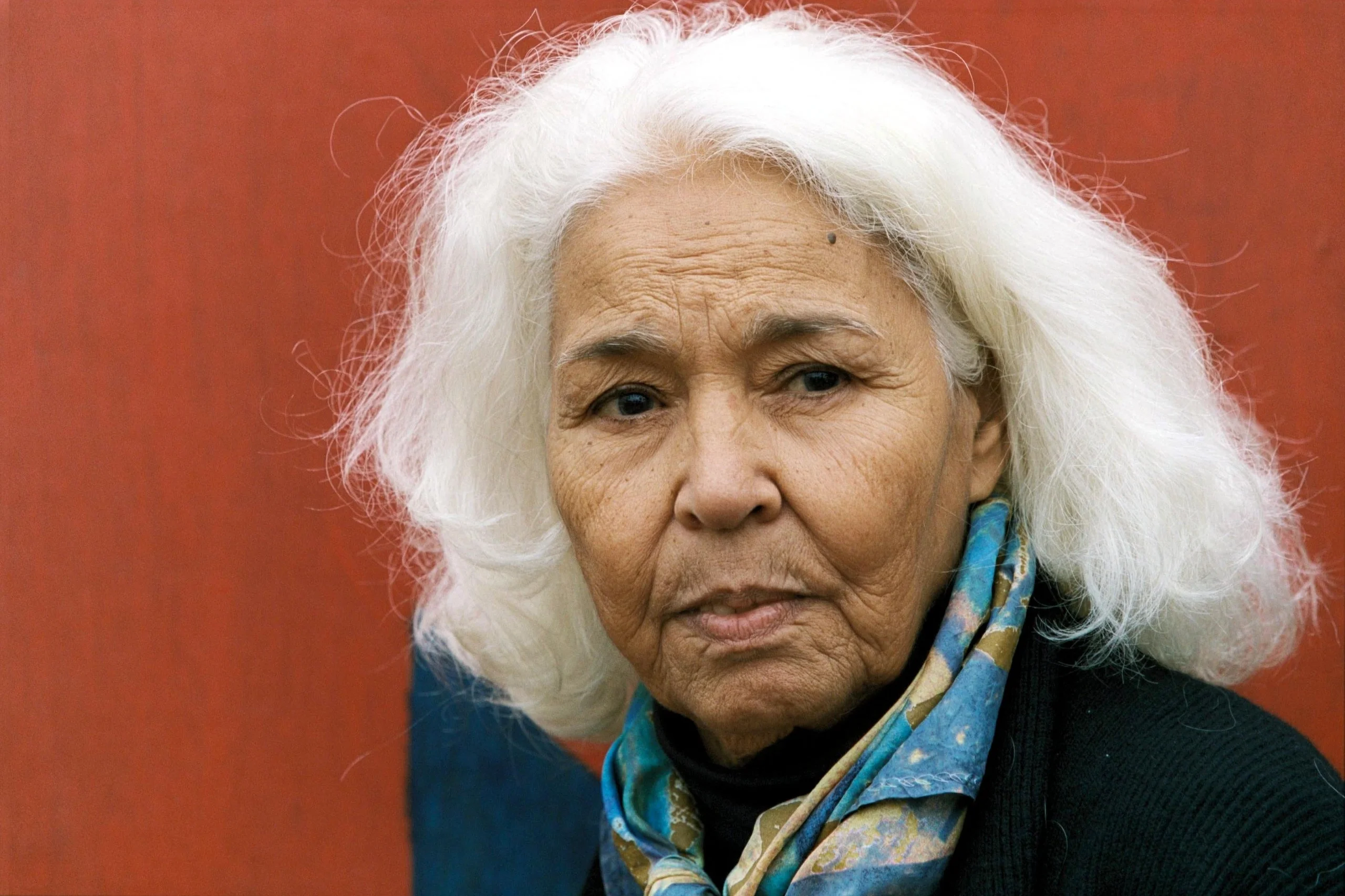
Nawal El Saadawi
 Egypt
EgyptWriter•physician•psychiatrist•activist
Also known as: Nawal el Saadaoui, Nawal al Sadaawi, Nawal Saadawi, Nawal as-Saadawi
Birthday
October 27, 1931
Birth Sign
Sagittarius
Birthplace
Kafr Tahla, Egypt
Age
Died at 89
About
Nawal El Saadawi was an Egyptian feminist writer, physician, and activist whose work challenged patriarchal norms across the Arab world and beyond. Born in 1931 in the Nile Delta village of Kafr Tahla, she became one of the most translated and widely taught Arab authors of her generation, with more than 50 books published in over 30 languages. Her writing blended medical insight with literary force, tackling female genital mutilation, sexuality, and state repression head-on.
Her landmark novel Woman at Point Zero (1975) and the searing memoir The Hidden Face of Eve (1977) remain touchstones of feminist literature. She founded the Arab Women's Solidarity Association in 1982 and served as a United Nations advisor on women's programs in Africa and the Middle East. Imprisoned under Anwar Sadat in 1981, she never softened her critique of religious and political authority.
El Saadawi died on March 21, 2021, in Cairo at age 89. Her legacy lives on in the generations of activists and writers she inspired, and in the 2008 Egyptian ban on female genital mutilation that her decades of advocacy helped bring about.
Early Life & Background
Nawal El Saadawi grew up in Kafr Tahla, a small village about 60 kilometers north of Cairo, the second of nine children. Her father, Al-Sayed El Saadawi, worked for the Ministry of Education and had campaigned against British rule during the 1919 revolution; he believed in educating daughters as much as sons. Her mother, Zaynab, came from an Ottoman Turkish family and, in her daughter's words, had a "free spirit" that she channeled into family life.
At age six, El Saadawi was subjected to female genital mutilation, an experience she later described in harrowing detail in The Hidden Face of Eve. The trauma marked her early life and sharpened her resolve. When she was ten, her family tried to arrange her marriage; she resisted by eating raw aubergine to discolor her teeth, an act that earned her a beating but also a declaration that she would never marry.
Education became her escape. She attended a school founded by Nabawyya Mousa, a pioneering advocate for women's education, and later the British School. Her academic record earned her a scholarship to Cairo University, where she graduated with a medical degree in 1955, specializing in psychiatry. She later earned a Master of Public Health from Columbia University in 1966, studying psychiatric research at Ain Shams University in Cairo between those years.
Career Growth
El Saadawi's career moved fluidly between medicine, writing, and activism. After qualifying as a doctor in 1955, she worked as a physician at Cairo University and in the Ministry of Health, where she witnessed the physical toll of patriarchal practices on rural women. She published her first book, Memoirs of a Woman Doctor, in 1958, drawing directly on those experiences.
In 1969, her study Women and Sex sparked immediate controversy for its frank examination of female sexuality. The backlash cost her the directorship of health education in 1972. She doubled down, publishing Woman at Point Zero in 1975, a novel based on interviews with a woman on death row, and The Hidden Face of Eve in 1977, which became a global feminist classic.
Her political engagement intensified in the 1980s. She founded the Arab Women's Solidarity Association in 1982 and was imprisoned for two months in 1981 under Sadat, an experience she chronicled in Memoirs from the Women's Prison. After her name appeared on a fundamentalist death list in 1993, she went into exile, teaching at Duke University and writing her memoirs. She returned to Egypt in the 2000s, continuing to publish and lecture until her death.
Career Timeline
Public Image & Style
El Saadawi's public persona was that of an unyielding radical intellectual. She was described as "unrepentant and still defiant" well into her eighties, and her writing combined medical precision with literary artistry. Critic Fedwa Malti-Douglas wrote that no living writer had a better finger on the pulse of Arab culture.
Her style was direct, confrontational, and deeply personal. She wrote about her own FGM, her prison cell, and her divorces with the same unflinching honesty she applied to political critique. This authenticity earned her a devoted readership across the Global South, particularly among women who saw their own struggles reflected in her words.
She was also a polarizing figure, condemned by religious conservatives and sometimes criticized by secular nationalists for her uncompromising stance. Yet her influence endured: she was the most widely taught and translated Arab woman writer in English, and her face became synonymous with Arab feminism worldwide.
Fame & Fandom
Nawal El Saadawi was a revolutionary voice whose influence transcended borders, cementing her status as a global icon of feminist resistance. In August 2026, the iFANN Global Fame Rankings placed her as the 98th most famous person in Egypt, while simultaneously ranking her as the 28th most famous person from Egypt. These positions held steady from the previous cycle, reflecting a consistent legacy rather than fleeting celebrity. Her fame stems not from pop culture rituals but from decades of intellectual labor that challenged patriarchal norms across the Arab world and beyond. Unlike modern stars with organized fan clubs, El Saadawi cultivated a community of readers, scholars, and activists who viewed her work as foundational texts for human rights advocacy. There is no official fandom name for her supporters; instead, her following consists of those drawn to her unyielding defiance against state repression and religious dogma. She engaged the public through lectures and writings, often confronting authorities rather than seeking adoration. Her story resonates deeply within academic circles and women's rights organizations, where her books remain essential reading. The absence of fan campaigns or merchandise underscores the serious nature of her impact, which relies on the enduring power of her ideas rather than commercial engagement. Even after her passing, her reputation as a fearless dissident continues to inspire new generations to question tradition and fight for equality.
Interesting Facts and Legends
El Saadawi proudly embraced her dark skin, stating she stopped hiding it once she realized Egypt is in Africa, not the 'Middle East', a term she refused to use. She called Hillary Clinton and Margaret Thatcher 'patriarchal women,' arguing that powerful women who uphold patriarchy are not feminists. At age ten, she told her grandmother she would never marry, yet she married three times anyway. Her novel Woman at Point Zero was named one of the 100 most important African books of the twentieth century. A legendary story from her time in prison recounts how she wrote parts of her book Woman at Point Zero on toilet paper rolls due to a lack of resources, a detail that has become iconic in telling the story of her resilience. Another widely retold moment involves her forced resignation as head of the Egyptian General Authority for Health Services after publishing Women and Sex, an event that led to her arrest and imprisonment without trial. This incident launched her career as a global dissident and cemented her status as a martyr for free speech after surviving an assassination attempt in 1981. Upon her death in 2021, tributes described her as the 'Godmother of Egyptian Feminism' and a 'feminist firebrand'.
Notable Quotes
“I stopped hiding my dark skin very early in my life, since I discovered Egypt is in Africa, not in the so-called Middle East. In fact, I never use the term Middle East.”
“I was born a rebel. I have always been a rebel.”
“The truth is that the woman is the mirror of the society.”
Family & Personal Life
El Saadawi's family shaped her politics from the start. Her father, Al-Sayed, was a government official who had fought British occupation, and her mother, Zaynab, came from an Ottoman Turkish lineage. She was the second of nine children, and her grandmother's sexist remark that "a boy is worth 15 girls at least" haunted her for years.
She married three times, each union reflecting her fierce independence. Her first husband, fellow medical student Ahmed Helmi, divorced her after two years; they had a daughter, Mona Helmy. Her second marriage, to a professional colleague, ended when he demanded she stop writing. Her third husband, novelist Sherif Hatata, was a former political prisoner; they were together for over four decades before divorcing in 2010. They had a son, Atef Hatata.
At the time of her death in 2021, she was divorced and lived alone in Cairo, still writing daily.
Notable Connections
El Saadawi's life intersected with key figures in Egyptian intellectual and political life. Her third husband, Sherif Hatata, was a novelist and former political prisoner. She was influenced by Nabawyya Mousa, a pioneer of women's education, whose school she attended. Her work was championed by critics like Fedwa Malti-Douglas and George Tarabishi, who saw her as the principal exponent of the Arabic feminist novel.
Relationships & Dating History
El Saadawi's personal life was as unconventional as her politics. She married three times, despite vowing at age ten never to marry. Her first marriage, to fellow medical student Ahmed Helmi, began in 1955 and ended in divorce two years later; they had one daughter, Mona Helmy.
Her second marriage, to a professional colleague named Rashad Bey, collapsed when he demanded she give up writing. She refused, and the marriage ended in divorce. She later described this as a defining moment in her commitment to her craft.
Her third and longest marriage was to novelist Sherif Hatata, a former political prisoner she wed in 1964. They had a son, Atef Hatata, and remained together for over 40 years before divorcing in 2010. At the time of her death in 2021, she was divorced and single, having not remarried after Hatata.
- MarriedAhmed Helmi1955 - 1957Fellow medical student; marriage ended in divorce after two years; had daughter Mona Helmy.
- MarriedRashad BeyProfessional colleague; divorced after he demanded she stop writing.
- MarriedSherif Hatata1964 - 2010Novelist and former political prisoner; marriage lasted over 40 years; had son Atef Hatata.
Death & Aftermath
Died
March 21, 2021 (aged 89)
Death Place
Unknown
Cause of Death
Unknown
Nawal El Saadawi died on March 21, 2021, at the age of 89. The confirmation of death appears to have been issued via family statements and subsequent media coverage by outlets such as The Guardian and BBC News.
The public reaction to her death was immediate and widespread among peers, institutions, and officials. Tributes poured in from global feminist circles and human rights organizations, recognizing her as a pioneering figure who challenged tradition and patriarchy throughout her life. Media outlets, including The Guardian and Africa Is a Country, published extensive obituaries and retrospectives highlighting her lifelong conflict with religious and political authorities over issues like female genital mutilation, sexuality, and sex work. Her final days and last public appearances are not documented in the provided snippets, though it is noted that she remained an active voice for women's rights and socialism until her death.
Her legacy continues through her existing body of work, most notably her 1973 novel Woman at Point Zero. Her status as a self-proclaimed historical, socialist feminist and a long-time activist ensures her continued influence in discussions regarding women's rights in Islam and the Arab world.
Net Worth (Estate Value)
$5 Million
iFANN Editorial Team estimate
As a writer and activist rather than a commercial entertainer, El Saadawi's financial standing remained modest and never the focus of public record. Her income derived primarily from book royalties, speaking fees, and academic positions, including a teaching stint at Duke University in the 1990s. Her literary estate continues to earn royalties from her more than 50 books, which remain in print in over 30 languages. Works like Woman at Point Zero are assigned in university courses across the world, providing a steady stream of income. However, exact figures for her estate's annual earnings or total value have never been publicly documented. Per iFANN's editorial analysis, estimates of her net worth at the time of her death place it around $5 Million, reflecting decades of intellectual labor and global readership rather than commercial ventures. The estate is managed by her heirs, who have kept her work in circulation and preserved her archive.
Awards Won (3)
El Saadawi received the North–South Prize from the Council of Europe in 2004, the Inana International Prize in Belgium in 2005, and the Seán MacBride Peace Prize from the International Peace Bureau in 2012. She also held honorary degrees from universities on three continents.
2012 · Peace
Lifetime achievement
2005 · Literature
Lifetime achievement
Known For
Woman at Point Zero
1975 · Author
The Hidden Face of Eve
1977 · Author
Memoirs of a Woman Doctor
1958 · Author
Memoirs from the Women's Prison
1983 · Author
A Daughter of Isis
1999 · Author
Keywords
Sources
Quick Facts
- Profession
- Writer, physician, psychiatrist, activist
- Born
- October 27, 1931
- Birthplace
- Kafr Tahla, Egypt
- Died
- March 21, 2021
- Gender
- Female
- Spouse
- Sherif Hatata (1964–2010)
- Birth Sign
- Sagittarius
- Education
- MD, Cairo University; MPH, Columbia University
Personal Details
- Full Name
- Nawal El Saadawi
- Spouse
- Sherif Hatata
- Children
- Mona Helmy, Atef Hatata
- Education
- MD from Cairo University (1955), Master of Public Health from Columbia University (1966)
Frequently Asked Questions
What is Nawal El Saadawi famous for?
Why was Nawal El Saadawi imprisoned?
How many books did Nawal El Saadawi write?
Was Nawal El Saadawi married?
What happened to Nawal El Saadawi's daughter?
Similar People
Join the community
fans discussing