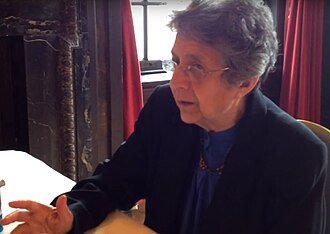
Leila Ahmed
 Egypt
EgyptBirthday
May 29, 1940
Birth Sign
Gemini
Birthplace
Heliopolis, Cairo, Egypt
Age
86 years old
About
Leila Ahmed is an Egyptian-American scholar of women's studies and religion, best known for her transformative research on gender and Islam. As the Victor S. Thomas Professor of Divinity Emerita at Harvard Divinity School, she has shaped how academics and the public understand the historical roots of women's roles in Muslim societies. Her landmark book Women and Gender in Islam (1992) remains a foundational text in feminist religious scholarship.
Today, Ahmed is celebrated as a pioneering voice who challenged Western stereotypes about Muslim women and offered nuanced, historically grounded perspectives. Her work continues to influence scholars, students, and activists worldwide. She has received numerous honors, including the Grawemeyer Award in Religion and recognition as a Carnegie Corporation Great Immigrant. Ahmed's writing and teaching have opened new pathways for examining faith, culture, and gender.
Early Life & Background
Leila Ahmed was born on May 29, 1940, in Heliopolis, a suburb of Cairo, Egypt. Her childhood unfolded during a period of political upheaval. Her father, a civil engineer, publicly criticized Gamal Abdel Nasser's Aswan High Dam project, and after the 1952 Free Officers Movement, the family faced political ostracism. This experience shaped Ahmed's lifelong skepticism of authoritarian nationalism.
Growing up in an aristocratic Egyptian household, Ahmed was exposed to both traditional Muslim values and liberal, cosmopolitan influences. She attended the University of Cambridge in the United Kingdom, where she earned her undergraduate and graduate degrees. Her academic training focused on literature and Middle Eastern studies, laying the groundwork for her later interdisciplinary work.
After completing her studies, Ahmed moved to the United States, where she began her teaching career. Her early academic positions included roles at the University of Massachusetts-Amherst, where she would later direct the Women's Studies and Near Eastern Studies programs. These formative years were marked by a deepening interest in how gender and religion intersect in Islamic contexts.
Career Growth
Leila Ahmed's breakthrough came in 1992 with the publication of Women and Gender in Islam: The Historical Roots of a Modern Debate. The book offered a meticulous historical analysis of women's positions in Arab Muslim societies, challenging both Western stereotypes and patriarchal interpretations. It quickly became a cornerstone of feminist scholarship and is widely taught in universities.
In 1999, Ahmed made history as the first professor of women's studies in religion at Harvard Divinity School. She was appointed to the Victor S. Thomas Professor of Divinity chair in 2003, a position she held until her retirement in 2020. During her tenure, she mentored countless students and expanded the field of Islamic feminist studies.
Her memoir A Border Passage: From Cairo to America, A Woman's Journey (1999) explored her multiple identities as a woman, Muslim, Arab, and Egyptian. In 2011, she published A Quiet Revolution: The Veil's Resurgence, from the Middle East to America, which won the Grawemeyer Award in Religion in 2012. This work analyzed the contemporary re-adoption of the veil, offering a nuanced perspective on Muslim women's agency.
Career Timeline
Public Image & Style
Leila Ahmed is widely regarded as a trailblazer in Islamic feminist scholarship. Her public image is that of a rigorous, thoughtful academic who challenges easy narratives. She is known for her accessible writing style, which bridges academic and general audiences. Media portrayals often highlight her as a bridge between Western and Islamic perspectives, offering a balanced and historically informed voice.
Her work has been praised for its nuance and depth, and she is frequently invited to speak at conferences and on public radio programs. Ahmed's presence on platforms like On Being has introduced her ideas to a broader audience, where she discusses topics such as the veil, Muslim women, and cultural misunderstanding. She is respected for her willingness to question both Western secular assumptions and Islamic orthodoxy.
Fans and followers appreciate her personal honesty, particularly in A Border Passage, where she openly navigates her complex identity. She is seen as a mentor to younger scholars and a moral compass for those exploring the intersection of religion and feminism.
Fame & Fandom
Leila Ahmed commands a distinct sphere of influence defined not by mass-market adoration but by profound academic authority and the enduring resonance of her scholarship on gender and Islam. Her audience consists primarily of students, theologians, and readers engaged with feminist religious studies rather than a pop-culture fanbase seeking celebrity rituals or organized campaigns. There is no documented collective moniker for her supporters, nor are there fan-driven projects or viral moments associated with her public appearances; interaction remains strictly professional, centered on lectures, book tours, and media interviews regarding her research. While her work has sparked significant global discourse, it lacks the folklore of stadium-filling crowds or internet-driven hysteria typical of entertainers. The iFANN Global Fame Engine evaluated this profile in August 2026 and determined that Leila Ahmed does not currently hold a placement in the published rankings. Consequently, she is not listed among the Global Top 1,000 or any scope-specific top-100 lists, reflecting her status as a distinguished scholar rather than a ranked public figure in the metrics of general fame.
Interesting Facts and Legends
Leila Ahmed was born in Heliopolis, a Cairo suburb noted for its modern architecture and diverse demographics. Her father's stance against the Aswan High Dam project subjected their family to political backlash during her formative years. She describes a childhood where inner character outweighed outward religiosity, and she remains fluent in both Arabic and English, frequently translating classical Islamic texts. A deep appreciation for literature led her to study at Cambridge before she pivoted to religious studies. Ahmed has long criticized Arab nationalism for suppressing diversity, and her memoir highlights the profound influence of her grandmother and female relatives on her faith. Her books have been translated into Turkish and Indonesian, demonstrating their international reach. Among her most celebrated milestones is the 1992 publication of Women and Gender in Islam, a text widely cited for redefining historical debates on women in Muslim societies. In 2013, she received the Grawemeyer Award in Religion for her 2011 work A Quiet Revolution, cementing her legacy as a pathbreaker in understanding the history of the veil and gender dynamics.
Notable Quotes
“What was important was how you conducted yourself, your attitude towards others, and how you were in your heart.”
“The veil is not simply about oppression; it is a complex symbol with multiple meanings.”
“I think of myself as a Muslim woman who is also a feminist, and I have found a way to reconcile those identities.”
Family & Personal Life
Leila Ahmed was born into an upper-class Egyptian family in Heliopolis. Her father was a civil engineer who worked on major infrastructure projects and later became an outspoken critic of Nasser's policies. Her mother, though less publicly documented, came from a similar aristocratic background. The family's political stance after the 1952 revolution led to social and professional isolation.
Ahmed has shared that her grandmother and aunts played significant roles in her upbringing, offering a counter-narrative to the male-dominated public sphere. These women, along with her mother, deeply influenced her views on gender and faith. In her memoir, she recounts how her mother's quiet dignity and her grandmother's religious devotion shaped her understanding of Muslim womanhood.
Ahmed has no public record of marriage or children. She has dedicated her life to scholarship and teaching, maintaining a private personal life. She currently lives in the United States, though she has not publicly detailed her living arrangements.
Notable Connections
Leila Ahmed has been associated with Harvard Divinity School, where she held the Victor S. Thomas chair. She has also been linked to the University of Massachusetts-Amherst, where she taught for nearly two decades. Her work has been discussed in conversation with other scholars of Islam and feminism, including Azadeh Moaveni, a journalist and author. Ahmed is also connected to the Carnegie Corporation of New York, which honored her as a Great Immigrant in 2024.
Relationships & Dating History
Leila Ahmed has kept her personal life extremely private. There is no public record of her dating history, marriages, or partnerships. She has never spoken publicly about a spouse or partner, and it appears she has remained single throughout her life. Her focus has been on her scholarship and teaching.
As of 2026, Leila Ahmed is reportedly single. She has no known children. Her legacy is defined by her intellectual contributions rather than her personal relationships.
Salary, Net Worth In 2026
$2 Million
iFANN Editorial Team estimate
Leila Ahmed's net worth is not publicly documented, but as an academic of her stature, her earnings have come primarily from her professorships and book royalties. Her seminal works, especially Women and Gender in Islam, have been widely adopted in university courses, generating steady royalty income. Per iFANN's editorial analysis, estimates put her net worth at around $2 Million as of 2026, reflecting decades of scholarly work and speaking engagements. During her time at Harvard, she held one of the most prestigious chairs in divinity, which likely came with a substantial salary. Her books have been translated into multiple languages, expanding her readership. While she has not been known for lavish spending, her financial standing is consistent with a distinguished academic career.
Awards Won (1)
Leila Ahmed has received the Grawemeyer Award in Religion in 2012 for A Quiet Revolution. She was also named a 2024 Great Immigrant by the Carnegie Corporation, recognizing her contributions to American society.
2012 · Religion
A Quiet Revolution: The Veil's Resurgence, from the Middle East to America
Known For
Women and Gender in Islam
1992 · Author
A Quiet Revolution: The Veil's Resurgence
2011 · Author
A Border Passage
1999 · Author
Harvard Divinity School
1999 · Professor of Women's Studies in Religion
Keywords
Sources
Quick Facts
- Profession
- university teacher, writer
- Born
- May 29, 1940
- Birthplace
- Heliopolis, Cairo, Egypt
- Gender
- Female
- Birth Sign
- Gemini
- Education
- University of Cambridge
- Awards
- Grawemeyer Award in Religion (2012)
Personal Details
- Education
- University of Cambridge (BA, MA, PhD)
Frequently Asked Questions
Who is Leila Ahmed?
What is Leila Ahmed's net worth in 2026?
Is Leila Ahmed still active in 2026?
What is Leila Ahmed best known for?
How does Leila Ahmed's work compare to other scholars of Islam and feminism?
Similar People
Join the community
fans discussing