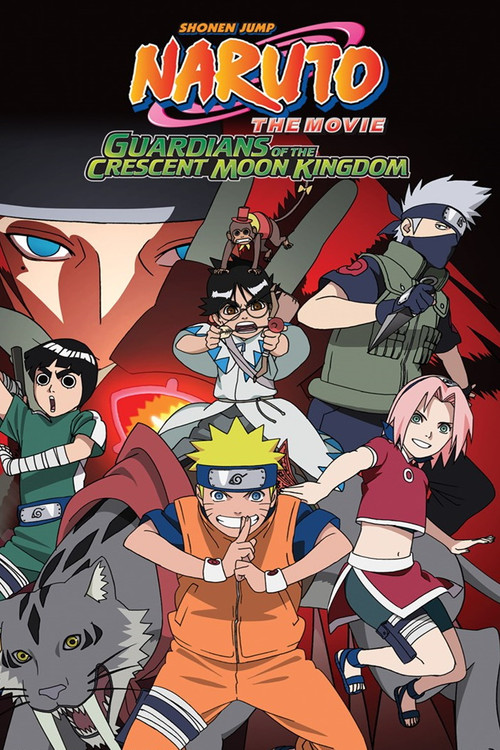
In the summer of 2006, as the original Naruto anime was winding down, the franchise's third theatrical outing took a sharp detour from village-saving heroics. Guardians of the Crescent Moon Kingdom drops Naruto Uzumaki, Sakura Haruno, Rock Lee, and Kakashi Hatake into a B-rank escort mission with a twist: their charge is Michiru, the outrageously wealthy prince of the Land of the Moon, and his bratty son Hikaru. What starts as a globe-trotting tourist trip quickly curdles when the team arrives home to find a coup has seized the kingdom.
Directed by Toshiyuki Tsuru, the film leans into comedy before pivoting to action, contrasting the ninja's discipline with the royals' entitlement. Produced by Pierrot, TV Tokyo, Shueisha, and a consortium of studios, it grossed roughly $3.2 million worldwide, making it the lowest-earning of the three pre-Shippuden films. Yet it carved out a niche: Rock Lee's Drunken Fist duel became a fan favorite, and the story's focus on privilege versus sacrifice gives it a distinct flavor within the franchise.
The movie also marks a transition point. Released just months before the original series ended, it was the last theatrical feature set in that era, paving the way for the Naruto Shippuden films. For completionists, it's a light, self-contained adventure that tests the team's chemistry outside the usual high-stakes arcs.
Availability and pricing can change. Confirm on the provider's site before purchasing.
PlotSpoiler-free
The mission begins as a simple escort job. Naruto, Sakura, Lee, and Kakashi are assigned to protect Michiru, the flamboyant prince of the Land of the Moon, and his young son Hikaru as they embark on a lavish world tour. From the start, the ninja clash with their charges: Michiru treats them like servants, while Hikaru throws tantrums and mocks their profession. The group travels through various international locales, with the prince spending extravagantly and ignoring his duties back home.
When they finally reach the Crescent Moon Kingdom, they discover disaster. A ruthless minister named Shabadaba has staged a coup, seizing the palace with the help of the Three Dark Ninja, elite mercenaries wielding powerful chakra armor. The rightful ruler, Kakeru, is imprisoned, and Shabadaba's forces control the kingdom. The ninja's mission shifts from bodyguard duty to liberation.
As the team fights to protect the royals and reclaim the kingdom, the pampered prince and his son are forced to confront reality. Hikaru, in particular, begins to change, witnessing the courage and sacrifice of the ninja who swore to protect him despite his earlier cruelty. The film builds toward a climactic assault on the palace, with Rock Lee taking on one of the Dark Ninja in an extended taijutsu battle, and Naruto preparing to face the enemy leader.
Throughout, the story explores themes of responsibility and true strength. Naruto, who grew up an orphan, finds himself defending a boy who had everything handed to him, yet he refuses to abandon the mission, embodying the Will of Fire. The narrative arc follows the classic pattern of culture clash, revelation, struggle, and a final push to restore order, all set against the backdrop of a kingdom in turmoil.
Generally considered a lower-tier entry in the Naruto movie franchise, this installment delivers solid action, especially Rock Lee's taijutsu battles, but suffers from a formulaic plot and underdeveloped villain. Fans and critics often rank it near the bottom of the series' theatrical outings, though it offers some character growth for the spoiled prince and his son.
 Japan