
Nargis
 Pakistan
film actor•screenwriter•politician
Also known as: Fatima Rashid, Nirmala Dutt, Nargis Dutt
Birthday
June 1, 1929
Birth Sign
Gemini
Birthplace
Rawalpindi, British India (now Pakistan)
Age
Died at 51
Height
5 ft 4 in (163 cm)
About
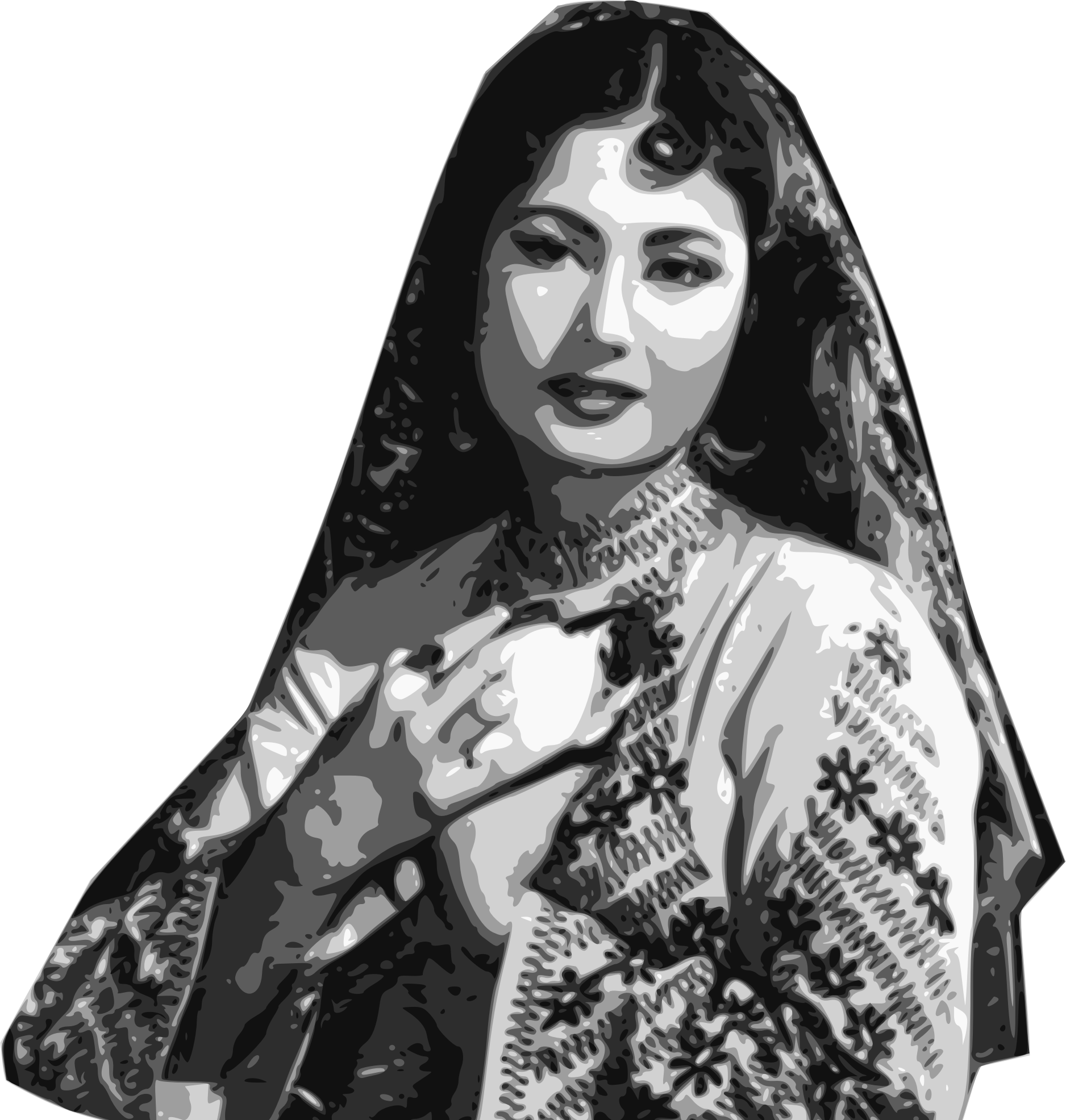
Nargis Dutt (born Fatima Rashid; 1 June 1929 – 3 May 1981), known mononymously as Nargis, was an Indian actress and politician who worked in Hindi cinema. Regarded as one of the greatest actresses in the history of Hindi cinema, she is widely recognized for portraying sophisticated and independent women across a diverse range of genres, from screwball comedy to intense literary drama. Standing at approximately 5 feet 4 inches (163 cm), she possessed a timeless elegance defined by her expressive eyes and distinctive saree draping style. Her ability to convey deep emotion without dialogue set her apart as a masterful performer.
Among the highest-paid actresses of the 1950s and 1960s, Nargis achieved unprecedented success that transcended national borders. She was the first Indian actress to receive the Padma Shri civilian honor in 1971. In 2011, Rediff.com ranked her as the "Greatest Indian Actress of All Time," cementing her status as a cultural icon. Her career spanned three decades, during which she became a symbol of the modern Indian woman in post-independence cinema. Beyond her acting prowess, she made a historic transition from a top Bollywood star to a Member of Parliament, serving in the Rajya Sabha starting in 1980. Her legacy is further honored by the annual Nargis Dutt Award for Best Feature Film on National Integration and the Nargis Dutt Memorial Cancer Foundation, established to fight cancer.
Nargis's filmography includes some of the most significant works in Asian cinema history. She won the Filmfare Award for Best Actress for her iconic role in Mother India (1957) and the inaugural National Film Award for Best Actress for Raat Aur Din (1967). Her performances in films like Awaara and Shree 420 are frequently cited as defining moments in the golden age of Indian cinema. She remains a legendary figure whose influence continues to inspire generations of actors and filmmakers worldwide.
Early Life & Background
Fatima Rashid entered the world on June 1, 1929, in Rawalpindi, which was then part of British India and is now located in Pakistan. Her father, Abdul Rashid, was a wealthy businessman who moved the family to Karachi when she was young. Despite her privileged upbringing, Nargis found herself drawn to the performing arts from a very young age. Her entry into the industry was not a calculated career move but rather a chance encounter that changed the trajectory of Indian cinema forever.
At just five years old, she made her uncredited screen debut in the 1934 film Naachwali. This early exposure did not immediately launch a professional career, as she continued her education while occasionally appearing in small roles. However, her talent was undeniable, and she returned to the screen more seriously in the early 1940s. Her professional acting debut came with the 1942 film Tamanna, where she played a supporting role alongside veteran actors. The following year, 1943, marked a significant turning point when she secured her first leading role in the film Taqdeer.
Before her massive breakthrough in 1949, Nargis navigated the industry with a mix of determination and natural charisma. She appeared in various films during the mid-1940s, honing her craft and building a reputation for emotional depth. During this period, she also showcased her musical talents, composing music for some of her early films and demonstrating her versatility as a singer. These early years were formative, establishing her as a versatile child artist who could transition seamlessly into adult roles as she grew older. The late 1940s saw her gaining traction with notable roles that showcased her ability to handle complex characters, setting the stage for the double hit that would define her career.
Career Growth
1949 proved to be the defining year for Nargis, launching her into superstardom with two massive hits: the romance Andaz and the musical Barsaat. These films established her as a leading lady capable of carrying a movie on her own. Her partnership with director Raj Kapoor in the 1951 crime drama Awaara elevated her status to international heights. The film became a sensation not only in India but also in the Soviet Union and China, where she became a household name. Scenes featuring her were replayed endlessly, and fans reportedly fainted upon seeing her image in the USSR. This global phenomenon marked a historic moment for Indian cinema, putting it on the world map.
Following a brief period of lower output, she reemerged triumphantly with the comedy-drama Shree 420 (1955) and the romantic comedy Chori Chori (1956). Her career peak was solidified by Mehboob Khan's epic Mother India (1957), which became the highest-grossing film in India at that time. For her portrayal of Radha, she won the Filmfare Award for Best Actress. The film was also nominated for an Academy Award for Best Foreign Language Film, marking a historic moment for Indian cinema as the first Indian film to receive such a nomination.
Her final film release was Raat Aur Din in 1967, a drama for which she received the inaugural National Film Award for Best Actress. After retiring from acting, she transitioned into social work, becoming the first patron of The Spastic Society of India in the early 1970s. Her contributions to society were recognized politically when she was nominated to the Rajya Sabha, the Upper House of Parliament, in 1980. Throughout her career, she also won multiple Bengal Film Journalists' Association (BFJA) Awards for Best Actress, notably for Anarkali and Mother India.
Career Timeline
Public Image & Style
Nargis was known for her elegant saree draping, expressive eyes, and ability to convey deep emotion without dialogue. She often played roles that defied traditional gender norms of the time, portraying sophisticated and independent women. Her style was timeless, and she became a symbol of the modern Indian woman in post-independence cinema. Media perception of her was overwhelmingly positive, viewing her as a talented artist who balanced stardom with social responsibility. Her transition from a top Bollywood star to a Member of Parliament was unprecedented for an actress of her stature, marking a rare successful shift into high-level politics.
Despite being born Fatima Rashid, a Muslim name, she converted to Hinduism later in her life, though she remained secular in her public persona. This aspect of her identity added a layer of complexity to her public image, reflecting the secular fabric of Indian society. Her quote, "I am not an actress who acts; I am a human being who feels," encapsulates the authenticity that audiences admired. She was universally recognized as a cultural icon, representing resilience and grace in the face of personal and professional challenges.
Fame & Fandom (iFAMOUS Rankings)
iFANN has not yet collected fame data for this person. While there is no formal ranking in current global fame metrics, Nargis remains a legendary figure whose influence transcends generations. Fans refer to her simply as "Nargis Dutt" or "The Queen of Hindi Cinema." Although she does not have a modern, organized fan club structure like contemporary stars, she maintains a dedicated cult following among cinephiles and historians. Fan campaigns often focus on digital remastering of her classics and preserving her legacy through academic study.
Her daughter Priya Dutt continues to engage with fans through her work with the Spastic Society and the cancer foundation, keeping the spirit of her mother's activism alive. The fanbase is characterized by a deep appreciation for her artistic contributions and her role in shaping Indian cinema. Discussions often highlight her impact on global cinema, particularly her reception in the Soviet Union and China. The lack of a specific documented fandom name in iFANN data reflects the organic nature of her enduring popularity rather than a structured organization.
Interesting Facts and Legends
The coincidence of her death occurring just three days before her son Sanjay Dutt's debut in Rocky is a frequently cited piece of Bollywood folklore, highlighting the bittersweet nature of her legacy. Nargis was the first Indian actress to be awarded the Padma Shri in 1971, a prestigious civilian honor recognizing her contributions to art. She was also a skilled singer and composed music for some of her early films. Her performance in Mother India is often cited as one of the greatest performances in Asian cinema history.
When Mother India was submitted to the Academy Awards in 1957, it was the first Indian film nominated for Best Foreign Language Film. Although it did not win, the nomination itself was a historic moment that put Indian cinema on the global map. Additionally, the annual National Film Award for Best Feature Film on National Integration was named the Nargis Dutt Award in her honor. Her real name was Fatima Rashid, and she was also known as Nirmala Dutt. These facts underscore her multifaceted legacy as an artist, activist, and cultural icon.
Notable Quotes
“I am not an actress who acts; I am a human being who feels.”
“She [Radha] was not just a mother; she was the motherland.”
Family & Personal Life
Nargis was married only once to Sunil Dutt, whom she met on the sets of Mother India. They wed in 1958 and remained together until her death in 1981. The couple had three children: the late actor Sanjay Dutt, actress Priya Dutt, and son Faisal Dutt. Their marriage was a cornerstone of their public lives; they formed the Ajanta Arts Culture Troupe together, organizing stage shows for border areas. There are no records of prior engagements or other long-term romantic relationships in credible biographical sources; her public life was defined almost exclusively by her marriage to Sunil Dutt.
In the early 1970s, Nargis became the first patron of The Spastic Society of India. Her subsequent work with the organisation brought her recognition as a social worker and later a Rajya Sabha nomination in 1980. Along with her husband, she managed the family estate, which included managing royalties from her classic films and the operations of the Nargis Dutt Memorial Cancer Foundation. The family maintained a strong bond, with her daughter Priya Dutt later directing a documentary about her mother's life and continuing her mother's charitable work.
Notable Connections
Relationships & Dating History
Nargis was married only once. In 1958, she wed her co-star Sunil Dutt, whom she met on the sets of Mother India. The couple had three children together: the late actor Sanjay Dutt, actress Priya Dutt, and son Faisal Dutt. Their marriage was a cornerstone of their public lives; they formed the Ajanta Arts Culture Troupe together, organizing stage shows for border areas. There are no records of prior engagements or other long-term romantic relationships in credible biographical sources; her public life was defined almost exclusively by her marriage to Sunil Dutt until her death.
Sunil Dutt was not only her husband but also a frequent co-star and close collaborator. Their relationship was marked by mutual support in both their careers and their social work. The couple's partnership extended beyond the home, as they jointly led the Ajanta Arts Culture Troupe, bringing entertainment to border regions. This shared commitment to public service and the arts strengthened their bond, making them one of the most respected couples in Indian history.
- MarriedSunil Dutt1958 - 1981Met on the sets of Mother India; had three children together.
Death & Aftermath
Died
May 3, 1981 (aged 51)
Death Place
Mumbai, Maharashtra, India
Cause of Death
Uterine cancer
Nargis passed away on May 3, 1981, at the age of 51 in Mumbai after a battle with uterine cancer. The diagnosis was confirmed by her family and reported in biographical accounts, though some older sources occasionally cited pancreatic cancer. She died at Breach Candy Hospital in Mumbai. Her death occurred just three days before her son Sanjay Dutt made his acting debut in the film Rocky, a coincidence that became a poignant part of Bollywood folklore. Tributes poured in from peers, government officials, and institutions across India, honoring the actress as one of the greatest figures in Hindi cinema history.
The funeral was held privately in Mumbai, attended by prominent figures from the Indian film community and political sphere. Posthumously, her legacy endured through the 1991 documentary Nargis directed by her daughter Priya Dutt, which featured scenes from her films and personal life. In 1982, her husband Sunil Dutt established the Nargis Dutt Memorial Cancer Foundation to honor her memory and fight cancer. Additionally, the annual National Film Award for Best Feature Film on National Integration was named the Nargis Dutt Award in her honor. Her estate remained within the private domain of her family with no public disputes reported regarding her assets or intellectual property. The foundation continues its work today, maintaining her legacy of compassion and advocacy.
Net Worth (Estate Value)
$0
iFANN Editorial Team estimate
As Nargis Dutt passed away in 1981, she does not have a current net worth in 2026. However, her estate continues to generate revenue. The estate value is managed by her family, specifically her husband Sunil Dutt (until his death in 2005) and subsequently her children, Sanjay Dutt and Priya Dutt. Major revenue sources include royalties from her classic films Mother India, Awaara, and Shree 420, licensing deals, merchandise, and the ongoing operations of the Nargis Dutt Memorial Cancer Foundation. Specific dollar figures for her estate in 2026 are not publicly itemized in standard financial reports due to the private nature of the family trust and the era of her death, but her films remain perennially profitable in the Indian market.
The Nargis Dutt Memorial Cancer Foundation, established in 1982, operates as a significant entity within the family's financial portfolio, receiving donations and generating income through charitable events. The family trust manages intellectual property rights, ensuring that her likeness and film archives continue to generate value. While exact figures are private, the enduring commercial success of her films in streaming platforms and international markets suggests a substantial ongoing income stream for her heirs.
Awards Won (9)
Nargis won the Filmfare Award for Best Actress in 1958 for Mother India and the inaugural National Film Award for Best Actress in 1968 for Raat Aur Din. She also received multiple Bengal Film Journalists' Association Awards for Best Actress, notably for Anarkali and Mother India. In 1971, she was honored with the Padma Shri for her contributions to art.
1958 · Best Actress
Mother India
1968 · Best Actress
Raat Aur Din
Known For
Mother India
1957 · Radha
Awaara
1951 · Ragini
Shree 420
1955 · Sunita
Barsaat
1949 · Gita
Keywords
Sources
Quick Facts
- Profession
- film actor, screenwriter, politician
- Born
- June 1, 1929
- Birthplace
- Rawalpindi, British India
- Died
- May 3, 1981
- Death Place
- Breach Candy Hospital, Mumbai
- Gender
- Female
- Spouse
- Sunil Dutt
- Birth Sign
- Gemini
Personal Details
- Full Name
- Fatima Rashid
- Height
- 5 ft 4 in (163 cm)
- Spouse
- Sunil Dutt
- Children
- Sanjay Dutt, Priya Dutt, Faisal Dutt
- Education
- St. Mary's Convent School, Karachi
Filmography
42
Total
40
Film
2
TV
Frequently Asked Questions
What was Nargis's real name?
How did Nargis die?
Who was Nargis married to?
What is Nargis's most famous movie?
Did Nargis have any children?

Join the community
fans discussing