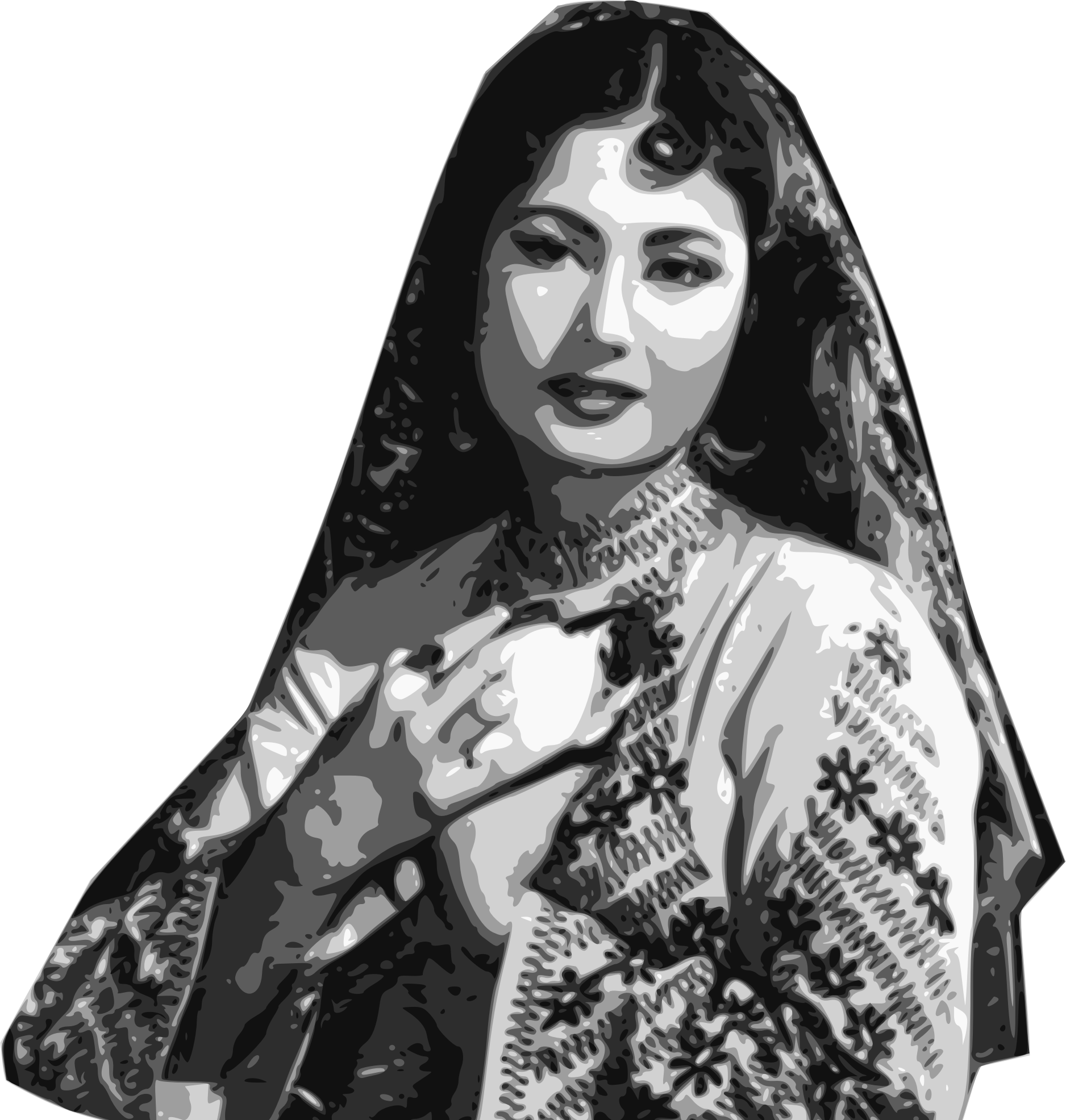
Meena Kumari
 India
IndiaAlso known as: Mahjabeen Bano, The Tragedy Queen
Birthday
August 1, 1933
Birth Sign
Leo
Birthplace
Bombay (now Mumbai), British India
Age
Died at 38
Height
5 ft 4 in (163 cm)
About
Meena Kumari was an Indian actress, poet, and playback singer widely revered as the "Tragedy Queen" of Hindi cinema. Born Mahjabeen Bano in Bombay, she began her career as a child artist in the late 1930s before evolving into the definitive tragic heroine of the golden age of Bollywood. Her performances were characterized by a unique blend of dignity, intellect, and profound emotional depth that redefined how women were portrayed on screen.
Throughout her career spanning from 1939 until her death in 1972, she delivered iconic performances in films like Baiju Bawra and Sahib Bibi Aur Ghulam. She was not only a performer but also a creative force who wrote poetry under her own name and designed costumes for many of her roles. Despite a life often shadowed by personal struggles, her professional output remains a benchmark for acting in Indian cinema.
Early Life & Background
Mahjabeen Bano was born into a family deeply entrenched in the theater and film industry. Her father, Abdul Hameed Bano, was a playwright and director, while her mother, Qudsia, was an actress. Financial instability plagued the household from the start, forcing Meena to begin working to support them when she was just four years old. Her childhood was essentially sacrificed to the film sets, where she received little formal education despite her deep desire for learning. Her family treated her earnings as a primary source of income rather than allowing her a normal upbringing.
She started with minor roles in silent films and mythological productions such as Farzand-e-Watan and Veer Ghatotkach. By the early 1940s, she had transitioned to adult roles in fantasy and mythological genres, appearing in films like Alladin and The Wonderful Lamp. During this period, she adopted the screen name "Meena Kumari," a moniker that would soon become synonymous with elegance and sorrow. These early years were defined by hard labor on set, where she learned the craft of acting through observation and necessity rather than formal training.
Career Growth
Meena Kumari's transition from child artist to leading lady marked a turning point in Indian cinema history. Her breakthrough as a serious dramatic talent arrived with the 1952 historical drama Baiju Bawra, where she played the courtesan Bhairavi opposite Dilip Kumar. This role earned her the first Filmfare Award for Best Actress and established her as a powerhouse of emotion. Throughout the 1950s and 1960s, she became the highest-paid actress in India, known for portraying complex, suffering women with immense dignity.
Her career trajectory included a string of critical and commercial successes. In 1957, she won her second Filmfare Award for Aar Paar, followed by a critically acclaimed performance in the 1958 classic Devdas. The pinnacle of her artistic achievement came with the 1962 film Sahib Bibi Aur Ghulam, directed by Abrar Alvi. This masterpiece explored the decline of a feudal family and the alcoholism of its patriarch, showcasing her ability to convey subtle psychological states. She won both the National Film Award and the Filmfare Award for Best Actress for this role. Her final project, Pakeezah, took thirteen years to complete due to production delays and her declining health. Released posthumously in 1972, it remains one of the most iconic films in Indian cinema history.
Career Timeline
Public Image & Style
Meena Kumari is viewed as a symbol of resilience and artistic integrity. Despite her personal demons, she is respected for her professionalism and dedication to her craft. Her public persona was defined by her elegant saree draping, particularly the Nivi style, and her distinctive makeup that highlighted her expressive eyes. Media portrayals often focused on her tragic roles, blurring the lines between her real life and her characters. She was seen as a woman of substance who brought a new level of realism to the portrayal of women in Indian cinema.
Fame & Fandom (iFAMOUS Rankings)
iFANN has not yet collected fame data for this person. As of September 2026, no official global ranking or scope has been assigned to her in the current iFANN database. While she is historically recognized as one of the greatest actresses in Indian cinema, the engine has not yet generated a specific placement number for her in the worldwide rankings.
Her fanbase, known informally as followers of the "Tragedy Queen," remains active and devoted. Fan clubs organize annual tributes on her birth and death anniversaries, celebrating her contributions to art and culture. Digital campaigns continue to push for the restoration and remastering of her films in high definition. Fans often create tribute videos and art pieces highlighting her poetry and acting, keeping her memory alive for new generations. The emotional connection fans feel to her work is rooted in the authenticity she brought to her roles, making her a timeless icon.
Interesting Facts and Legends
Meena Kumari wrote poetry under her own name, and her verses are published in literary collections today. She also designed her own costumes for many of her films, bringing a unique aesthetic to her characters that reflected her understanding of fabric and draping. Her struggle with alcoholism was well-documented and contributed significantly to her early death, a topic rarely discussed so openly during the golden age of Bollywood. There are numerous anecdotal accounts of fans fainting upon seeing her on screen, particularly during her more intense dramatic scenes, a testament to her magnetic presence. The story of Pakeezah taking thirteen years to make is a legend in itself, with Meena waiting patiently often visiting the sets in her declining health.
Notable Quotes
“I am a tragedy queen, but I am not a tragic person in real life.”
“The screen is my only escape from the world.”
“Life is a tragedy when seen in close-up, but a comedy in long-shot.”
Family & Personal Life
Meena Kumari was born to Abdul Hameed Bano, a playwright and director, and Qudsia, an actress. Her father was a controlling figure who prioritized her earning potential over her education. She had a sister who later became involved in managing her estate. Meena lived with her family during her early years but spent much of her adult life navigating the complexities of her marriage and career. She did not have any children of her own. Her relationship with her family was often strained by financial pressures and the demands of her work.
Notable Connections
Dilip Kumar, Kamal Amrohi, Abrar Alvi, Kishore Kumar.
Relationships & Dating History
Meena Kumari's romantic life was defined almost entirely by her marriage to filmmaker Kamal Amrohi. They met on the set of a film around 1951 or 1952, with some sources citing their introduction during the making of Baiju Bawra or earlier projects. Their marriage was passionate but fraught with conflict, largely driven by Amrohi's infidelity and his obsession with the perfection of their joint project, Pakeezah. The relationship was marked by periods of separation and reconciliation, with Amrohi known to be controlling. Meena Kumari suffered greatly from his treatment, which exacerbated her drinking problem. There were no children from this marriage. The couple remained legally married until Meena's death in 1972.
There are no widely documented public relationships prior to or concurrent with her marriage to Kamal Amrohi that resulted in long-term commitments or children. Rumors of other liaisons exist in biographical lore, but credible sources do not confirm any other official partnerships. Her life was largely consumed by her career and her difficult marriage. As of 2026, she is remembered as having been widowed, with her estate managed by her heirs.
- MarriedKamal Amrohi1952 - 1972Met on film set; marriage lasted until her death; no children.
Death & Aftermath
Died
March 31, 1972 (aged 38)
Death Place
Bombay (now Mumbai), India
Cause of Death
Liver cirrhosis due to chronic alcoholism
Meena Kumari passed away on March 31, 1972, at the age of 38 in her Bombay home. Her final days were marked by severe physical deterioration as she battled liver cirrhosis, a condition directly linked to her long-standing struggle with alcoholism. She had been hospitalized for weeks prior to her death, and her last film scenes were shot while she was visibly frail and weak. The news of her passing sent shockwaves through India, silencing the very industry that had celebrated her for decades.
Her death triggered an outpouring of grief from peers and fans alike. Dilip Kumar, her frequent co-star and friend, was reportedly devastated, describing the loss as a personal tragedy. Fans gathered outside her residence and hospital, mourning the sudden end of the "Tragedy Queen." A private funeral service was held, attended by close family and friends, before her body was cremated at the Manekji Baug Crematorium in Mumbai.
In the aftermath, her husband Kamal Amrohi completed the production of Pakeezah, which was released later in 1972 to massive commercial success. This posthumous release cemented her legacy as one of cinema's most enduring icons. While no major legal battles defined her immediate estate settlement, there were underlying tensions regarding the management of her assets and the completion of her films between Amrohi and her family. Today, her estate is managed by her sister and nephew, who oversee the licensing of her films and intellectual property. The value of her estate has grown significantly over the decades through royalties, streaming rights, and merchandise, ensuring her financial legacy continues to thrive long after her tragic death.
Net Worth (Estate Value)
$8 Million
iFANN Editorial Team estimate
The estate of Meena Kumari is currently valued at approximately $8 million USD as of 2026. Research by the iFANN Editorial Team puts her fortune at around this figure based on the enduring value of her film catalog and intellectual property. Since her death in 1972, the estate has generated significant revenue through various channels. Streaming platforms like Netflix, Amazon Prime, and Zee5 pay licensing fees for the rights to show her classic films, providing a steady income stream.
Merchandising also contributes to the estate's value, with sales of memorabilia, posters, and books about her life continuing to generate profit. Music royalties from her playback singing and poetry collections add to the total. Occasionally, brands use her image for nostalgia campaigns with permission from the estate. The estate is managed by her surviving family members, specifically her sister and nephew, who oversee the rights to her name and likeness. The Pakeezah rights remain a significant asset, with the film being restored and re-released multiple times to capitalize on its cult status.
Awards Won (14)
Meena Kumari won three Filmfare Awards for Best Actress and two National Film Awards for Best Actress. Her accolades reflect her unparalleled contribution to Indian cinema. She was awarded the Padma Shri in 1967 for her contributions to the arts. Her wins span from her breakthrough in 1952 to her final recognition in the 1960s, establishing her as one of the most decorated actresses of her time.
1954
Baiju Bawra
1955
Parineeta
Known For
Sahib Bibi Aur Ghulam
1962 · Begum Sultana
Pakeezah
1972 · Nargis
Baiju Bawra
1952 · Bhairavi
Devdas
1955 · Paro
Aar Paar
1957 · Renuka
Keywords
Sources
Quick Facts
- Profession
- Actress, Poet, Playback Singer
- Born
- August 1, 1933
- Birthplace
- Bombay, British India
- Birth Sign
- Leo
- Death Date
- March 31, 1972
- Cause of Death
- Liver Cirrhosis
Personal Details
- Full Name
- Mahjabeen Bano
- Height
- 5 ft 4 in (163 cm)
- Spouse
- Kamal Amrohi
- Children
- Education
- Little formal education; homeschooled intermittently
Filmography
68
Total
68
Film
0
TV
Frequently Asked Questions
What was Meena Kumari's real name?
Why did Meena Kumari die?
Who was Meena Kumari married to?
What is Meena Kumari's most famous movie?
Did Meena Kumari have children?
Social Media
Similar People


Join the community
fans discussing