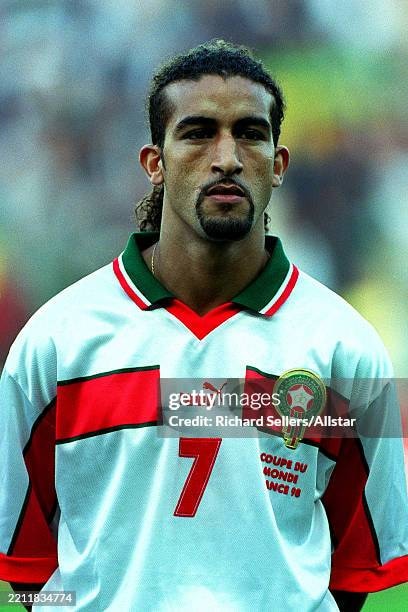
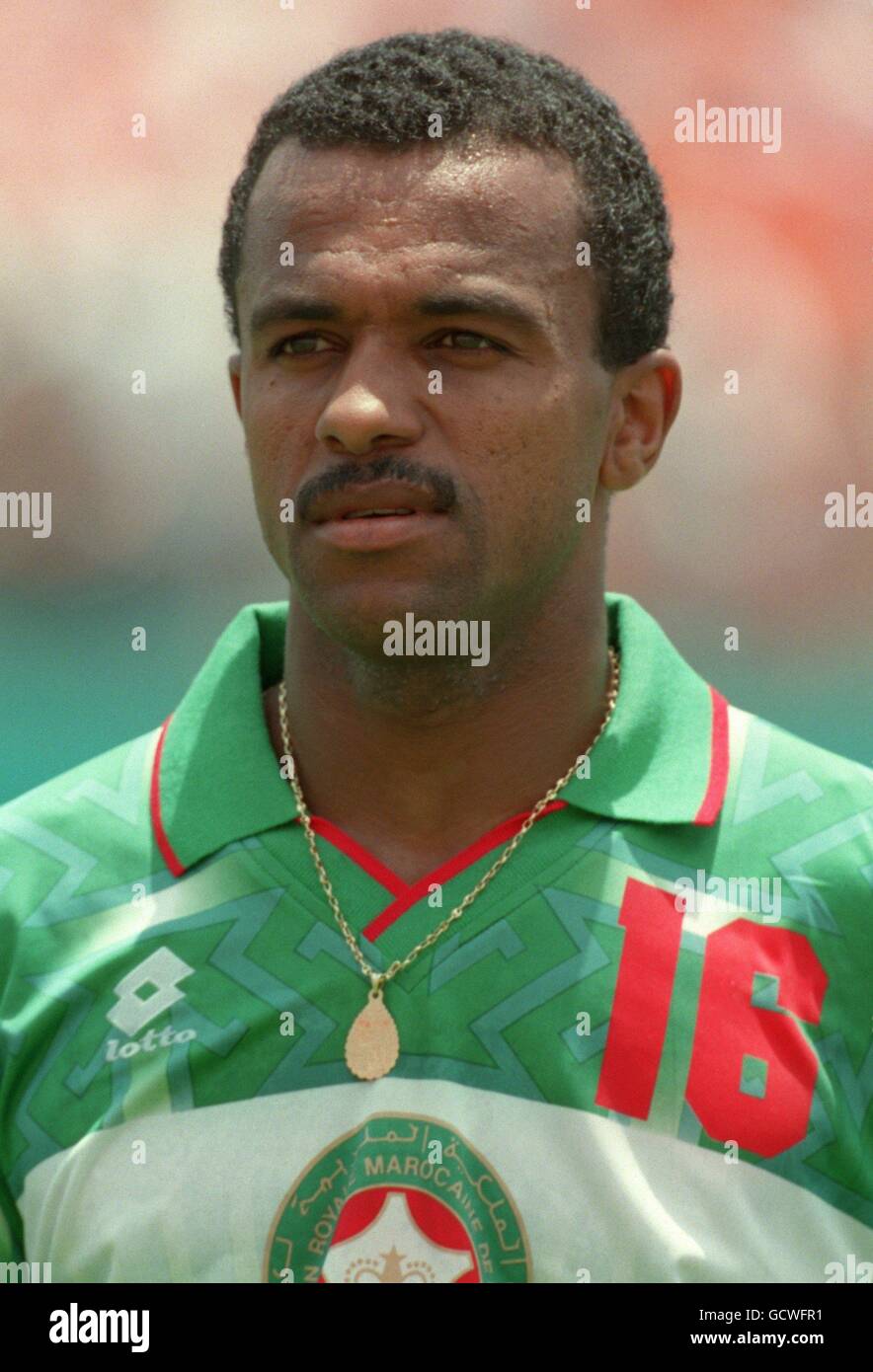
Mustapha Hadji
 Morocco
Birthday
November 16, 1971
Birth Sign
Scorpio
Birthplace
Ifrane Atlas-Saghir, Morocco
Age
54 years old
Height
5 ft 11 in (1.80 m)
About
Mustapha Hadji is a Moroccan former professional footballer and coach. An attacking midfielder and winger, he is best remembered for his technical flair, vision, and long-range shooting. Hadji's club career took him from FC Nancy in France to Sporting CP in Portugal, Deportivo La Coruña in Spain, and Premier League sides Coventry City and Aston Villa. He earned 63 caps for Morocco, scoring 13 goals, and represented his country at the 1998 and 2002 World Cups. His finest individual moment came in 1997 when he was named CAF African Footballer of the Year, only the second Moroccan to win that award. After retiring in 2007, Hadji moved into coaching, serving as an assistant for the Moroccan national team until 2022. He remains active as a football pundit and youth development advocate.
Early Life & Background
Hadji grew up in Ifrane Atlas-Saghir, a small town in southern Morocco, where his father's passion for football sparked his own. He played street football constantly and joined the youth academy of local club Najm de Souss. At 17, he moved to France to pursue a professional career, entering the youth system of FC Nancy. He balanced local schooling with football training, and in 1991 signed his first professional contract with Nancy. Those early years in Ligue 2 honed his dribbling and creativity, laying the groundwork for his move to bigger clubs.
Career Growth
Hadji's breakthrough came in 1996 when he joined Sporting CP for €1.5 million. In one season he scored 9 goals in 27 appearances, catching the eye of Deportivo La Coruña, which signed him for around €3 million. At Deportivo, his performances earned him the 1997 CAF African Footballer of the Year award. He then moved to England, signing with Coventry City for £3.5 million in 1999. Over two seasons he scored 12 goals in 62 appearances, including a famous volley against Aston Villa that won Coventry's Goal of the Season. A £5 million transfer to Aston Villa followed in 2001, but injuries limited his impact. After a loan at Espanyol, he played for Al-Sadd in Qatar, winning the Qatar Stars League in 2005, and finished his career at FC Sochaux before retiring in 2007. Internationally, he played in two World Cups and four Africa Cup of Nations tournaments. After retiring, he coached Morocco's U-20 and U-23 teams and served as assistant coach for the senior side from 2019 to 2022.
Career Timeline
Public Image & Style
Hadji was known as a creative, flair-based attacking midfielder with exceptional dribbling and vision. He often wore a headband, which became a signature look. Moroccan fans nicknamed him "the Magician" for his ability to produce moments of brilliance. Media coverage praised his technical ability and professionalism, ranking him among Africa's finest players of the 1990s. On social media, he presents a warm, family-oriented persona, frequently posting about football memories and Moroccan culture. His fandom, while not formally named, remains strong among Moroccan football enthusiasts and Coventry City supporters.
Fame & Fandom (iFAMOUS Rankings)
Mustapha Hadji stands as the 34th most famous person from Morocco, a standing confirmed in the latest cycle. This placement within the iFANN Global Fame Rankings reflects his enduring legacy across media coverage and consumption signals worldwide. While he does not command the organized, digital-first movements of modern pop icons, his fanbase remains deeply rooted in the Moroccan diaspora and football purists who remember his golden era. There is no formal moniker for his supporters; they are simply devoted admirers who gather sporadically at legacy events rather than engaging in ritualized online campaigns. His influence persists as a cultural guardian, with recent appearances at the 2025 CAF Awards and vocal critiques of national team management in 2026 proving he still commands significant respect in football discourse.
The mythology surrounding Hadji is built on stories of grit that have become folklore. One widely retold anecdote describes him taping a raw steak to his foot during matches at Coventry City to numb severe pain, a tale of physical resilience often cited by The Athletic and fans alike. Another defining moment cemented his legend was his crucial goal against Norway at the 1998 World Cup, a performance so iconic that his Panini trading card became a sought-after item among collectors everywhere. Though a later controversy regarding a forged coaching license tarnished his administrative record, the public memory of his playing days remains untarnished, preserving his status as a true icon of African football.
Interesting Facts and Legends
Mustapha Hadji holds the distinction of being one of only two Moroccans to win the CAF African Footballer of the Year award, joining Ahmed Faras who won in 1975. During his time in England, he scored a spectacular volley against Aston Villa in 2000, a strike now considered one of the greatest goals in Coventry City's Premier League history. He is also a polyglot, fluent in Arabic, French, English, and possessing working knowledge of Spanish. His distinctive look included a trademark headband worn during every match, becoming an instant symbol of his flair. Family ties run deep in the sport, as his brother Youssef Hadji also enjoyed a professional career representing Morocco and playing in Ligue 1. In international competition, Mustapha once netted a hat-trick for the Atlas Lions against Burkina Faso in 1998. Beyond the pitch, his reputation includes a legendary story of toughness where he famously played while binding a piece of raw steak to his injured foot to manage pain, a tale that has become a staple of Moroccan football folklore illustrating his dedication.
Notable Quotes
“I always tried to bring joy to the fans. Football is about happiness.”
“Winning African Player of the Year was the greatest honor of my career. It showed that Moroccan football could compete with the best.”
“Coventry City fans will always be in my heart. They gave me so much support.”
Family & Personal Life
Hadji is married to a woman whose name he has kept private; they have been together since the late 1990s and have at least two children. His older brother, Youssef Hadji, also became a professional footballer, playing for clubs like Nancy and Rennes and earning caps for Morocco. Mustapha's father was a football enthusiast who encouraged both sons to play. The family is devoutly Muslim, and Hadji often shares nostalgic posts about his Moroccan heritage on social media.
Notable Connections
Hadji's brother Youssef Hadji also played professionally for Morocco and Ligue 1 clubs. He coached alongside Vahid Halilhodžić as assistant for the Moroccan national team. At Coventry City and Aston Villa, he was teammates with Dion Dublin and Robbie Keane. Internationally, he played alongside Hassan Nader and Salaheddine Bassir for Morocco.
Relationships & Dating History
Hadji married his wife in the late 1990s or early 2000s. Her name has not been publicly disclosed, as he has consistently kept his personal life private. The couple has at least two children. There are no credible reports of any previous romantic relationships before his marriage. As of 2026, he remains married and living with his family in Morocco.
- Married1999 - presentCurrentMarried in the late 1990s or early 2000s; wife's name not publicly disclosed. They have at least two children.
Salary, Net Worth In 2026
$5 Million
iFANN Editorial Team estimate
Per iFANN's editorial analysis, Mustapha Hadji's net worth is estimated at $5 Million as of 2026. His financial foundation was laid during a prolific playing career, highlighted by a peak weekly salary of approximately £30,000 while at Coventry City. Although cumulative transfer fees involving his moves reached about €12 million, his personal earnings were derived strictly from salaries rather than fee shares. During his active years, he secured a sponsorship deal with Puma that added to his income stream. Following his retirement in 2007, he transitioned into coaching, earning an estimated $100,000–$200,000 annually as an assistant for the Moroccan national team. His assets include a primary residence in Morocco and a secondary home in France. Additionally, he generates supplementary revenue through occasional punditry work for beIN Sports, maintaining his presence in the sports media landscape.
Awards Won (4)
Hadji's most prestigious award is the 1997 CAF African Footballer of the Year, making him only the second Moroccan to win it. He was also named Coventry City Player of the Year in 2000 and won Coventry's Goal of the Season for his volley against Aston Villa. With Al-Sadd, he won the Qatar Stars League in 2005.
1997 · Player of the Year
Deportivo La Coruña / Morocco
2000 · Player of the Year
Coventry City
Known For
CAF African Footballer of the Year
1997 · Winner
FIFA World Cup
1998 · Morocco squad
FIFA World Cup
2002 · Morocco squad
Coventry City
1999 · Player
Keywords
Quick Facts
- Profession
- association football player
- Born
- +1971-11-16
- Birthplace
- Ifrane Atlas-Saghir
- Gender
- Male
- Birth Sign
- Scorpio
Personal Details
- Full Name
- Mustapha Hadji
- Height
- 5 ft 11 in (1.80 m)
- Children
- 2
Frequently Asked Questions
Is Mustapha Hadji married?
What is Mustapha Hadji's net worth?
How old is Mustapha Hadji?
Does Mustapha Hadji have kids?
What club did Mustapha Hadji play for in the Premier League?
Join the community
fans discussing