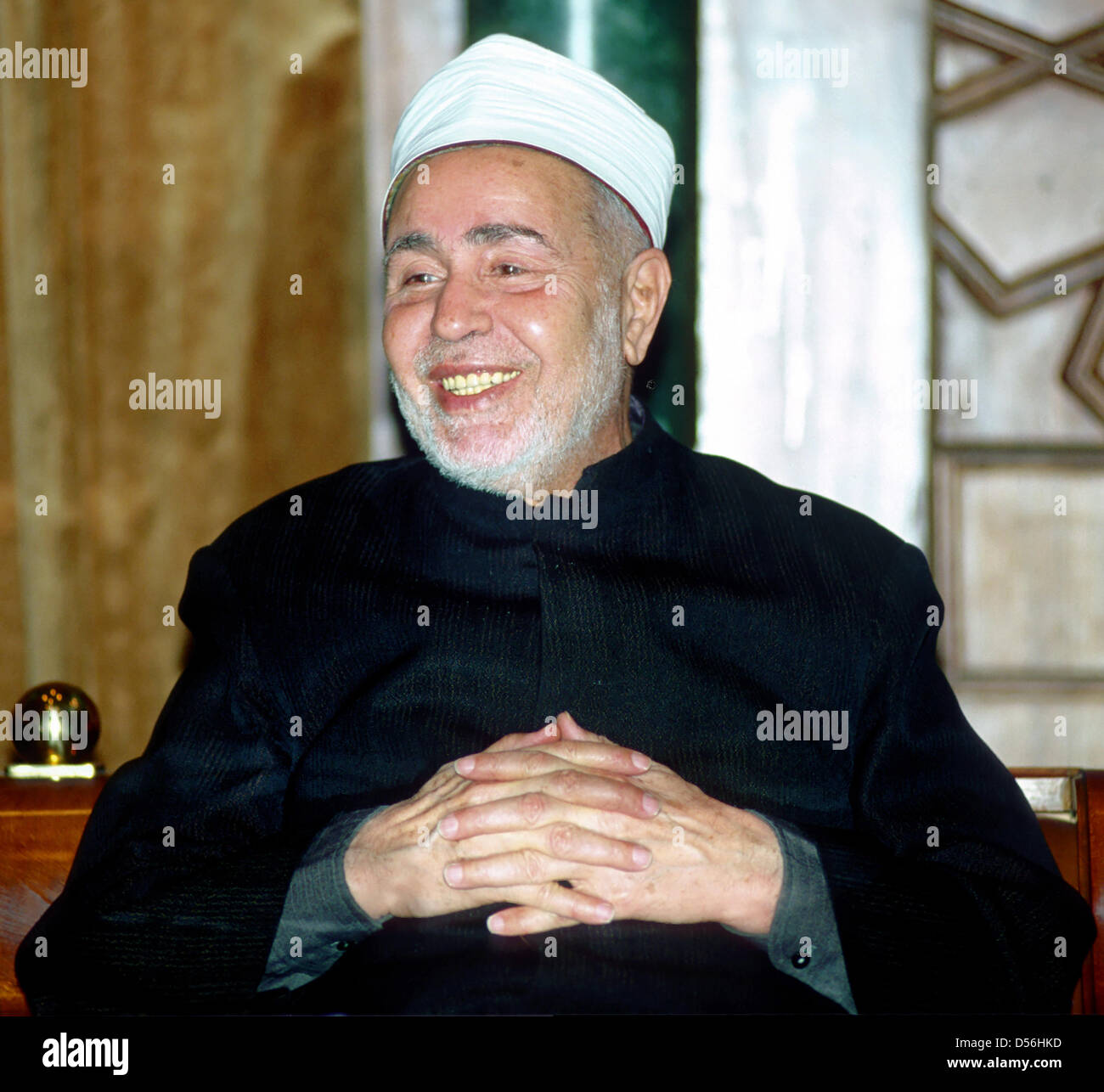
Muhammad Sayyid Tantawi
 Egypt
EgyptIslamic jurist•muhaddith•theologian
Also known as: Sheikh Muhammad Sayyid Tantawi, Mohammed Sayyid Tantawi, Shaykh Tantawi
Birthday
October 28, 1928
Birth Sign
Scorpio
Birthplace
Salim ash-Sharqiyah, Sohag, Egypt
Age
Died at 81
About
Muhammad Sayyid Tantawi was an Egyptian Islamic scholar who held the two most senior religious offices in Sunni Islam. He served as Grand Mufti of Egypt from 1986 to 1996, then as Grand Imam of al-Azhar from 1996 until his death in 2010. As the head of al-Azhar, the foremost institution of Sunni learning, he was widely regarded as the leading cleric in the Sunni Muslim world.
His tenure was marked by a pragmatic, often moderate approach to religious rulings. He endorsed the Amman Message against extremism, participated in interfaith dialogues with Christian leaders, and delivered the inaugural MUIS Lecture in Singapore. He also courted controversy, notably defending France's ban on Islamic headscarves in state schools and clashing with a female student over the niqab in 2009.
Tantawi died of a heart attack in Riyadh, Saudi Arabia, on 10 March 2010, aged 81. His legacy remains a subject of debate, with supporters praising his reformist instincts and critics accusing him of excessive accommodation to state power.
Early Life & Background
Muhammad Sayyid Tantawi was born on 28 October 1928 in the village of Salim ash-Sharqiyah, in the municipality of Toma, Sohag Governorate, Egypt. Growing up in Upper Egypt, a region steeped in Islamic tradition and conservative values, he showed an early aptitude for religious studies. He pursued his education at al-Azhar University in Cairo, the most prestigious Sunni institution, where he earned a degree in Islamic studies and later a doctorate in Quranic exegesis (tafsir). His academic focus also encompassed Hadith science and Islamic jurisprudence.
Before rising to national prominence, Tantawi taught Quranic exegesis at al-Azhar University. He also spent time as a lecturer at the Islamic University of Madinah in Saudi Arabia, where he gained international academic exposure. His scholarly publications, including the widely read Adab al-Hiwar fi al-Islam (The Etiquette of Dialogue in Islam), established his reputation as a careful interpreter of the Quran and a proponent of reasoned religious discourse.
Career Growth
In 1986, Tantawi was appointed Grand Mufti of Egypt, the country's highest official authority for issuing fatwas. His rulings during this decade were often seen as moderate and pragmatic, reflecting an effort to reconcile Islamic law with modern conditions. In 1996, he was promoted to Grand Imam of al-Azhar, the most senior religious position in Sunni Islam, and concurrently served as Rector of al-Azhar University.
His tenure at al-Azhar was marked by active engagement with global affairs. In December 2003, he made international headlines by defending France's right to ban Islamic headscarves in state schools, arguing that Muslims in non-Muslim countries must respect local laws. He signed the Amman Message in 2004, a landmark declaration against takfir (declaring other Muslims apostates). In March 2005, he participated in interfaith dialogue initiatives in Egypt with Christian scholars from five Arab states. On 26 May 2006, he delivered the inaugural MUIS Lecture in Singapore, addressing Muslim-Christian relations.
His final years were clouded by controversy. In October 2009, he reportedly ordered a female student at al-Azhar to remove her niqab, sparking widespread debate about religious dress and institutional authority. He died less than five months later.
Career Timeline
Public Image & Style
Tantawi was portrayed in Western media as a moderate, sometimes progressive voice at the apex of Islamic scholarship, while also being described as controversial. The Guardian's obituary called him 'one of Islam's leading spiritual figures.' He was seen as a pragmatic scholar who attempted to balance traditional Islamic positions with modern realities, often engaging with Western governments and interfaith bodies. Within the Muslim world, his image was more divided: some viewed him as a reformist, while Salafi critics saw him as too accommodating to state power and Western positions. He commanded deep respect among many Sunni Muslims, though he had no formal fandom in the modern sense.
Fame & Fandom
The public relationship with Muhammad Sayyid Tantawi was defined by reverence and theological weight rather than the adoration reserved for pop icons. His influence flowed through fatwas, academic leadership at Al-Azhar, and interfaith dialogues rather than viral moments or fan campaigns. No organized fandom emerged to champion his name, nor did a specific collective identity form around his legacy; he remained a statesman of faith whose authority commanded respect across the Sunni world without generating celebrity culture rituals. The stories told about him focus on his controversial rulings and his role as a global religious figure, not on crowds fainting or fan-funded projects. While Western media often framed him as a moderate voice balancing tradition with modernity, the Muslim world viewed his tenure with a complex mix of admiration and debate. He never engaged in the direct social media interactions typical of modern stardom, and no official fanbase ever claimed him as their own. Despite his immense global stature as Grand Imam, iFANN's Global Fame Engine has evaluated this person, but they do not currently hold a placement in the published rankings (Global Top 1,000 or a Top-100 scope list).
Interesting Facts and Legends
Muhammad Sayyid Tantawi served as Grand Mufti of Egypt from 1986 to 1996 before becoming Grand Imam of al-Azhar, a position he held until his death in 2010. As the head of the foremost institution of Sunni learning, he was widely regarded as the leading cleric in the Sunni Muslim world. A signatory of the Amman Message, he helped declare that no Muslim could be excommunicated by another, marking a significant anti-extremist stance. He authored at least 11 books, with Adab al-Hiwar fi al-Islam standing out as his most popular work. His legacy includes several defining controversies that sparked intense debate. In 2003, he defended France's ban on Islamic hijabs, a position that surprised many within the Muslim community. Later, in October 2009, a directive he issued to a female student to remove her niqab at al-Azhar caused significant public uproar. These incidents cemented his reputation as a scholar who navigated the difficult waters between traditional doctrine and modern geopolitical realities.
Notable Quotes
“Muslims living in non-Muslim countries must respect the laws of those countries.”
“Whoever testifies that there is no divinity but God and that Muhammad is the Messenger of God is a Muslim.”
Family & Personal Life
Tantawi was married and had at least one son, who has spoken publicly about his father's legacy in media interviews. His wife's name and details about his other children have not been publicly documented. The family maintained a private life, consistent with his role as a conservative religious leader. His son's 2025 interview offered a personal glimpse into Tantawi's writings and character, but little else is known about his household.
Notable Connections
Tantawi engaged with the World Council of Churches leadership in interfaith dialogue. As Grand Imam, he presided over al-Azhar's academic and religious affairs, working with its scholars and students. He was invited by Singapore's Islamic Religious Council (MUIS) to deliver their inaugural lecture. His son has spoken publicly about his father's legacy.
Relationships & Dating History
As a conservative Islamic scholar and religious leader, Tantawi kept his personal romantic life private. There are no documented dating relationships or publicized romantic partnerships. He was married, but details about his wife, the date of marriage, or their life together have not been publicly disclosed. He had at least one son, who has since spoken about his father's legacy. Tantawi was married at the time of his death on 10 March 2010, and his widow survives him, though her name has not been made public.
- MarriedUnknown wife? - 2010Married at the time of his death; details not publicly disclosed.
Death & Aftermath
Died
March 10, 2010 (aged 81)
Death Place
Riyadh, Saudi Arabia
Cause of Death
Heart attack
President Hosni Mubarak declared a three-day national mourning period in Egypt, while U.S. Secretary of State Hillary Clinton and the World Council of Churches issued statements honoring the Grand Imam as a highly respected leader who championed interfaith dialogue. Tributes poured in from heads of state and religious institutions across the globe, recognizing his role as a moderate voice in the Sunni Muslim world. Muhammad Sayyid Tantawi passed away on March 10, 2010, at the age of 81 in Riyadh, Saudi Arabia, where he had traveled for medical treatment. Family statements and official reports from Al-Azhar University confirmed that the cause of death was a heart attack.
His final days were spent receiving care in the Saudi city before his condition proved fatal. Following prayers held shortly after his death, his body was transported back to Cairo for a massive state funeral attended by thousands of mourners, government officials, and foreign dignitaries. The service featured Quranic recitations and eulogies delivered by prominent scholars rather than musical performances, adhering to Islamic tradition. While his son has since spoken publicly about his father's legacy and writings, the family maintained privacy regarding the specific division of assets or intellectual property without public litigation.
Net Worth (Estate Value)
$2 Million
iFANN Editorial Team estimate
Public records regarding Muhammad Sayyid Tantawi's personal wealth remain scarce, yet his financial standing derived from his senior government positions as Grand Mufti and Grand Imam of al-Azhar. These roles provided state salaries and allowances throughout his career. Beyond his official duties, he earned royalties from his published works, including Adab al-Hiwar fi al-Islam, though exact figures from these sales are unknown. Since his passing in 2010, his estate has not generated major commercial revenue beyond modest book royalties. Per iFANN's editorial analysis, his net worth is estimated at around $2 million as of 2026, reflecting his lifetime earnings and the continued, albeit limited, sales of his writings.
Awards & Accolades
View 4 records, honours and achievementsKnown For
Grand Mufti of Egypt
1986 · Grand Mufti
Grand Imam of al-Azhar
1996 · Grand Imam
Keywords
Sources
Quick Facts
- Profession
- Islamic jurist, muhaddith, theologian
- Born
- October 28, 1928
- Birthplace
- Salim ash-Sharqiyah, Sohag, Egypt
- Died
- March 10, 2010
- Death Place
- Riyadh, Saudi Arabia
- Gender
- Male
- Birth Sign
- Scorpio
- Education
- Doctorate in Quranic exegesis, al-Azhar University
Personal Details
- Children
- At least one son
- Education
- Doctorate in Quranic exegesis from al-Azhar University
Frequently Asked Questions
Who was Muhammad Sayyid Tantawi?
What was Muhammad Sayyid Tantawi's net worth in 2026?
How did Muhammad Sayyid Tantawi die?
What was Muhammad Sayyid Tantawi's stance on hijab?
Did Muhammad Sayyid Tantawi have children?
Join the community
fans discussing