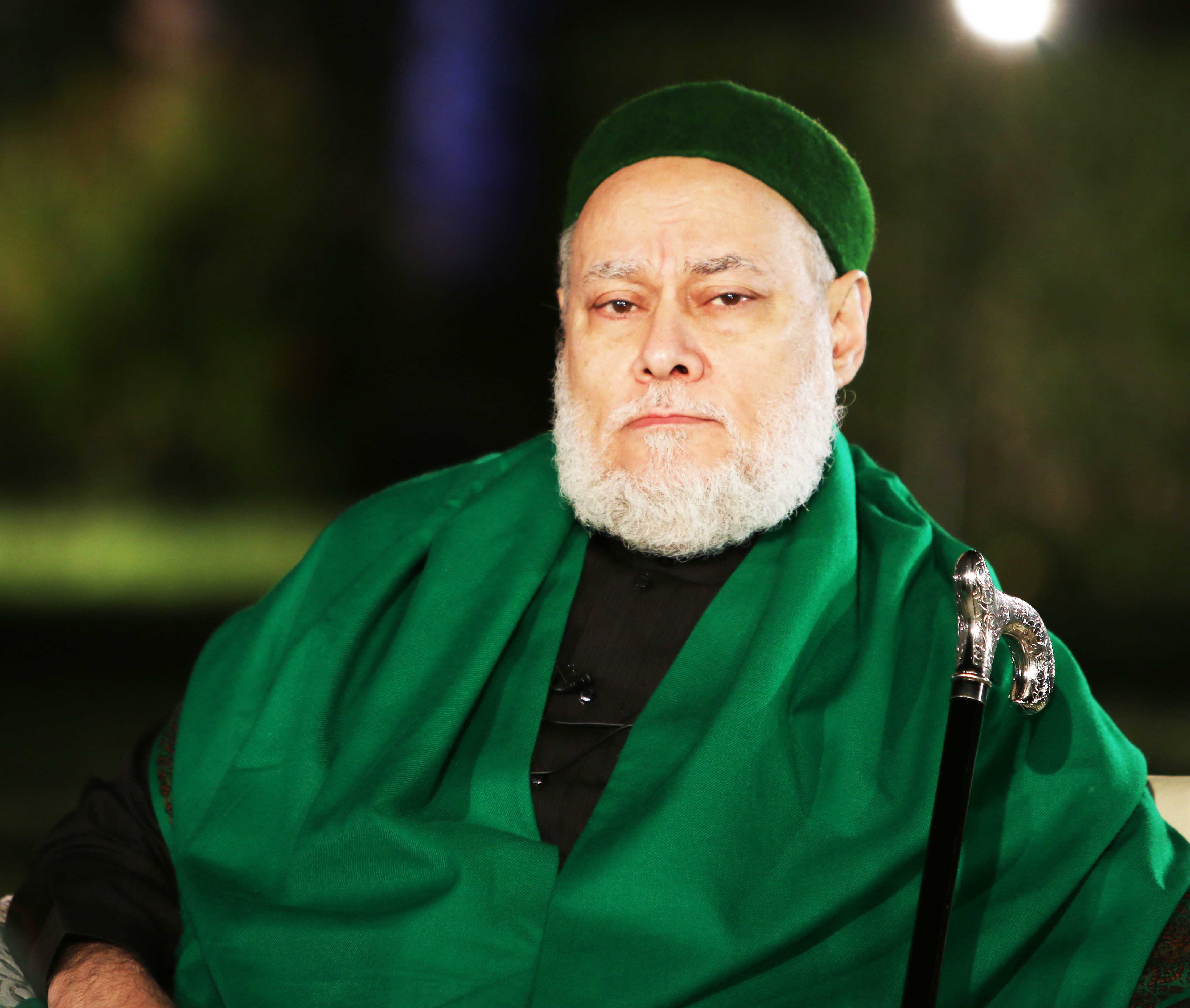
Ali Gomaa
 Egypt
EgyptIslamic scholar•jurist•public figure
Birthday
March 3, 1952
Birth Sign
Pisces
Birthplace
Beni Suef, Egypt
Age
74 years old
About
Ali Gomaa is an Egyptian Islamic scholar, jurist, and public figure, recognized for his deep knowledge in Islamic legal theory. He adheres to the Shafi`i school of jurisprudence and the Ash'ari school of theology, often identifying as a Sufi master. Gomaa served a decade as the Grand Mufti of Egypt, holding the influential position from 2003 to 2013. Today, he continues his work as a professor of Islamic jurisprudence at Al-Azhar University, engaging with contemporary issues and addressing diverse audiences on matters of Islamic law. His public statements frequently draw considerable attention and discussion. He is a respected Sufi master and has extended his engagement beyond academic circles, notably speaking to Thai Muslim villagers in Thailand. He maintains an active YouTube channel, where he shares lectures and discussions on various Islamic topics, reaching a broad online audience. He has engaged with Western audiences, with one of his books titled "The Radical Middle: Building Bridges Between the Muslim and Western Worlds."
Early Life & Background
Ali Gomaa entered the world on March 3, 1952, in Beni Suef, Egypt. His early life was dedicated to extensive study within the traditional Islamic educational system, laying the groundwork for his future scholarly pursuits. He immersed himself in Islamic studies, meticulously learning the foundational texts and methodologies that would define his career. This rigorous academic path led him to Al-Azhar University, a renowned center of Islamic learning, where he further specialized in jurisprudence. Before his public appointment, Gomaa distinguished himself as a professor, focusing on Usul (Islamic Legal Theory) and Juristic Methodologies at Al-Azhar University. His scholarly work at Al-Azhar prepared him for a prominent role in shaping religious discourse in Egypt and beyond.
Career Growth
Gomaa's career reached a significant milestone in 2003 when he was appointed the Grand Mufti of Egypt, succeeding Ahmed el-Tayeb. This role positioned him at the forefront of Islamic legal interpretation, where he served for a full decade until 2013. During his tenure, Gomaa was often seen as a voice for moderate Islam, issuing religious edicts and engaging with pressing social and legal questions. After completing his term in 2013, Shawki Ibrahim Abdel-Karim Allam took over the position. Gomaa remained a prominent public figure even after stepping down as Grand Mufti. His public life has not been without challenges; in August 2016, he survived an assassination attempt in Cairo when gunmen opened fire on him, though he escaped unharmed and an associate was wounded. He continued to speak on important religious topics, notably stating in October 2017 that an apostate does not deserve death in Islamic Sharia, emphasizing the role of intent. In July 2021, he clarified that taking off the hijab is not considered a major sin in Islam. In January 2013, he issued a fatwa stating that growing or shaving a beard is unrelated to Shari'a. More recently, in January 2023, he was the target of a verbal assault by Cairo university students, an incident that was publicly condemned by the current Grand Mufti of Egypt.
Career Timeline
Public Image & Style
Ali Gomaa presents as an influential contemporary Muslim scholar and public intellectual. His public persona is often characterized by his adherence to established Islamic legal and theological schools, positioning him as a voice of traditional yet nuanced interpretation. While some observers perceive him as a proponent of moderate Islam, particularly during his time as Grand Mufti, others have noted his controversial political stances, leading to characterizations of him as supportive of authoritarian governance. His public discourse typically centers on Islamic law, ethics, and contemporary societal issues, with his statements frequently sparking debate among both religious scholars and the general public. He engages with audiences through various platforms, from academic settings to online channels, fostering discussions around faith and its application in modern life. He has an official website and an X (formerly Twitter) account.
Fame & Fandom (iFAMOUS Rankings)
For decades, the public following of Ali Gomaa has been defined by deep engagement with his theological insights rather than the frenetic energy of pop culture fandom. As a former Grand Mufti and a respected Sufi master, his audience consists primarily of students of Islamic jurisprudence, religious communities seeking guidance, and observers of Egyptian political history. There is no organized fan club, no specific name for his supporters, and no documented rituals like birthday billboards or fan-funded subway campaigns. His influence flows through fatwas, academic lectures at Al-Azhar University, and high-stakes political commentary that sparks intense debate across the Muslim world. While he survived an assassination attempt in 2016 and navigated controversial rhetoric that drew global scrutiny, these moments are viewed as historical events within a religious context rather than viral celebrity milestones. The interaction between Gomaa and his followers remains rooted in authority and scholarship, lacking the direct, participatory fan culture seen in entertainment industries. Despite his significant global reach and the attention his statements receive, the iFANN Global Fame Engine has evaluated this profile without assigning a placement in its published rankings. Ali Gomaa is currently not ranked among the Global Top 1,000 most famous people. He also holds no position on any Top-100 scope list maintained by the engine.
Interesting Facts and Legends
Ali Gomaa has not received awards from major Western ceremonies like the Oscars, Golden Globes, BAFTA, Emmy, SAG, or Grammy, as his distinctions remain firmly within the Islamic religious and academic spheres. A persistent point of confusion involves recent reports from July 2026 regarding the arrest of an Egyptian Nubian activist named Ali Gomaa Ali Bahr by Saudi authorities; this appears to be a case of mistaken identity given the primary subject's age and role as a scholar in Egypt. Beyond standard biography, Gomaa's legacy includes surviving a verified assassination attempt in Cairo on August 5, 2016, an event that cemented his image as a figure of resilience during Egypt's volatile post-2011 era. Another defining moment in his public mythology stems from January 2014, when remarks attributed to him, specifically the phrase 'Kill them, they stink', triggered international debate over his hardline political stance against the Muslim Brotherhood. His theological impact also features prominently in lore surrounding his evolving legal opinions, such as the widely discussed 2021 fatwa stating that removing the hijab is not a major sin, which sparked fierce arguments between conservative and progressive Muslims. These incidents, ranging from survival of violence to polarizing theological shifts, form the core of his modern reputation as a complex and often controversial religious authority.
Notable Quotes
“Apostate does not deserve death in Islamic Sharia.”
“Taking off the headscarf (hijab) by women is not a 'major sin' in Islam.”
Family & Personal Life
Specific details regarding Ali Gomaa's personal and family life, including information about his parents, siblings, or whether he is married or has children, are not publicly available in the provided sources. He maintains a private stance on these aspects of his life, keeping his focus on his scholarly and public duties as an Islamic jurist and intellectual.
Notable Connections
Ali Gomaa's career saw him succeed Ahmed el-Tayeb as Grand Mufti of Egypt, and he was later succeeded by Shawki Ibrahim Abdel-Karim Allam. His work has also put him in contact with various international religious leaders, including the Archbishop of Canterbury, reflecting his global engagement with interfaith dialogue.
Relationships & Dating History
Public information regarding Ali Gomaa's personal relationships, including any marriages, partnerships, or dating history, is not available in the provided research. He maintains a private stance on these aspects of his life, with his public profile primarily focused on his academic, religious, and public service roles. As of August 2026, his relationship status is not publicly known.
Salary, Net Worth In 2026
$1 Million
iFANN Editorial Team estimate
As of 2026, there is no publicly available information regarding Ali Gomaa's net worth or detailed wealth sources. However, a prominent Islamic scholar and former Grand Mufti like Gomaa would typically derive income from several avenues. His long-standing professorship in Islamic jurisprudence at Al-Azhar University would provide a steady academic salary. Additionally, as an influential public intellectual and author, he would likely earn royalties from his published works, speaking engagement fees, and potentially consultation fees for religious or legal matters. Support from religious institutions or endowments is also a common source of income for scholars of his stature. While an exact breakdown remains private, these professional activities suggest a sustained financial standing commensurate with his distinguished career. Per iFANN's editorial analysis, his net worth is conservatively estimated to be around $1 Million.
Awards & Accolades
Keywords
Sources
Quick Facts
- Profession
- Islamic scholar, jurist, public figure
- Born
- March 3, 1952
- Birthplace
- Beni Suef, Egypt
- Gender
- Male
- Birth Sign
- Pisces
Personal Details
- Children
- Education
Frequently Asked Questions
Who is Ali Gomaa?
When was Ali Gomaa born?
What significant roles has Ali Gomaa held?
Has Ali Gomaa faced any public threats?
What are some of Ali Gomaa's notable religious statements?
Social Media
Join the community
fans discussing