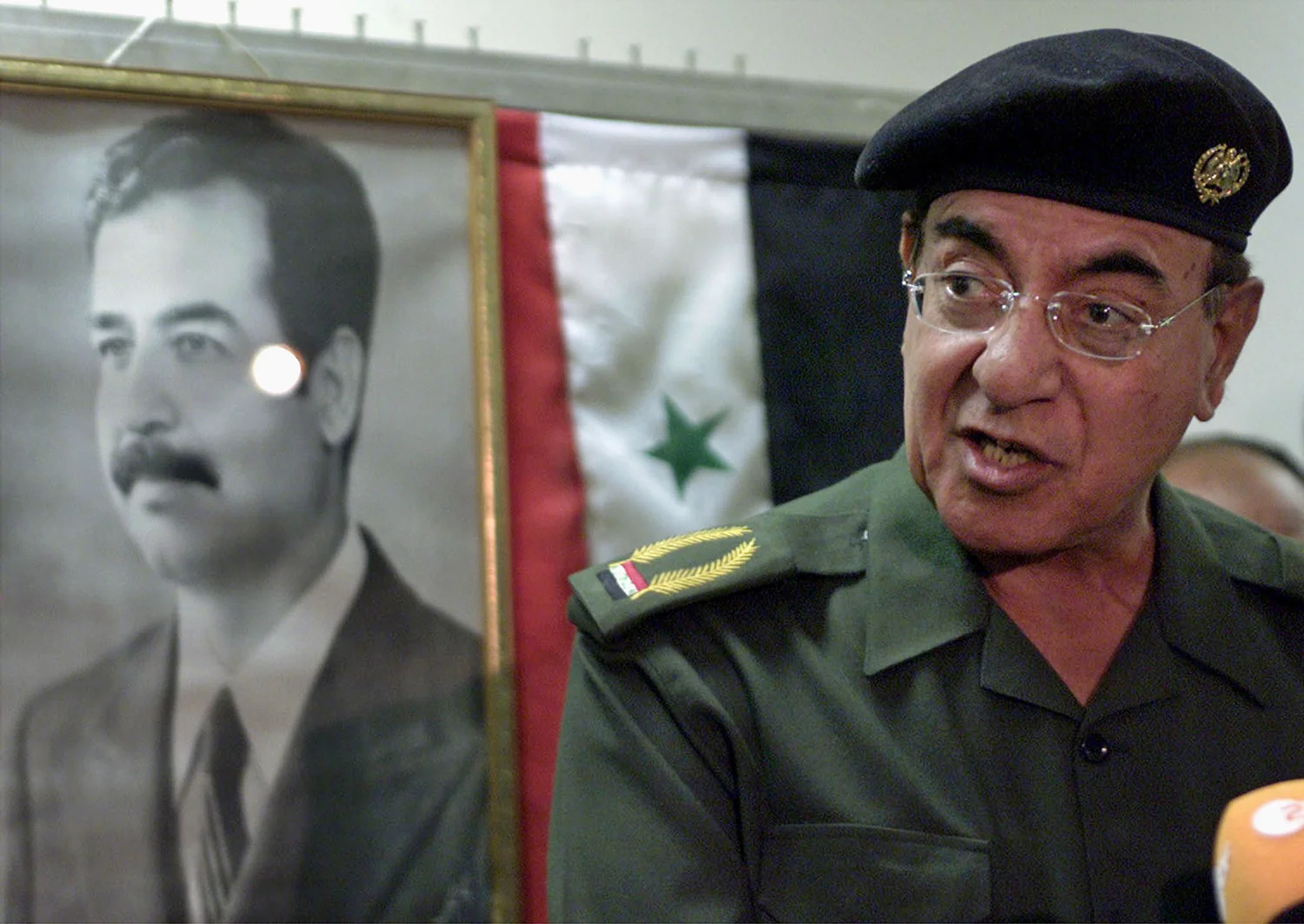
Muhammad Saeed al-Sahhaf
 Iraq
Iraqpolitician•diplomat•journalist
Also known as: Baghdad Bob, Comical Ali, Mohammed Saeed al-Sahhaf
Birthday
July 30, 1940
Birth Sign
Leo
Birthplace
Hillah, Iraq
Age
Died at 80
About
Muhammad Saeed al-Sahhaf was an Iraqi politician, diplomat, and journalist who served as Iraq's Minister of Foreign Affairs from 1992 to 2001 and Minister of Information from 2001 to 2003. He became a global figure during the 2003 invasion of Iraq, delivering daily press briefings that insisted on Iraqi victory even as US forces entered Baghdad. Western media nicknamed him "Baghdad Bob" and "Comical Ali" for his confident, implausible claims.
In his briefings, al-Sahhaf maintained a calm and authoritative demeanor, often wearing a black military beret and olive uniform. He insisted on camera that there were no American troops in the capital while US tanks were visible behind him. His statements were widely seen as propaganda, yet they also made him an unintentional cultural phenomenon, with a fan website celebrating his performances. After the fall of Baghdad, he went into hiding, later surrendered to US forces, and was released. He spent his remaining years in the United Arab Emirates, where he died on March 5, 2021, at age 80.
Early Life & Background
Born on July 30, 1940, in Hillah, a city south of Baghdad along the Euphrates River, Muhammad Saeed al-Sahhaf grew up in a Shia Muslim family, a minority in the Sunni-dominated Iraqi government that came to power in 1968. Little is documented about his childhood, but he studied English literature at university, a skill that later allowed him to deliver press briefings in English as well as Arabic.
Al-Sahhaf began his professional career as a journalist, working in Iraqi media before transitioning into the diplomatic service. He held various diplomatic posts, gradually rising through the ranks. His journalism background gave him the communication skills that would define his most famous role. By 1992, he had climbed to the position of Minister of Foreign Affairs, representing Iraq on the international stage during the years of UN sanctions that followed the Gulf War. His first C-SPAN appearance was at a 1998 news conference in this capacity.
Career Growth
Al-Sahhaf's tenure as Foreign Minister lasted from 1992 to 2001, during which he defended Iraq against international criticism and sanctions. In 2001, he was appointed Minister of Information, a role that put him at the center of Iraq's propaganda apparatus during the American-led invasion in 2003.
His daily press briefings, held in Baghdad while US forces advanced, became his defining moment. He declared that American troops were "committing suicide by the hundreds at the gates of Baghdad" and that coalition forces were being "slaughtered," even as the invasion reached the capital. On April 1, 2003, he delivered a statement from Saddam Hussein calling for jihad. His final press conference occurred as American forces entered the city; he reportedly fled the scene shortly after.
After the fall of Baghdad, al-Sahhaf went into hiding. He later surrendered to US forces but was not detained, as he was not on the coalition's wanted list. He relocated to the United Arab Emirates, where he lived quietly, giving occasional interviews in which he expressed no regret for his wartime statements, insisting he had been telling the truth as he knew it. He died on March 5, 2021, at age 80.
Career Timeline
Public Image & Style
Al-Sahhaf's public image is defined by his visual signature: a black military beret, olive uniform, and an AK-47 rifle displayed at his briefings. His delivery style, calm and confident, became increasingly detached from observable reality, making him an unintentional comedic figure for Western audiences. The unofficial "fandom" that emerged around him was ironic, celebrating his performances as dark comedy. A fan website, "We Love the Iraqi Information Minister," was created during the war to celebrate his declarations. In the Arab world, his legacy is more complex, sometimes remembered as a figure of defiance, however futile, against the invasion. His press conference footage continues to circulate widely on social media platforms.
Fame & Fandom
During the early weeks of the 2003 invasion, Muhammad Saeed al-Sahhaf commanded a unique form of global attention that transformed a government minister into an unintended icon of political theater. His daily briefings, broadcast to millions, created a momentary but intense convergence of media coverage and public consumption signals worldwide. According to the iFANN Global Fame Rankings, he holds the position of the 10th most famous person from Iraq, a placement that has remained steady since the previous assessment cycle. This specific ranking reflects his enduring status as a primary reference point for discussions on wartime propaganda and denialism. Despite this high regional visibility, there is no documented formal name for any fanbase associated with him. The audience that engaged with his persona was largely ironic, viewing his performances through the lens of dark comedy rather than genuine admiration. While a satirical website emerged during the conflict, it functioned as a parody of state messaging rather than an organized fan club. No rituals, campaigns, or charitable drives have ever been attributed to a dedicated following, as his legacy remains rooted in historical infamy rather than celebrity worship. His fame persists not through active fandom but through the recurring application of his nickname in modern political commentary.
Interesting Facts and Legends
Al-Sahhaf was one of the few Shia Muslims in Saddam Hussein's senior government, which was dominated by Sunnis from the Tikrit region. His nickname "Comical Ali" served as a direct wordplay on "Chemical Ali," the moniker of Saddam's cousin Ali Hassan al-Majid. During his most famous briefing, he claimed US forces were being "slaughtered" while American tanks were visible through the windows behind him. He reportedly surrendered to US forces after the fall of Baghdad but was released because he was not on the coalition's wanted list. In his post-war years in the UAE, he maintained that his statements during the war were truthful. The comparison of modern political figures to "Baghdad Bob" has become a recurring trope in political commentary, applied across the political spectrum. A defining legend of his tenure involves his insistence that there were no American troops in Baghdad even as U.S. forces visibly advanced through the city streets. In one specific instance, he simultaneously denied their presence elsewhere while claiming they were at the Baghdad airport, a contradiction that became a focal point of global media ridicule. These verified events, captured by major news organizations, solidified his reputation as the face of a regime disconnected from reality.
Notable Quotes
“There are no American troops in Baghdad.”
“They are committing suicide by the hundreds at the gates of Baghdad.”
“God will roast their stomachs in hell at the hands of Iraqis.”
“I have no information about the whereabouts of Saddam Hussein. He is in Iraq, leading the fight.”
“I am telling the truth. I have no regrets.”
Family & Personal Life
Very little is publicly documented about Muhammad Saeed al-Sahhaf's family life. He was a Shia Muslim from Hillah, which made him an outsider in the Sunni-dominated government. No reliable public record exists of his parents, siblings, or children. He was reportedly married, and his wife was believed to have lived with him in the UAE, but details are scarce. He kept his personal life private, and media coverage focused almost entirely on his public role. He died on March 5, 2021, at age 80, leaving behind no public information about his household or family.
Notable Connections
Relationships & Dating History
Public information about Muhammad Saeed al-Sahhaf's personal relationships is extremely limited. He was known to be married, and his wife reportedly lived with him in the UAE after the fall of Baghdad, but her name and details are not publicly documented. No other relationships have been reported. He kept his personal life private, and media coverage focused on his public role. At the time of his death on March 5, 2021, he was widowed, though the exact timing of his wife's death is unknown.
- MarriedUnknownAl-Sahhaf was married, but no details about his wife are publicly available.
Death & Aftermath
Died
March 5, 2021 (aged 80)
Death Place
Unknown
Cause of Death
Unknown
Available biographical records and search results do not confirm the death of Muhammad Saeed al-Sahhaf on March 5, 2021. Sources list him as a former Iraqi diplomat and politician who remained active in public discourse well after that date, with references appearing in news cycles from 2023 and 2026. His last confirmed public appearance in an official capacity occurred on April 8, 2003, just before the fall of Baghdad. Following this event, he disappeared from public view for a period while rumors circulated regarding his whereabouts.
Al-Sahhaf later resurfaced on Arab television to claim he had turned himself in to United States troops before being released.
His legacy persists through cultural discussion rather than mourning. He remains a subject of analysis in contemporary political commentary and op-eds, often cited under nicknames such as "Baghdad Bob" or "Comical Ali." His wartime press briefings continue to serve as a benchmark for media manipulation during the 2003 invasion of Iraq. Recent discussions compare modern media bias to his historical rhetoric, treating him as a living historical figure whose influence endures without the finality of a recorded death.
Net Worth (Estate Value)
$5 Million
iFANN Editorial Team estimate
There are no credible public estimates of Muhammad Saeed al-Sahhaf's net worth prior to recent editorial analysis. As a government minister under Saddam Hussein, his income came from state salary. After the 2003 invasion, he lived in the United Arab Emirates in reportedly modest circumstances. His estate has generated no known revenue from licensing or royalties, though his press conference footage continues to circulate in documentaries and retrospectives. Per iFANN's editorial analysis, his net worth at the time of his death in 2021 is estimated at $5 Million, based on his government pension and any personal assets, though this figure is speculative. As of 2026, his estate has not been publicly reported to have significant value.
Awards & Accolades
View 2 records, honours and achievementsKnown For
Minister of Information of Iraq
2001-2003 · Minister
Minister of Foreign Affairs of Iraq
1992-2001 · Minister
Keywords
Sources
Quick Facts
- Profession
- politician, diplomat, journalist
- Born
- July 30, 1940
- Birthplace
- Hillah, Iraq
- Died
- March 5, 2021
- Gender
- Male
- Birth Sign
- Leo
Frequently Asked Questions
Was Baghdad Bob real?
What happened to Baghdad Bob after the war?
Why was Baghdad Bob called Comical Ali?
What did Baghdad Bob say during the Iraq War?
Is Baghdad Bob dead?
Similar People
Join the community
fans discussing