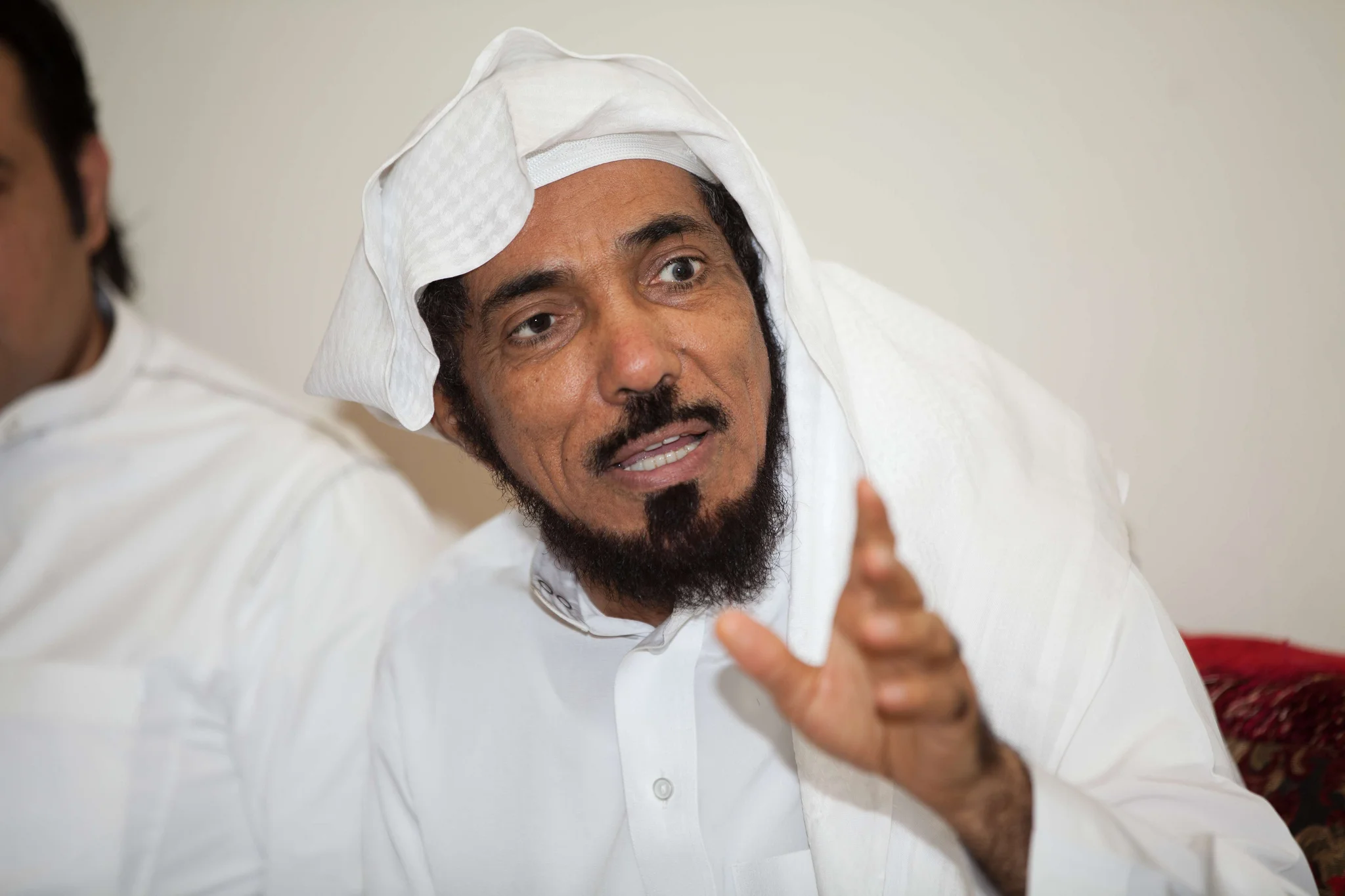
Muḥammad ibn Ṣāliḥ al-ʻUthaymīn
 Saudi Arabia
Islamic jurist•Qur'anic exegete•university teacher
Also known as: Ibn Uthaymin, Muhammad bin Salih al-Uthaymeen, Abu 'Abd Allah Muhammad ibn Saalih
Birthday
March 9, 1929
Birth Sign
Pisces
Birthplace
Unaizah, Saudi Arabia
Age
Died at 71
About
Muḥammad ibn Ṣāliḥ al-ʻUthaymīn was a preeminent Saudi Islamic scholar, jurist, and Qur'anic exegete whose influence extended across the Muslim world during the late 20th and early 21st centuries. Born in Unaizah, he is widely regarded as one of the most authoritative voices in contemporary Salafi scholarship. His life was dedicated to teaching, writing, and issuing legal rulings that shaped religious understanding for millions.
He passed away on January 10, 2001, in Riyadh at the age of 71. His legacy endures through thousands of recorded lectures and over fifty published books that continue to be studied globally. The scholar maintained a reputation for clarity, humility, and rigorous adherence to traditional sources throughout his decades of public service.
Early Life & Background
The story of Muḥammad ibn Ṣāliḥ al-ʻUthaymīn begins in the city of Unaizah in the Qassim region of Saudi Arabia. Historical records indicate he was born on the night of the 27th of Ramadan, 1347 AH, which corresponds to March 9, 1929, though some sources cite slightly different years. He entered a family with a strong tradition of religious scholarship; his father served as a judge and scholar, setting an early precedent for a life devoted to learning.
From a very young age, al-ʻUthaymīn displayed an extraordinary aptitude for memorization and study. He memorized the entire Quran by the age of ten, a feat that marked him as a prodigy within his community. His early education took place in Unaizah under local scholars before he moved to Riyadh at the age of fifteen. There, he enrolled in the newly established Madrasa of the Sharia, where he studied under some of the most prominent scholars of the era. Among his mentors was Sheikh Abd al-Aziz ibn Baz, who became a lifelong friend and influential figure in his intellectual development. During these formative years, he honed his skills in debating complex theological points and mastering vast amounts of text, laying the groundwork for his future role as a leading authority in Islamic jurisprudence.
Career Growth
After completing his studies in Riyadh, al-ʻUthaymīn returned to Unaizah to teach, quickly gaining a reputation for clarity and depth in his explanations of Islamic law. His career trajectory shifted significantly in the 1970s when he joined the faculty of the College of Sharia in Riyadh. This period marked his rise into the highest echelons of religious authority in Saudi Arabia, as he began serving as a member of the Council of Senior Scholars, the nation's highest religious body.
The 1980s and 1990s saw his fame grow exponentially. He started delivering weekly lectures at the Grand Mosque in Mecca, drawing crowds of thousands. These sessions were later distributed via cassette tapes and digital media, reaching audiences from Indonesia to Morocco. He also served as a senior judge in the Saudi court system and held a professorship at the University of Sharia. His prolific output included over 50 books and hundreds of treatises, covering everything from fundamental creed to detailed jurisprudence. Key works like Sharh al-'Aqeedah al-Wasitiyyah and his comprehensive exegesis of the Quran remain essential texts for students today. Even after stepping back from active judicial duties due to health issues, he continued to issue fatwas and guide students until shortly before his death.
Career Timeline
Public Image & Style
Al-ʻUthaymīn was known for his simple and dignified appearance, typically wearing traditional Saudi attire including a thobe and ghutra. He cultivated an image of humility and approachability, often walking to his lectures rather than accepting special treatment. Media descriptions highlight his gentle demeanor and soft voice, even when engaging in intense theological debates. He projected an aura of unwavering integrity, refusing to accept gifts or favors that might compromise his independence. His public persona was defined by a commitment to clarity and accessibility, making complex legal concepts understandable to ordinary people without sacrificing scholarly rigor.
Fame & Fandom (iFAMOUS Rankings)
The quiet streets of Unaizah still echo with the footsteps of a man who turned Islamic jurisprudence into a global discipline. Muḥammad ibn Ṣāliḥ al-ʻUthaymīn remains a towering figure in religious scholarship, his voice preserved in thousands of recordings that circulate from Cairo to Jakarta. His influence transcends borders, anchoring him firmly within the cultural memory of his homeland and beyond. He is the 21st most famous person in Saudi Arabia and holds the position of the 36th most famous person from Saudi Arabia according to the iFANN Global Fame Rankings. These placements reflect a sustained legacy built on rigorous teaching and clear exegesis rather than fleeting celebrity. The rankings capture attention across media coverage, search activity, and consumption signals worldwide, measuring how deeply his words resonate decades after his passing. No formal fan club or branded movement exists to organize his followers; the audience consists of students and scholars who seek guidance through his written commentaries and recorded lectures. This devotion manifests as a steady, reverent engagement with his texts rather than the chaotic energy of pop-culture fandoms. People gather not to cheer but to learn, treating his words with the solemnity due to a master jurist. The digital age has amplified this reach, with social media reels sharing his quotes, yet the core of his following remains rooted in educational necessity and spiritual reverence. There are no viral campaigns or birthday billboards for a man who passed away in 2001. His fame endures because his work solved complex theological problems for millions, creating a lasting impact that outlasts the noise of modern entertainment.
Interesting Facts and Legends
Al-ʻUthaymīn was famous for his extreme simplicity despite his high status. He famously refused gifts from dignitaries and wealthy individuals, choosing instead to walk to classes rather than use official vehicles provided by the administration. A persistent legend among his students recounts how he once spent an entire night answering a single question from a young student who struggled with a concept, demonstrating his boundless patience. Another widely told story involves him correcting a renowned professor's error during a public lecture without raising his voice; the room fell silent before erupting in applause. He possessed a photographic memory that allowed him to recall vast amounts of hadith and legal texts instantly. While he lived a life of modest means, his impact on Islamic thought remains immense, with his teachings continuing to circulate globally decades after his passing.
Notable Quotes
“Knowledge is not what is memorized; knowledge is what benefits.”
“The best of people are those who are most beneficial to others.”
“Do not follow the whims of your desires, for they will lead you astray.”
Family & Personal Life
As an Islamic scholar dedicated to religious life, Muḥammad ibn Ṣāliḥ al-ʻUthaymīn maintained a private family life in accordance with cultural norms. He was married and had children, but specific details regarding his spouse's name or the names of his offspring are not widely publicized, reflecting the discretion common for religious figures. His household was reportedly humble, mirroring his personal lifestyle. He is survived by his family, who continue to manage his legacy and protect his private archives. The scholar often spoke about the importance of family values in Islam, emphasizing kindness and respect within the home structure.
Notable Connections
Abd al-Aziz ibn Baz, Muhammad Nasiruddin al-Albani, Salman al-Ouda.
Relationships & Dating History
As an Islamic scholar dedicated to religious life, Muḥammad ibn Ṣāliḥ al-ʻUthaymīn did not have a public dating history or romantic relationships in the manner of entertainment figures. In accordance with Islamic tradition and his role as a scholar, he maintained a private family life. He was married and had children, but specific details regarding his spouse's name, the dates of marriage, or the names of his children are not widely publicized in available biographical sources. This reflects the cultural norm of keeping such details private for religious figures. He is not known to have been divorced, widowed in a public context, or engaged in any high-profile romantic partnerships that would be recorded in secular media. His primary relationships were those of teacher-student and mentorship, which were extensive and deeply influential.
Death & Aftermath
Died
January 10, 2001 (aged 71)
Death Place
Riyadh, Saudi Arabia
Cause of Death
Complications from diabetes and kidney failure
Muḥammad ibn Ṣāliḥ al-ʻUthaymīn died on January 10, 2001, in Riyadh. The scholar spent his final months at King Faisal Specialist Hospital & Research Centre battling stomach cancer, a condition diagnosed years earlier. Even as his health deteriorated through late 2000 and early 2001, he maintained his scholarly duties by issuing fatwas and teaching from his hospital bed via telephone and video link. His passing marked the end of a life dedicated to rigorous jurisprudence and Quranic exegesis. The reaction across the Muslim world was immediate and profound. Tributes poured in from peers, institutions, and government officials who acknowledged his status as one of the most influential Sunni scholars of the century. On January 11, 2001, hundreds of thousands of mourners gathered for his funeral prayer in Riyadh, making it one of the largest funerals in modern Saudi history.
Senior Saudi officials, leading Islamic scholars, and countless students attended the service, which was led by Sheikh Abdul Aziz bin Baz. The body was interred at Al-Azizia Cemetery following extensive recitations of the Quran and eulogies that praised his piety. In the aftermath, his legacy expanded through the release of remaining manuscripts and audio recordings of his lectures. Foundations and scholarships established in his name now support Islamic studies and research throughout Saudi Arabia. The Muhammad ibn Salih Al-Uthaymin Foundation continues to manage his estate, ensuring proceeds fund charitable causes while safeguarding his scholarly works.
Net Worth (Estate Value)
$0
iFANN Editorial Team estimate
As a religious scholar dedicated to a life of simplicity, Muḥammad ibn Ṣāliḥ al-ʻUthaymīn did not accumulate wealth in the traditional sense. He lived modestly, refusing gifts and special treatment throughout his career. Consequently, there is no "net worth" in the celebrity sense, and iFANN estimates his estate value at approximately $0. Any assets he left behind were likely managed by his family or charitable foundations. His financial legacy is not measured in currency but in the enduring circulation of his writings and lectures, which continue to generate educational value for millions. The estate continues to publish his works, ensuring his teachings remain accessible to new generations without the accumulation of personal fortune.
Awards & Accolades
View 3 records, honours and achievementsKnown For
Sharh al-'Aqeedah al-Wasitiyyah
1980s · Author
Tafsir al-Qur'an al-Karim
1990s · Exegete
Sharh al-Mumti'
1990s · Jurist
Keywords
Sources
Quick Facts
- Profession
- Islamic jurist, Qur'anic exegete, university teacher
- Born
- March 9, 1929
- Birthplace
- Unaizah, Saudi Arabia
- Died
- January 10, 2001
- Death Place
- Riyadh, Saudi Arabia
- Gender
- Male
- Birth Sign
- Pisces
Personal Details
- Full Name
- Abu 'Abd Allah Muhammad ibn Saalih ibn Muhammad ibn Sulayman ibn Abd Al Rahman Al Uthaymeen Al Tamimi
- Children
- Several (names not publicly disclosed)
- Education
- Madrasa of the Sharia, Riyadh; University of Sharia in Riyadh
Frequently Asked Questions
When was Muhammad ibn Salih al-Uthaymin born?
How did Muhammad ibn Salih al-Uthaymin die?
What is Muhammad ibn Salih al-Uthaymin famous for?
Did Muhammad ibn Salih al-Uthaymin have any children?
Where is Muhammad ibn Salih al-Uthaymin buried?
Similar People
Join the community
fans discussing