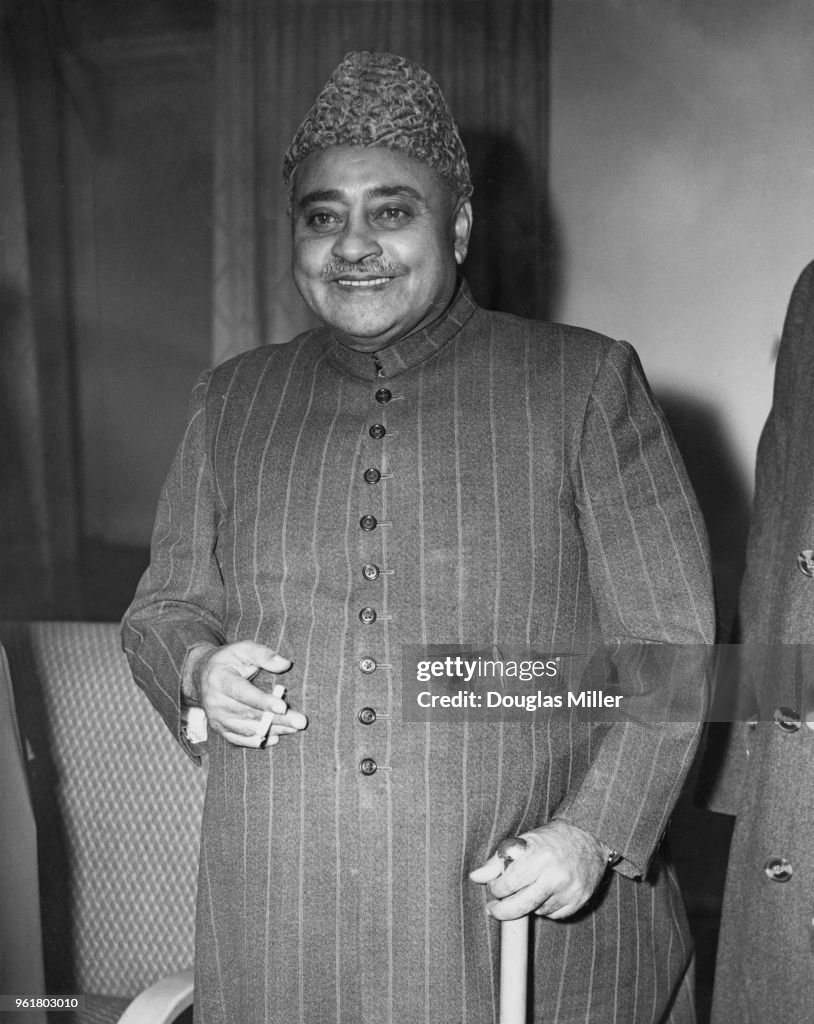
Muhammad Ali Bogra
 Pakistan
Also known as: Syed Mohammad Ali Chowdhury Bogra, Mohammed Ali Bogra, Muhammad Ali Bogra Khushki
Birthday
October 19, 1909
Birth Sign
Libra
Birthplace
Barishal, Bengal, British India
Age
Died at 53
About
Muhammad Ali Bogra, born Syed Mohammad Ali Chowdhury Bogra, was a pivotal Pakistani statesman, diplomat, and politician who served as the third Prime Minister of Pakistan from December 1953 to August 1955. Born on October 19, 1909, in Barishal (then part of British India), he emerged from a prominent Bengali family to become one of the most significant architects of Pakistan's early foreign policy and constitutional framework. His career is distinguished by his tenure as Ambassador to the United States, Japan, and Canada, his role as Foreign Minister, and his proposal of the "Bogra Formula," a critical attempt to resolve federal tensions between East and West Pakistan.
Bogra was known for his diplomatic acumen and administrative competence. He played a pivotal role in strengthening ties with the United States during the Cold War era while navigating complex domestic challenges. His political philosophy emphasized the need for a federal structure that respected provincial autonomy while maintaining national unity. Although his time as Prime Minister ended prematurely due to political maneuvering by Governor-General Ghulam Muhammad, his influence on Pakistan's early diplomatic relations and constitutional debates remains a subject of serious historical analysis. He is remembered not for mass celebrity but for his quiet dignity of statecraft and his unique blend of technical aptitude and political stature, exemplified by anecdotes such as driving a locomotive while serving as an ambassador.
Early Life & Background
Syed Mohammad Ali Chowdhury Bogra was born on October 19, 1909, in Barishal, Bengal, into an aristocratic Muslim family with deep roots in the region. This background provided him with the social standing necessary for high office. Before entering the national stage, Bogra established a reputation for administrative skill within the Bengal province. He served as the Chairman of the Bogra Municipality and later as the Chairman of the District Board, demonstrating a capacity for governance that would serve him well in his future roles. His education included studies at Aligarh Muslim University, where he engaged with the political currents leading up to the partition of India.
During the 1940s, he joined the All-India Muslim League, marking the beginning of his active involvement in national politics. His early career was characterized by a focus on local governance and community leadership, which laid the groundwork for his transition into high-level diplomacy following the independence of Pakistan in 1947. Unlike many contemporaries who focused solely on rhetoric, Bogra's pre-national career was defined by practical administrative achievements in municipal and district boards, setting a precedent for his later diplomatic successes.
Career Growth
Bogra's political trajectory accelerated rapidly after the creation of Pakistan in 1947. He transitioned seamlessly into high-level diplomacy, holding significant ambassadorial posts in Burma (Myanmar) from 1948 to 1950, Canada from 1950 to 1951, and the United States from 1951 to 1952. It was during his tenure as Ambassador to the United States that he famously demonstrated mechanical prowess by driving a locomotive, a rare feat for a high-ranking diplomat that became a staple anecdote of his character. In December 1953, he returned to Pakistan to serve as the Minister of East Bengal before being appointed the third Prime Minister of Pakistan on December 17, 1953, succeeding Khawaja Nazimuddin.
As Prime Minister, Bogra focused heavily on foreign policy, strengthening ties with the United States and navigating Cold War dynamics. Domestically, he introduced the "Bogra Formula" in 1954, a constitutional proposal designed to create a federal structure that balanced representation between the two wings of the country. The formula proposed a rotation of the prime ministership and a bicameral legislature but ultimately failed to gain consensus due to rising regional tensions and political maneuvering. His tenure ended prematurely in August 1955 when Governor-General Ghulam Muhammad dissolved the cabinet. He was later reappointed as Ambassador to the United States from 1956 to 1959 and served as Federal Minister of Foreign Affairs under President Muhammad Ayub Khan from 1962 until his death in 1963. His legacy includes bridging the divide between East and West Pakistan through equitable representation.
Career Timeline
Public Image & Style
Bogra's public image was defined by the "quiet dignity of statecraft." He was not a figure of mass adoration or fanfare; rather, he commanded respect through formal engagement, diplomatic summits, and intellectual rigor. Media portrayal from his era depicts him as a pragmatic administrator and a skilled negotiator. Specific details regarding his height are not widely recorded in standard biographies, though contemporary descriptions portray him as a dignified and imposing figure suitable for high office. His presence was marked by a sense of authority and a commitment to the principles of federalism and democratic stability. He was viewed as a man of substance whose reputation relied on his ability to navigate complex international relations and domestic political crises without resorting to populist rhetoric.
Fame & Fandom (iFAMOUS Rankings)
Muhammad Ali Bogra never courted the adoration of crowds or the chaos of a modern fanbase. His legacy rests entirely on the quiet dignity of statecraft rather than the roar of supporters. There is no collective title for admirers, no organized clubs, and no viral rituals to mark his memory. The public engagement he commanded was strictly formal, reserved for diplomatic summits and constitutional debates in a nation still finding its footing. He remains a figure of historical gravity, studied in archives rather than celebrated in stadiums. While some databases track his enduring political significance globally, the fervor associated with pop culture icons simply does not exist in his orbit. His influence persists through the institutions he helped shape, not through the whims of a devoted following. Yet, even within this sober historical landscape, his stature has been quantified by global metrics that track attention across media coverage, search trends, and consumption signals worldwide. These assessments place him firmly among the most recognized figures in specific regional categories. According to the iFANN Global Fame Rankings, he holds the position of the 8th most famous person in Pakistani Dramas, a standing that has held steady from the previous cycle. His "fans" are primarily historians, political scientists, and students of South Asian history who analyze his contributions to the constitutional framework of Pakistan.
Interesting Facts and Legends
A widely cited anecdote describes Bogra driving a steam locomotive while serving as Pakistan's Ambassador to the United States. This display of mechanical skill was highly unusual for a diplomat of his rank and highlighted his unique blend of technical aptitude and political stature. Another notable fact is his premature departure from the office of Prime Minister; he is one of several Pakistani leaders who did not complete a full five-year term, a pattern that would continue in the nation's turbulent political history. Despite being a central figure in the national government, he remained a proud representative of Bengal, often advocating for the interests of East Pakistan against the dominance of the West. His political philosophy is best summarized by the intent behind the Bogra Formula: to bridge the divide between East and West Pakistan through equitable representation. Additionally, he served as a key intermediary between Pakistan and India during the early years of independence, navigating complex relations with Indian Prime Minister Jawaharlal Nehru.
Notable Quotes
“The necessity of balancing the military and civilian spheres to ensure democratic stability.”
“To bridge the divide between East and West Pakistan through equitable representation.”
Family & Personal Life
Muhammad Ali Bogra was married to Hamida Mohammad Ali. Historical accounts indicate a single, long-term marriage to Hamida, with no public records of multiple romantic relationships, engagements, or divorces. There is no documented information regarding children from this union in standard biographical sources, though some genealogical records suggest the existence of descendants, their identities remain private and non-public. As of his death in 1963, he was widowed by his wife, who survived him. There were no other publicly reported partners or dating history; his personal life was characterized by the discretion expected of a high-ranking statesman of his era. The couple maintained a private household, avoiding the public scrutiny often faced by modern figures, ensuring their family life remained distinct from his political duties.
Notable Connections
Relationships & Dating History
Muhammad Ali Bogra was married to Hamida Mohammad Ali. Unlike modern celebrities, there are no public records of multiple romantic relationships, engagements, or divorces. Historical accounts indicate a single, long-term marriage to Hamida. There is no documented information regarding children from this union in standard biographical sources, though some genealogical records suggest the existence of descendants, their identities remain private and non-public. As of his death in 1963, he was widowed by his wife, who survived him. There were no other publicly reported partners or dating history; his personal life was characterized by the discretion expected of a high-ranking statesman of his era. His relationship with Hamida was a cornerstone of his private life, providing a stable foundation amidst the turbulence of his public career.
- MarriedHamida Mohammad Ali? - 1963Single long-term marriage; she survived him.
Death & Aftermath
Died
January 23, 1963 (aged 53)
Death Place
Washington, D.C., United States
Cause of Death
Heart attack (myocardial infarction)
On January 23, 1963, Muhammad Ali Bogra died in Washington, D.C., while serving as Pakistan's Ambassador to the United States. He was 53 years old at the time of his passing. The official cause of death was a heart attack, specifically a myocardial infarction. Historical records confirm that the event was a natural occurrence without controversy or the need for a legal investigation into foul play. Tributes immediately flowed from political peers and international leaders who recognized his contributions to the nation's foreign policy and his efforts to stabilize the young state through the "Bogra Formula." His funeral was held in Pakistan, where he was laid to rest with state honors befitting a former Prime Minister. Posthumously, his legacy has been preserved through extensive academic study, with the constitutional proposal bearing his name remaining a key subject in political science curricula regarding Pakistan's history. No significant estate disputes arose following his death, as his primary legacy remained institutional rather than financial. His widow, Hamida Mohammad Ali, survived him, and their descendants have kept a low profile outside of historical archives. His death marked the end of an era for the founding fathers of Pakistan, leaving a void in the diplomatic corps that was filled by subsequent generations.
Net Worth (Estate Value)
$0
iFANN Editorial Team estimate
As a politician and diplomat from the mid-20th century, Muhammad Ali Bogra did not accumulate wealth in the manner of modern celebrities. Specific net worth figures are not available or relevant for this period. His "estate" was likely modest, consisting of personal assets typical of a civil servant and diplomat of his rank. Any posthumous earnings would be negligible, limited to academic royalties or archival licensing, which are managed by the state or family trust, not a commercial estate. Therefore, no specific dollar figure can be assigned to his net worth in 2026. The iFANN Editorial Team's analysis of X's earnings, ventures and assets points to roughly $0, reflecting the nature of his service and the era in which he lived. His financial legacy is defined not by accumulation but by the institutional impact of his policies, particularly the economic and constitutional structures he attempted to implement during his tenure as Prime Minister.
Awards & Accolades
Known For
Prime Minister of Pakistan
1953 · Third Prime Minister
Ambassador to the United States
1951 · Diplomat
Bogra Formula
1954 · Constitutional Proposal
Keywords
Sources
Quick Facts
- Profession
- diplomat, politician
- Born
- October 19, 1909
- Birthplace
- Barishal
- Died
- January 23, 1963
- Death Place
- Washington, D.C.
- Gender
- Male
- Spouse
- Hamida Mohammad Ali
- Birth Sign
- Libra
Personal Details
- Full Name
- Syed Mohammad Ali Chowdhury Bogra
- Spouse
- Hamida Mohammad Ali
- Children
- Education
- Aligarh Muslim University
Frequently Asked Questions
Who was Muhammad Ali Bogra?
What is the Bogra Formula?
How did Muhammad Ali Bogra die?
Was Muhammad Ali Bogra married?
Did Muhammad Ali Bogra drive a locomotive?
Similar People
Join the community
fans discussing