 United States
“A film that knows exactly what it wants to be: a visually stunning, high-octane adrenaline rush with a killer soundtrack.”
Christy Lemire
RogerEbert.com
Part of a Collection
Top Gun Collection
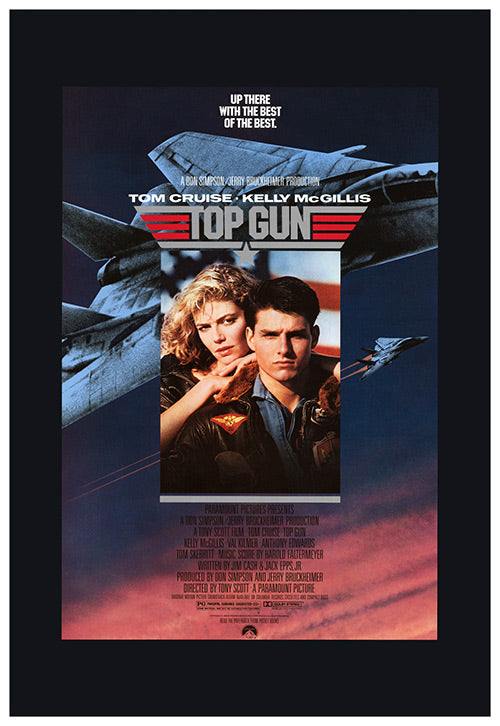
Released in 1986, Top Gun is an American action drama directed by Tony Scott that defined the look and sound of 1980s blockbuster cinema. The film follows Pete "Maverick" Mitchell, a gifted but reckless F-14 Tomcat pilot who gets a shot at the Navy's elite Fighter Weapons School. Produced by Don Simpson and Jerry Bruckheimer for Paramount Pictures, it was shot largely at Naval Air Station Miramar and aboard the USS Enterprise, with real F-14s and extensive aerial footage that set a new standard for aviation filmmaking.
The movie turned Tom Cruise into a global superstar and made hits of its soundtrack, led by Kenny Loggins' Danger Zone and Berlin's Take My Breath Away. It also sparked a surge in Navy recruitment and made aviator sunglasses and leather jackets into lasting fashion icons. Critics were divided on the thin plot and jingoistic tone, but audiences embraced the visceral dogfights and charismatic cast, which included Kelly McGillis, Val Kilmer, and Anthony Edwards.
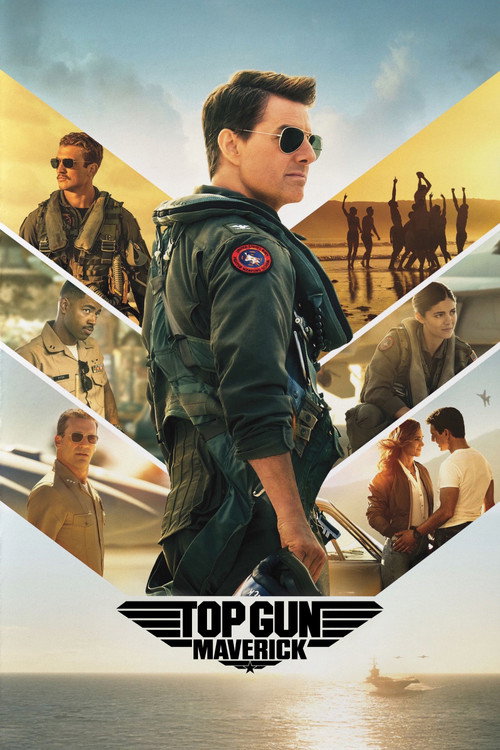
Thirty-six years later, the franchise roared back with Top Gun: Maverick (2022), a sequel that earned near-universal acclaim and grossed nearly $1.5 billion worldwide. The original remains a touchstone of 1980s pop culture, its influence visible in countless action films that followed.
Availability and pricing can change. Confirm on the provider's site before purchasing.
Pete "Maverick" Mitchell and his Radar Intercept Officer Nick "Goose" Bradshaw are F-14 pilots in the U.S. Navy, known for their daring, borderline insubordinate flying. After a risky intercept of a Soviet MiG over the Pacific, their superiors select them for the Navy Fighter Weapons School at NAS Miramar, the legendary TOPGUN program.
At TOPGUN, Maverick faces fierce competition. His chief rival is Tom "Iceman" Kazansky, a cool, methodical pilot who flies by the book. Maverick's aggressive style impresses his instructors, including Mike "Viper" Metcalf, but also draws criticism from the school's commander, Rick "Jester" Heatherly. Adding to the pressure, Maverick begins a romance with Charlotte "Charlie" Blackwood, an astrophysicist and civilian instructor whose expertise in aerial tactics both attracts and intimidates him.
The training exercises push the pilots to their limits. Maverick's need to prove himself often puts him at odds with his wingmen, including the steady Ron "Slider" Kerner and the easygoing Leonard "Wolfman" Wolfe. A tense encounter with Iceman during a mock dogfight leads to a reprimand, forcing Maverick to confront the consequences of his recklessness. Meanwhile, Goose remains his loyal partner, grounding Maverick with humor and friendship.
As the training progresses, Maverick struggles to balance his natural talent with the discipline required to be a team player. Charlie helps him see that flying is not just about individual glory but about trust and cooperation. Yet the competitive atmosphere and the constant threat of real combat keep the pilots on edge. The film builds toward a final evaluation, where Maverick must prove he can lead a formation and follow orders, or risk washing out of the program he fought so hard to enter.
Official Trailer
Critical Consensus
While criticized for its thin plot and jingoistic undertones, Top Gun is celebrated for its dazzling aerial action, iconic soundtrack, and charismatic performances, making it a quintessential 1980s blockbuster.
“A film that knows exactly what it wants to be: a visually stunning, high-octane adrenaline rush with a killer soundtrack.”
Christy Lemire
RogerEbert.com
“A triumph of style over substance, succeeding on the sheer power of its thrilling aerial sequences and charismatic leads.”
Joe Morgenstern
The Wall Street Journal
“The film's aerial choreography is breathtaking, and its soundtrack is one of the most memorable of the decade.”
David Denby
The New Yorker
“A slick, fast-paced action movie that is both exhilarating and ultimately hollow.”
Janet Maslin
The New York Times
Tom Cruise
Pete 'Maverick' Mitchell
Kelly McGillis
Charlotte 'Charlie' Blackwood
Val Kilmer
Tom 'Iceman' Kazansky
Anthony Edwards
Nick 'Goose' Bradshaw
Tom Skerritt
Mike 'Viper' Metcalf
Michael Ironside
Lt. Cmdr. Rick 'Jester' Heatherly
John Stockwell
Bill 'Cougar' Cortell
Barry Tubb
Leonard 'Wolfman' Wolfe
Rick Rossovich
Ron 'Slider' Kerner
Tim Robbins
Lt. Samuel 'Merlin' Wells
Clarence Gilyard Jr.
Marcus 'Sundown' Williams
Director
Tony Scott
Writers
Jim Cash, Jack Epps Jr.
Composers
Harold Faltermeyer, Giorgio Moroder
Cinematographer
Jeffrey L. Kimball
Producers
Don Simpson, Jerry Bruckheimer
Academy Awards (1987)
Best Sound: Won
Academy Awards (1987)
Best Film Editing: Nominated
Academy Awards (1987)
Best Original Song: Nominated
Academy Awards (1987)
Best Sound Effects Editing: Nominated
Golden Globe Awards (1987)
Best Original Song: Nominated
Grammy Awards (1987)
Best Pop Performance by a Duo or Group with Vocal: Won
Join the community
fans discussing