 United States
“A showcase for Tarantino's distinctive voice, with dialogue that crackles and a structure that keeps you off balance.”
Roger Ebert
Chicago Sun-Times
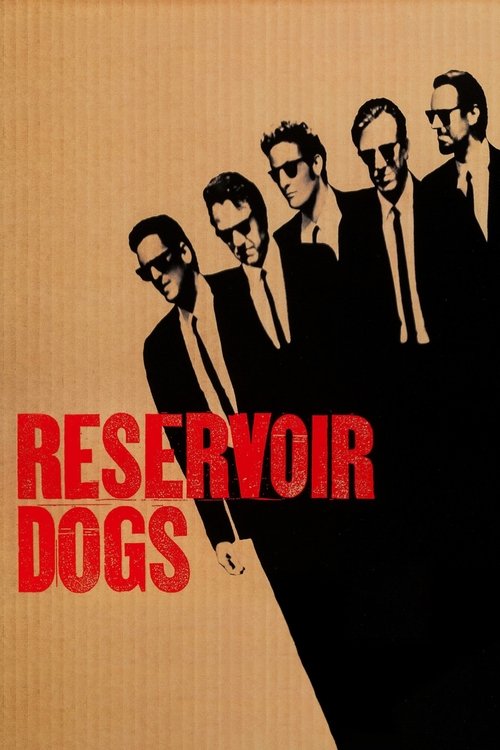
Six men in black suits sit around a diner table, debating the meaning of Madonna's "Like a Virgin" and refusing to tip. Within minutes, one of them is bleeding in the back of a getaway car. That jolt from mundane to violent is the engine of Reservoir Dogs, Quentin Tarantino's 1992 debut, a heist film that never shows the heist.
The cast is a lineup of character actors doing what they do best: Harvey Keitel as the loyal Mr. White, Tim Roth as the wounded newcomer Mr. Orange, Michael Madsen as the chilling Mr. Blonde, Steve Buscemi as the fast-talking Mr. Pink, and Lawrence Tierney as the gravel-voiced boss Joe Cabot. Tarantino wrote and directed, Lawrence Bender produced, and the whole thing cost $1.2 million, shot in and around Los Angeles over a few weeks.
The film's tone is pure crime thriller with a mean streak of black comedy. It plays like a stage play with guns, most of it set in a single warehouse where the survivors of a jewelry store robbery try to figure out who sold them out. The box office was modest, under $3 million domestically, but the film became a calling card for Tarantino and a favorite among critics and cinephiles. Its rating sits at 8.11/10 from nearly 16,000 votes, a sign of how strongly it still lands with viewers who like their crime stories lean and nasty.
Stream
Rent
Prime Video
$3.99
Apple TV
$3.99
YouTube
$3.99
Availability and pricing can change. Confirm on the provider's site before purchasing.
A diner table, six men in identical black suits, and an argument about Madonna. That is how Reservoir Dogs begins, not with a gunshot but with a lecture. Mr. Brown (Quentin Tarantino) holds forth on the hidden meaning of "Like a Virgin" while Mr. White (Harvey Keitel) and Mr. Pink (Steve Buscemi) bicker about whether to leave a tip. Around them sit Mr. Blonde (Michael Madsen), Mr. Orange (Tim Roth), Mr. Blue (Edward Bunker), and the man who assembled them all, Joe Cabot (Lawrence Tierney), along with his son and enforcer, "Nice Guy" Eddie (Chris Penn). Joe has one rule: no real names, no personal details, just colors. The men barely know each other, and that is the point.
The film then cuts hard to the aftermath. A jewelry heist has collapsed into a bloodbath. Police arrived almost immediately, and the crew was ambushed. Mr. White is driving a getaway car with Mr. Orange in the back seat, shot in the stomach and losing blood fast. They reach a prearranged warehouse rendezvous, an empty industrial space with concrete floors and a lot of echoes. Mr. Pink arrives next, panicked and already convinced the job was a setup. Mr. Blonde turns up calm, almost cheerful, and pops the trunk of his car to reveal a bound and gagged police officer, Marvin Nash (Kirk Baltz). Mr. Blue and Mr. Brown are missing. No one knows who is dead, who is alive, or who talked.
The warehouse becomes the whole world. Mr. White wants to get Orange to a doctor and wait for Joe. Mr. Pink insists they cut the wounded man loose and vanish. The argument is not really about strategy; it is about trust, and there is none. Through a series of flashbacks, the film fills in how each man was recruited and what happened in the minutes before the robbery. We see Joe Cabot assigning colors, Mr. White refusing to give up his real name, Mr. Blonde listening to a radio station called K-BILLY and smiling at nothing. We also see Mr. Orange, the newcomer, rehearsing a cover story about a drug deal gone wrong, coached by a man we do not yet understand is a police detective. The flashbacks do not clarify so much as deepen the fog.
Meanwhile, Mr. Blonde takes center stage. With the cop tied to a chair, he turns on the radio and the film's most infamous sequence unfolds: a casual, almost conversational act of cruelty set to Stealers Wheel's "Stuck in the Middle with You." The camera looks away at the worst moment, but the implication is enough. The scene is not just violence; it is a demonstration of how little these men have left to lose and how much they enjoy what remains.
Joe and Eddie eventually arrive, and the hunt for the informant becomes explicit. Joe is certain there is a rat. Accusations fly. Mr. Pink points fingers. Mr. White defends Orange with a ferocity that surprises even him. The warehouse turns into a pressure cooker, and every conversation carries the threat of being the last. Tarantino keeps cutting away to the diner, to the recruitment, to the moments before the heist, so the audience is forced to assemble the truth from fragments, just like the characters. The film never shows the robbery itself. It does not need to. The aftermath is the story.
Official Park Circus Trailer
Critical Consensus
A lean, brutal debut that announced Tarantino as a major new voice in American cinema. Critics praise the crackling script, the ensemble of character actors at their best, and the audacious decision to never show the heist. Some recoil from the graphic violence, particularly the ear-cutting scene, but the film is widely considered a landmark of 1990s independent cinema.
“A showcase for Tarantino's distinctive voice, with dialogue that crackles and a structure that keeps you off balance.”
Roger Ebert
Chicago Sun-Times
“Fierce, exhilarating storytelling. Tarantino turns a single warehouse into a pressure cooker of paranoia.”
Janet Maslin
The New York Times
“A confident and stylish debut that transcends its low budget, driven by sharp ensemble performances and a witty screenplay.”
Todd McCarthy
Variety
“A bold, actor-driven crime drama that signaled a new generation of filmmakers.”
The Hollywood Reporter
The Hollywood Reporter
Harvey Keitel
Mr. White / Larry Dimmick
Tim Roth
Mr. Orange / Freddy Newandyke
Michael Madsen
Mr. Blonde / Vic Vega
Chris Penn
"Nice Guy" Eddie Cabot
Steve Buscemi
Mr. Pink
Lawrence Tierney
Joe Cabot
Randy Brooks
Detective Holdaway
Kirk Baltz
Officer Marvin Nash
Edward Bunker
Mr. Blue
Quentin Tarantino
Mr. Brown
Director
Quentin Tarantino
Writer
Quentin Tarantino
Cinematographer
Andrzej Sekula
Producer
Lawrence Bender
Sundance Film Festival (1992)
Grand Jury Prize - Dramatic: Won
Join the community
fans discussing