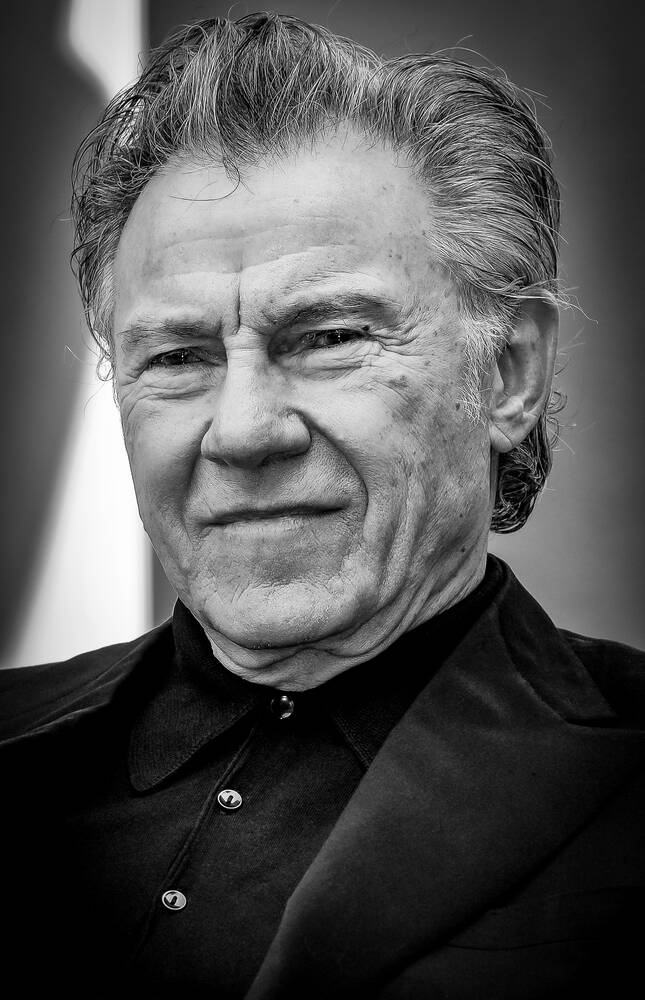
Harvey Keitel
 United States
actor•film actor•character actor
Birthday
May 13, 1939
Birth Sign
Taurus
Birthplace
Brooklyn, New York, USA
Age
87 years old
Height
5 ft 8 in (173 cm)
About
Harvey Johannes Keitel is an American actor and producer known for his intense portrayals of morally complex and tough-guy characters. He emerged as a key figure in the New Hollywood movement of the 1970s, working extensively with director Martin Scorsese. Over a career spanning more than five decades, Keitel has accumulated over 100 film and television credits, earning an Academy Award nomination for his role in Bugsy and winning the AACTA Award for Best Actor for The Piano. He co-presided over the Actors Studio alongside Al Pacino and Ellen Burstyn from 1995 to 2017.
Keitel's distinctive weathered face and method-acting intensity have made him a cult icon among cinephiles. He is particularly revered for his collaborations with Quentin Tarantino in Reservoir Dogs and Pulp Fiction, as well as his recurring work with Wes Anderson. As of 2026, he continues to act, bringing his signature grit and depth to every role.
Early Life & Background
Keitel grew up in the Brighton Beach neighborhood of Brooklyn, the son of Polish and Romanian Jewish immigrants. His father worked as a hat maker, and the family ran a luncheonette. He attended Abraham Lincoln High School but dropped out without graduating. As a child, he struggled with a stutter, a problem that persisted into adulthood.
At age 16, Keitel enlisted in the United States Marine Corps, serving as an infantry rifleman from 1956 to 1959. He was deployed to Lebanon in 1958 during Operation Blue Bat, the U.S. intervention in the country's political unrest. After his discharge, he worked as a court stenographer in New York City for ten years. During this time, he began taking acting classes in 1964, studying under Stella Adler, Lee Strasberg, and at the HB Studio. The training helped him overcome his stutter. He performed in off-Broadway productions before his big break.
While working as a court stenographer, Keitel saw a casting call for Martin Scorsese's first feature film. He auditioned and was cast as J.R. in Who's That Knocking at My Door (1967), beginning a decades-long collaboration.
Career Growth
Keitel made his film debut in Martin Scorsese's Who's That Knocking at My Door (1967). His breakthrough came in 1973 with Mean Streets, playing the volatile Charlie, a role that established him as a leading man of the New Hollywood era. He followed with villainous turns in Alice Doesn't Live Here Anymore (1974) and as the pimp Sport in Taxi Driver (1976).
In 1976, Keitel was fired from Francis Ford Coppola's Apocalypse Now less than two weeks into filming due to creative differences, a major setback. He rebounded with roles in Ridley Scott's The Duellists (1977) and Blue Collar (1978). Throughout the 1980s, he stayed busy, appearing in 16 films and television movies, including playing Judas Iscariot in Scorsese's The Last Temptation of Christ (1988).
His career resurged in the early 1990s. He earned an Academy Award nomination for Best Supporting Actor for Bugsy (1991) and starred in Thelma & Louise (1991). In 1992, he played Mr. White in Quentin Tarantino's Reservoir Dogs, a film he helped finance by raising the budget from $30,000 to $1.5 million and paying for casting sessions. That same year, he delivered a raw performance as a corrupt cop in Abel Ferrara's Bad Lieutenant. In 1993, he played the mute lover Baines in Jane Campion's The Piano, winning the AACTA Award for Best Actor. In 1994, he cemented his cult-icon status as Winston Wolfe in Tarantino's Pulp Fiction.
From 1995 to 2017, Keitel served as co-president of the Actors Studio. He continued to appear in major films, including From Dusk Till Dawn (1996), Cop Land (1997), U-571 (2000), and the National Treasure franchise (2004, 2007). Later roles include Wes Anderson's Moonrise Kingdom (2012) and The Grand Budapest Hotel (2014), Paolo Sorrentino's Youth (2015), and a voice role in Anderson's Isle of Dogs (2018). In 2019, he reunited with Scorsese for The Irishman.
Career Timeline
Public Image & Style
Keitel is known for his intense method acting, tough-guy presence, and distinctive weathered face that conveys deep emotion. He is regarded as one of the great method actors, often compared to Humphrey Bogart and Spencer Tracy. Media portrayals emphasize his reputation for choosing powerful, morally ambiguous roles over fame. He has a devoted cult following among cinephiles, particularly fans of Martin Scorsese and Quentin Tarantino films. Keitel does not maintain a significant public social media presence; an Instagram account under his name is not official.
Fame & Fandom (iFAMOUS Rankings)
Harvey Keitel is currently evaluated by the iFANN Global Fame Engine but does not hold a placement in the published rankings. The system has assessed his standing without assigning a specific ordinal position within the Global Top 1,000 or any scope-based list. This absence of a numeric rank reflects a profile defined by deep industry reverence rather than mass-market chart dominance. His fanbase lacks a formal name and operates as a dispersed collective of cinephiles, film students, and enthusiasts of the New Hollywood era who appreciate his work individually rather than as a mobilized political force. Unlike celebrities with branded communities that organize into named groups, Keitel's supporters do not engage in fan-funded projects, birthday billboards, or public rituals designed to cultivate a distinct subculture. The cultural mythology surrounding him is rooted almost exclusively in his professional legacy and status as a cornerstone of American independent cinema. A widely retold story regarding his career highlights his pivotal role in launching the careers of Martin Scorsese and Robert De Niro through his performance in Mean Streets. This film is frequently cited as the genesis of the modern tough-guy archetype in New York cinema, with Keitel playing Charlie Cappa, a character whose moral ambiguity set the template for future roles. While this serves as an origin story told to newcomers about his importance, it remains a verified historical fact rather than folklore. Recent events at the Karlovy Vary International Film Festival reinforced his legend as a principled artist who remains active in the industry, though these appearances did not generate the chaotic, myth-making incidents often associated with pop culture icons.
Interesting Facts and Legends
Harvey Keitel's father changed his name from Nikonar to Harry upon immigrating to America. He is of mixed Romanian and Polish Jewish descent. Keitel was instrumental in getting Jane Campion's The Piano made, championing the project when it seemed unmarketable. He helped make Quentin Tarantino's Reservoir Dogs possible by raising the budget from $30,000 to $1.5 million. He co-presided over the Actors Studio for 22 years. Keitel worked as a court stenographer for ten years before becoming an actor. He overcame a childhood stutter by taking acting classes. A legendary narrative in film history credits Keitel with launching the careers of Martin Scorsese and Robert De Niro, particularly through his performance in Mean Streets. This film is often described as the genesis of the modern tough-guy archetype in New York cinema, with his character Charlie Cappa setting a template for moral ambiguity that influenced decades of filmmaking. Fans frequently cite this collaboration as the primary origin story explaining his enduring importance to American independent cinema. At age 87, he publicly denounced the use of AI in filmmaking at the Karlovy Vary International Film Festival, calling it a danger while advocating for film as a tool to cure biases. These actions reinforce his reputation as a working-class artist with consistent integrity rather than a figure driven by sensationalism.
Notable Quotes
“I'm not an actor who plays roles. I'm a human being who acts.”
“It's the most important thing in someone's life.”
“The work is the only thing that matters.”
“I've always been attracted to characters who are on the edge.”
Family & Personal Life
Keitel's father, Nikonar (Harry) Keitel, was a Polish Jewish immigrant who worked as a hat maker. His mother, Miriam (née Klein), was a Romanian Jewish immigrant. The family owned a luncheonette in Brooklyn. Keitel has an older sister, Renee, and an older brother, Jerry. He married Israeli-American actress and filmmaker Daphna Kastner on October 7, 2001. They have a son, Roman, born in 2004. Keitel also has a daughter, Stella (born 1985), from his long-term relationship with actress Lorraine Bracco. The family resides in New York City.
Notable Connections
Keitel's longest collaboration is with Martin Scorsese, spanning from 1967 to 2019. He frequently co-starred with Robert De Niro in films like Mean Streets, Taxi Driver, and The Irishman. Quentin Tarantino cast him in Reservoir Dogs and Pulp Fiction, revitalizing his career. Jane Campion directed him in The Piano. He served as co-president of the Actors Studio with Al Pacino and Ellen Burstyn. Wes Anderson cast him in three films. His former partner Lorraine Bracco is the mother of his daughter Stella.
Relationships & Dating History
Keitel had a long-term domestic partnership with actress Lorraine Bracco from 1982 to 1993. They met while both were building their careers in the 1980s. The relationship ended amicably, and they have remained friends; Keitel was a pallbearer at Bracco's brother's funeral. They share a daughter, Stella, born in 1985. On October 7, 2001, Keitel married Israeli-American actress and filmmaker Daphna Kastner. They have a son, Roman, born in 2004. As of 2026, Keitel is married to Kastner and resides with her in New York City.
- DatedLorraine Bracco1982 - 1993Long-term domestic partnership; they have a daughter, Stella.
- MarriedDaphna Kastner2001 - presentCurrentMarried on October 7, 2001; they have a son, Roman.
Salary, Net Worth In 2026
$18 Million
iFANN Editorial Team estimate
Per iFANN's editorial analysis, Harvey Keitel's net worth in 2026 stands at $18 Million. The bulk of this wealth stems from a five-decade film career where he earned approximately $1–3 million per major role during the 1990s and 2000s. He also operates his own film production company, The Goatsingers. Residuals and royalties from classic films like Taxi Driver, Pulp Fiction, Reservoir Dogs, The Piano, and the National Treasure franchise provide ongoing income. Keitel owns property in New York City. His role as co-president of the Actors Studio was largely unpaid or nominal.
Awards Won (9)
Keitel won the AACTA Award for Best Actor in a Leading Role for his performance in The Piano (1993). He received an Academy Award nomination for Best Supporting Actor for Bugsy (1991) but did not win. His other competitive award wins are limited, though he has received numerous lifetime achievement and honorary accolades throughout his career.
1993 · Best Actor
The Piano
1991 · Best Supporting Actor
Mortal Thoughts
Known For
Reservoir Dogs
1992 · Mr. White
Pulp Fiction
1994 · Winston Wolfe
Taxi Driver
1976 · Sport
Mean Streets
1973 · Charlie
The Piano
1993 · Baines
Bad Lieutenant
1992 · The Lieutenant
Bugsy
1991 · Mickey Cohen
The Irishman
2019 · Angelo Bruno
Keywords
Sources
Quick Facts
- Profession
- actor, film actor, character actor
- Born
- May 13, 1939
- Birthplace
- Brooklyn, New York, USA
- Gender
- Male
- Spouse
- Daphna Kastner
- Birth Sign
- Taurus
- Height
- 5 ft 8 in (173 cm)
- Children
- 3
- Net Worth
- $18 Million
Personal Details
- Full Name
- Harvey Johannes Keitel
- Height
- 5 ft 8 in (173 cm)
- Spouse
- Daphna Kastner
- Children
- 3 (Stella Keitel, Roman Keitel, and one other)
- Education
- Attended Abraham Lincoln High School (did not graduate); studied acting at HB Studio, under Stella Adler and Lee Strasberg
Filmography
120
Total
100
Film
20
TV
Frequently Asked Questions
Is Harvey Keitel still acting?
How many children does Harvey Keitel have?
What is Harvey Keitel's net worth?
Did Harvey Keitel serve in the military?
Why did Harvey Keitel get fired from Apocalypse Now?
Similar People

Join the community
fans discussing