“The pairs of lovers are not interracial, but bohemian Paris is integrated, the jazz tunes are anthems of revolutionary personal.”
Darryl Pinckney
The Paris Review
 United States
"Love and jazz collide in the City of Light."
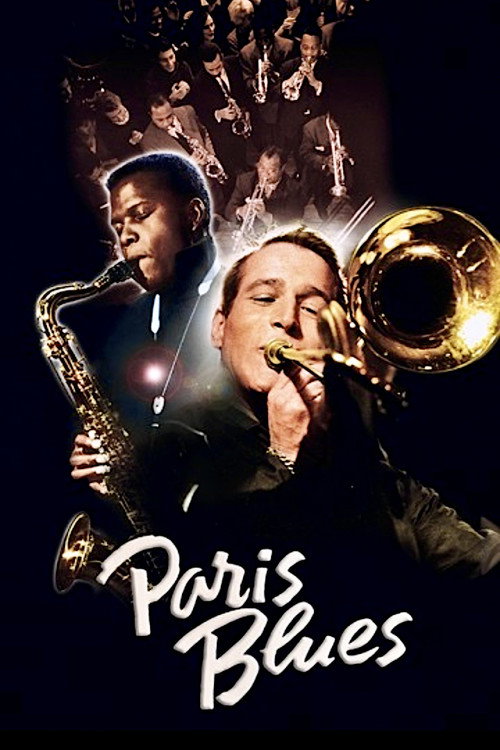
In 1961, Martin Ritt directed this jazz-infused romantic drama, pairing real-life couple Paul Newman and Joanne Woodward with Sidney Poitier and Diahann Carroll. Set in the bohemian jazz clubs of Paris, the film follows two American expatriate musicians, Ram Bowen and Eddie Cook, who have found a measure of freedom in the City of Light. Ram, a trombonist and composer, is chasing artistic recognition; Eddie, a saxophonist, has escaped the racism of America. Their lives are disrupted when two American tourists, Lillian and Connie, arrive, sparking two parallel romances that force the men to confront their choices.
The film was shot on location in Paris, with Duke Ellington providing the score, which earned an Oscar nomination. It was one of the few Hollywood films of its era to feature two Black stars in prominent romantic roles, treating their relationship with dignity. Though it received mixed reviews at the time, Paris Blues has since been reassessed as a significant cultural document, capturing a moment when Paris was a haven for Black artists and jazz was the soundtrack of a generation.
With a runtime of 98 minutes, the film balances intimate character moments against iconic Parisian backdrops. Newman and Woodward's on-screen chemistry is palpable, while Poitier and Carroll bring depth to their roles. The film's modest budget and focus on character over spectacle give it a quiet, melancholic tone that has aged well, making it a rewarding watch for fans of classic cinema and jazz history.
Buy
BFI
Availability and pricing can change. Confirm on the provider's site before purchasing.
Paris, late 1950s. Ram Bowen, an American trombonist and composer, has lived in the city for five years, chasing a musical breakthrough that will validate his artistic ambitions. Eddie Cook, a saxophonist, has found in Paris a sanctuary from the systemic racism of the United States. The two play in a smoky Left Bank jazz club, living the bohemian life.
One evening, two American tourists walk in: Lillian Corning, a schoolteacher from Connecticut, and Connie Lampson, a singer. Ram and Lillian are drawn to each other through their intellectual curiosity and emotional vulnerability. Eddie and Connie connect over their experiences as Black Americans, though from different perspectives: Eddie fled America, while Connie has built a life there.
As the romances develop, Ram faces a crossroads in his career. He has been offered a chance to record his compositions in New York, a move that could bring professional recognition but would require him to confront the America he left behind. Lillian challenges him to examine whether his artistic purity is genuine conviction or fear of failure. Meanwhile, Eddie and Connie's conversations reveal the painful complexity of being Black in mid-century America, with its opportunities and indignities.
The film unfolds through intimate scenes set against Paris's iconic locations: jazz clubs, riverside walks along the Seine, Montmartre's cobblestone streets, and cafés. Duke Ellington's score provides the emotional texture. Wild Man Moore, a legendary jazz trumpeter passing through Paris, mentors Ram, embodying the older generation's wisdom about art, love, and compromise.
As the couples grow closer, the central tension emerges: can love and artistic ambition coexist? Ram's obsession with his music threatens to consume him, while Eddie's commitment to expatriate life raises questions about whether he is running toward something or away from something. The women must decide whether the men they love are worth the uncertainty of a life in Paris or whether they should return to the stability of America. The film builds toward the moment when each character must choose what they truly value.
Based on Harold Flender's novel, the screenplay maintains a tone that is at once romantic and melancholy, celebrating the passion of youth while acknowledging the weight of adult choices. The narrative avoids easy answers, leaving the characters' futures uncertain.
Paris Blues (1961) Trailer - out now on BFI DVD & Blu-ray | BFI
Critical Consensus
Paris Blues is a jazz-infused romantic drama that pairs real-life couple Paul Newman and Joanne Woodward with Sidney Poitier and Diahann Carroll. Duke Ellington's Oscar-nominated score provides the emotional backbone, while Martin Ritt's direction captures the allure of Paris as a haven for artists. Though some narrative conventions feel dated, the performances and atmosphere have ensured its enduring appeal.
“The pairs of lovers are not interracial, but bohemian Paris is integrated, the jazz tunes are anthems of revolutionary personal.”
Darryl Pinckney
The Paris Review
“The 1961 film had its clichés and confections but it had a jazz theme and music by Duke Ellington and Louis Armstrong.”
Jazz Journal
Jazz Journal
“A landmark film featuring an Oscar- and Grammy-nominated soundtrack by Duke Ellington.”
Moving Image Museum
Moving Image Museum
Paul Newman
Ram Bowen
Joanne Woodward
Lillian Corning
Sidney Poitier
Eddie Cook
Diahann Carroll
Connie Lampson
Louis Armstrong
Wild Man Moore
Barbara Laage
Marie Séoul
André Luguet
René Bernard
Marie Versini
Nicole
Serge Reggiani
Michel "Gypsy" Devigne
Moustache
Mustachio
Aaron Bridgers
Pianist
Guy Pedersen
Bass Player
Director
Martin Ritt
Writers
Jack Sher, Irene Kamp, Walter Bernstein, Lulla Rosenfeld, Harold Flender
Composer
Duke Ellington
Cinematographer
Christian Matras
Producer
Sam Shaw
Academy Awards (1962)
Best Music, Original Song: Nominated
Join the community
fans discussing