
“Hepburn is so luminous, so perfectly cast, that she makes the character of Holly Golightly seem like a real person, not just a creation of fiction.”
Roger Ebert
Chicago Sun-Times

 United States
"A dazzling New York tale of love, loss, and the search for something real."
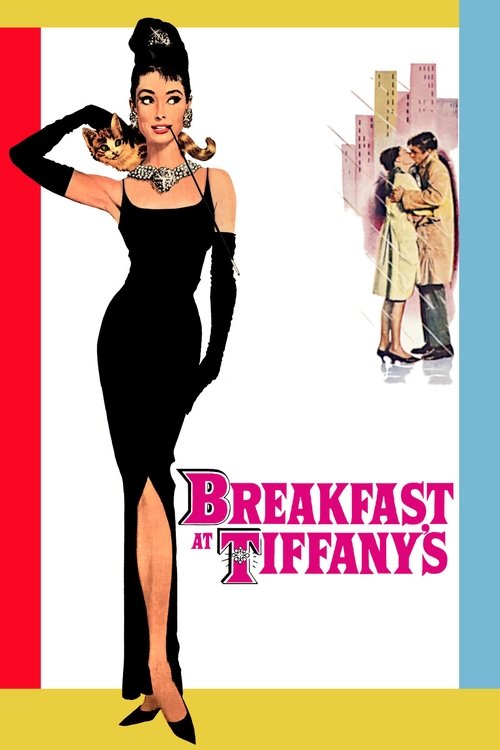
Audrey Hepburn stars as Holly Golightly, a glamorous socialite who spends her days people-watching at Tiffany's and dreaming of marrying into wealth. The story unfolds in early 1960s New York City, where she crosses paths with Paul Varjak, an aspiring writer living in the same apartment building. Their lives intertwine as they navigate loneliness, ambition, and the search for belonging in a bustling metropolis. Director Blake Edwards helmed this blend of comedy, romance, and drama, bringing Truman Capote's novella to life with a touch of whimsy and melancholy.
Produced by Martin Jurow and Richard Shepherd for Paramount Pictures, the film operated on a modest budget of $2.5 million but earned over $9.5 million at the box office upon its release in October 1961. The cast features strong supporting turns from Patricia Neal as the nosy neighbor Mrs. Failenson and Buddy Ebsen as Holly's brother Doc. Henry Mancini's score, including the famous title song, became instantly iconic. Critics and audiences responded warmly to Hepburn's performance, which helped cement the movie's status as a classic. With a current rating hovering around 7.6 out of 10 based on thousands of votes, the film remains a beloved piece of cinema history that balances humor with genuine emotional depth.
Stream
Availability and pricing can change. Confirm on the provider's site before purchasing.
The narrative opens on a rainy morning in 1961, introducing Holly Golightly (Audrey Hepburn) standing outside the Fifth Avenue jewelry store Tiffany & Co. She eats a croissant and drinks coffee while staring at the diamonds inside, calling the shop her sanctuary because nothing bad can happen within its walls. This ritual establishes her central philosophy: finding safety in luxury while fleeing the chaos of her past. Holly lives in a small, unfurnished apartment in the same building as Paul Varjak (George Peppard), a struggling writer who supports himself through the generosity of his older girlfriend, Mag Wildwood. Paul initially finds Holly annoying and mysterious, especially when she breaks into his apartment or brings strange men home, but their relationship slowly shifts from annoyance to a tentative friendship built on shared loneliness.
Holly reveals fragments of her history, describing a childhood in rural Texas and a brief marriage to a cowboy named Doc Golightly whom she claims to love but left because he wanted to settle down. She speaks constantly about her freedom and her refusal to be tied down, yet she harbors a deep fear of abandonment. Her life is a whirlwind of parties hosted by wealthy men and constant movement between cities. She maintains a strict code against getting attached, believing that attachment leads to pain. However, her lifestyle attracts dangerous attention when she becomes entangled with José da Silva Pereira, a Russian mobster who uses her to smuggle drugs. Simultaneously, Rusty Trawler, a wealthy and obsessive suitor, harasses her with gifts and proposals, further complicating her precarious existence.
As tensions rise, Paul begins to fall for Holly, seeing the vulnerability beneath her glittering facade. He discovers her involvement with the criminal underworld after she is arrested for prostitution, a charge stemming from her association with the mobster. The situation forces Paul to intervene, leading to a confrontation that exposes the fragility of Holly's constructed world. The narrative builds toward a climax involving the loss of something precious to Holly, her cat, and a final, desperate attempt to escape the consequences of her choices. Throughout these events, the film explores themes of identity, the American Dream, and the search for a place to belong, all set against the backdrop of a stylish, sophisticated New York that contrasts sharply with the gritty reality of its characters' lives. The story culminates in a moment of profound realization for both Holly and Paul, challenging their respective definitions of freedom and love without revealing the ultimate fate of their relationship or Holly's future.
Paramount Movies Trailer
Original Trailer
Restored Version Trailer
Critical Consensus
Directed by Blake Edwards and starring Audrey Hepburn in her most iconic role, Breakfast at Tiffany's is a visually stunning and emotionally resonant romantic comedy that balances whimsy with melancholy. While the film's racial insensitivity regarding Mickey Rooney's casting remains a significant blemish, the chemistry between Hepburn and Peppard, combined with Henry Mancini's timeless score and Givenchy's elegant costumes, creates a cinematic experience that has endured for generations as a classic of Hollywood romance.
“Hepburn is so luminous, so perfectly cast, that she makes the character of Holly Golightly seem like a real person, not just a creation of fiction.”
Roger Ebert
Chicago Sun-Times
“A dazzling, witty, and occasionally poignant adaptation that captures the essence of New York City in the early sixties.”
Variety Staff
Variety
“Miss Hepburn is a marvel of lightness and charm, and Mr. Peppard provides a solid counterpoint to her flightiness.”
Bosley Crowther
The New York Times
Audrey Hepburn
Holly Golightly
George Peppard
Paul Varjak
Patricia Neal
Mrs. Failenson
Buddy Ebsen
Doc Golightly
Martin Balsam
O.J. Berman
José Luis de Vilallonga
José da Silva Pereira
John McGiver
Tiffany's Salesman
Alan Reed
Sally Tomato
Dorothy Whitney
Mag Wildwood
Stanley Adams
Rusty Trawler
Mickey Rooney
I.Y. Yunioshi
Director
Blake Edwards
Writers
George Axelrod, Truman Capote
Composer
Henry Mancini
Cinematographer
Franz Planer
Producers
Martin Jurow, Richard Shepherd
Academy Awards (1962)
Best Original Song: Won
Academy Awards (1962)
Best Actress: Nominated
Academy Awards (1962)
Best Costume Design: Nominated
Golden Globe Awards (1962)
Best Actress – Motion Picture Musical or Comedy: Won
Golden Globe Awards (1962)
Best Original Score: Won
Golden Globe Awards (1962)
Best Original Song: Won
Grammy Awards (1963)
Best Performance by a Chorus or Orchestra: Won
Join the community
fans discussing