“A masterful blend of humor and heart. Crowe has created a film that is both a love letter to rock 'n' roll and a cautionary tale about the cost of fame.”
Roger Ebert
Chicago Sun-Times
 United States
"Experience it. Enjoy it. Just don't fall for it."
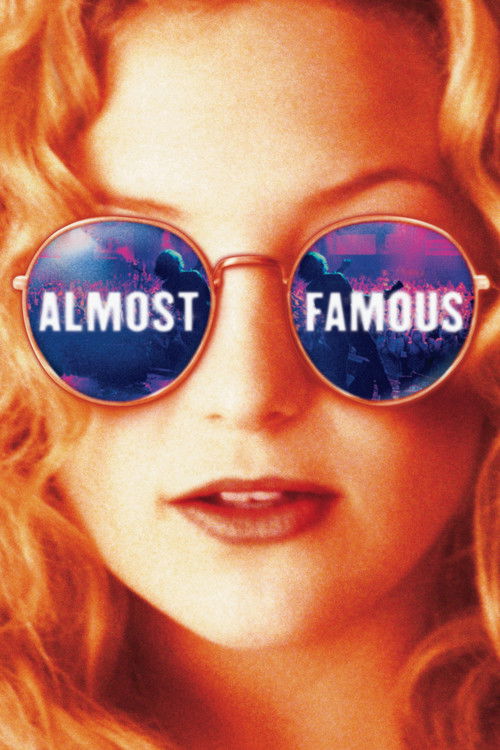
Cameron Crowe's semi-autobiographical film transports viewers to the vibrant rock scene of 1973 through the eyes of fifteen-year-old William Miller. A prodigy from Tucson, Arizona, William writes fan letters with such passion that he catches the attention of legendary critic Lester Bangs. This connection lands him a dream assignment with Rolling Stone magazine to cover the fictional band Stillwater on their first major tour.
The narrative follows William as he trades his suburban life for the chaotic reality of the road. He moves into the band's tour bus and encounters a world defined by excess, drugs, and sexual freedom. The story balances the excitement of discovery with the harsh lessons of growing up, featuring standout performances by Patrick Fugit, Kate Hudson, Billy Crudup, and Frances McDormand. Though the film grossed $47 million against a $60 million budget, it has earned critical acclaim and a devoted cult following over time.
Stream
Rent
Availability and pricing can change. Confirm on the provider's site before purchasing.
William Miller is a quiet teenager living in Tucson who spends his days writing music journalism under pseudonyms like "Blackie" and "Mister Wonderful." His dedication leads him to correspond with Lester Bangs, an eccentric and brilliant critic known for his sharp tongue and deep knowledge of rock history. When Bangs reads William's work, he recognizes a genuine talent and recommends the boy to Rolling Stone editor Ben Fong-Torres. This endorsement secures William's first professional gig: following the fictional rock band Stillwater across the United States in 1973.
Upon joining the tour, William initially stays at hotels but soon earns a spot on the band's tour bus, affectionately called the Big Red Bus. The environment is a stark contrast to his home life. The band members are charismatic yet flawed, navigating the pressures of sudden fame while surrounded by substances and hedonism. Central to this dynamic is Russell Hammond, the band's lead guitarist, who becomes a father figure to William. Russell struggles with his identity and the expectations placed upon him by the industry. He also manages the complex relationships within the band, particularly with the manager Ed Vallencourt and the lead singer Jeff Bebe.
Traveling alongside the musicians is a group of women known as the Band-Aids or groupies. These women, led by the enigmatic Penny Lane, dedicate their lives to the rock lifestyle. Penny is portrayed as a free spirit who has chosen this path willingly, yet she harbors a deep vulnerability beneath her confident exterior. She serves as a mentor to William, teaching him about the allure and dangers of the world he has entered. Their relationship evolves as William begins to see them not just as accessories to the band, but as individuals with their own dreams and struggles.
As the tour progresses, the glamour of the rock star life begins to fade. William witnesses the internal fractures of the band, including the strained relationship between Russell and the management, and the destructive behavior fueled by substance abuse. The narrative explores the tension between innocence and experience as William grapples with his journalistic integrity. He finds himself torn between protecting the people he cares about and reporting the truth about the chaos unfolding around him. His mother, Elaine Miller, provides a grounding force in his life, offering wisdom and unconditional love that contrasts sharply with the instability of the road.
The climax approaches as the band faces a crisis during a show in San Francisco. A drug-fueled incident involving the lead singer threatens to derail their career and expose the darker side of their lifestyle. William is forced to make difficult decisions about what to report and how to protect those he loves. The story builds toward a moment of profound realization where William must reconcile his idealized view of rock stars with the flawed humanity of the people behind the music. The film captures the raw energy of the era while delivering a poignant message about the importance of authenticity and human connection.
Throughout the journey, William learns that the fantasy of fame is often built on exploitation and emptiness. He sees how the Band-Aids are treated as disposable accessories rather than individuals. The narrative culminates in a decision that defines his character and his future. He chooses honesty over loyalty, writing a piece that exposes the dysfunction within the band and the treatment of the women traveling with them. This choice marks the end of his childhood innocence and the beginning of his adulthood.
The film concludes with William returning to Tucson, having gained a deeper understanding of the world and himself. He reunites with his mother and Penny, who has decided to leave the road life behind. The final moments emphasize reconciliation and growth, showing that true success lies in maintaining one's own identity amidst the noise of the world. The story leaves William ready to face the future with a new perspective, forever changed by his experiences on the road.
Theatrical Trailer
Trailer
Critical Consensus
Crowe's semi-autobiographical masterpiece blends humor and heart to explore youth, music, and the price of fame. With a stellar cast and timeless soundtrack, the film captures the raw energy of the 1970s rock scene while delivering a poignant message about authenticity and human connection.
“A masterful blend of humor and heart. Crowe has created a film that is both a love letter to rock 'n' roll and a cautionary tale about the cost of fame.”
Roger Ebert
Chicago Sun-Times
“Kate Hudson delivers a career-defining performance that anchors the film's emotional core. A triumph of storytelling and performance.”
Peter Debruge
Variety
“Crowe's direction is precise and evocative, capturing the essence of the era without falling into cliché. A perfect snapshot of a time and place.”
A.O. Scott
The New York Times
“The film's ability to balance the absurdity of rock stardom with genuine emotion is nothing short of miraculous. A deeply personal and universally relatable story.”
Peter Bradshaw
The Guardian
Patrick Fugit
William Miller
Kate Hudson
Penny Lane
Billy Crudup
Russell Hammond
Frances McDormand
Elaine Miller
Jason Lee
Jeff Bebe
Anna Paquin
Polexia Aphrodisia
Fairuza Balk
Sapphire
Philip Seymour Hoffman
Lester Bangs
Noah Taylor
Dick Roswell
Zooey Deschanel
Anita Miller
Director
Cameron Crowe
Writer
Cameron Crowe
Composer
Nancy Wilson
Cinematographer
John Toll
Producers
Lisa Stewart, Scott M. Martin, Cameron Crowe, Ian Bryce
Academy Awards (2001)
Best Original Screenplay: Won
Academy Awards (2001)
Best Supporting Actress: Nominated
Academy Awards (2001)
Best Cinematography: Nominated
Golden Globe Awards (2001)
Best Motion Picture – Musical or Comedy: Nominated
Golden Globe Awards (2001)
Best Supporting Actress – Motion Picture: Nominated
BAFTA Awards (2001)
Best Original Screenplay: Nominated
Writers Guild of America (2001)
Best Original Screenplay: Won
Join the community
fans discussing