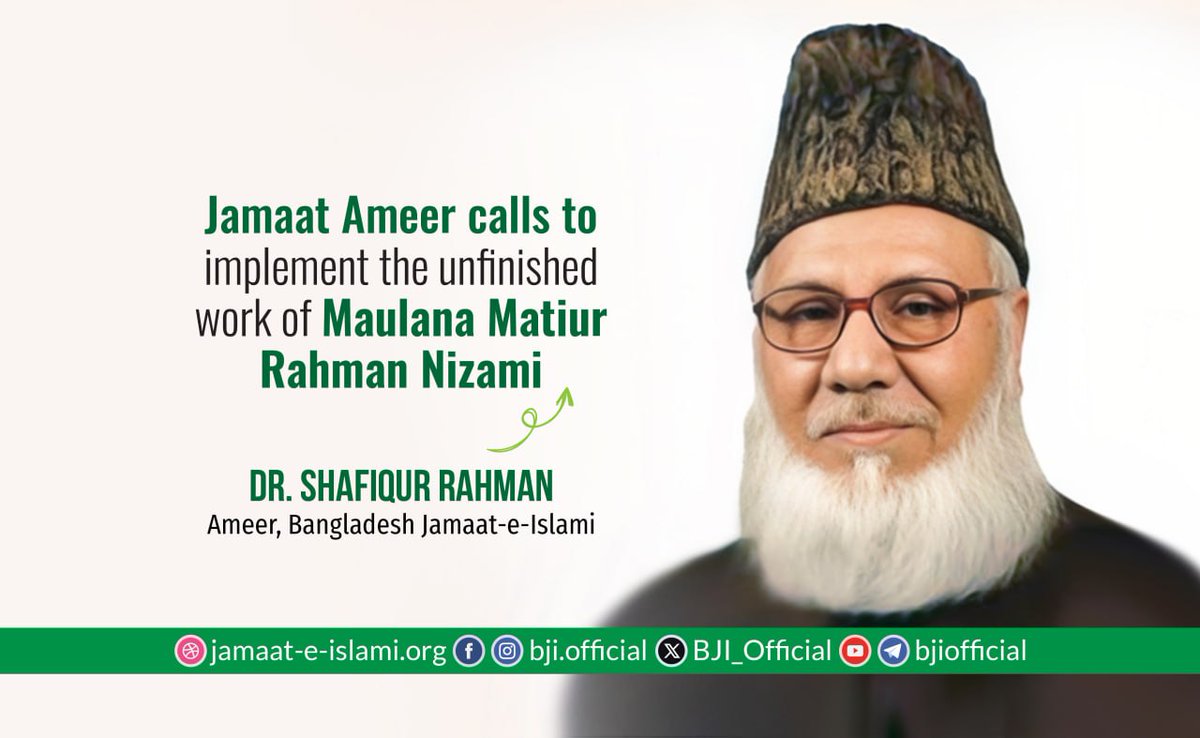
Motiur Rahman Nizami
 Bangladesh
Also known as: Motiur Rahman Nizami, নিজামী
Birthday
March 31, 1943
Birth Sign
Aries
Birthplace
Santhia Upazila, Pabna District, British India
Age
Died at 73
About
Motiur Rahman Nizami was a Bangladeshi politician, Islamic scholar, and writer who served as the Ameer of Bangladesh Jamaat-e-Islami, the country's largest Islamist party. He held ministerial roles as Minister of Agriculture and Minister of Industry, and represented Pabna-1 in parliament for two terms. His life ended on May 11, 2016, when he was executed for crimes against humanity committed during the 1971 Liberation War.
Nizami's legacy remains deeply polarizing. To his supporters, he is a martyr for Islamic values; to his critics, a convicted war criminal. His execution drew international concern from human rights groups, yet his name was added to a parliamentary condolence motion in 2026, reflecting shifting political tides.
Early Life & Background
Motiur Rahman Nizami was born on March 31, 1943, in the rural village of Santhia Upazila in Pabna District, then part of British India. He grew up in a devout Muslim family, and from an early age he pursued religious studies, memorizing the Quran and studying Islamic jurisprudence. His scholarly bent led him to become a writer and intellectual within the Islamist movement in East Pakistan.
He joined Jamaat-e-Islami in his youth, rising through its ranks as a disciplined organizer and thinker. His early career was marked by his role as a teacher and preacher, building a base of support among the rural faithful. By the late 1960s, he was a prominent figure in the party's student wing, known for his fiery speeches and unwavering commitment to an Islamic state.
The 1971 Liberation War became a turning point. Nizami aligned with the Pakistani military and was accused of leading the Al-Badr paramilitary force, which collaborated in suppressing the independence movement. After Bangladesh gained independence, he continued his political ascent, eventually becoming the Ameer of Jamaat-e-Islami.
Career Growth
Nizami's political career peaked in the 1990s and 2000s. He won the Pabna-1 parliamentary seat in 1991 and again in 2001, serving as Minister of Agriculture and later Minister of Industry. His tenure was marked by efforts to Islamize education and promote religious values in public life.
The war crimes tribunal changed everything. On October 29, 2014, he was convicted for masterminding the Demra massacre, which killed hundreds of unarmed Hindu civilians, and sentenced to death. A separate arms trafficking conviction in 2004 added to his legal troubles, though he was posthumously acquitted of that charge in December 2024.
His execution on May 11, 2016, at Dhaka Central Jail made him the third former minister to be hanged. International bodies like Amnesty International and Human Rights Watch criticized the trial's fairness, but the government proceeded. In 2026, his name was included in a parliamentary condolence motion, signaling a complex reassessment of his legacy.
Career Timeline
Public Image & Style
Nizami's public image is starkly divided. Supporters in Jamaat-e-Islami revere him as a 'Shaheed' (martyr) and 'leader of the general masses,' commemorating him in party events. To critics, he is a convicted war criminal responsible for atrocities during the 1971 war.
International media portrayed him as the head of Bangladesh's largest Islamist party whose execution could ignite violence. Human rights organizations condemned the trial's fairness, while his party and family continue to uphold his legacy as a religious and political leader.
Fame & Fandom
Motiur Rahman Nizami commanded a global spotlight that was less about celebrity adoration and more about geopolitical gravity. His name became a flashpoint for international human rights debates, drawing condemnation from major organizations while simultaneously galvanizing a specific political base across the Islamic world. Despite this intense focus, iFANN's Global Fame Engine has evaluated this person, but they do not currently hold a placement in the published rankings (Global Top 1,000 or a Top-100 scope list). This absence of a numeric rank reflects his status as a polarized historical figure rather than a contemporary entertainment icon with charting metrics. The audience surrounding Nizami does not operate as a traditional fandom with a formal name; instead, his supporters are members of the Bangladesh Jamaat-e-Islami party who view him through an ideological lens. There is no documented fanbase name, nor are there organized campaigns, birthday billboards, or streaming drives characteristic of pop culture stars. His legacy is defined by the stark division between those who revere him as a martyr and those who condemn him as a convicted war criminal. While he appeared on lists like The 500 Most Influential Muslims, reflecting his standing among Islamist circles, he lacks the universal recognition required for a global fame ranking. The narrative around him remains strictly political, rooted in legal proceedings and the aftermath of his execution.
Interesting Facts and Legends
Nizami stands as one of the last high-profile figures tried for crimes committed during the 1971 Liberation War. His sentencing faced delays due to deteriorating health, and he ultimately became the third former minister in Bangladesh to face execution. The event itself occurred at 10:30 PM local time on May 10, 2016, though most sources cite May 11. In a twist of legal irony, nearly nine years after his death, the High Court acquitted him in an arms smuggling case, ruling that the police report lacked evidence. He was included in The 500 Most Influential Muslims list, a reflection of his global standing within Islamist circles. Following his hanging, the Bangladesh Jamaat-e-Islami officially designated him as a 'Shaheed' (martyr), a title adopted to mobilize their base. Decades later, in August 2026, the memory of his execution remained volatile when a billboard titled 'Judicial Killing' featuring his image was removed from Rajshahi University following student protests. Turkey also condemned the execution in recent years, continuing to stand in solidarity with the Bangladeshi people. His son, Dr. Md. Nadimur Rahman, has kept the family politically active, joining the National Congress Party in 2026.
Family & Personal Life
Nizami was married and had at least two sons. His son Barrister Nazibur Rahman Momen has spoken at Jamaat-e-Islami rallies, honoring his father's memory. Another son, Dr. Md. Nadimur Rahman, joined the National Citizen's Party in May 2026, marking a political realignment within the family. Details about his wife and daughters remain private, consistent with his conservative religious values.
Notable Connections
Nizami was associated with fellow Jamaat-e-Islami leaders convicted of war crimes, including Delwar Hossain Sayeedi, Muhammad Kamaruzzaman, Ali Ahsan Mohammad Mojaheed, and Abdul Quader Molla. His sons, Barrister Nazibur Rahman Momen and Dr. Md. Nadimur Rahman, have carried on his legacy in different political directions.
Relationships & Dating History
Nizami was married, though details about his wife are scarce. He had at least two sons, Barrister Nazibur Rahman Momen and Dr. Md. Nadimur Rahman. His personal life remained private, consistent with his conservative religious and political standing. At the time of his death in 2016, he was married.
- MarriedMarried, wife's name not publicly documented.
Death & Aftermath
Died
May 11, 2016 (aged 73)
Death Place
Dhaka, Bangladesh
Cause of Death
Hanging (judicial execution)
Motiur Rahman Nizami died on May 11, 2016, inside Dhaka Central Jail in Bangladesh. The state carried out a judicial execution by hanging following the Supreme Court's rejection of his final clemency plea just six days prior. Law Minister Anisul Haq publicly confirmed the hanging to the BBC, marking the end of a legal process initiated by the International Crimes Tribunal for crimes against humanity committed during the 1971 Liberation War. International bodies like Amnesty International and Human Rights Watch had criticized the trial's fairness and called for a suspension of the death penalty, but their appeals were ignored by Bangladeshi authorities.
The reaction to his death fractured the nation along political lines. The Awami League-led government welcomed the event as a step toward justice for war atrocities, while supporters of his Jamaat-e-Islami party viewed it as a judicial killing. Widespread protests and violent unrest erupted across the country immediately after the announcement, with party members holding vigils that framed his death as martyrdom. Within days, the party began referring to him as "Shaheed Maulana Matiur Rahman Nizami," a designation they reiterated nearly a decade later in March 2026. Specific details regarding a public funeral or burial location remain unverified in available records, suggesting the body was likely returned to the family under security restrictions.
Posthumous memorials have remained contentious; an August 2026 student protest at Rajshahi University forced the removal of a billboard titled "Judicial Killing" that featured images of Nizami. His estate remains unknown, though his family continues to challenge the narrative of his guilt through legal channels and public statements.
Net Worth (Estate Value)
No credible public estimates of Motiur Rahman Nizami's net worth exist. As a politician and religious leader in Bangladesh, his financial affairs were not publicly documented, and he had no commercial ventures or endorsements. Following his execution in 2016, his estate's value remains unknown.
His legacy continues to generate political capital rather than financial wealth, with his family active in public life.
Awards & Accolades
View 1 records, honours and achievementsKnown For
Ameer of Bangladesh Jamaat-e-Islami
2000-2016 · Leader
Minister of Agriculture
1991-1996 · Minister
Minister of Industry
2001-2006 · Minister
Keywords
Sources
Quick Facts
- Profession
- Politician, Islamic Scholar
- Born
- March 31, 1943
- Birthplace
- Santhia Upazila, Pabna District
- Died
- May 11, 2016
- Death Place
- Dhaka Central Jail
- Gender
- Male
- Birth Sign
- Aries
Personal Details
- Full Name
- Motiur Rahman Nizami
- Children
- Barrister Nazibur Rahman Momen, Dr. Md. Nadimur Rahman
- Education
- Islamic education
Frequently Asked Questions
Why was Motiur Rahman Nizami executed?
What was Motiur Rahman Nizami's role in the 1971 war?
Was Motiur Rahman Nizami acquitted of any charges?
Who are Motiur Rahman Nizami's children?
How old was Motiur Rahman Nizami when he died?
Join the community
fans discussing