
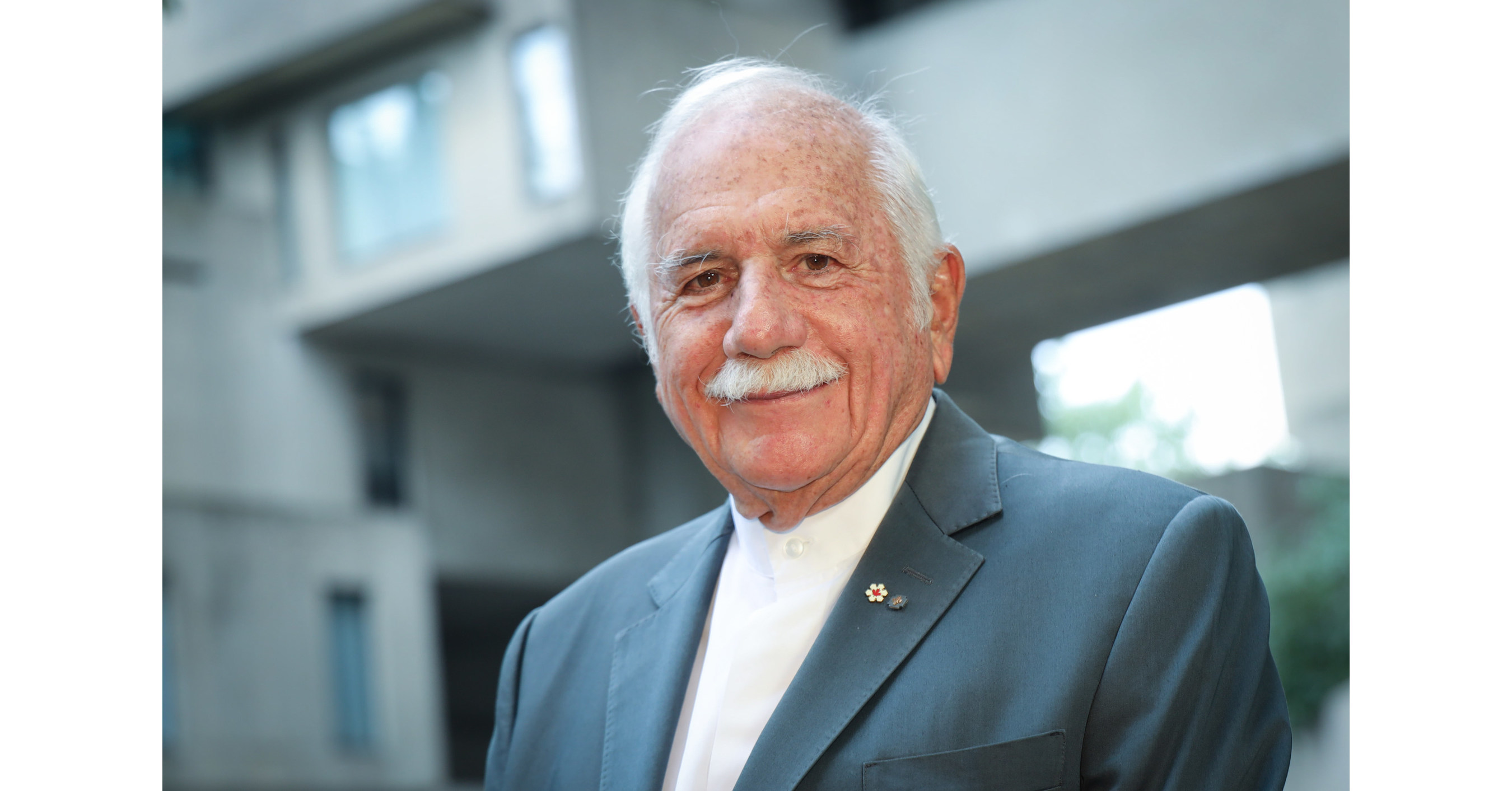
Moshe Safdie
 Canada
architect•urban planner•author
Birthday
July 14, 1938
Birth Sign
Cancer
Birthplace
Haifa, Israel
Age
88 years old
About
Moshe Safdie is an internationally renowned architect, urban planner, educator, and author born on July 14, 1938, in Haifa. He holds citizenship in Canada, Israel, and the United States, a unique tri-national status that allows him to navigate diverse cultural contexts with ease. His career spans over six decades, defined by a philosophy of socially responsible design that prioritizes community interaction with nature and human dignity. Safdie first gained global recognition for Habitat 67, a modular housing complex in Montreal originally conceived as his master's thesis at McGill University and built for Expo 67. This project revolutionized high-density living by integrating private outdoor spaces and communal areas into a stacked concrete structure.
Today, Safdie continues to lead Moshe Safdie Architects, delivering major civic and commercial projects worldwide. Recent work includes the monumental expansion of the Crystal Bridges Museum of American Art in Arkansas, completed in June 2026, which transformed the site into a cultural village with bridges over ponds. He remains active in designing libraries, airports, and urban districts that blend modernist principles with deep sensitivity to local context. His work has significantly influenced the field of sustainable urbanism and the integration of green spaces within dense environments.
Early Life & Background
Born in Haifa in 1938 to parents who had immigrated from Poland, Safdie moved to Montreal, Canada, when he was 15 years old. This pivotal move shifted his educational trajectory and cultural perspective. He briefly attended Sir George Williams University before transferring to McGill University, where he studied architecture. During his time at McGill, he developed a deep interest in the relationship between urban density and quality of life. His undergraduate and master's studies culminated in a radical proposal for "Habitat," a vision of affordable, high-quality housing that could be mass-produced yet offer individuality.
In 1967, this thesis was selected for construction at Expo 67, transforming it from a theoretical model into a permanent landmark. Before this breakthrough, Safdie worked in various architectural offices, including with Marcel Breuer, gaining early exposure to modernist principles while refining his own approach to contextual design. The transition from student theorist to practicing architect was seamless, as the Expo 67 project launched him directly into international prominence without a traditional apprenticeship period in smaller firms. His early education laid the groundwork for a career that would redefine how cities house their populations.
Career Growth
Safdie's career is marked by a chronological evolution from residential experimentation to large-scale civic and commercial icons. In 1967, the completion of Habitat 67 in Montreal won international acclaim for its innovative use of precast concrete modules and sky gardens, proving that high-density housing could be humane and aesthetically pleasing. Following this success, he established Moshe Safdie Architects in 1970, expanding his scope to include cultural institutions and urban planning.
The 1970s and 1980s saw him designing significant projects like the Cité du Havre in Quebec (1976) and conceptualizing future developments in Asia. The turn of the millennium brought massive scale with the Marina Bay Sands resort in Singapore, which opened in 2010 featuring three towers connected by a massive SkyPark. This was followed by the opening of Jewel Changi Airport in 2019, which features the world's tallest indoor waterfall. His portfolio now exceeds 100 projects worldwide, ranging from airports and museums to libraries and entire urban districts. In 2026, he completed a major expansion for the Crystal Bridges Museum of American Art and announced plans for the Cherokee Heritage Center in Oklahoma, utilizing rammed earth techniques. His recent work also includes the restoration of Brooklyn's Pacific Library branch and the unveiling of a futuristic urban complex in Qinhuangdao, China.
Career Timeline
Public Image & Style
Safdie is portrayed in the media as a visionary, a humanitarian, and a master of context-sensitive design. He is seen as a bridge between the brutalist past and a greener, more inclusive future. His tone in interviews is thoughtful, academic, and deeply committed to social responsibility. He avoids self-promotion, letting his buildings speak for him. His presence is distinguished and consistent with his age, commanding respect through the sheer scale and beauty of his work rather than personal celebrity. He does not maintain a personal social media account; his digital presence is managed through the firm's official Instagram account, which serves as a hub for professional followers rather than a celebrity fanbase.
Fame & Fandom (iFAMOUS Rankings)
Moshe Safdie commands a global audience defined by professional reverence rather than mass adulation, his reputation built on structures that house millions and museums that draw crowds from every continent. The iFANN Global Fame Engine has evaluated this person, but they do not currently hold a placement in the published rankings (Global Top 1,000 or a Top-100 scope list). This absence of a numeric rank reflects his status as a titan of architecture whose fame operates through institutional impact instead of chart positions. While entertainment figures chase viral metrics, Safdie's influence is measured in the longevity of his civic projects and the academic weight of his urban plans.
His fanbase has no formal name, nor do organized groups exist to rally around his personal brand with rituals or campaigns. Instead, his supporters are professionals, students, and citizens who engage with his work through the physical spaces he creates. There are no subway ads bearing his face or charity drives funded by a dedicated following; the connection between architect and public remains rooted in the built environment itself. The opening of Jewel Changi Airport drew millions of visitors in its first year, turning the airport into a tourist destination itself, yet the focus remained on the space, not the man.
Interesting Facts and Legends
The iconic structure of Habitat 67 began as a student thesis. It was so successful that it became a permanent housing complex, a rare occurrence for academic projects. Safdie is one of the few architects to hold citizenship in Canada, Israel, and the United States, allowing him to navigate diverse cultural contexts seamlessly. In 2026, he donated his personal unit within Habitat 67 to McGill University, ensuring the preservation of his original design and personal history alongside his professional archives. He has taught at Harvard Graduate School of Design and other prestigious institutions, influencing generations of architects with his focus on "architecture for people." The opening of Jewel Changi Airport drew millions of visitors in its first year, turning the airport into a tourist destination itself. In September 2026, Safdie commented on planned major changes to 24 Sussex Drive, the official residence of the Prime Minister of Canada, suggesting renovations that would align with his principles of accessibility and sustainability. Additionally, in August 2026, the 240-meter Altair tower in Pakistan received a lobby and entrance upgrade designed by Safdie Architects.
Notable Quotes
“Architecture is not just about buildings; it's about the life that happens inside them.”
“We must design for the future, but we must also respect the past and the context.”
“Habitat 67 was a dream that came true because people believed in the possibility of better living.”
Family & Personal Life
Moshe Safdie maintains a strict boundary between his public persona and his private family life, sharing almost no details about his domestic sphere. He is married to Ruth Safdie, whom he met during their university days in Montreal. They have been together since then, and their long-standing union is often cited as a stabilizing force behind his prolific career. The couple has children, though specific details about their names, ages, or current residences are not widely publicized in media sources, reflecting Safdie's preference for privacy regarding his family. As of 2026, he remains married to Ruth Safdie with no reports of divorce or separation. There are no public records of prior marriages, engagements, or high-profile romantic relationships preceding his marriage to Ruth. Their home life remains shielded from the intense scrutiny that often accompanies architects of his stature.
Notable Connections
Relationships & Dating History
Moshe Safdie is known for maintaining a relatively private personal life compared to his public professional achievements. He is married to Ruth Safdie, whom he met during their university days in Montreal. They have been together since then, and their long-standing union is often cited as a stabilizing force behind his prolific career. The couple has children, though specific details about their names and ages are not widely publicized in media sources, reflecting Safdie's preference for privacy regarding his family. As of 2026, he remains married to Ruth Safdie with no reports of divorce or separation. There are no public records of prior marriages, engagements, or high-profile romantic relationships preceding his marriage to Ruth. Their long-standing union is often cited as a stabilizing force behind his prolific career.
- MarriedRuth Safdie1961 - presentCurrentMet at McGill University; lifelong partners.
Salary, Net Worth In 2026
$24 Million
iFANN Editorial Team estimate
iFANN currently estimates Moshe Safdie's net worth at approximately $20 million based on his long-standing practice, real estate holdings, and intellectual property rights. His wealth sources include firm revenue from Safdie Architects, which manages large-scale international projects, and consulting fees for high-profile developments. Historically, he owned property in Montreal, including his unit in Habitat 67, though he donated this unit and his archive to McGill University in 2026. Additional income streams come from speaking engagements, lectures at academic institutions, book royalties, and advisory roles for government clients. There are no significant endorsement deals outside of his architectural practice. The donation of his personal assets suggests a shift toward philanthropy rather than wealth accumulation in his later years. Conservative asset valuations place his worth between $10 million and $15 million, while industry reports suggest a higher range of $25 million to $30 million, with the consensus settling around the $20 million mark.
Awards Won (5)
Moshe Safdie has received numerous accolades throughout his career, including the Royal Architectural Institute of Canada Gold Medal and the American Institute of Architects Gold Medal. He has been appointed as a Member and later Officer of the Order of Canada for his contributions to Canadian culture and architecture. He also received the Legion of Honour from France and the National Design Award from the Cooper Hewitt, Smithsonian Design Museum. Additionally, he has been awarded honorary degrees from multiple universities including McGill, Harvard, and the Technion in Israel.
2000 · Lifetime Achievement
Career Contributions
2002 · Lifetime Achievement
Career Contributions
Known For
Habitat 67
1967 · Architect
Marina Bay Sands
2010 · Architect
Jewel Changi Airport
2019 · Architect
Crystal Bridges Museum Expansion
2026 · Architect
Keywords
Sources
Quick Facts
- Profession
- architect, urban planner, author
- Born
- July 14, 1938
- Birthplace
- Haifa, Israel
- Gender
- Male
- Birth Sign
- Cancer
Personal Details
- Full Name
- Moshe Safdie
- Spouse
- Ruth Safdie
- Education
- McGill University; Sir George Williams University
Frequently Asked Questions
How old is Moshe Safdie?
What is Moshe Safdie famous for?
Is Moshe Safdie still alive?
Where did Moshe Safdie grow up?
Does Moshe Safdie have a wife?
Social Media
Similar People
Join the community
fans discussing