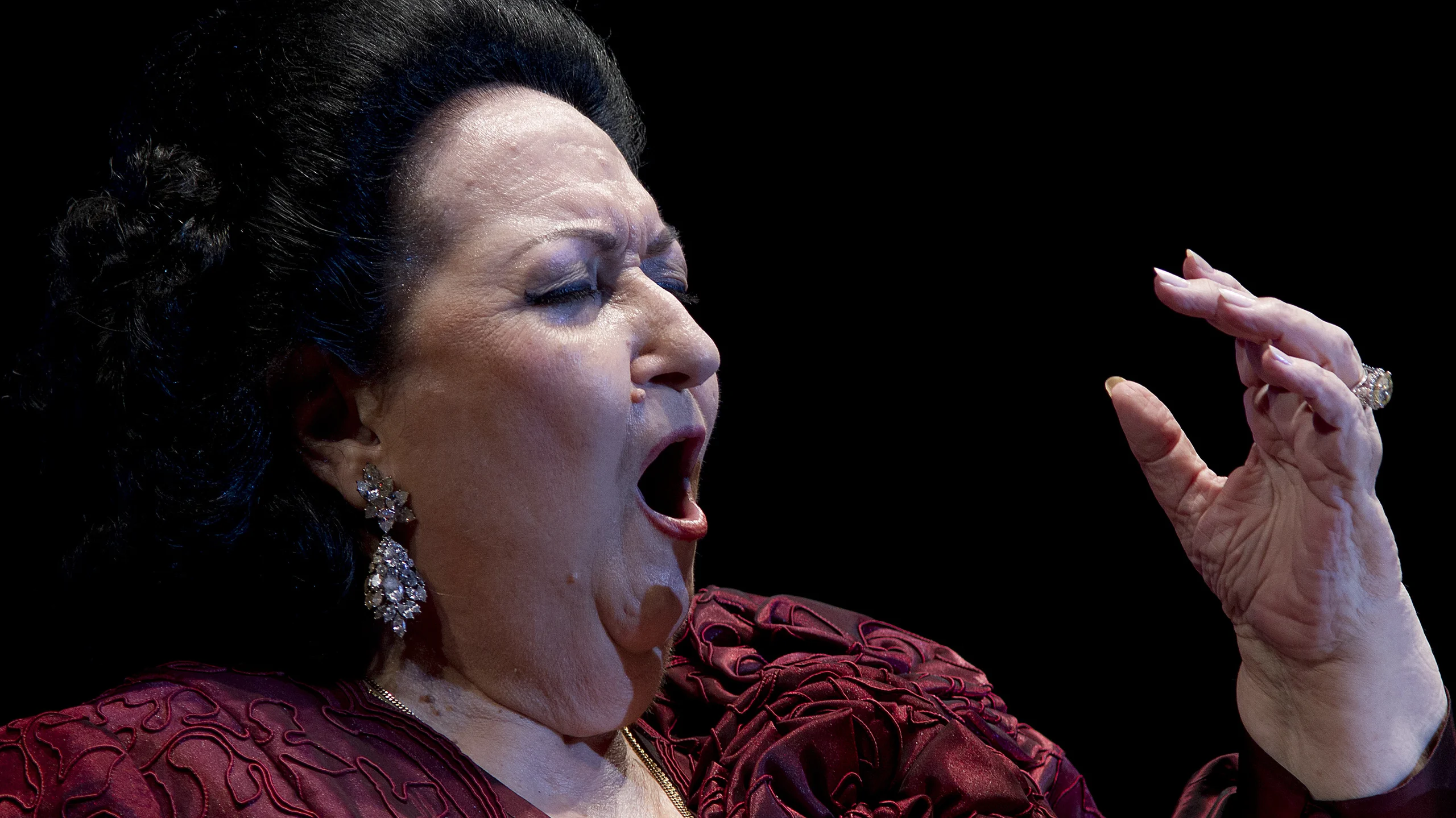
Montserrat Caballé
 Spain
opera singer•recording artist•singer
Also known as: María de Montserrat Bibiana Concepción Caballé i Folch, Montserrat Caballe
Birthday
April 12, 1933
Birth Sign
Aries
Birthplace
Barcelona, Spain
Age
Died at 85
Height
5 ft 5 in (165 cm)
About
María de Montserrat Bibiana Concepción Caballé i Folch was a Spanish operatic soprano born on April 12, 1933, in Barcelona, widely regarded as one of the greatest singers of the 20th century. She died on October 6, 2018, at the age of 85, leaving behind a legacy defined by her bel canto interpretations and a unique ability to bridge classical opera with popular music. Her career spanned over six decades, earning her three Grammy Awards and numerous international honors including the Prince of Asturias Award and the Legion of Honour. Caballé is perhaps best known globally for her collaboration with Freddie Mercury on the song "Barcelona," which became the anthem of the 1992 Summer Olympics. Throughout her life, she performed at the world's most prestigious opera houses, including La Scala, the Metropolitan Opera, and the Royal Opera House. Critics praised her pure tone, exceptional control, and emotional depth, often describing her voice as having a "silvery thread" quality. Even after her passing, her influence remains strong, with new projects like a biopic directed by Patricia Ortega and a commemorative statue ensuring her story continues to reach audiences worldwide.
She maintained a reputation for professionalism and kindness, never letting her fame inflate her ego while managing a vast discography that includes massive sales and streaming numbers. Her work extended beyond performance into significant humanitarian efforts through the Montserrat Caballé Foundation, which supports children with heart defects. The scale of her success is evident in her induction into the Grammy Hall of Fame and her frequent listing among the greatest opera singers alongside legends like Maria Callas.
Early Life & Background
Born into a musical family in Barcelona, Montserrat began her studies at the Conservatory of Music at the age of six. Her father, a lawyer and amateur pianist, and her mother, a homemaker, supported her early artistic development. She initially focused on piano before dedicating herself entirely to vocal performance. Before her international breakthrough, she studied under the renowned voice teacher Elena Gerhardt and later with the famous tenor Mario Del Monaco, who recognized her immense potential. Her first major public performance occurred in 1954 at the Gran Teatre del Liceu in Barcelona, where she sang the role of Gilda in Verdi's Rigoletto. However, her career truly launched due to a stroke of luck in 1957. Scheduled to perform in Madrid but unable to do so, she was called upon at the last minute to replace an ill substitute singer. Her performance of the title role in Donizetti's Lucrezia Borgia received such overwhelming acclaim that critics immediately hailed her as the successor to Maria Callas. This event marked the definitive turning point from a promising student to an international star. Prior to this moment, she remained a minor singer in her hometown, relying on local engagements until fate intervened.
Career Growth
Caballé's career flourished after her 1957 debut, characterized by versatility across a wide range of roles, particularly in the works of Verdi, Rossini, Bellini, and Donizetti. In 1959, she made her debut at La Scala in Milan as Lucia in Lucia di Lammermoor, a role that would become one of her signature pieces. That same year, she achieved an international breakthrough in the United States with a performance of Lucrezia Borgia at Carnegie Hall. She debuted at the Metropolitan Opera in New York in 1966 as Aida, performing opposite Luciano Pavarotti. Throughout the 1970s and 1980s, she established herself as a leading figure at the world's top opera houses, known for her ethereal high notes and ability to sustain long phrases with perfect control. In 1987, she collaborated with Freddie Mercury to record the song "Barcelona," bridging the gap between classical opera and rock music. She performed the title track at the opening ceremony of the 1992 Summer Olympics in Barcelona, introducing her voice to a global mainstream audience. She continued to perform regularly, including a notable return to the Met in 2006 for La forza del destino. In 2016, she underwent a successful liver transplant to treat liver cancer, marking a significant personal challenge during her later years. Her final public appearances were limited due to health issues, though she remained active in humanitarian efforts through the Montserrat Caballé Foundation.
Career Timeline
Public Image & Style
Caballé was portrayed as a dignified, elegant, and humble artist throughout her life. She was known for her warm personality off-stage and her intense focus on her craft. Media coverage often highlighted her grace and her dedication to charity. Her style was classic and timeless, reflecting the era of great divas. She maintained a reputation for professionalism and kindness, never letting her fame inflate her ego. Her collaborations with pop stars like Freddie Mercury showed her willingness to connect with different musical worlds while maintaining her operatic integrity. She appeared on the cover of Time Magazine in 1992 following the Olympic performance, further cementing her status as a cultural icon. Vogue Spain also featured her multiple times, highlighting her style and humanitarian work.
Fame & Fandom (iFAMOUS Rankings)
The iFANN Global Fame Rankings place her as the 30th most famous person in Classical, a position she held steady through the August 2026 cycle. This standing reflects a career where vocal precision met widespread cultural resonance, particularly through collaborations that bridged high art with rock music. Her legacy endures not merely through recordings but through a sustained presence in public memory that transcends the typical lifespan of an artist's peak fame. While the rankings track this influence across media coverage and consumption signals worldwide, the specific placement confirms her status among the most significant figures in her field. Regarding her audience, research indicates no formal or unique fandom name exists for her supporters; they are generally identified simply as opera fans or admirers of her work. Unlike pop phenomena with organized clubs and specific rituals, Caballé's following engaged through charitable initiatives like the Montserrat Caballé Foundation and tribute concerts rather than coordinated viral campaigns. Following her death in 2018, these admirers rallied to preserve archives and support biographical projects, yet the group lacks the self-styled branding seen in modern celebrity culture. As of 2026, her Spotify profile shows over 58,000 monthly listeners, demonstrating enduring global interest.
Interesting Facts and Legends
A notable controversy arose in mid-2026 regarding the use of voice double Judit Martín to replicate Caballé in a theatrical production, highlighting the enduring demand for her specific sound even after her passing. Recent announcements in late 2025 confirmed plans for a joint statue honoring both singers in Glòries Park, cementing their inseparable status in the city's history. Fans have historically supported the preservation of her archives and promoted her biopic project directed by Patricia Ortega, though these efforts lack the coordinated nature of pop fandoms. She passed away on October 6, 2018, leaving behind a legacy defined by vocal versatility and humanitarian work rather than crowd hysteria. A clip from a 2021 broadcast highlighted her ability to hold a top B for 16 seconds during a Verdi epic, a feat that stunned even seasoned critics. Tribute concerts continue to be held globally, including a notable tribute in Yerevan in September 2026. Her friendship with Freddie Mercury was deep and personal; he visited her frequently in Barcelona, and they worked together on "Barcelona" for years.
Notable Quotes
“Music is a language that speaks to the soul.”
“He was a genius, and we were friends.”
“I try to sing with my heart, not just with my throat.”
Family & Personal Life
Montserrat Caballé was married only once to Bernabé Martí, a Spanish businessman and former mayor of Sitges. They met in the early 1960s, and Martí was a close friend of her family before they married in 1963. Their marriage was considered a stable and private union, shielded from the media spotlight despite her immense fame. There were no children from this marriage. Bernabé Martí died in 2013, leaving Caballé widowed until her own death in 2018. The couple lived primarily in Barcelona and Sitges, maintaining a home life that balanced her public career with private family values. Martí was a prominent figure in Catalan politics before his death, and their union was noted for its stability amidst the chaos of celebrity life.
Notable Connections
Relationships & Dating History
Montserrat Caballé was married only once to Bernabé Martí, a Spanish businessman and former mayor of Sitges. They met in the early 1960s, and Martí was a close friend of her family before they married in 1963. Their marriage was considered a stable and private union, shielded from the media spotlight despite her immense fame. There were no children from this marriage. Bernabé Martí died in 2013, leaving Caballé widowed until her own death in 2018. There are no reported romantic relationships prior to her marriage to Martí in public records. The relationship lasted from 1963 until Martí's death in 2013, spanning five decades of partnership.
- MarriedBernabé Martí1963 - 2013Martí died in 2013, making Caballé widowed until her own death in 2018.
Death & Aftermath
Died
October 6, 2018 (aged 85)
Death Place
Barcelona, Spain
Cause of Death
Complications from liver cancer
The Hospital Clínic de Barcelona confirmed that Montserrat Caballé passed away peacefully on October 6, 2018, at the age of 85, following a prolonged struggle with cancer. The renowned soprano had been under medical care for several years, having undergone a liver transplant in 2016 to treat liver cancer, and her death was attributed to complications arising from this condition. Tributes immediately emerged from global cultural institutions, including the Metropolitan Opera and La Scala, while Queen Letizia of Spain issued a formal statement honoring her legacy alongside a government-declared period of mourning in Catalonia. Public sentiment manifested through vigils at her former residence and the hospital, accompanied by a measurable surge in streaming activity for her discography, particularly the Olympic anthem "Barcelona".
Her funeral proceedings remained private affairs conducted shortly after her passing, attended by close family members, dignitaries, and opera colleagues who respected the family's wishes for discretion. Caballé was cremated in Barcelona, with her ashes interred at the cemetery of Santa Maria del Mar in the Gràcia district. In the years following her death, her estate continued to generate revenue through royalties and licensing deals. A biographical film directed by Patricia Ortega was announced in late 2025 to chronicle her life, while plans were confirmed for a joint statue honoring her and Freddie Mercury in Glòries Park, Barcelona. These projects reflect the enduring cultural impact of her work and the ongoing efforts to preserve her memory through art and public monuments. The controversy surrounding the use of voice doubles in 2026 further underscored the unique nature of her vocal legacy.
Net Worth (Estate Value)
$18 Million
iFANN Editorial Team estimate
As of 2026, the estate of Montserrat Caballé is valued at approximately $18 million according to research by the iFANN Editorial Team. This figure reflects the accumulated wealth from her extensive career and ongoing revenue streams managed by her heirs and the Montserrat Caballé Foundation. Her primary sources of income continue to be royalties from her vast discography, including the massive sales and streaming numbers of "Barcelona." Posthumous releases and archival recordings also contribute significantly to the estate's value. Licensing rights for her image and voice in documentaries, films, and advertisements provide additional revenue. Real estate holdings in Barcelona and Sitges, likely managed by the foundation or trustees, form a substantial part of her assets. No major legal disputes regarding the estate have been widely reported as of 2026. The foundation manages some assets, focusing on scholarships and medical research, which may affect liquid estate calculations.
Awards Won (11)
Montserrat Caballé received numerous prestigious awards throughout her career, including three Grammy Awards. She won Best Classical Vocal Performance for La Traviata in 1980, Best Pop Collaboration with Vocals for Barcelona with Freddie Mercury in 1988, and Best Classical Album for Donizetti: La Fille du Régiment in 1994. She also received the Prince of Asturias Award in 1989, the National Music Award in Spain in 1984, and the Gold Medal of Merit in Fine Arts in 1992. Additional honors include the Order of Isabella the Catholic, the Legion of Honour from France, and honorary doctorates from multiple universities.
1994 · Best Classical Album
Donizetti: La Fille du Régiment
1988 · Best Pop Collaboration with Vocals
Barcelona
1980 · Best Classical Vocal Performance
La Traviata
1976 · Best Opera Recording
Erik Smith (producer); Colin Davis (conductor), Richard Van Allan, Janet Baker, Montserrat Caballé, Ileana Cotrubaș, Wladimiro Ganzarolli, Nicolai Gedda - Mozart: Così fan tutte (Royal Opera House Orchestra)
1975 · Best Opera Recording
Richard Mohr (producer); Georg Solti (conductor), Judith Blegen, Montserrat Caballé, Plácido Domingo, Sherrill Milnes, Ruggero Raimondi - Puccini: La bohème (London Philharmonic Orchestra)
1969 · Best Vocal Soloist Performance
Montserrat Caballé – Rossini: Rarities
Known For
Barcelona
1987 · Singer
Lucia di Lammermoor
1959 · Opera Singer
Norma
1965 · Opera Singer
La Traviata
1980 · Opera Singer
Keywords
Sources
Quick Facts
- Profession
- opera singer, recording artist, singer
- Born
- April 12, 1933
- Birthplace
- Barcelona, Spain
- Died
- October 6, 2018
- Death Place
- Barcelona, Spain
- Gender
- Female
- Spouse
- Bernabé Martí
- Birth Sign
- Aries
Personal Details
- Full Name
- María de Montserrat Bibiana Concepción Caballé i Folch
- Height
- 5 ft 5 in (165 cm)
- Spouse
- Bernabé Martí
- Children
- Education
- Conservatory of Music in Barcelona
Filmography
4
Total
0
Film
4
TV
Frequently Asked Questions
Who was Montserrat Caballé?
How did Montserrat Caballé die?
What was Montserrat Caballé's biggest hit?
Was Montserrat Caballé married?
Is there a statue of Montserrat Caballé?
Similar People
Join the community
fans discussing