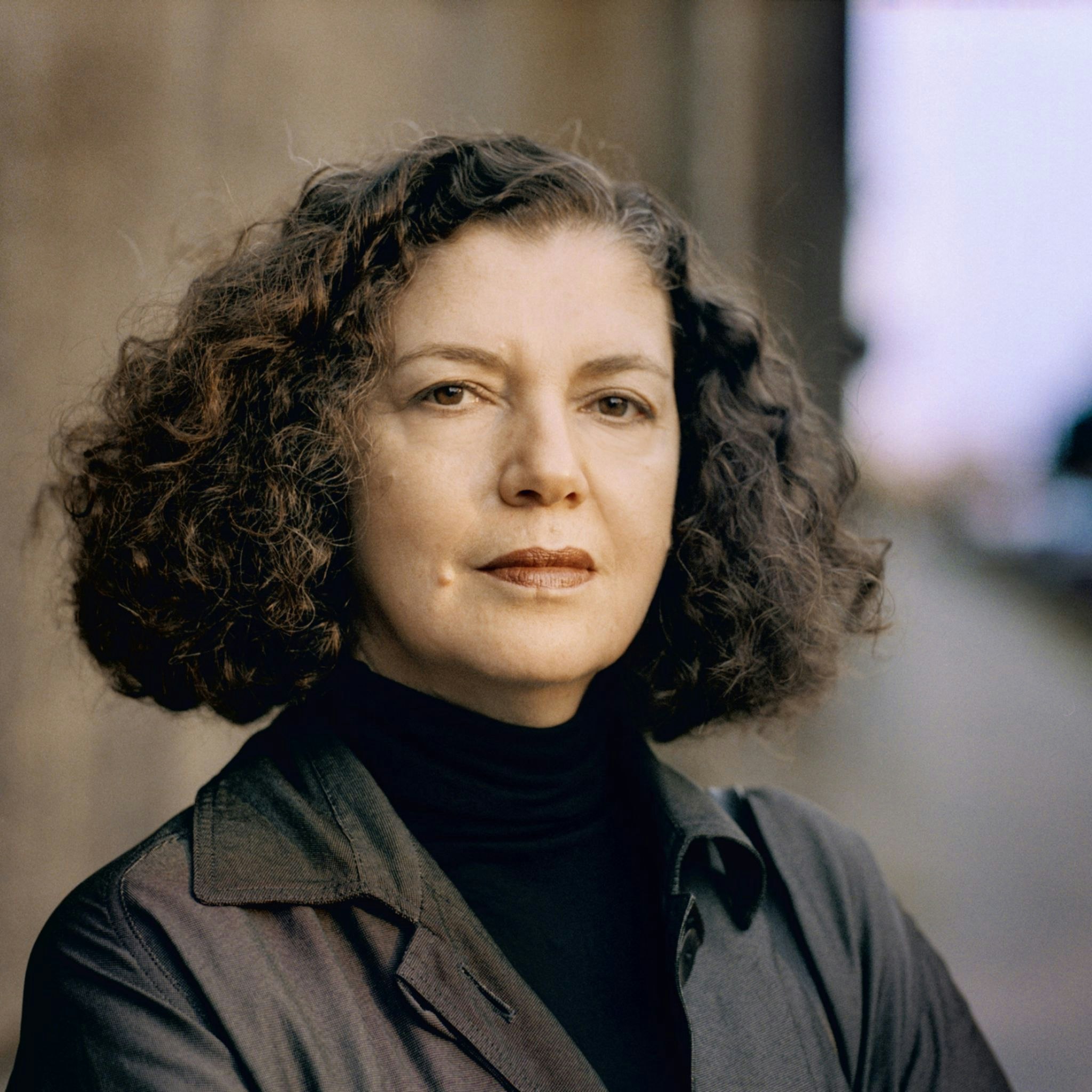
Mona Hatoum
 Lebanon
Also known as: Muná Ḥāṭūm, Mona Joseph Hatoum, Mūnā H̲ātūm
Birthday
1952
Birth Sign
Capricorn
Birthplace
Beirut, Lebanon
Age
74 years old
About
Mona Hatoum is a British-Palestinian artist known for multimedia installations that probe displacement, conflict, and the body's vulnerability. Born in Beirut in 1952, she has lived in London since 1975, where she developed a practice that blends minimalism with political urgency. Her works often unsettle, using everyday objects transformed into instruments of tension.
Hatoum's pieces appear in major collections worldwide, including the Centre Pompidou, MoMA, and Tate Modern. She received the Roswitha Haftmann Prize in 2000 and the Praemium Imperiale in 2019. Recent exhibitions, such as "Over, Under and In Between" at Fondazione Prada in 2026, continue to draw large audiences. Fans and critics alike value her ability to make abstract ideas feel physically immediate.
Early Life & Background
Hatoum grew up in Beirut, the daughter of Palestinian parents who had been displaced from Haifa. Her childhood was marked by the political turmoil of the region, which later shaped her artistic concerns. In 1975, while visiting London, the Lebanese Civil War broke out, preventing her return. She remained in London, studying at Byam Shaw School of Art and later at the Slade School of Fine Art.
During the late 1970s and early 1980s, Hatoum began making performance and video works that addressed identity and social politics. These early pieces often involved her own body, exploring themes of surveillance and control. She gained attention for works like "Undercurrent" (1989) and "Measures of Distance" (1988), which used video to examine exile and family. Her move to installation art in the mid-1980s marked a turning point, as she started incorporating objects and materials that carried symbolic weight.
Career Growth
Hatoum's breakthrough came in the late 1980s with works that combined minimalism and political critique. "The Light at the End" (1989) featured a burning bed frame, a stark image of violence and displacement. In 1995, she created "Marameed," a video installation of women's hands performing domestic tasks, which toured internationally. "+ / -" (1996-2000), a cage-like structure with flickering bulbs, further cemented her reputation.
Her 2009 installation "Hot Spot" presented a glowing world map with red neon borders, evoking global tension. The piece was shown at the Centre Pompidou and later at the Tate Modern. Hatoum has exhibited at the Venice Biennale, Documenta, and the Istanbul Biennial. In 2019, she received the Praemium Imperiale, one of the highest honors in the arts. Recent projects include a 2026 exhibition at Fondazione Prada and participation in an outdoor sculpture trail in Menorca.
Career Timeline
Public Image & Style
Hatoum is perceived as a rigorous, intellectually demanding artist who avoids easy spectacle. Her installations often use industrial materials like steel mesh, rubber, and wire, creating a minimalist aesthetic that carries political weight. Critics praise her ability to merge the personal and the political, drawing on psychoanalytic theory and minimalism. She is not a celebrity figure, but she commands deep respect in the art world. Fans appreciate her works' ability to make viewers feel physically implicated in the themes of displacement and conflict. Her exhibitions often attract large crowds and generate thoughtful discussion.
Fame & Fandom (iFAMOUS Rankings)
Mona Hatoum commands a devoted following that operates entirely within the hallowed halls of galleries and academic seminars rather than the chaotic energy of pop culture. Her audience consists of art critics, curators, students, and scholars who engage with her work through intellectual rigor rather than fan rituals or organized campaigns. There is no specific moniker for this group; they do not call themselves by a unique name, nor do they mount birthday billboards or chart-pushing drives. The connection between Hatoum and her viewers is defined by professional respect and a shared commitment to unpacking themes of displacement and bodily vulnerability, creating an environment where emotional idolization is replaced by political reflection. Unlike celebrities who cultivate viral myths, Hatoum's legacy is built on institutional milestones and critical acclaim.
Regarding her standing in the broader cultural landscape, iFANN has evaluated Mona Hatoum as currently holding no placement in the published Global Top 1,000 rankings or any Top-100 scope list. This absence of a numeric rank reflects her position as a high-art figure whose fame is measured in scholarly impact and museum acquisitions rather than mass-market consumption signals. While she does not appear on global celebrity leaderboards, her influence remains profound within the specific sphere of contemporary art history.
Interesting Facts and Legends
Mona Hatoum's artistic identity is deeply rooted in her personal history and her engagement with complex theoretical frameworks. Born in Beirut in 1952 to a Palestinian family, she moved to London in 1975, a displacement that became the central engine of her practice. She has frequently cited Edward Said's writings as a key influence on her perspective regarding exile and narrative. In 1989, she created the performance piece "Undercurrent," where she walked through a gallery carrying a live rat under her shirt, an act that challenged viewer comfort zones. Her installation "Hot Spot" is often described as simultaneously beautiful and menacing, utilizing red neon lines that mimic warning signs to evoke tension.
Hatoum once stated her desire to create a feeling of unease in her audience, a goal she achieved through works like "Homebound." In 2015, she was elected to the American Academy of Arts and Letters, cementing her status among peers. More recently, her solo exhibition "Over, Under and In Between" at the Fondazione Prada in 2026 drew significant attention for its exploration of containment using glass and tower shapes. These moments are not viral legends but verified chapters in a career dedicated to making the invisible structures of power visible.
Notable Quotes
“The contradictions of a world caught in conflict: safety vs danger, home vs displacement, the personal vs the political.”
“I want to create a feeling of unease, a sense that things are not quite right.”
“My work is about the body and its vulnerability, but also about resilience.”
Family & Personal Life
Hatoum's parents were Palestinian refugees from Haifa, who settled in Beirut. Her father was a teacher, and her mother was a homemaker. The family's experience of displacement deeply influenced Hatoum's work. She has a sister, but little is publicly known about her private life. Hatoum has no children and lives alone in London, where she works from a studio in the East End. She has described her art as a way to process the loss of her homeland.
Notable Connections
Hatoum has been associated with institutions like the Centre Pompidou, MoMA, and Tate Modern, where her works are held. She has collaborated with curators such as Octavio Zaya and exhibited alongside artists like Alberto Giacometti in a 2025 Barbican show. Her practice is often linked to the legacy of minimalism and conceptual art, and she has been a mentor to younger artists through her teaching at the Slade School.
Relationships & Dating History
Salary, Net Worth In 2026
Specific financial details about Mona Hatoum are not publicly available. As an artist of international standing, her income derives from gallery sales, commissions, and grants. Major institutions and private collectors purchase her works, with pieces like 'Hot Spot' fetching substantial sums at auction. She has also received prize money from awards such as the Praemium Imperiale, which carries a cash prize of 15 million yen. Her net worth is not documented in reliable sources, so an estimate cannot be provided.
Awards Won (2)
Mona Hatoum has received two major international awards: the Roswitha Haftmann Prize in 2000 and the Praemium Imperiale in 2019. These honors recognize her significant contributions to contemporary art.
2019 · Sculpture
Lifetime achievement
2000 · Fine Arts
Lifetime achievement
Known For
Hot Spot
2009 · Installation
The Light Inside
1999 · Installation
Marameed
1995 · Video installation
+ / -
1996 · Installation
Keywords
Sources
Quick Facts
- Profession
- visual artist
- Born
- 1952
- Birthplace
- Beirut, Lebanon
- Gender
- Female
- Nationality
- British-Palestinian
Personal Details
- Full Name
- Mona Hatoum
Frequently Asked Questions
Who is Mona Hatoum?
What are Mona Hatoum's most famous works?
Where does Mona Hatoum live?
What themes does Mona Hatoum explore in her art?
What awards has Mona Hatoum received?
Similar People
Join the community
fans discussing