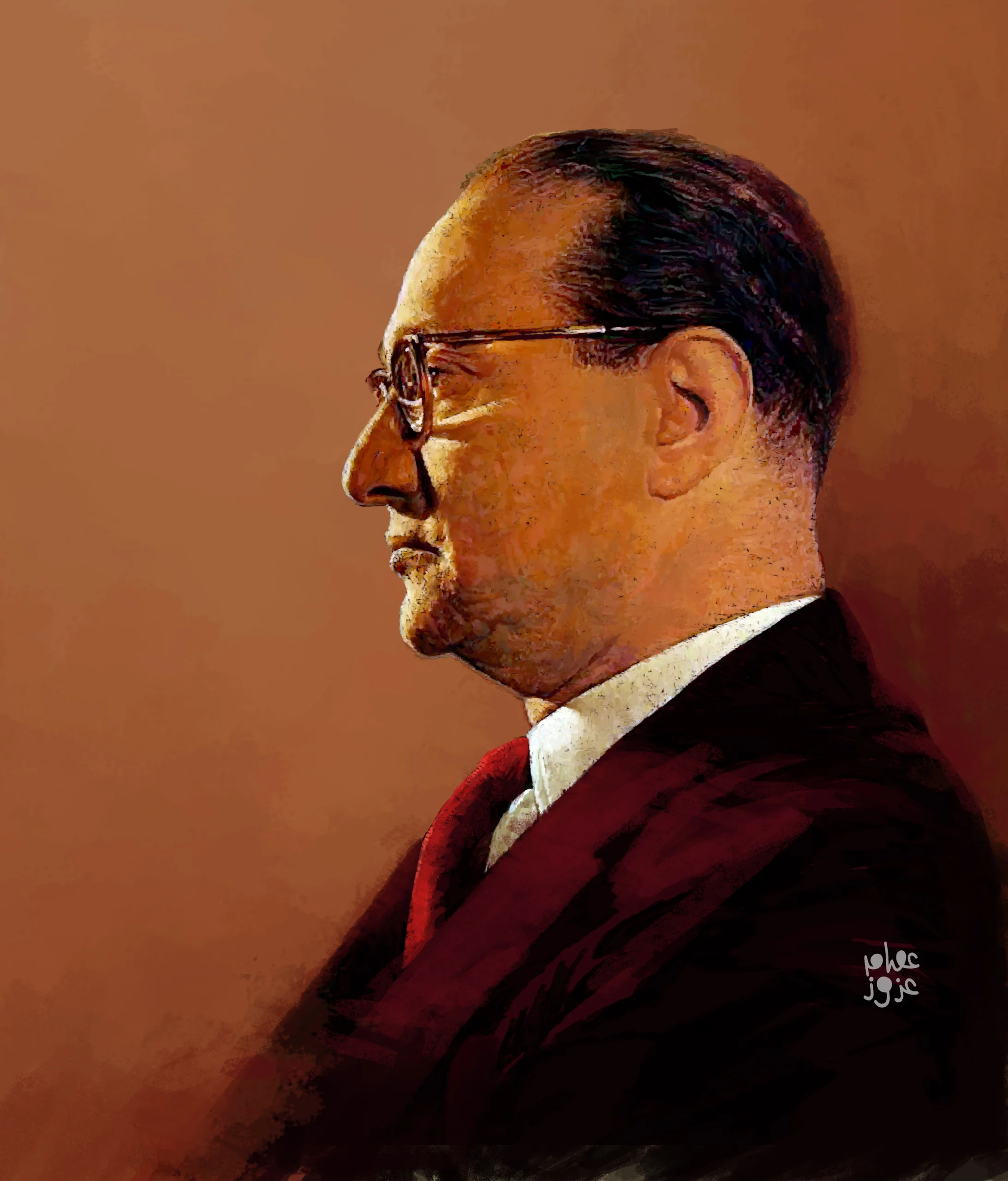
Mohammed Abdel Wahab
 Egypt
Also known as: Mohamed Abdel Wahab, Muḥammad ‘Abd al-Wahhāb
Birthday
March 13, 1902
Birth Sign
Pisces
Birthplace
Cairo, Egypt
Age
Died at 89
Height
5 ft 9 in (175 cm)
About
Mohammed Abdel Wahab was an Egyptian singer, composer, and oud player who fundamentally reshaped the soundscape of the Arab world. Born in Cairo in 1902, he is widely revered as the "Father of Modern Egyptian Song." His legacy is defined by his revolutionary fusion of Western musical instruments, such as the piano, violin, and cello, with traditional Arabic maqamat, creating a sophisticated new genre that bridged classical heritage with modern sensibilities. At the time of his death in 1991, Abdel Wahab left behind a vast catalog of over 1,000 songs and numerous film scores. He composed the Libyan national anthem between 1951 and 1969 and wrote patriotic anthems for Egypt that became rallying cries during periods of political change.
Early Life & Background
Mohammed Abdel Wahab El-Sayyed was born into a middle-class family in the Bab al-Sha'ria district of Cairo on March 13, 1902. His father, a military officer, died when Mohammed was young, leaving him to be raised primarily by his mother. Despite early financial struggles, his mother recognized his prodigious talent for music and singing from a very young age. He began his formal musical education at the age of five, learning the oud and vocal techniques from local masters. By the time he was ten, he was already performing publicly in local venues.
He attended the School of Fine Arts but eventually left formal schooling to pursue music full-time, a decision driven by his intense passion and the urgent need to support his family. His early years were marked by a relentless drive to master both traditional folk styles and the emerging influences of European classical music. This period of self-directed study and early performance laid the groundwork for his future innovations, as he absorbed diverse musical traditions without the constraints of rigid academic training. He developed a unique ability to blend these disparate elements, setting the stage for his later career breakthroughs.
Career Growth
Abdel Wahab's professional career began in the late 1910s. He first gained recognition not just as a performer but as a composer who could write for the stage. His breakthrough into the mainstream occurred in the 1920s and 1930s through his collaborations with Umm Kulthum, the most famous singer in the Arab world. Together, they created some of the most enduring songs in Arabic history, including Al-Atlal (The Ruins) and Enta Omri (You Are My Life). These collaborations were pivotal; Abdel Wahab composed the music while Umm Kulthum provided the vocals, resulting in a partnership that dominated the cultural landscape for decades.
His film career was equally significant. He acted in and composed music for over 30 films, often playing the lead role or the composer character. Notable films include Yahya el Hub (Long Live Love, 1942), Mamnou'a (Forbidden, 1947), and Layla wa al-Layl (Night and Day, 1956). In these films, he seamlessly integrated song, dance, and narrative, establishing the template for the Egyptian musical film genre. For Egypt, he wrote anthems such as O Egypt, Happiness Is Here (Ya Masr, Sa'ada) and The Call of Duty (Adwa' al-Watan), which became rallying cries during periods of political change and nationalism. His work extended beyond entertainment; he used his art to comment on social issues, women's rights, and the struggle for independence.
Career Timeline
Public Image & Style
Abdel Wahab is portrayed as a visionary artist who elevated Arabic music to a global standard. His image is one of intellectual depth and artistic integrity, often depicted in black-and-white photographs wearing a suit or traditional robe, holding an oud or seated at a piano. Fans refer to him simply as "The Master" or "El-Mohandis" (The Engineer), a title reflecting his precision and innovation in music. His aesthetic was one of sophistication and intellectualism, reflecting his deep knowledge of music theory and his willingness to experiment. He stood at an average height for men of his generation, approximately 5'9" or 175 cm, though exact measurements are not consistently documented in all biographies.
Fame & Fandom (iFAMOUS Rankings)
Mohammed Abdel Wahab commands a following defined not by digital campaigns or organized groups, but by a deep, generational reverence that treats his work as an inseparable part of Egyptian identity. Unlike modern stars with self-identified fan clubs, his audience manifests through state-sponsored tributes and institutional preservation rather than active, fan-led movements. Recent events underscore this enduring legacy, including a November 2025 tribute concert in London featuring soprano Fatma Said and a February 2025 celebration at the Ithra center in Saudi Arabia. His catalog maintains a steady presence on streaming platforms with approximately 75,500 monthly listeners, while the high-profile $7 million listing of his former Cairo villa in 2023 signals that collectors actively seek to preserve his personal history. This quiet but persistent engagement reflects a fandom that operates through cultural continuity rather than viral activity.
Within the broader scope of global recognition, Mohammed Abdel Wahab holds significant standing according to the iFANN Global Fame Rankings. He is currently ranked as the 70th most famous person in Egypt, a position holding steady from the previous cycle. Furthermore, he stands as the 68th most famous person from Egypt in the global index, maintaining his placement without fluctuation. These metrics reflect a sustained level of attention across media coverage and consumption signals worldwide. The absence of a formal fandom name does not diminish his status; instead, it highlights how his influence has transcended typical celebrity dynamics to become a historical constant. Reports from 2025 note his compositions being sampled and reimagined in American Hip-Hop, proving his art transcends time and genre.
Interesting Facts and Legends
Mohammed Abdel Wahab was the first Arab musician to introduce the piano as a primary instrument in Arabic orchestration, moving away from the traditional ensemble of oud and qanun. His early recording sessions with Baidaphone preserved the transition from live performance to recorded media, capturing the raw energy of his voice before studio technology altered it. His music appeared in the 2003 film Good Bye Lenin!, introducing his work to a new generation of European audiences. He was proficient in playing the oud, piano, violin, and cello, and was also a skilled conductor. A story often retold among enthusiasts involves the Baidaphone recording sessions, which captured his early work during the transition from live performance to recorded media. During his live performances in the mid-20th century, crowds would sometimes shut down streets to hear him sing, a testament to his magnetic presence. He was awarded the Order of Merit by the Egyptian government multiple times.
Notable Quotes
“Music is the language of the soul, and it must speak to the people.”
“I did not compose for the past; I composed for the future.”
Family & Personal Life
Mohammed Abdel Wahab was married to Nahla Alqudsi, a Palestinian-Egyptian woman. The couple did not have children. Their marriage was known for its stability and mutual respect, with Nahla serving as a supportive figure throughout his later years. Following his death, Nahla lived until 2015, passing away at the age of 90. His grandson has expressed a desire to maintain his legacy. There are no public records of other marriages or long-term romantic relationships outside of Nahla.
Notable Connections
Relationships & Dating History
Mohammed Abdel Wahab was married to Nahla Alqudsi, a Palestinian-Egyptian woman. They remained together until his death in 1991. There are no public records of other marriages or long-term romantic relationships outside of Nahla. The couple did not have children. Their marriage was known for its stability and mutual respect, with Nahla serving as a supportive figure throughout his later years. Following his death, Nahla lived until 2015, passing away at the age of 90. At the time of his death, he was married to Nahla Alqudsi.
- MarriedNahla AlqudsiUnknown - 1991Remained together until his death; had no children.
Death & Aftermath
Died
May 4, 1991 (aged 89)
Death Place
Cairo, Egypt
Cause of Death
Natural causes associated with advanced age
Mohammed Abdel Wahab spent his final years largely withdrawn from the public eye, focusing on composition and mentoring younger artists in Cairo. He passed away on May 4, 1991, at the age of 89 due to natural causes linked to a decline in health associated with old age. His death triggered an immediate outpouring of grief across the Arab world, with state media declaring a period of mourning and millions lining the streets of Cairo to bid farewell. The funeral was a massive event, though specific details regarding the exact location of burial were kept somewhat private consistent with the wishes of his family. He was buried in the Al-Rawda cemetery in Cairo.
In the aftermath, his estate has continued to generate significant revenue through streaming royalties, licensing deals for his extensive catalog of over 1,000 songs, and merchandise. In 2023, his former villa in Cairo was listed for sale at $7 million, highlighting the enduring value of his personal property and legacy. Posthumous tributes remain active; a major symphonic concert featuring soprano Fatma Said was held in London in November 2025, and a celebration took place at the Ithra center in Dhahran, Saudi Arabia, in February 2025, demonstrating that his influence continues to resonate globally. The 2025 hip-hop reinterpretations of his songs represent a modern legend of his adaptability, showing how his melodies transcend generations.
Net Worth (Estate Value)
$15 Million
iFANN Editorial Team estimate
As a historical figure who died in 1991, "net worth" refers to the value of his estate and the earnings of his intellectual property. The iFANN Editorial Team estimates the current value of Mohammed Abdel Wahab's estate and ongoing revenue streams at approximately $15 Million as of 2026. No single consolidated figure exists for the total net worth of his estate, but the listing of his former villa for $7 million in 2023 indicates significant asset value.
The estate earns revenue through streaming royalties (estimated at millions annually given 86+ million YouTube views), licensing deals for films and commercials, and merchandise. The estate is managed by his family, specifically his grandson, who has expressed a commitment to preserving his legacy. Any figure suggesting a specific current net worth in the billions would be speculative. The $7 million villa listing is the most concrete recent valuation of his physical assets, contributing to the overall estimated worth derived from his catalog's enduring popularity. While specific award ceremonies like the Oscars or Grammys did not exist or were accessible to him in the same way they are today, his achievements are commemorated through state honors and cultural recognition.
Awards Won (2)
While Abdel Wahab received numerous state honors during his lifetime, many specific award ceremonies like the Oscars or Grammys did not exist or were not accessible to him in the same way they are today. However, his achievements are commemorated through state honors such as the Order of Merit by the Egyptian government multiple times. He is universally recognized as the "Father of Modern Egyptian Song" and enshrined in the pantheon of Arab music legends.
1950s · State Honor
Contribution to Egyptian Music
1960s · State Honor
Contribution to Egyptian Music
Known For
Enta Omri
1932 · Composer
Yahya el Hub
1942 · Actor/Composer
Mamnou'a
1947 · Actor/Composer
Layla wa al-Layl
1956 · Actor/Composer
Keywords
Sources
Quick Facts
- Profession
- singer, composer, oud player
- Born
- March 13, 1902
- Birthplace
- Cairo, Egypt
- Died
- May 4, 1991
- Death Place
- Cairo, Egypt
- Gender
- Male
- Spouse
- Nahla Alqudsi
- Birth Sign
- Pisces
Personal Details
- Full Name
- Mohammed Abdel Wahab El-Sayyed
- Height
- 5 ft 9 in (175 cm)
- Spouse
- Nahla Alqudsi
- Children
- Education
- School of Fine Arts (left before completion)
Filmography
35
Total
30
Film
5
TV
Frequently Asked Questions
Who was Mohammed Abdel Wahab?
When did Mohammed Abdel Wahab die?
Was Mohammed Abdel Wahab married?
What is Mohammed Abdel Wahab's net worth?
Did Mohammed Abdel Wahab compose the Libyan national anthem?
Similar People
Join the community
fans discussing