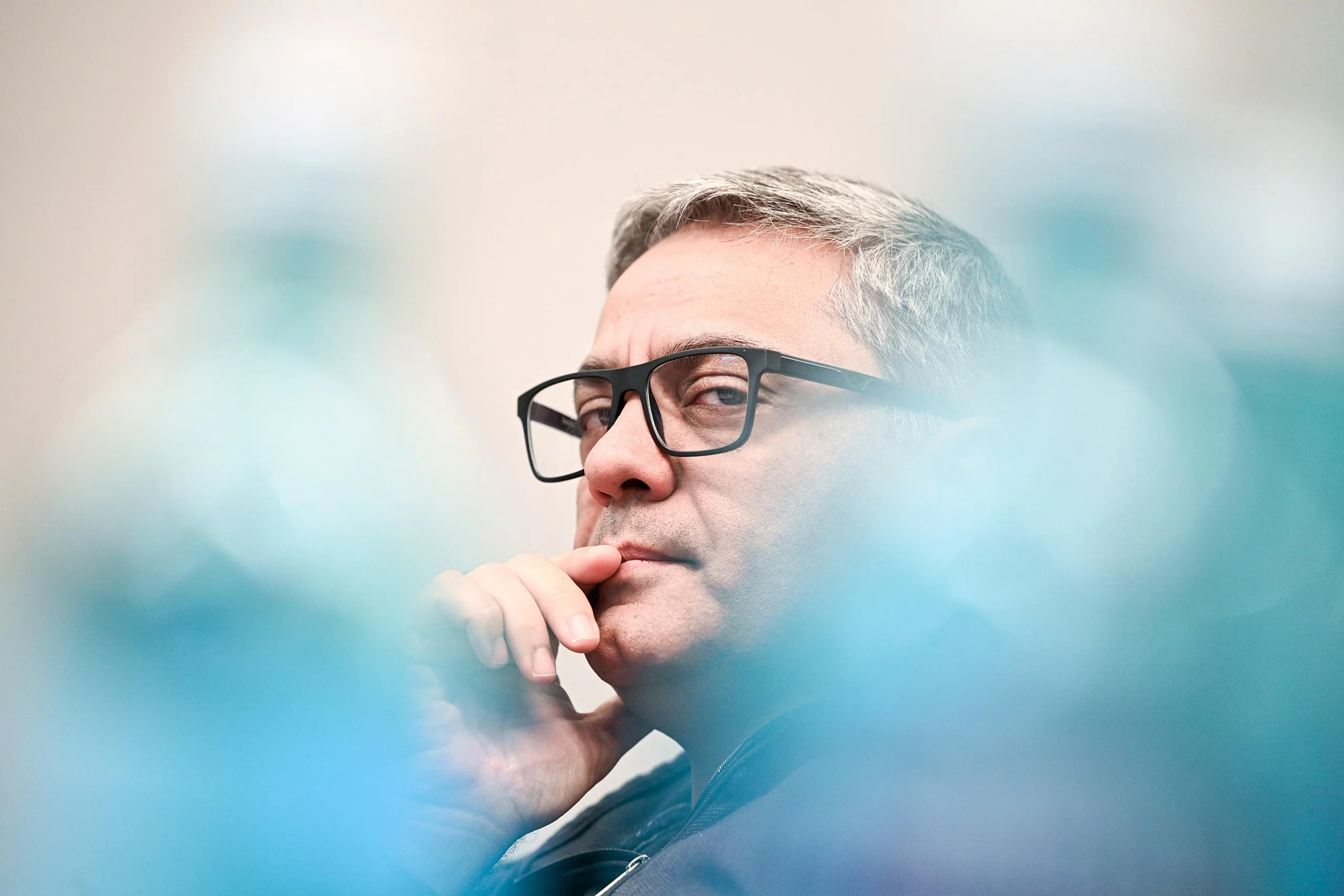
Mohammad Rasoulof
 Iran
Irandirector•film producer•screenwriter
Birthday
November 16, 1972
Birth Sign
Scorpio
Birthplace
Shiraz, Iran
Age
53 years old
About
Mohammad Rasoulof is an Iranian filmmaker whose independent cinema has consistently challenged authority. Born in Shiraz in 1972, he studied sociology before turning to film, and that academic grounding shows in every frame: his movies dissect power, repression, and moral compromise with a sociologist's precision. He has directed eight features, including the Golden Bear winner There Is No Evil (2020), and his work has earned him a devoted following among cinephiles and human-rights advocates alike.
Rasoulof's career is defined by defiance. He has been arrested multiple times, had his passport confiscated, and in 2024 was sentenced in absentia to eight years in prison and flogging for making The Seed of the Sacred Fig. He fled Iran on foot, crossing into Germany, where he now lives in exile. In 2025, Time named him one of the 100 Most Influential People, a recognition of his artistic courage and his role as a voice for the Iranian people.
Today, Rasoulof continues to work from Europe, premiering new films and speaking out against the regime that forced him out. His latest feature, Sense of Water, debuted at the 2026 Rotterdam Film Festival. For audiences, he represents the rare artist who puts everything on the line for the truth.
Early Life & Background
Rasoulof's path to cinema began on the stage. At nine years old, he started performing in theatre in his hometown of Shiraz, a city known for its poets and gardens. Those early years in front of an audience gave him a feel for storytelling, but it was his university studies in sociology that shaped his worldview. He became fascinated by how societies function, how power operates, and how individuals navigate systems of control.
After university, he moved into documentary and short films, learning the craft outside the state-supported industry. His first feature, The Twilight (2002), came after years of honing his voice. The film was modest but signaled a filmmaker unafraid to ask hard questions. He followed it with Iron Island (2005), which drew on his sociological eye to depict life on a sinking ship, a metaphor for Iranian society.
By the late 2000s, Rasoulof was established as a rising voice in Iranian independent cinema. But the political climate was tightening, and his next projects would put him on a collision course with the authorities.
Career Growth
Rasoulof's breakthrough came with Iron Island (2005), which won awards at several international festivals and put him on the map. But it was Goodbye (2011) and Manuscripts Don't Burn (2013) that cemented his reputation as a political filmmaker. The latter, made secretly under severe restrictions, tackled the 1998 serial murders of Iranian intellectuals. It was banned in Iran, but it traveled the festival circuit and earned him the FIPRESCI Prize at the 2014 Berlin Film Festival.
In 2017, A Man of Integrity won the top prize at the Locarno Film Festival, a story about a fish farmer fighting corruption. Then came There Is No Evil (2020), a four-part anthology about capital punishment in Iran. It won the Golden Bear at Berlin, making Rasoulof the most decorated Iranian filmmaker of his generation.
His 2024 film, The Seed of the Sacred Fig, was selected for Cannes, but the Iranian government responded with a savage sentence: eight years in prison, flogging, a fine, and confiscation of his property. Rasoulof escaped on foot to Germany in May 2024. From exile, he has continued to make films and speak out. In 2025, Time named him one of the 100 Most Influential People. In 2026, he premiered Sense of Water at the Rotterdam Film Festival, a deeply personal work about displacement.
Career Timeline
Public Image & Style
Rasoulof is widely seen as a symbol of artistic resistance. His public persona is that of a quiet, principled intellectual who would rather flee his homeland than compromise his vision. He rarely gives interviews, but when he speaks, his words carry weight. In 2026, he called the late Ayatollah Khamenei "the most hated figure in the contemporary history of Iran," a statement that made headlines worldwide.
His films are known for their naturalistic style and moral complexity. He has described cinema as "an act of freedom and resistance." Fans and critics alike admire his willingness to risk everything for his art. He has become a hero to many Iranians and to filmmakers everywhere who believe in the power of truth.
Fame & Fandom
Mohammad Rasoulof commands a distinct and potent global attention that transcends typical celebrity metrics, resonating deeply within the international film community, human rights circles, and political discourse rather than through mass-market pop culture channels. His influence is measured not by chart positions or viral moments but by the profound impact of his cinematic defiance and the high-stakes narrative of his exile. According to the iFANN Global Fame Engine evaluation from August 2026, Mohammad Rasoulof is currently evaluated as unranked in the published rankings, holding no specific placement within the Global Top 1,000 or any Top-100 scope list. This absence of a numerical rank reflects his unique status as a figure whose fame is defined by ideological alignment and critical acclaim rather than commercial volume. The audience supporting Rasoulof does not coalesce around a formalized fandom name; there is no documented official moniker for his supporters. Instead, his following comprises critics, festival attendees, and activists who engage with his work through solidarity and shared concern for artistic freedom in Iran. Unlike mainstream entertainers who inspire organized fan campaigns or ritualistic gatherings, Rasoulof's supporters interact primarily through the reception of his films at major festivals like Locarno and through the dissemination of his political statements. The most significant cultural mythology surrounding him involves his dramatic escape from Iran and his subsequent legal battles, events that have cemented his legacy as a symbol of resistance without generating the performative fanfare associated with traditional stardom.
Interesting Facts and Legends
Rasoulof's film Manuscripts Don't Burn was famously smuggled out of Iran in pieces to evade state detection. Despite his growing international stature, he has never produced a feature film outside Iran prior to his exile and continues to write all scripts in Persian. He maintains a deep appreciation for the poetry of Hafez, the celebrated poet also hailing from Shiraz. The experience of living in exile profoundly influenced his film Sense of Water, which was sparked by a peculiar sensation he experienced while showering in London. A central legend of his career is his daring flight from Iran in 2024, where he fled on foot to avoid arrest after completing The Seed of the Sacred Fig, an act documented by major news outlets as a triumph of art over tyranny. Another iconic moment occurred at the Locarno Film Festival, where he received the inaugural Locarno City of Peace Award amidst a hero's welcome that transformed the ceremony into a symbolic stand against oppression. In 2026, his legend was further solidified when he publicly called the late Ayatollah Khamenei the most hated figure in contemporary Iranian history, a statement that garnered worldwide headlines despite the ongoing legal threats he faces from Tehran.
Notable Quotes
“I think that a great filmmaker draws most pleasure sharing his emotions with his crew. Creating a film.”
“Cinema is an act of freedom and resistance.”
“The most hated figure in the contemporary history of Iran.”
Family & Personal Life
Rasoulof is married, though his wife's name has not been made public. She and their daughter reportedly played a key role in his escape from Iran in 2024, helping him cross the border on foot. His daughter has been involved in his filmmaking activities, though details are scarce. The family now lives in Germany, where they have started a new life away from the regime that sought to silence him.
Notable Connections
Rasoulof is closely associated with fellow Iranian dissident filmmaker Jafar Panahi, with whom he has issued joint statements condemning the government's repression. He has also been publicly supported by actress Golshifteh Farahani. His primary political adversary is the late Supreme Leader Ali Khamenei, whose death in 2026 prompted a scathing response from Rasoulof.
Relationships & Dating History
Details about Rasoulof's personal life are scarce. He is married, and his wife's name has not been publicly disclosed. She and their daughter reportedly helped him escape Iran in 2024. There is no public information about prior relationships or dating history. As of 2026, he remains married, living with his family in Germany.
- MarriedWife (name undisclosed)CurrentWife helped him escape Iran in 2024; they live in Germany.
Salary, Net Worth In 2026
$5 Million
iFANN Editorial Team estimate
iFANN currently estimates Mohammad Rasoulof's net worth at $5 Million as of 2026. This valuation reflects earnings derived from film production budgets, festival prize money, and international distribution agreements secured across arthouse markets globally. Wins at prestigious venues such as Cannes and Berlin have significantly enhanced the commercial value of his catalog, allowing for sustained revenue streams despite his displacement. However, his financial landscape remains complicated by the confiscation of property ordered by the Iranian government as part of his 2024 sentence. Residing in exile in Germany, Rasoulof relies on income generated from his ongoing creative output. Recent projects including The Seed of the Sacred Fig and Sense of Water have likely bolstered his earning potential, yet he remains a modest figure compared to directors operating within the mainstream industry.
Awards Won (63)
Rasoulof has won some of the most prestigious awards in cinema. His most notable win is the Golden Bear at the 2020 Berlin International Film Festival for There Is No Evil. He also received the Special Jury Prize at Cannes in 2024 for The Seed of the Sacred Fig, and the Golden Leopard at Locarno for A Man of Integrity in 2017.
2024 · Special Award (Prix Spécial)
The Seed of the Sacred Fig
2024 · FIPRESCI Prize
The Seed of the Sacred Fig
2024 · Prize of the Ecumenical Jury
The Seed of the Sacred Fig
2024 · François Chalais Prize
The Seed of the Sacred Fig
2024 · Prix des Cinémas Art et Essai
The Seed of the Sacred Fig
2017 · Prix Un Certain Regard
A Man of Integrity
2013 · FIPRESCI Prize – Un Certain Regard
Manuscripts Don't Burn
2011 · Un Certain Regard – Directing Prize
Goodbye
2011 · François Chalais Prize – Special Mention
Goodbye
2020 · Best Film
There Is No Evil
Known For
There Is No Evil
2020 · Director, Screenwriter
The Seed of the Sacred Fig
2024 · Director, Screenwriter
A Man of Integrity
2017 · Director, Screenwriter
Iron Island
2005 · Director, Screenwriter
Keywords
Sources
Quick Facts
- Profession
- Director, screenwriter, producer
- Born
- November 16, 1972
- Birthplace
- Shiraz, Iran
- Gender
- Male
- Birth Sign
- Scorpio
- Education
- Sociology
- Notable Award
- Golden Bear, Berlin 2020
- Status
- In exile in Germany
Personal Details
- Spouse
- Wife (name undisclosed)
- Children
- 1 daughter
- Education
- Sociology (university)
Filmography
8
Total
8
Film
0
TV
Frequently Asked Questions
Why did Mohammad Rasoulof leave Iran?
What is Mohammad Rasoulof's most famous film?
Is Mohammad Rasoulof married?
What awards has Mohammad Rasoulof won?
Where does Mohammad Rasoulof live now?
Social Media
Similar People
Join the community
fans discussing