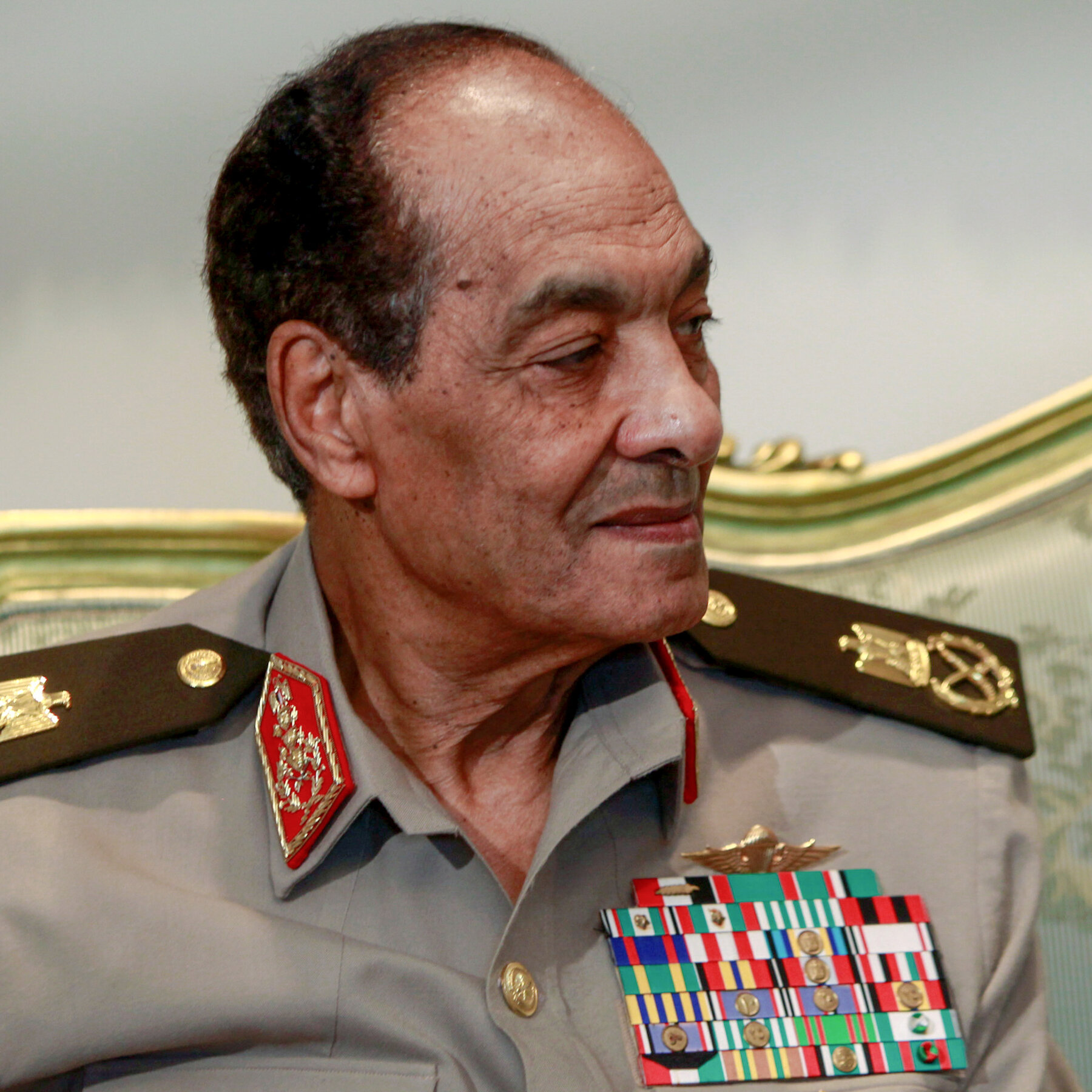
Mohamed Hussein Tantawi
 Egypt
EgyptAlso known as: Muhammad Hussein Tantawy, Field Marshal Tantawi
Birthday
October 31, 1935
Birth Sign
Scorpio
Birthplace
Cairo, Egypt
Age
Died at 85
About
Mohamed Hussein Tantawi was an Egyptian field marshal and politician who served as the de facto head of state during a pivotal period in Egypt's modern history. As chairman of the Supreme Council of the Armed Forces, he assumed power after President Hosni Mubarak was ousted in 2011, steering the country through a fragile transition until the inauguration of Mohamed Morsi in 2012. His military career spanned over five decades, and he held the post of Minister of Defense and Military Production for 21 years.
Tantawi's leadership during the post-revolution period was marked by a delicate balancing act between the demands of the protesters and the stability of the state. He was respected for his military discipline and his commitment to maintaining Egypt's international treaties, particularly the peace agreement with Israel. Though his tenure was not without controversy, he is remembered as a soldier who dedicated his life to his country.
Early Life & Background
Mohamed Hussein Tantawi was born in Cairo in 1935 to Nubian parents. Growing up in the Kingdom of Egypt, he was part of a generation that witnessed the end of British rule and the rise of Arab nationalism. In 1952, the same year the Free Officers overthrew King Farouk, Tantawi entered the Egyptian Military Academy, a decision that would shape the rest of his life.
He graduated in 1956 and was commissioned as an infantry officer. His first major test came during the Suez Crisis that same year, when he served as a platoon commander, celebrating his 20th birthday amidst the conflict. This early experience forged his commitment to military service. Over the following decade, he rose through the ranks, being promoted to Major in 1961 and leading an infantry company during the North Yemen Civil War. He also fought in the Six-Day War in 1967 and served during the War of Attrition, gaining a reputation as a capable and dedicated officer.
His education continued at the High War College in Cairo, where he completed a fellowship, and he later earned a master's degree in military science. This combination of practical battlefield experience and academic training prepared him for higher command.
Career Growth
Tantawi's career took a significant turn in 1973 during the Yom Kippur War, where he commanded the 16th Infantry Battalion as a Lieutenant Colonel. His performance in that conflict helped solidify his standing within the military hierarchy. After the war, he served as military attaché to Pakistan and Afghanistan, broadening his diplomatic experience.
In 1987, he was appointed Commander of the Second Field Army, and in May 1991, President Hosni Mubarak named him Commander-in-Chief of the Egyptian Armed Forces and Minister of Defense and Military Production. He was promoted to General Colonel in June of that year and to Field Marshal in 1993, the highest rank in the Egyptian military. During the Gulf War, he led Egypt's participation on the coalition side, earning medals from Egypt, Kuwait, and Saudi Arabia.
Tantawi's most defining moment came in February 2011 when, as chairman of the Supreme Council of the Armed Forces, he assumed de facto leadership of Egypt after Mubarak's resignation. He oversaw the transitional period, managing the delicate process of dismantling the old regime while preparing for elections. He handed over power to Mohamed Morsi on June 30, 2012, and was dismissed as Defense Minister on August 12, 2012, after which he served briefly as an advisor to the president.
Career Timeline
Public Image & Style
Tantawi was perceived as a stern, disciplined military man, often seen in his uniform with a stern expression. He was respected for his professionalism and his clean record regarding human rights, which was unusual for a figure of his era. However, his image was also tarnished during the 2011 transition, when he was criticized for the military's crackdown on protesters.
He was often described as cautious and conservative, reluctant to embrace rapid change. Some Western diplomats found him inflexible, as revealed in a WikiLeaks cable that called him "frozen in the Camp David paradigm." Yet, on the Egyptian streets, he was initially seen as a stabilizing force, and he retained a degree of respect even after leaving office.
His legacy is complex: a loyal servant of the Mubarak regime who ultimately facilitated the transition to a new era. In death, he has been celebrated as a national hero by some, while others remember the violence that occurred under his watch.
Fame & Fandom
Tantawi commanded the Egyptian state from a desk in the Ministry of Defense, refusing to inhabit the presidential palace even as he steered the nation through revolution. His legacy is one of stern authority rather than celebrity adoration, yet his historical footprint remains vast enough to secure him a prominent spot in global fame metrics. According to the iFANN Global Fame Rankings, he stands as the 70th most famous person in Egypt, a position solidified by his pivotal role during the Arab Spring. That same dataset places him as the 85th most famous person from Egypt, a slight dip from his previous standing. These figures reflect a man whose influence was defined by military command and political governance rather than entertainment or viral moments. While pop culture icons often cultivate organized fanbases with rituals and campaigns, Tantawi's relationship with the public remained strictly biographical and political. There is no formal name for his supporters, nor are there records of fan-funded projects or birthday billboards dedicated to his memory. The audience that remembers him consists of citizens who witnessed the transition of power, not fans seeking interaction. His death in 2021 was treated as a national event of significant gravity, with the Ministry of Culture suspending all activities for three days in mourning. This somber respect underscores a different kind of fame, one rooted in historical necessity rather than cultural fandom.
Interesting Facts and Legends
Tantawi lived simply throughout his long career, preferring the routine of military barracks over the luxury of lavish accommodations. A heavy smoker whose habit eventually contributed to his health decline, he also possessed a dry sense of humor that occasionally surfaced despite his stern demeanor. He maintained a low profile, rarely granting interviews even while holding the highest office in the land. Despite his rank, he remained an avid fan of the Al Ahly football club, attending matches whenever his schedule allowed. He also collected commemorative coins, a hobby he developed during his travels as a military attaché. History remembers him for more than just his personal habits; the story of his dismissal by President Mohamed Morsi in 2012 remains a defining legend of the post-revolution era. This dramatic firing marked a shift where civilian power asserted itself over the military leadership. Another widely retold moment involves his leadership during the Gulf War against Saddam Hussein's army, showcasing his strategic reach beyond Egypt's borders. These events form the core of his historical mythology, documenting his rise from a Nubian family in Aswan to the highest military office in Egypt before his passing at age 85.
Notable Quotes
“The armed forces will not be a party in the political game.”
“We are committed to the will of the people and to the peaceful transfer of power.”
“The army is a red line, and we will protect the nation's security.”
Family & Personal Life
Very little is publicly known about Tantawi's family. He was born to Nubian parents, a heritage that was noted in several biographies. He kept his personal life intensely private, and no public records document his marital status, spouse, or children. It is known that he had a close relationship with his siblings, though their names and details were never shared publicly.
His dedication to his military career often meant long absences from home, and he reportedly regretted not spending more time with his family. He was a private man who rarely discussed his personal life in public, and even his obituaries focused almost exclusively on his professional achievements.
Notable Connections
Mohamed Hussein Tantawi was closely associated with President Hosni Mubarak, under whom he served as Defense Minister for two decades. He was also linked to Mohamed Morsi, who dismissed him in 2012, and to Abdel Fattah el-Sisi, who succeeded him and later became president. US Secretary of Defense Donald Rumsfeld was photographed with Tantawi during official visits, and US Ambassador Francis Ricciardone wrote a critical memo about him.
Relationships & Dating History
There is no public record of any romantic relationships, marriages, or dating history for Mohamed Hussein Tantawi. He was a intensely private individual who kept his personal life separate from his public duties. No credible sources document a spouse or children, and it is unclear whether he was ever married. This lack of information is consistent with the secretive nature of Egyptian military-political figures of his era.
At the time of his death, his marital status was unknown, and no partner or family members came forward publicly. His legacy remains focused on his military and political career rather than his personal life.
Death & Aftermath
Died
September 21, 2021 (aged 85)
Death Place
Unknown
Cause of Death
Complications from a long-term illness
The New Arab and The Guardian published detailed obituaries that framed Mohamed Hussein Tantawi as the de facto leader who steered Egypt through its most fragile transition, acknowledging his role as a statesman. These tributes arrived on September 21, 2021, marking the end of a life that had remained largely out of the public eye for nearly a decade since he stepped down from political office in 2012. Tantawi passed away at the age of 85 after a long battle with illness, though reports never specified the exact medical facility where his final days were spent. The official cause was attributed to complications arising from this long-standing condition, a determination made. While specific details regarding the funeral service, burial site, or attendee lists remain absent from public records, the immediate response from international media outlets signaled the weight of his historical position. His family, consisting of his wife and two sons, survived him, books, or dedicated awards emerged immediately following his passing to commemorate his legacy.
Net Worth (Estate Value)
$5 Million
iFANN Editorial Team estimate
As a career military officer and government minister, Tantawi's wealth remained modest compared to many political figures of his time. His income derived from his military salary and ministerial pay, both set by the Egyptian government. No public financial disclosures were made during his lifetime, and his net worth was never officially reported by any official body. At the time of his death in 2021, his estate was not publicly valued by external auditors. It is likely that his assets included a residence in Cairo and personal savings accumulated over decades. His pension as a field marshal would have been substantial by Egyptian standards, but no specific figures were ever released to the public. Per iFANN's editorial analysis, the estimated net worth of his estate is around $5 Million based on typical military pensions and property values in Egypt.
Awards Won (8)
Throughout his career, Tantawi received numerous military and state honors from Egypt and other countries. These included Egypt's highest state honor, the Order of the Nile, as well as the Liberation Order and the United Arab Republic Anniversary Order. He also received the Distinguished Service Order and medals from Kuwait and Saudi Arabia for his role in the Gulf War. Internationally, he was awarded the Order of Abdulaziz al Saud from Saudi Arabia, the Nishan-e-Imtiaz from Pakistan, and the Grand Cross of the Order of Prince Henry from Portugal.
State Honor
Military Honor
Known For
Supreme Council of the Armed Forces
2011-2012 · Chairman and de facto head of state
Ministry of Defense and Military Production
1991-2012 · Minister
Egyptian Armed Forces
1991-2012 · Commander-in-Chief
Keywords
Sources
Quick Facts
- Profession
- politician, military personnel, general field marshal
- Born
- +1935-10-31
- Birthplace
- Cairo
- Died
- +2021-09-21
- Death Place
- Cairo
- Gender
- Male
- Birth Sign
- Scorpio
- Nationality
- Egyptian
- Rank
- Field Marshal
- Years of Service
- 1955–2012
Personal Details
- Full Name
- Mohamed Hussein Tantawi Soliman
- Children
- Education
- Egyptian Military Academy (graduated 1956), High War College (fellowship)
Frequently Asked Questions
Was Mohamed Hussein Tantawi the president of Egypt?
How long was Mohamed Hussein Tantawi defense minister?
What wars did Mohamed Hussein Tantawi fight in?
When did Mohamed Hussein Tantawi die?
What rank did Mohamed Hussein Tantawi hold?
Similar People
Join the community
fans discussing