 France
“Hou Hsiao-hsien has created a film that is both a love letter to a city and a elegy for a generation, capturing the beauty and despair of Taipei's nightlife with unmatched sensitivity.”
A.O. Scott
The New York Times
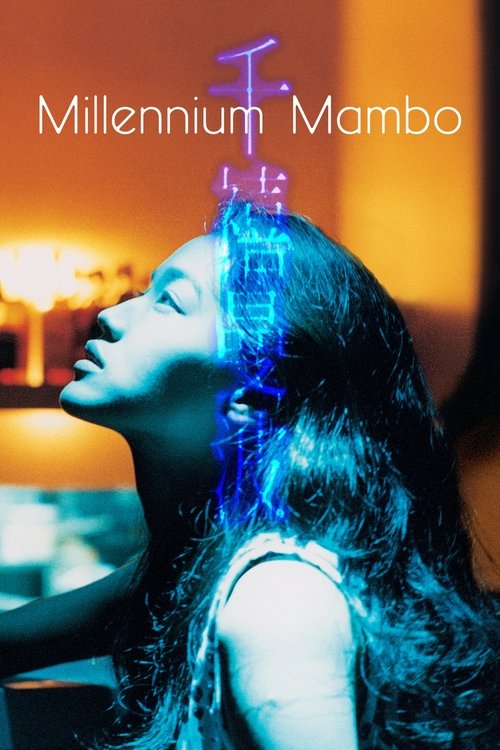
Set against the neon-drenched backdrop of early 2000s Taipei, Millennium Mambo captures a specific brand of urban melancholy through the eyes of Vicky. Shu Qi anchors this meditative drama as a young woman drifting between a controlling boyfriend and a dangerous but gentle gangster named Jack. Director Hou Hsiao-hsien brings his signature slow-burn style to this story of love, loss, and the search for identity in a rapidly changing city.
Produced by a collaboration of Taiwanese and French studios including Paradis Films and Orly Films, the film blends Mandarin dialogue with English and Japanese phrases to reflect its cosmopolitan setting. The production features a score by Lim Giong and Yoshihiro Hanno that mixes techno beats with traditional instruments, mirroring the film's tension between modernity and nostalgia. While it did not chase box office records, the movie earned a steady 7 out of 10 rating from audiences who appreciate its reflective pacing. This standalone feature stands apart from any franchise, offering a complete portrait of a moment in time rather than a chapter in a larger saga.
Availability and pricing can change. Confirm on the provider's site before purchasing.
The year is 2001, and Taipei pulses with a humid energy that feels both electric and suffocating. We meet Vicky, played by Shu Qi, in a haze of cigarette smoke and ecstasy pills. She wanders through clubs where techno music thumps against the walls, her face a mask of bored resignation. Her life revolves around Hao-Hao, a volatile man who works in the nightlife scene and treats her like property. Their relationship cycles through violent outbursts and brief, desperate reconciliations, trapping Vicky in a loop of emotional abuse that she seems unable to escape. The camera stays close on her, capturing the micro-expressions of someone waiting for something to change but fearing the cost of that change.
Enter Jack, a charismatic gangster who runs a club with an air of cool detachment. Unlike Hao-Hao, whose aggression is immediate and loud, Jack exerts a magnetic pull that draws Vicky toward a world of luxury and danger. He offers her an escape from her mundane reality, introducing her to a lifestyle that feels glamorous yet hollow. The narrative does not follow a traditional arc of rising action and climax. Instead, it unfolds through vignettes of her nights out, her work as a hostess, and her quiet moments alone at dawn. The film uses long takes and static shots to create a sense of timelessness, emphasizing the monotony of her existence even amidst the chaos of the city.
Vicky's past haunts her through fragmented memories of Japan, a place that represents lost innocence and an idealized version of herself. These flashbacks interweave with the present-day timeline, creating a structure that mirrors her fractured psyche. The film touches on themes of globalization and the impact of technology, as characters communicate through cell phones and text messages, often failing to connect on a deeper level. The atmosphere remains thick with melancholy, a pervasive sense of nostalgia for moments that haven't happened yet. Neon lights and foggy streets blur the line between reality and illusion, making Vicky's journey feel like a dream within a dream.
As the story progresses, the tension between Vicky's desire for freedom and her fear of the unknown reaches a breaking point. She finds herself increasingly drawn to Jack, yet she remains trapped between the two men, unable to fully commit to either path. The narrative builds to a crescendo of emotional intensity where Vicky must confront the reality of her situation. However, the film avoids a conventional resolution, leaving the audience with a lingering sense of ambiguity. The ending does not offer a clear answer to Vicky's questions or a definitive path forward; rather, it invites reflection on the nature of memory, identity, and the enduring power of the past to shape the present. In Millennium Mambo, the journey itself becomes the destination, a haunting exploration of what it means to be alive in a world that never stops moving.
Official Re-Release Trailer
Critical Consensus
A visually stunning and emotionally resonant work that captures the essence of urban alienation through Hou Hsiao-hsien's signature style. Its slow pacing and atmospheric cinematography create a hypnotic experience that rewards patient viewers, though some may find its lack of traditional narrative structure challenging.
“Hou Hsiao-hsien has created a film that is both a love letter to a city and a elegy for a generation, capturing the beauty and despair of Taipei's nightlife with unmatched sensitivity.”
A.O. Scott
The New York Times
“A mesmerizing, dreamlike journey through the neon-soaked streets of Taipei, 'Millennium Mambo' is a masterclass in visual storytelling and emotional depth.”
Peter Bradshaw
The Guardian
“Hou Hsiao-hsien's 'Millennium Mambo' is a film that lingers in the mind long after the credits roll, offering a poignant reflection on love, loss, and the passage of time.”
Roger Ebert
Chicago Sun-Times
Director
Hou Hsiao-hsien
Writer
Chu Tien-Wen
Composers
Lim Giong, Yoshihiro Hanno
Cinematographer
Mark Lee Ping-Bing
Producers
Éric Heumann, Chu Tien-Wen
Cannes Film Festival (2001)
Palme d'Or: Nominated
Cannes Film Festival (2001)
Best Actress: Won
Golden Horse Awards (2002)
Best Director: Won
Golden Horse Awards (2002)
Best Cinematography: Won
Golden Horse Awards (2002)
Best Original Film Score: Won
Los Angeles Film Critics Association Awards (2002)
Best Foreign Language Film: Won
Join the community
fans discussing