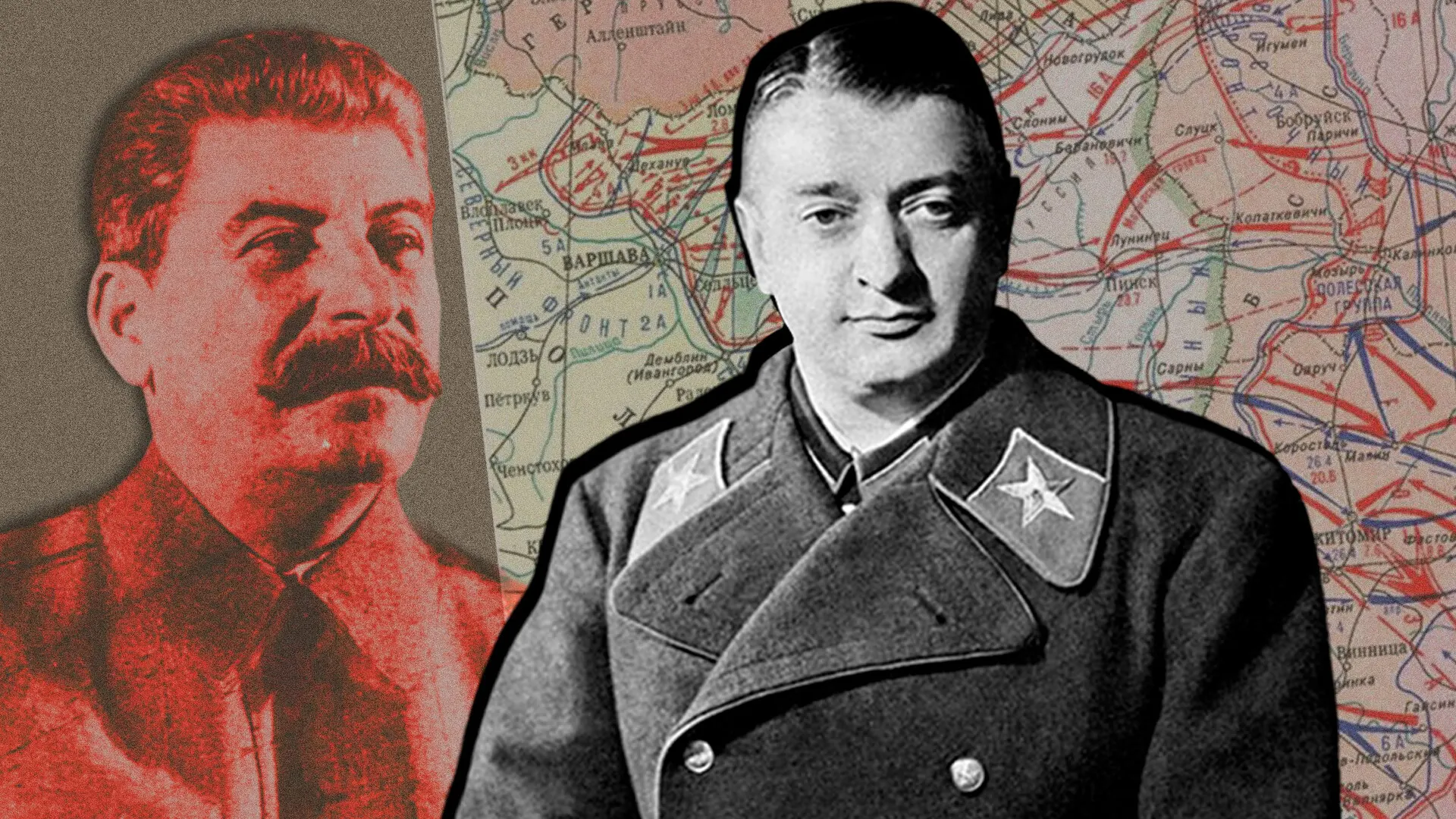
Mikhail Tukhachevsky
 Russia
Also known as: Mikhail Nikolayevich Tukhachevsky, Red Napoleon
Birthday
February 16, 1893
Birth Sign
Aquarius
Birthplace
Slednevo, Russian Empire
Age
Died at 44
Height
5 ft 11 in (180 cm)
About
Mikhail Nikolayevich Tukhachevsky was a preeminent Soviet military commander, theoretician, and the first person appointed to the rank of Marshal of the Soviet Union. Born into an aristocratic family with deep military ties, he rose to become one of the most influential figures in modern warfare strategy. His career spanned the chaos of World War I, the Russian Civil War, and the interwar period, where he championed the development of mechanized warfare and air power.
Tukhachevsky is best known for formulating the doctrine of "deep operations," a revolutionary concept that emphasized the simultaneous use of air power, tanks, and infantry to penetrate enemy lines. Despite his towering achievements and early promotion to Marshal in 1935, his life ended in tragedy during Stalin's Great Purge. Executed in 1937 on fabricated charges of treason, he was later rehabilitated and recognized as a key architect of the Red Army's modernization efforts.
Early Life & Background
Mikhail Tukhachevsky entered the world on February 16, 1893, near the village of Slednevo in the Kaluga region of the Russian Empire. He was born into a noble family; his father, Nikolai Ivanovich Tukhachevsky, served as a general in the Imperial Russian Army. This lineage provided Mikhail with a privileged upbringing and direct access to the military establishment, setting him apart from many self-made contemporaries of his era. From a young age, he followed in his father's footsteps, attending specialized military schools where he excelled academically.
His formal entry into the armed forces occurred at the remarkably young age of seventeen when he joined the officer corps during World War I. Serving as a cavalry officer on the Eastern Front, he quickly distinguished himself through bravery and tactical insight. In 1915, while fighting against German forces, Tukhachevsky was wounded twice and subsequently captured. He spent time in a prisoner-of-war camp, an experience that allegedly radicalized him or led to his conversion to Bolshevism through interactions with fellow prisoners. Upon his release and return to Russia in 1917, he abandoned his allegiance to the Tsarist regime and threw his support behind the Bolsheviks, marking the pivotal shift that would define his future.
Career Growth
Tukhachevsky's rise to prominence began in earnest during the Russian Civil War between 1917 and 1923. He demonstrated exceptional tactical brilliance in recapturing Siberia from Admiral Kolchak's White Army and successfully defending Moscow against General Yudenich's forces. His command of the Fifth Army was particularly notable, pushing back Polish forces during the Polish-Soviet War of 1920-1921, although the eventual Soviet defeat at the Battle of Warsaw cast a shadow over this campaign.
In the interwar period, he became the driving force behind the modernization of the Red Army. From 1925 to 1928, serving as Chief of Staff, he spearheaded massive efforts to develop Soviet aviation and tank warfare capabilities. He authored numerous books on military strategy and established the Frunze Military Academy as a center for advanced theory. In 1935, he achieved the historic distinction of becoming one of only five Marshals of the Soviet Union. His influence extended globally, shaping the thinking of future generals like Heinz Guderian and Georgy Zhukov until his sudden arrest and execution in 1937.
Career Timeline
Public Image & Style
Tukhachevsky projected an image of an intellectual, calm, and authoritative military leader. He was known for wearing his Marshal's star with pride and maintaining a distinctive uniform that reflected his high status. His demeanor was described as serious and focused, befitting a man dedicated to the rigorous study of war. Over time, his public persona evolved from a celebrated war hero to a scapegoat for political failures, and finally to a tragic martyr of military genius. Media perception shifted dramatically depending on the political climate, moving from reverence to vilification and back again.
Fame & Fandom (iFAMOUS Rankings)
Mikhail Tukhachevsky stands as the 38th most famous person from Russia, a standing confirmed in the latest cycle of global attention. This placement anchors his enduring presence within the iFANN Global Fame Rankings, reflecting a steady trajectory that has held firm against shifting historical tides. The data captures a figure whose strategic brilliance and tragic end have secured a permanent spot in the collective memory of nations, measured by the sheer volume of discourse surrounding his life and legacy.
Despite this significant fame ranking, Tukhachevsky does not possess a formal fandom name or organized fanbase in the modern sense. His audience consists primarily of military historians, students of Soviet history, and enthusiasts who study the intricacies of interwar warfare rather than a community driven by idolization or commercial engagement. There are no documented rituals, birthday campaigns, or spontaneous gatherings dedicated to his memory; the reverence he commands is academic and historical rather than devotional. While some might imagine crowds rallying for a legend, the reality is far more somber: his legacy is defined by the silence of the Great Purge and the weight of historical analysis. He remains a subject of intense study and discussion, but the concept of a "fan" interacting with him as a celebrity is entirely absent from the record.
Interesting Facts and Legends
Historians often refer to Tukhachevsky as the "Red Napoleon" due to his innovative military strategies and his reputation as a brilliant strategist who sought to modernize the Red Army along the lines of European powers. A widely retold legend suggests that he frequently challenged Joseph Stalin's knowledge of military affairs, a dynamic that reportedly fueled Stalin's paranoia and contributed to the decision to eliminate him. Another notable fact involves his capture during World War I; it was in the German POW camps that he reportedly learned valuable lessons about German tactics, which he later applied to Soviet doctrine.
The Battle of Warsaw in 1920 remains a point of historical contention. While celebrated in Poland as the "Miracle on the Vistula," it serves as a stark reminder of the limits of Tukhachevsky's ambitions, as his offensive stalled just short of victory. His legacy also includes a unique place in the history of the Great Purge; his execution is often cited as the single most damaging event to the Red Army's leadership structure prior to World War II, removing some of its most capable commanders.
Notable Quotes
“The army must be ready to fight not just today, but tomorrow and the day after.”
“War is not a game of chess, it is a game of blood and iron.”
Family & Personal Life
Mikhail Tukhachevsky was married to Alexandra Vasilievna Vorontsova. They had at least one son named Yuri. Details regarding their marriage dates and specific romantic history prior to this union are sparse due to the destruction of personal files during the Great Purge. The family suffered immensely following his arrest; his wife was sent to the Gulag, and their son faced significant persecution. Despite these hardships, the family eventually managed to clear their names after the rehabilitation of the Marshal in 1957. No other siblings or extended family members are widely documented in public records.
Notable Connections
Relationships & Dating History
Mikhail Tukhachevsky's personal life was largely shielded behind the veil of state secrecy, and detailed public records of his dating history do not exist. Historical sources indicate he was married to Alexandra Vasilievna Vorontsova, a union that produced at least one son, Yuri. The specifics of how they met or the duration of their courtship remain obscure, as personal archives were destroyed or lost during the Great Purge. Their marriage ended tragically with his execution in 1937, leaving Alexandra widowed and her life upended by the political climate of the era.
There is no public record of engagements, multiple marriages, or high-profile romances comparable to modern celebrity profiles. His private life remained secondary to his military duties and political struggles. As a figure executed in 1937, his status is permanently deceased, and he has no current relationship status or living partners. His family suffered immensely; his wife was sent to the Gulag, and his children faced persecution, though they eventually managed to clear their names.
- MarriedAlexandra Vasilievna Vorontsova1920 - 1937They had a son named Yuri; she was sent to the Gulag after his execution.
Death & Aftermath
Died
June 12, 1937 (aged 44)
Death Place
Moscow, Soviet Union
Cause of Death
Execution by firing squad
The end of Mikhail Tukhachevsky's life came swiftly and brutally on June 12, 1937. Following a secret arrest on June 11, he faced a closed trial before the Military Collegium of the Supreme Court of the USSR. The charges of treason, espionage for Poland, and plotting a coup against Joseph Stalin were entirely fabricated using coerced confessions and forged documents. The proceedings lasted less than twenty-four hours, resulting in an immediate death sentence. He was executed by a firing squad at dawn, and his body was disposed of in an unmarked grave at the Kommunarka shooting ground, leaving no trace for his family or comrades to mourn.
For over two decades, the official narrative painted him as a traitor, silencing any public discussion of his military genius. His wife, Alexandra Vasilievna, was sent to the Gulag, and their son Yuri faced severe persecution, though they eventually managed to clear their names. The tide turned only after Stalin's death during the Khrushchev Thaw. In 1957, the Supreme Court officially rehabilitated Tukhachevsky, declaring the conviction baseless and restoring his rank of Marshal of the Soviet Union posthumously. Today, statues stand in Moscow honoring him, and his theories remain a subject of intense study in military academies worldwide, transforming his legacy from a victim of paranoia into a martyr of strategic brilliance.
Net Worth (Estate Value)
$0
iFANN Editorial Team estimate
As a military commander and statesman in the early Soviet Union, Mikhail Tukhachevsky did not accumulate personal wealth in the manner of modern celebrities or business tycoons. His income consisted of a standard military salary and state stipend, which were modest compared to the vast fortunes accumulated by industrialists or oligarchs. There is no evidence of private business ventures, real estate holdings, or investment portfolios under his name. The concept of net worth does not apply to his estate, as all assets were likely absorbed by the state following his execution and the subsequent confiscation of property common during the purges.
Following his rehabilitation in 1957, his family received no financial compensation for the years of suffering or the loss of his estate. Instead, the value of his legacy is found in the preservation of his writings and the continued study of his military doctrines in academies around the world. His contribution to the Red Army's modernization remains his primary asset, a strategic inheritance that outlived his physical existence.
Awards & Accolades
View 7 records, honours and achievementsKnown For
Marshal of the Soviet Union
1935 · First appointee
Deep Operations Doctrine
1920 · Theorist
Russian Civil War
1918 · Commander
Keywords
Sources
Quick Facts
- Profession
- military officer, politician
- Born
- February 16, 1893
- Birthplace
- Slednevo, Russian Empire
- Died
- June 12, 1937
- Death Place
- Moscow
- Gender
- Male
- Birth Sign
- Aquarius
Personal Details
- Full Name
- Mikhail Nikolayevich Tukhachevsky
- Height
- 5 ft 11 in (180 cm)
- Spouse
- Alexandra Vasilievna Vorontsova
- Children
- Yuri Tukhachevsky
- Education
- Military schools
Frequently Asked Questions
What was Mikhail Tukhachevsky's role in the Red Army?
How did Mikhail Tukhachevsky die?
Why is he called the "Red Napoleon"?
Was Mikhail Tukhachevsky rehabilitated?
Did Mikhail Tukhachevsky have children?
Similar People
Join the community
fans discussing