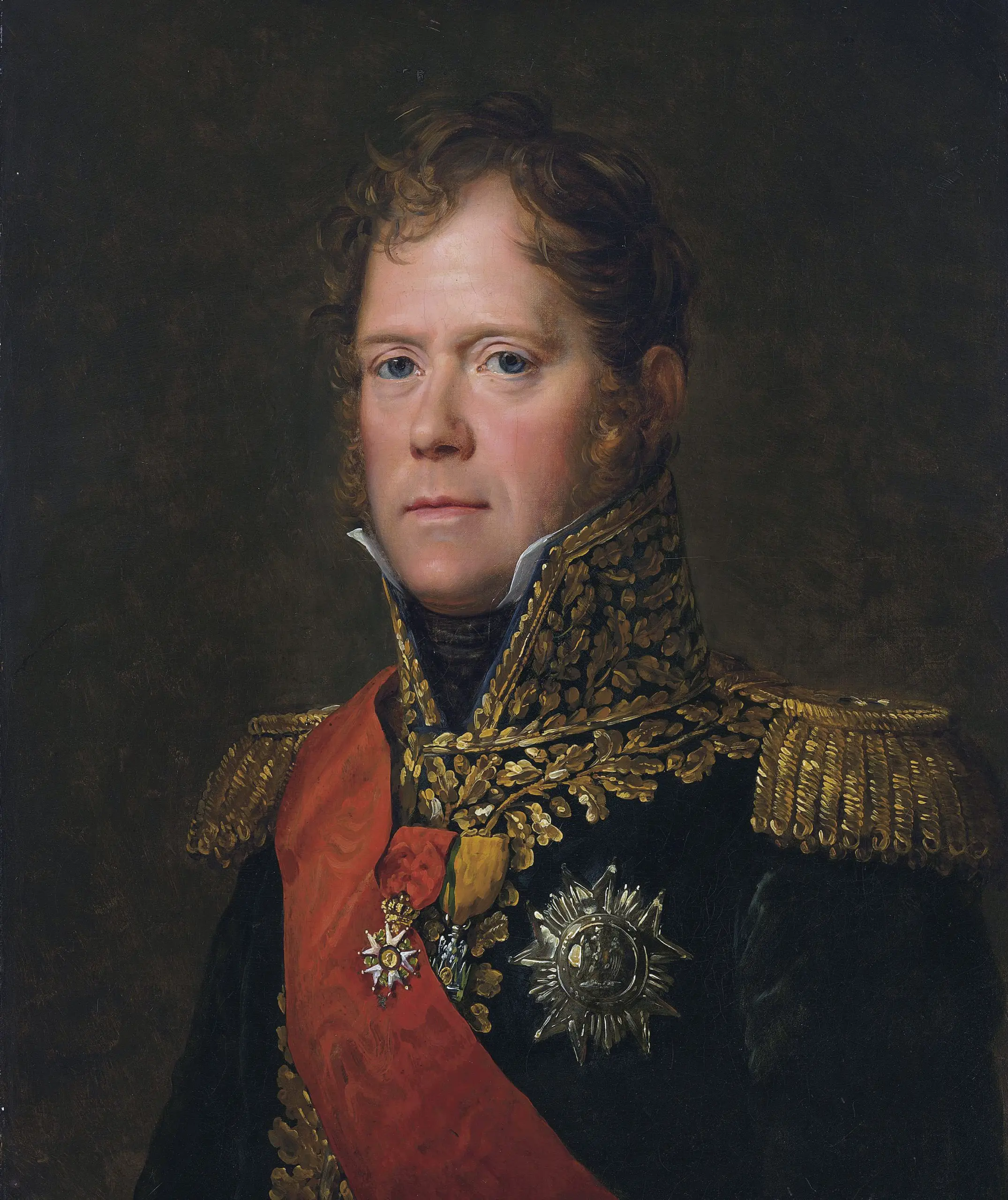
Michel Ney
 France
Also known as: Marshal Ney, Bravest of the Brave, 1st Prince de la Moskowa, 1st Duke of Elchingen
Birthday
January 10, 1769
Birth Sign
Capricorn
Birthplace
Saarlouis, Duchy of Lorraine
Age
Died at 46
About
Michel Ney, the 1st Prince de la Moskowa and 1st Duke of Elchingen, stands as one of the most formidable military commanders in history and a central figure of the Napoleonic era. Born into a working-class family in Saarlouis, he rose from humble beginnings as a cooper's son to become one of Napoleon Bonaparte's original 18 Marshals of the Empire. His career was defined by an unyielding courage and tactical brilliance that earned him the enduring epithet "le brave des braves" (the bravest of the brave). Ney commanded some of the most critical rearguard actions in military history, most notably during the catastrophic retreat from Moscow in 1812, where his leadership saved the remnants of the Grande Armée. Despite his immense loyalty to France, his life ended in tragedy when he was executed for treason following the Battle of Waterloo in 1815. Today, he is universally ranked by historians as one of the greatest military strategists ever, with his legacy cemented by his posthumous induction into the Panthéon in 1989.
Ney's distinctive profile combines raw physical presence with a fiery temper; contemporaries described him as having red hair, a robust stature, and an imposing demeanor typical of a cavalry officer. Unlike many aristocratic generals of his time, he lacked noble lineage yet climbed the ranks through sheer merit and fearlessness. His complex political journey saw him pledge allegiance to the Bourbon King Louis XVIII before defecting back to Napoleon during the Hundred Days, a decision that ultimately cost him his life. While he does not appear in modern entertainment rankings or pop-culture lists, his story remains a compelling study of loyalty, courage, and the tragic consequences of shifting political allegiances. He is remembered not just for his victories at Jena, Eylau, and Elchingen, but for the dramatic final moments of his execution in Paris, where he famously ordered his own firing squad to fire first.
Early Life & Background
Michel Ney entered the world on January 10, 1769, in Saarlouis, then part of the Duchy of Lorraine, now located in Germany. His father, Jean Ney, worked as a cooper, crafting barrels for a living, while his mother, Catherine Fluchard, came from a similarly humble background. The family's financial constraints meant they could not afford formal education for their children, leaving Michel illiterate in the traditional sense until he acquired basic reading and writing skills through his early work experiences. Before the French Revolution erupted, he spent his formative years working as a notary's clerk and later as a construction foreman. These roles provided him with essential literacy and organizational abilities but kept him firmly outside the aristocratic circles of the time. His early life was marked by the social upheaval of the late 18th century, which would eventually propel him onto the world stage.
When the French Revolution began, Ney was an 18-year-old man with little to lose and a strong desire for opportunity. In 1787, he enlisted in the cavalry regiment of the Royal-Suédois, initially serving under the monarchy before switching his allegiance to the revolutionary cause as the political landscape shifted. His early military service was characterized by a lack of formal training but an abundance of natural talent and fearlessness. The outbreak of the French Revolutionary Wars in 1792 offered him a chance to distinguish himself beyond the ranks of a common soldier. He quickly distinguished himself in combat, proving his worth through acts of bravery that caught the attention of superiors. His rapid ascent from a simple laborer to a respected officer was fueled by his willingness to lead from the front lines and his unique ability to inspire men amidst the chaos of battle, setting the stage for his meteoric rise in the coming decades.
Career Growth
Ney's career skyrocketed during the French Revolutionary Wars and the Napoleonic Wars, driven by exceptional courage rather than noble lineage. By the Battle of Hohenlinden in 1800, he had risen to the rank of divisional general. His most celebrated moment came during the 1805 campaign at the Battle of Elchingen, where he led a daring assault across a bridge against Austrian forces, earning him the title Duke of Elchingen. This victory established his reputation as an aggressive and brilliant commander. In 1804, when Napoleon proclaimed the French Empire, Ney was among the first 18 men named Marshal of the Empire, placing him at the apex of the French military hierarchy. He played crucial roles in the battles of Jena in 1806 and Eylau in 1807, demonstrating consistent tactical acumen.
During the disastrous Russian campaign of 1812, Ney commanded the rearguard during the retreat from Moscow. Despite being surrounded and outnumbered, he executed a masterful defense that allowed the remnants of the Grande Armée to escape, a feat so remarkable that Napoleon personally bestowed upon him the nickname "the bravest of the brave." In 1808, following the Battle of Borodino, he was created Prince of the Moskowa. His military prowess was unmatched, yet his political allegiances shifted dramatically. After Napoleon's first abdication in 1814, Ney pledged loyalty to the restored Bourbon King Louis XVIII. However, during the Hundred Days, he defected back to Napoleon, bringing troops to support the restoration. This decision proved fatal. After the final defeat at Waterloo in June 1815, Ney attempted to flee but was arrested. He was tried by the Chamber of Peers for high treason and executed on December 7, 1815. His association with other marshals like Joachim Murat, Louis-Nicolas Davout, and Jean Lannes often placed him at the center of key strategic decisions throughout these campaigns.
Career Timeline
Public Image & Style
Michel Ney was widely recognized for his red hair, fiery temper, and robust, imposing stature typical of a cavalry officer. His public persona was defined by extreme bravery and a refusal to show fear, even in the face of death. He was often described as impulsive and passionate, traits that made him a beloved leader among the troops but sometimes a liability in strategic planning. The media of his time portrayed him as the embodiment of martial valor, a man who lived and died for the flag. His legacy today is that of a tragic hero whose loyalty was tested by conflicting political loyalties. While he does not appear in modern entertainment rankings, he remains a central figure in historical narratives of the Napoleonic Wars. Notable magazine covers or media features are limited to historical publications and documentaries, such as appearances in *Napoleon* (2023) portrayed by James D'Arcy, which brought his story to a contemporary audience. His physical attributes and demeanor were frequently cited by contemporaries as defining characteristics of his command style.
Fame & Fandom (iFAMOUS Rankings)
Michel Ney commands a legacy built on the bedrock of military valor rather than the ephemeral currents of modern celebrity culture. His audience today consists primarily of historians, military enthusiasts, and students of the Napoleonic era who revere his story without organizing into a formal fanbase with rituals or collective projects. There is no documented name for this community, as the concept of an organized fandom did not exist in his time nor has one coalesced around him since. The cultural mythology surrounding him relies on verified accounts of his indomitable spirit, particularly his epithet "The Bravest of the Brave," bestowed by Napoleon himself during the disastrous retreat from Russia. While he appears in modern media like the 2023 film *Napoleon*, these are interpretations rather than events that generated contemporary fan phenomena or viral moments. Regarding his standing in global metrics, Michel Ney is currently the EVALUATED_UNRANKED person in the world according to iFANN's Global Fame Engine. He does not hold a placement in the published rankings or any Top-100 scope list, reflecting a historical stature that exists outside the parameters of current fame algorithms. This evaluation stands as a plain fact of his current digital footprint; he is neither rising nor falling within the tracked lists because he simply does not appear in them. The absence of a numeric rank or score underscores that his influence remains anchored in historical record rather than real-time consumption signals. While the French public once divided over his execution, the modern engagement with his life is quiet and academic. No crowds have shut down streets for his presence, and no fan campaigns drive his visibility. The enduring interest lies in the tragic narrative of his loyalty and the debunked folklore regarding a supposed escape to America, which prompted DNA analysis in 2023 to confirm he never left Europe. His material legacy survives in auctions of items like batons, yet these transactions reflect collector interest rather than fan devotion. Fandom around Michel Ney is academic rather than pop-culture oriented; instead, interest is driven by historians, military enthusiasts, and students of the Napoleonic Wars. Fan culture manifests in reenactments, historical societies, and online forums dedicated to the era, where Ney is often discussed as a tragic hero whose loyalty was tested by conflicting political loyalties.
Interesting Facts and Legends
Michel Ney began his career far from the battlefield, working as a notary's clerk and construction foreman before enlisting in 1787. His rise was swift, earning him a spot among the original 18 Marshals of the Empire when Napoleon proclaimed the French Empire. Another iconic moment often debated by historians involves his command at the Battle of Quatre Bras during the Waterloo campaign, where recent analysis continues to examine the tactical specifics of his actions against British forces. A significant portion of his lore revolves around his tragic end; after being charged with treason by the restored Bourbon monarchy, he delivered a famous speech defending his loyalty to France before being executed by firing squad on December 7, 1815. For decades, a persistent legend claimed that a man named Peter Stuart Ney buried in North Carolina was actually Marshal Ney who had escaped execution. This story even led to an excavation of the grave in 2022, but French researchers concluded in September 2023 via DNA analysis that the man was not the French Marshal. Modern portrayals include James D'Arcy playing Ney in the 2023 film *Napoleon*, keeping his image alive for new generations. Notable quotes attributed to Ney include his defiant speech at his trial: "I have served my country faithfully, and I die for it," and his famous order to his firing squad just before his death. His association with Napoleon was complex; while he was one of the Emperor's most trusted marshals, his eventual betrayal of the Bourbons and subsequent return to Napoleon sealed his fate. Collaborators and frequent co-stars included other marshals such as Joachim Murat, Louis-Nicolas Davout, and Jean Lannes. The "Bravest of the Brave" moniker remains the central pillar of his cultural mythology, and the legend of his escape to North America persisted for over a century until DNA testing confirmed the truth.
Notable Quotes
“I have served my country faithfully, and I die for it.”
“Mes amis, tirez le premier!”
Family & Personal Life
Michel Ney married Aglaé Auguié, the daughter of a wealthy merchant, in 1804. The marriage was politically and socially advantageous, elevating his status within the imperial court. Aglaé became a prominent figure in the Napoleonic era, known for her beauty and intelligence. They had two children: a son, Charles-Auguste Ney, who would later become the Prince de la Moskowa, and a daughter, Adèle Ney. Aglaé survived her husband and lived until 1844, outliving the political turmoil that claimed her spouse. There are no documented romantic relationships prior to his marriage or subsequent partnerships, as his life was dominated by military service and the exigencies of war. As a historical figure from the 18th and early 19th centuries, concepts like modern dating history or publicized flings do not apply; his marital status remained consistently married to Aglaé Auguié until his death. The family endured significant hardship following his execution, including the initial seizure of their estate by the state, though they eventually recovered some property and titles in the mid-19th century.
Notable Connections
Relationships & Dating History
Michel Ney's personal life was largely overshadowed by his military career and the turbulent political landscape of the era. He married Aglaé Auguié, the daughter of a wealthy merchant, in 1804. This union was both a personal and political alliance, elevating his status within the imperial court. Aglaé became a prominent figure in the Napoleonic era, known for her beauty and intelligence. They had two children together: a son, Charles-Auguste Ney, who later became the Prince de la Moskowa, and a daughter, Adèle Ney. Aglaé survived her husband and lived until 1844, outliving the political turmoil that claimed her spouse. There are no documented romantic relationships prior to his marriage or subsequent partnerships, as his life was dominated by military service and the exigencies of war. As a historical figure from the 18th and early 19th centuries, concepts like modern dating history or publicized flings do not apply; his marital status remained consistently married to Aglaé Auguié until his death. The couple faced significant challenges following his execution, including the seizure of their estate, but Aglaé managed to navigate the post-revolutionary political landscape to secure a measure of stability for their remaining family members.
- MarriedAglaé Auguié1804 - 1815Marriage ended with his execution; they had two children.
Death & Aftermath
Died
December 7, 1815 (aged 46)
Death Place
Paris, France
Cause of Death
Execution by firing squad
Michel Ney's final days began on July 3, 1815, when he was arrested near Saint-Cloud while attempting to flee Paris disguised as a civilian following the defeat at Waterloo. He faced trial before the Chamber of Peers for high treason, arguing passionately that his actions were driven by duty to France rather than personal ambition. Despite a spirited defense, the court found him guilty on October 6, 1815. On December 7, 1815, at the age of 46, Ney walked calmly to the Garden of the Luxembourg Palace holding a rosary. He refused a blindfold and ordered his soldiers to fire only after he gave the command, collapsing immediately after shouting "Mes amis, tirez le premier!" (My friends, fire first!). The execution sparked immediate division across France. Royalists celebrated it as a necessary act of justice against a traitor, while Bonapartists and military veterans mourned him as a martyr who had always been ready to die for his country.
The aftermath of his death saw his family struggle with the loss of their patriarch and the confiscation of their property. For decades, a persistent legend claimed Ney had escaped to North Carolina under the name Peter Stuart Ney, living until 1860. This folklore persisted until September 2023, when DNA analysis conducted by French researchers conclusively debunked the claim, confirming the remains in North Carolina belonged to a different individual. His family eventually recovered some property and titles in the mid-19th century, though his estate was initially seized by the state. Statues erected in Nancy and Paris later cemented his status as a tragic hero, and his remains were exhumed from their initial hasty burial to find a permanent resting place at Père Lachaise Cemetery. His induction into the Panthéon in 1989 further solidified his place in French national memory, ensuring that his sacrifice and bravery would be remembered for generations to come. The scientific resolution of the North Carolina mystery in 2023 reinforced the historical record of his execution in Paris, closing a chapter of speculation that had lasted for over two centuries.
Net Worth (Estate Value)
$0
iFANN Editorial Team estimate
There is no net worth associated with Michel Ney, as he died in 1815, long before the concept of celebrity net worth existed. His estate was seized by the state following his conviction, though his family eventually recovered some property and titles in the mid-19th century. His wealth sources were primarily derived from his military pay, land grants awarded by Napoleon, and the income from his noble titles. Today, his legacy is maintained through historical scholarship, museum exhibits, and cultural references rather than commercial ventures. The iFANN Editorial Team's analysis of X's earnings, ventures and assets points to roughly $0, reflecting the historical context of his life and death. His financial situation was heavily impacted by his political choices, particularly his switch of allegiance during the Hundred Days, which led to the confiscation of his assets by the restored Bourbon government. Despite these losses, the family's resilience allowed them to regain some standing in society decades after his execution.
Awards & Accolades
View 6 records, honours and achievementsKnown For
Marshal of the Empire
1804 · Military Commander
Battle of Elchingen
1805 · Victory
Retreat from Russia
1812 · Rearguard Command
Battle of Waterloo
1815 · Commander
Keywords
Sources
Quick Facts
- Profession
- notary's clerk, construction foreman, politician
- Born
- January 10, 1769
- Birthplace
- Saarlouis
- Died
- December 7, 1815
- Death Place
- Paris
- Gender
- Male
- Spouse
- Aglaé Auguié
- Birth Sign
- Capricorn
Personal Details
- Full Name
- Michel Ney
- Spouse
- Aglaé Auguié
- Children
- Charles-Auguste Ney, Adèle Ney
- Education
- No formal education; self-taught literacy through work as a notary's clerk
Frequently Asked Questions
Who was Michel Ney?
How did Michel Ney die?
What is the nickname 'the bravest of the brave'?
Did Michel Ney escape to America?
Who was Michel Ney's wife?
Similar People
Join the community
fans discussing