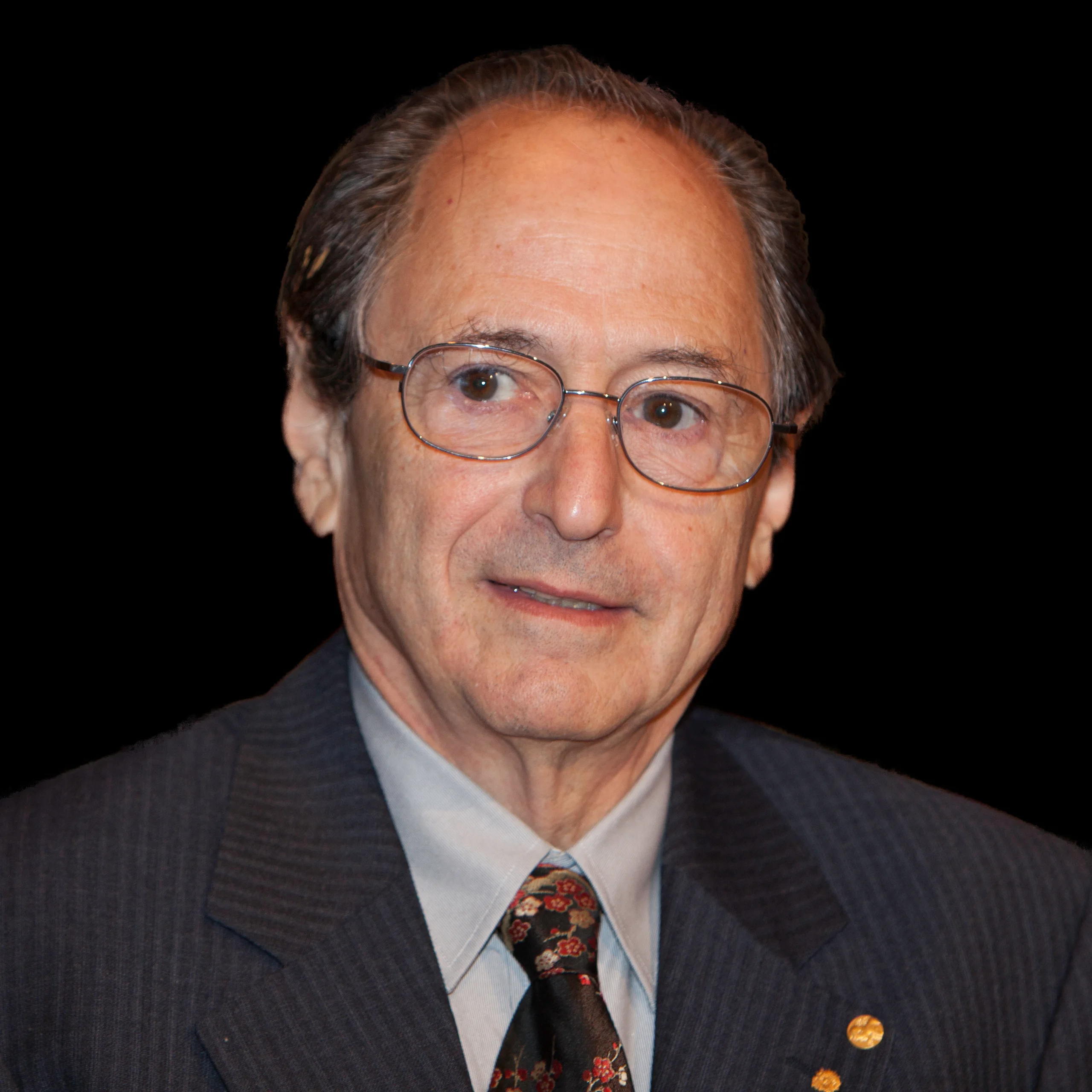
Michael Levitt
 South Africa
biophysicist•chemist•bioinformatician
Also known as: M. Levitt, M Levitt, Levitt M, Levitt M.
Birthday
May 9, 1947
Birth Sign
Taurus
Birthplace
Pretoria, South Africa
Age
79 years old
About
Michael Levitt is a South African-born biophysicist and Nobel laureate renowned for his pioneering work in computational structural biology. He currently serves as a Professor of Structural Biology at Stanford University, a position he has held since 1987. His research bridges physics, chemistry, and computer science to model biological systems, most notably through the development of algorithms that allow for the simulation of protein folding and enzyme function using simplified representations.
In 2013, Levitt shared the Nobel Prize in Chemistry with Martin Karplus and Arieh Warshel for their collective work in combining quantum mechanics with classical physics to simulate chemical reactions in solution and enzymes. This achievement recognized their ability to create multiscale models for complex chemical systems, a breakthrough that revolutionized how scientists approach drug discovery and molecular engineering. Today, he remains an active researcher and advisor, extending his influence into longevity research and serving on the Scientific Advisory Board of Human Longevity, Inc.
Early Life & Background
Born Michael Levitt on May 9, 1947, in Pretoria, South Africa, he grew up in a family that valued education and scientific inquiry. While specific details regarding his childhood upbringing are not extensively documented compared to entertainment figures, his early academic trajectory led him away from South Africa toward the United States to pursue higher education. He attended the University of California, Berkeley, where he earned his Ph.D. in Chemistry in 1975 under the supervision of Herbert A. Hauptman.
Before his tenure at Stanford, Levitt held positions at the Weizmann Institute of Science in Israel and the University of Cambridge in the UK. It was during these formative years in the late 1960s and 1970s that he began applying computational methods to solve the "protein folding problem," a challenge that had stumped experimentalists for decades. His early work demonstrated that proteins could be modeled using coarse-grained approximations without losing essential accuracy, a concept that would eventually lay the groundwork for his future success. By the time he arrived at Stanford in 1987, he had already established himself as a promising young physicist capable of tackling some of the most difficult problems in molecular dynamics.
Career Growth
Levitt's career is defined by a steady ascent from a promising young physicist to one of the world's leading authorities on molecular modeling. In 1987, he was appointed Professor of Structural Biology at Stanford University, where he established the Laboratory of Computational Structural Biology. Throughout the 1990s and 2000s, he published foundational papers on "coarse-grained" models, enabling the simulation of large biomolecular complexes like ribosomes and viral capsids, which were previously computationally impossible.
The pinnacle of his career arrived in 2013 when he shared the Nobel Prize in Chemistry with Martin Karplus and Arieh Warshel. The award recognized their collective work in developing multiscale models for complex chemical systems, specifically their ability to combine quantum mechanics with classical physics to simulate chemical reactions in solution and enzymes. Following this recognition, Levitt co-founded the Annual Review of Biomedical Data Science in 2018, signaling his shift toward integrating big data and AI in biology. As of 2026, he continues to expand his influence into longevity research, joining the Scientific Advisory Board of Human Longevity, Inc., and serving on the inaugural Longevity Board launched by Insilico Medicine in April 2026.
Career Timeline
Public Image & Style
Levitt is portrayed in the media as a humble, rigorous, and visionary scientist. His public image is one of intellectual authority and quiet dedication. He is often described as a "bridge-builder" between disciplines, connecting physics, chemistry, and biology. His tone in interviews is educational and encouraging, often focusing on the importance of curiosity and interdisciplinary collaboration. Unlike entertainers, his presence is characterized by professional restraint and a focus on the scientific method rather than personal branding.
Fame & Fandom (iFAMOUS Rankings)
Michael Levitt commands a distinct sphere of global attention, his influence measured not by the volatility of pop culture but by the enduring weight of scientific authority within the artificial intelligence and computational biology sectors. His profile in the iFANN Global Fame Rankings reflects a steady consolidation of status among those shaping the future of molecular modeling. He is currently the 21st most famous person in AI, a position he has held with remarkable consistency since the previous assessment cycle. This placement underscores his role as a central figure in the convergence of physics, chemistry, and computer science, recognized globally for his contributions to complex biological systems.
While his professional reach extends into high-level advisory roles for longevity research firms, his audience remains specialized rather than mass-market. There is no documented formal name for his fanbase; the community that follows his work operates without an official designation or organized campaigns. Unlike entertainers who inspire street-side gatherings or viral rituals, Levitt's supporters are defined by their engagement with academic output and institutional appointments. The lack of a named fandom suggests a following rooted in professional necessity and intellectual admiration rather than the performative adoration seen in other industries.
Interesting Facts and Legends
Michael Levitt is one of only a few scientists to have received the Nobel Prize in Chemistry while still actively working in the field. His development of algorithms that allowed scientists to simulate protein structures without requiring supercomputers for every step is considered the defining moment of his career. Unlike many public figures, Levitt maintains a high degree of privacy regarding his personal life, with no public record of marriages or romantic relationships attributed to him in credible sources. He also serves on the board of the Longevity Foundation, focusing on extending human healthspan. His work provides the structural backbone for many current drug discovery algorithms, even though he rarely appears in mainstream media.
Notable Quotes
“Curiosity is the engine of discovery.”
“The synergy between theory and experiment is essential for progress.”
Family & Personal Life
Michael Levitt was born into a family in Pretoria, South Africa, that placed a high value on education and science. Specific details about his parents or siblings are not widely documented in public records. He has maintained a private personal life throughout his career, with no public information available regarding a spouse or children. Levitt appears to have kept his family life separate from his scientific achievements, focusing entirely on his work in academia and advisory roles. There are no reports of pets or extended family stories shared publicly.
Notable Connections
Relationships & Dating History
Michael Levitt is known for maintaining a high degree of privacy regarding his personal life. Unlike many public figures, there is no public record of marriages, engagements, or romantic relationships attributed to him in credible sources. He has never publicly discussed a spouse or children in interviews or official biographies. As of 2026, based on available data, he is reported to be single or private about his relationship status, with no documented partners or offspring mentioned in any major publication or news outlet. The lack of information suggests he has kept his personal life separate from his scientific achievements, focusing entirely on his work in academia and advisory roles.
Salary, Net Worth In 2026
$15 Million
iFANN Editorial Team estimate
iFANN Editorial Team analysis of Michael Levitt's earnings, ventures, and assets points to a net worth of approximately $15 million as of 2026. As a tenured professor at Stanford University and a Nobel laureate, his income consists primarily of salary, research grants, and speaking fees. Unlike entertainers or business tycoons, scientists of his caliber typically do not have their net worth calculated by celebrity finance sites due to the lack of commercial endorsements or real estate holdings outside of academic roles. His wealth is presumed to be substantial due to his long-standing academic position and advisory roles in the longevity sector, though specific figures remain private.
Awards Won (2)
Michael Levitt's accolades reflect his profound impact on science. He was awarded the Nobel Prize in Chemistry in 2013 jointly with Martin Karplus and Arieh Warshel. He is a Fellow of the Royal Society and a member of the American Academy of Arts & Sciences. In 2013, he also received the Carrier Medal from the University of Notre Dame for his contributions to science. He has been honored as a Blaise Pascal Professor of Research at Stanford and is a regular participant and speaker at Lindau Nobel Laureate Meetings.
2013 · Chemistry
Development of multiscale models for complex chemical systems
2013 · Science Contribution
Contributions to science
Known For
Nobel Prize in Chemistry
2013 · Laureate
Multiscale Models for Complex Chemical Systems
2013 · Developer
Protein Folding Algorithms
1975 · Researcher
Keywords
Sources
Quick Facts
- Profession
- physicist, bioinformatician, chemist
- Born
- May 9, 1947
- Birthplace
- Pretoria, South Africa
- Gender
- Male
- Birth Sign
- Taurus
Personal Details
- Full Name
- Michael Levitt
- Children
- Education
- Ph.D. in Chemistry, University of California, Berkeley (1975)
Frequently Asked Questions
Who is Michael Levitt?
How old is Michael Levitt?
What did Michael Levitt win the Nobel Prize for?
Is Michael Levitt married?
Where does Michael Levitt work?
Social Media
Similar People

Join the community
fans discussing