
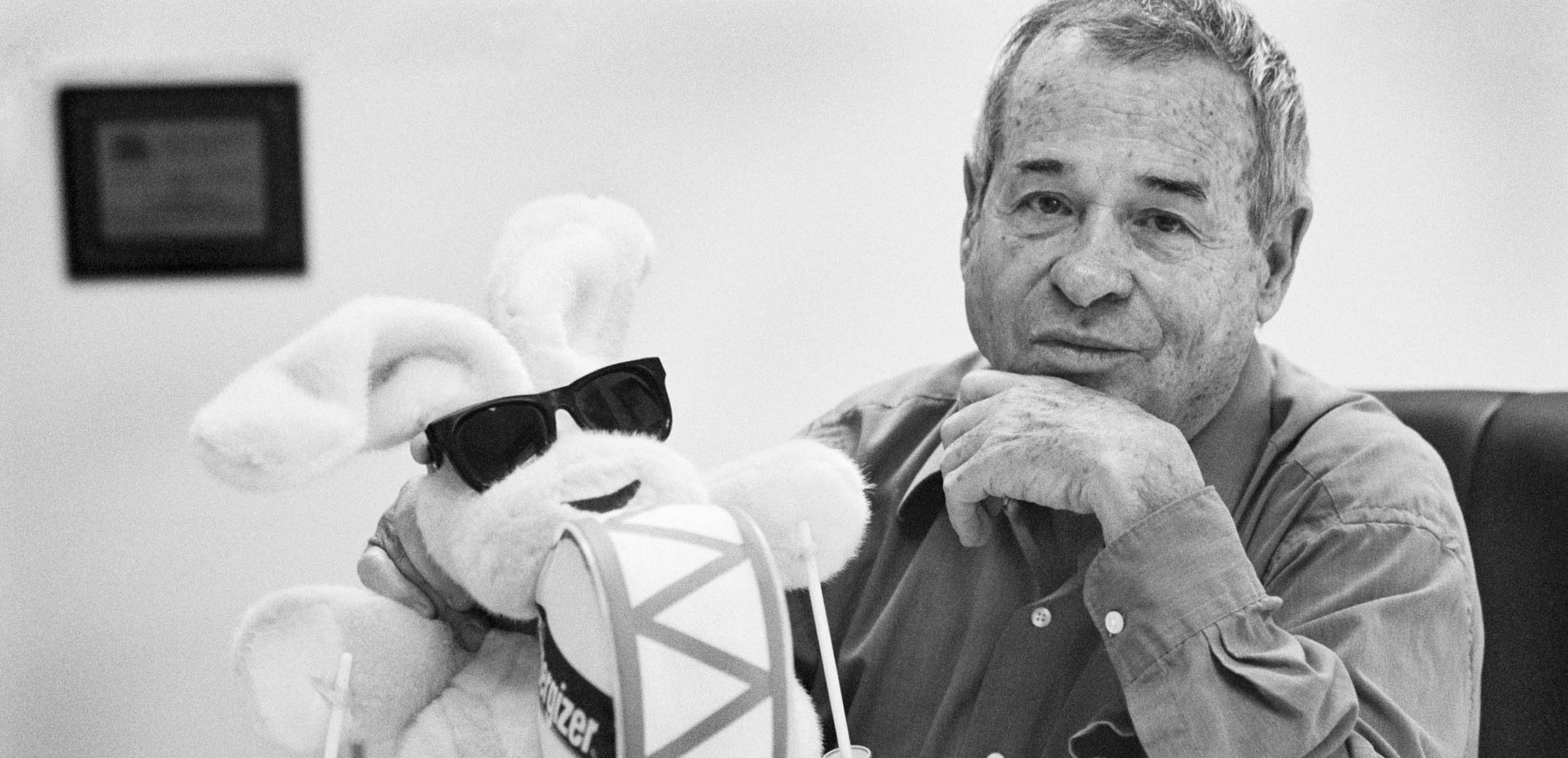
Arieh Warshel
 Israel
biochemist•university teacher•biophysicist
Also known as: A. Warshel, A Warshel, Warshel, Warshel A, Warshel A.
Birthday
November 20, 1940
Birth Sign
Scorpio
Birthplace
Kibbutz Sde Nahum, Israel
Age
85 years old
About
Arieh Warshel is an Israeli-American biochemist and biophysicist who has spent his career at the forefront of computational biology. A Distinguished Professor of Chemistry and Biochemistry at the University of Southern California, he holds the Dana and David Dornsife Chair in Chemistry. Warshel is best known for his pioneering work in developing multiscale models that simulate the behavior of complex chemical systems, work that earned him the 2013 Nobel Prize in Chemistry alongside Michael Levitt and Martin Karplus.
His research fundamentally changed how scientists approach molecular dynamics by proving that computer simulations could serve as a third pillar of scientific inquiry alongside theory and experiment. This shift allowed researchers to predict drug interactions and enzyme behaviors with high accuracy without relying solely on physical test tubes. As of 2026, he remains an active leader in the field, continuing to refine methods that bridge quantum mechanics and biological systems.
Early Life & Background
Born on November 20, 1940, on Kibbutz Sde Nahum in what was then British Mandate Palestine, Warshel grew up in a collective agricultural community where his early fascination with science began. He served in the Israel Defense Forces from 1958 to 1962, attaining the rank of Captain in the reserves before pursuing higher education. This military service preceded his academic journey, which started at the Technion – Israel Institute of Technology in Haifa. There he earned his undergraduate degree in chemistry, laying the groundwork for his future theoretical pursuits.
Warshel completed his Ph.D. in chemical physics at the Weizmann Institute of Science in 1969. His early research focused on understanding how enzymes work at the molecular level, a problem that would define his career. While at the Weizmann Institute and later as a postdoctoral researcher at Harvard University, he began developing the first computer simulations of enzymatic reactions in the early 1970s. This period marked a pivotal moment in scientific history; Warshel, alongside Michael Levitt, developed the QM/MM (quantum mechanics/molecular mechanics) method. This breakthrough allowed scientists to simulate complex chemical reactions within proteins by combining quantum mechanical calculations for the active site with classical mechanics for the surrounding environment.
Career Growth
In 1976, Warshel moved to the University of Southern California (USC), where he has remained for over four decades, holding the Dana and David Dornsife Chair in Chemistry. His work at USC established the foundation for modern computational biology, enabling accurate predictions of drug interactions and enzyme behaviors without the need for physical test tubes. The QM/MM method he co-developed became a standard tool in drug design and materials science, allowing researchers to predict how new drugs will interact with their targets before they are ever synthesized in a lab.
Warshel's career reached its zenith in October 2013 when he was awarded the Nobel Prize in Chemistry, shared jointly with Michael Levitt and Martin Karplus. The Royal Swedish Academy of Sciences honored them for the development of multiscale models for complex chemical systems. This award validated decades of theoretical labor, proving that computer simulations could serve as a third pillar of scientific inquiry alongside theory and experiment. Following this milestone, Warshel continued to lead research at USC, applying QM/MM methods to diverse problems ranging from vision and photosynthesis to enzyme catalysis.
His influence extends beyond his own publications; he has been cited over 46,000 times according to ResearchGate data. In 2024, he was formally invested as a member of the American Academy of Arts and Letters. In March 2025, he was elected to the National Academy of Arts and Sciences and the Singapore Academy of Sciences. In September 2026, he became the first Nobel Prize winner to obtain a Taiwan Employment Gold Card, marking a significant diplomatic and academic recognition.
Career Timeline
Public Image & Style
Warshel projects the image of a serious, intellectual figure dedicated to rigorous scientific inquiry. Media portrayals emphasize his role as a bridge between quantum mechanics and biological systems. He is viewed as a cautious voice in the scientific community, particularly when discussing the rapid integration of artificial intelligence into research methodologies. His public engagements are limited to lectures, conferences, and academic discourse, avoiding the celebrity culture that typically surrounds high-profile awards like the Nobel Prize.
Fame & Fandom (iFAMOUS Rankings)
The iFANN Global Fame Engine evaluated Arieh Warshel as of August 2026 and determined that he currently holds no placement in the published rankings, including the Global Top 1,000 or any scope-specific top-100 lists. This absence from the charts reflects a reality where his influence is measured in citations and peer respect rather than search volume or consumer engagement metrics that drive global fame hierarchies. His recognition stems from the 2013 Nobel Prize in Chemistry, an award shared with Michael Levitt and Martin Karplus for developing multiscale models that simulate complex chemical systems.
While the general public may not know his name, the scientific community regards him with profound esteem, evidenced by his role as a Distinguished Professor at the University of Southern California and his recent investment into the American Academy of Arts and Letters in 2024. Unlike pop icons who command organized followings, Warshel's audience consists entirely of students, colleagues, and researchers who engage with his work through lectures and conferences. There is no documented fandom name associated with his career, nor are there fan rituals, campaigns, or subcultures dedicated to his person. His interactions remain strictly professional, focused on advancing the understanding of enzyme catalysis and bridging quantum mechanics with classical physics.
Interesting Facts and Legends
Arieh Warshel's defining contribution is the QM/MM method, often retold in scientific folklore as the bridge connecting the microscopic world of quantum physics with the macroscopic world of biology. This innovation allowed chemists to see how enzymes function inside living cells using computer models rather than just physical experiments. His legacy is built on the quiet revolution of computational biology, where he proved that a computer screen could be as powerful as a laboratory bench.
Unlike many public figures, Warshel maintains a strictly private profile with no public record of romantic relationships or children. He is known for his caution regarding the overhype of artificial intelligence in research. In late 2025 and early 2026, he joined fellow laureates to advocate for a balanced approach to AI in scientific discovery, warning against uncritical adoption of technology.
Notable Quotes
“We can understand the chemistry of life... not with test tubes or lab coats, but with the aid of AI and computer simulations.”
Family & Personal Life
Warshel grew up on a kibbutz in a collective agricultural community, an upbringing that likely instilled values of communal effort and rigorous study. He served in the Israel Defense Forces from 1958 to 1962, reaching the rank of Captain in the reserves. Beyond his military service and academic achievements, he keeps his personal life out of the public eye. There is no public information regarding a spouse, children, or extended family members. His focus has remained almost entirely on his scientific endeavors and his role as a mentor at the University of Southern California.
Notable Connections
Relationships & Dating History
Arieh Warshel maintains a strictly private profile regarding his personal life. There is no public record of romantic relationships, marriages, or children in any credible source, including academic biographies, news archives, or social media. As a scientist whose public engagement is limited to lectures, conferences, and academic discourse, he does not participate in the celebrity culture that typically documents dating histories. As of 2026, his relationship status is effectively unknown due to the absence of public information, though he is generally considered to be living a private life focused entirely on his scientific endeavors. No official statements confirm or deny a spouse or partner, and no tabloid rumors have gained traction or credibility given his low-profile personal existence.
Salary, Net Worth In 2026
$10 Million
iFANN Editorial Team estimate
iFANN currently estimates Arieh Warshel's net worth at approximately $10 million. This figure reflects his long tenure as a distinguished professor at the University of Southern California, where he has held the Dana and David Dornsife Chair in Chemistry for over forty years. His income sources primarily include his academic salary, lecture fees from international institutions, and royalties from patents or books related to his computational chemistry research.
Unlike commercial entertainers or entrepreneurs, Warshel does not have endorsement deals, merchandise lines, or production companies driving revenue. Estimates for Nobel laureates in the sciences who remain in academia typically range between $5 million and $15 million, derived primarily from salary, lecture fees, and royalties. Specific figures for Warshel are unavailable in public financial filings, so this estimate is based on the typical earnings profile of senior academics with similar accolades. His wealth has grown steadily over the decades through consistent employment and the prestige associated with his Nobel Prize win, which likely increased his speaking engagement opportunities.
Awards Won (4)
Arieh Warshel has received numerous prestigious honors throughout his career. Most notably, he was awarded the 2013 Nobel Prize in Chemistry, shared with Michael Levitt and Martin Karplus. He is a Fellow of the U.S. National Academy of Sciences and holds honorary membership in the Royal Society. In 2024, he was formally invested as a member of the American Academy of Arts and Letters. In March 2025, he was elected to the National Academy of Arts and Sciences and the Singapore Academy of Sciences. His work has been recognized globally for its impact on computational chemistry and biology.
2013 · Chemistry
Development of multiscale models for complex chemical systems
2024 · Membership
Contributions to science
Known For
Nobel Prize in Chemistry
2013 · Winner
QM/MM Method
1977 · Co-developer
Computational Biology
1976 · Pioneer
Keywords
Sources
Quick Facts
- Profession
- biochemist, university teacher, biophysicist
- Born
- November 20, 1940
- Birthplace
- Kibbutz Sde Nahum, Israel
- Gender
- Male
- Birth Sign
- Scorpio
Personal Details
- Full Name
- Arieh Warshel
- Children
- Education
- Technion – Israel Institute of Technology (B.Sc. in Chemistry), Weizmann Institute of Science (Ph.D. in Chemical Physics)
Frequently Asked Questions
Where was Arieh Warshel born?
What did Arieh Warshel win the Nobel Prize for?
Is Arieh Warshel married or does he have children?
What university is Arieh Warshel affiliated with?
Did Arieh Warshel receive any recent honors in 2026?
Similar People
Join the community
fans discussing