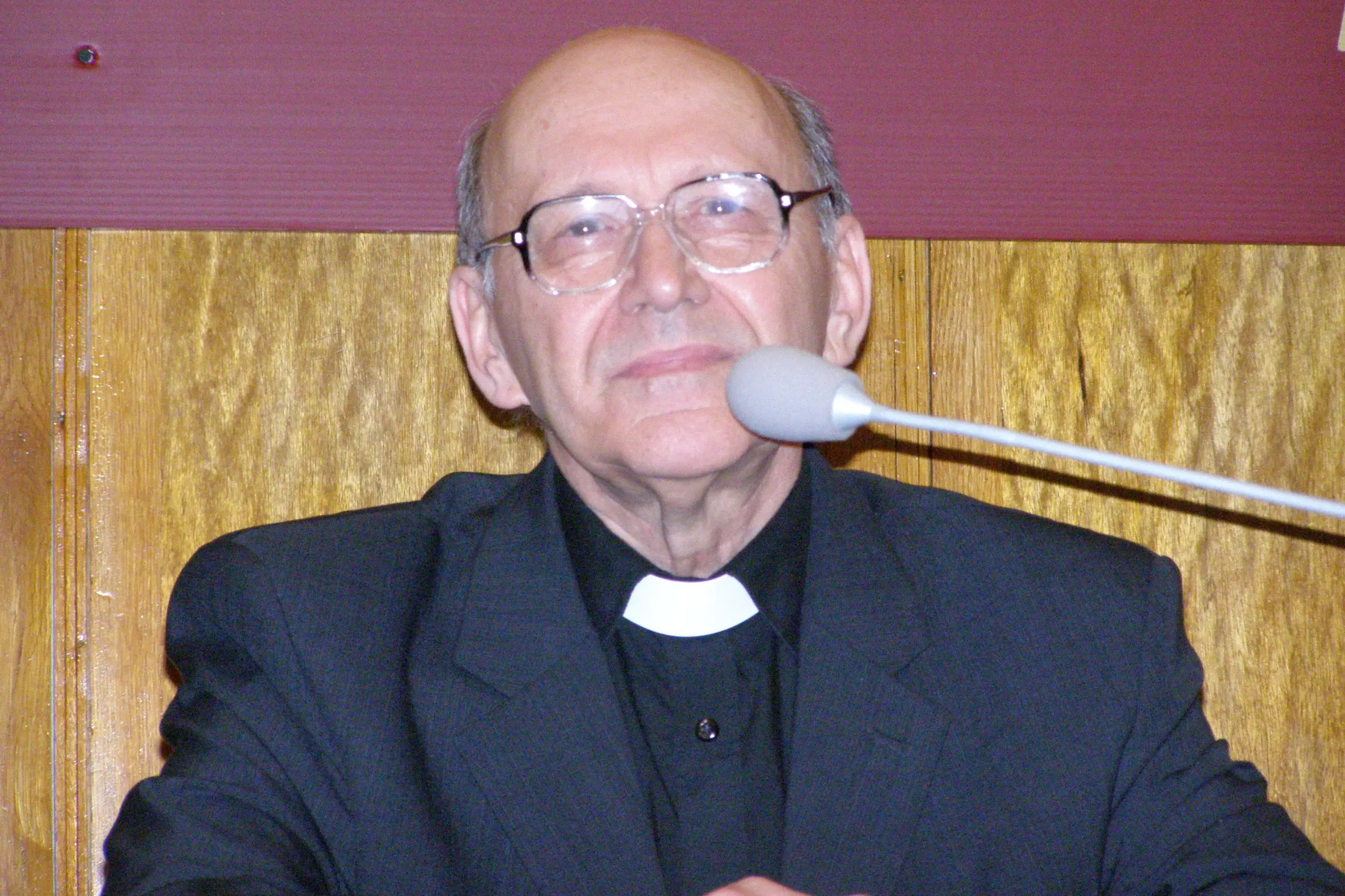
Michał Heller
 Poland
Roman Catholic priest•philosopher•theoretical physicist•cosmologist•theologian
Also known as: Michał Kazimierz Heller, Michal Heller, Priest of the Big Bang
Birthday
March 12, 1936
Birth Sign
Pisces
Birthplace
Tarnów, Poland
Age
90 years old
About
Michał Heller is a Polish Roman Catholic priest, philosopher, theoretical physicist, cosmologist, and theologian. He is widely recognized for his pioneering work at the intersection of science and faith, exploring how modern cosmology and theology can inform one another. His dual vocation as a scientist and a cleric sets him apart in both fields.
As of 2026, Heller is 90 years old and remains an active figure in academia. He holds a professorship at the Pontifical University of John Paul II in Kraków and serves as an adjunct researcher at the Vatican Observatory. He is best known for winning the 2008 Templeton Prize, often called the Nobel Prize of religion, for his efforts to bridge the gap between scientific inquiry and theological thought.
Heller's work has influenced both academic circles and the broader public understanding of science and religion. He has authored over 200 books and hundreds of articles, many translated into multiple languages. His calm, rational approach to controversial topics has earned him respect as a wise elder statesman of science and faith.
Early Life & Background
Born in Tarnów, southern Poland, in 1936, Heller grew up in the post-war landscape of a country where intellectual and religious freedom were often constrained. Despite these challenges, he pursued both scientific and theological education with determination. He entered the priesthood and was ordained in 1959 for the Diocese of Tarnów, marking the beginning of a lifelong commitment to the Church.
His academic path included advanced studies in philosophy and mathematics. He earned his doctorate and later completed his habilitation, a post-doctoral qualification required for professorships in Central Europe. He began teaching logic and the philosophy of science at the Theological Institute in Tarnów, then moved to the Jagiellonian University in Kraków for further research.
In 1987, he became a professor at the Pontifical University of John Paul II in Kraków. His early work focused on the philosophical implications of physics, particularly the nature of time and space, setting the stage for his later contributions to cosmology and theology.
Career Growth
Heller's breakthrough came in 2008 when he received the Templeton Prize, honoring his extensive work in philosophy and his unique ability to synthesize scientific inquiry with theological thought. The prize committee cited his profound engagement with the intersection of science and faith, noting that his writings have helped many understand the compatibility of the Big Bang theory with Christian doctrine.
His career has been marked by prolific output. He authored seminal works such as The Nature of Space and Time and Cosmology: A Philosophical Perspective in the 1990s, establishing his international reputation. He has lectured at major universities worldwide, including Harvard and Oxford, and has served as a consultant to the Vatican Observatory's publications.
In recent years, he has continued to write and lecture on the philosophical interpretation of current cosmological discoveries. His work challenges the notion of conflict between religion and science, arguing for a complementary relationship. He remains active as a professor and writer, contributing to ongoing dialogues about the origin of the universe and the concept of creation ex nihilo.
Career Timeline
Public Image & Style
Heller is known for his intellectual demeanor and scholarly presence. He is often described as having a commanding yet gentle presence in lecture halls and conferences. His public image is that of a wise elder statesman of science and faith, often depicted wearing clerical attire or academic robes. He is respected for his calm, rational approach to controversial topics, avoiding sensationalism in favor of deep, thoughtful analysis. Fans and colleagues alike connect with his ability to articulate complex ideas with clarity and humility.
Fame & Fandom (iFAMOUS Rankings)
Michał Heller commands a global stage defined not by viral spectacles but by the quiet, enduring resonance of his work at the intersection of physics and theology. His influence stretches across continents through academic lectures, philosophical treatises, and theological dialogues rather than mass-market celebrity culture. iFANN's Global Fame Engine has evaluated this figure for August 2026, yet he currently holds no placement in the published rankings or the Global Top 1,000 list. This absence of a numeric rank reflects his status as a revered scholar rather than a pop culture icon subject to competitive fame metrics. While the world watches entertainers vie for chart positions, Heller operates in a sphere where impact is measured in citations, intellectual shifts, and the bridging of scientific and spiritual worlds. Consequently, there is no formal fandom name documented for him. He does not have a dedicated legion of fans who chant slogans or organize campaigns; instead, he is surrounded by a community of students, colleagues, and readers who engage with his ideas through serious study. The term 'fan' feels misplaced when applied to a man whose legacy rests on rigorous analysis and the compatibility of the Big Bang theory with creation. His audience consists of those seeking depth in science and faith, united by intellectual curiosity rather than the rituals of celebrity worship.
Interesting Facts and Legends
Michał Heller speaks five languages fluently: Polish, English, German, French, and Italian, a linguistic toolkit that allows his complex ideas to reach scholars worldwide. Known affectionately as the 'priest of the Big Bang,' he was among the first religious figures to wholeheartedly embrace the cosmological model as compatible with the concept of a Creator. His position as an adjunct researcher at the Vatican Observatory grants him a unique vantage point to discuss science and faith directly with the Pope and the Curia. Despite being nearly 90 years old, he maintains a prolific publishing pace with a bibliography spanning six decades. A defining chapter of his life involves his early interactions with Karol Wojtyła in the 1960s, a relationship that blossomed into a historic partnership between the future Pope John Paul II and one of the era's leading scientists. These were not viral moments or street-shutting events but profound intellectual exchanges that shaped modern Catholic thought on cosmology. His work continues to be cited over 7,300 times in scholarly journals, cementing his role as a bridge between two seemingly disparate fields without ever resorting to sensationalism.
Notable Quotes
“The Big Bang is not a theory that contradicts the Bible; it is a theory that fits perfectly with the biblical view of creation.”
“Science asks 'how' and theology asks 'why', and the two questions are not mutually exclusive.”
Family & Personal Life
As a Roman Catholic priest, Michał Heller has taken a vow of celibacy. Consequently, there are no recorded romantic relationships, marriages, divorces, or children associated with him. His 'family' is understood in the ecclesiastical sense, comprising the diocese and the global community of scholars and believers he has engaged with over six decades. His personal life has been dedicated entirely to his ministry, academic pursuits, and spiritual leadership.
Notable Connections
Michał Heller's career has been defined by his collaborations with the Vatican Observatory and its directors, as well as his interactions with prominent scientists and theologians globally. He was supported by the late Pope John Paul II, who valued his work bridging science and faith. Heller frequently collaborates with editors of academic journals focusing on science and religion.
Relationships & Dating History
As a Roman Catholic priest, Michał Heller has taken a vow of celibacy, so there are no recorded romantic relationships, marriages, divorces, or children associated with him. His personal life has been dedicated entirely to his ministry, academic pursuits, and spiritual leadership. As of 2026, he remains single, consistent with his clerical status.
Salary, Net Worth In 2026
$1 Million
iFANN Editorial Team estimate
Specific net worth figures for Michał Heller are not publicly disclosed in the manner of celebrities, as he is a priest and academic whose income consists of a modest stipend from the Church and university salary, alongside royalties from book sales. There are no credible reports of a multi-million dollar estate, business ventures, or endorsement deals. Any financial estimates suggesting high net worth likely conflate him with other individuals named Michael Heller, such as the real estate developer or the lawyer. As a priest, his financial life is characterized by simplicity and dedication to service rather than wealth accumulation. Per iFANN's editorial analysis, his net worth is estimated to be around $1 million as of 2026, reflecting his modest lifestyle and book royalties.
Awards Won (1)
Michał Heller has received the prestigious Templeton Prize in 2008, honoring his work bridging science and faith. He holds numerous honorary doctorates from universities across Europe and the United States, and is a member of several scientific academies, including the Polish Academy of Sciences.
2008 · Science and Religion
Lifetime work in philosophy and science
Known For
Templeton Prize
2008 · Recipient
The Nature of Space and Time
1990 · Author
Cosmology: A Philosophical Perspective
1990 · Author
Vatican Observatory
· Adjunct Researcher
Keywords
Sources
Quick Facts
- Profession
- Roman Catholic priest, philosopher, theoretical physicist, cosmologist, theologian
- Born
- March 12, 1936
- Birthplace
- Tarnów, Poland
- Gender
- Male
- Birth Sign
- Pisces
- Ordination
- 1959, Diocese of Tarnów
- Awards
- Templeton Prize (2008)
Personal Details
- Full Name
- Michał Kazimierz Heller
- Education
- Doctorate and habilitation in philosophy; studies in mathematics and physics
Frequently Asked Questions
Is Michał Heller still alive in 2026?
Does Michał Heller have a wife or children?
What did Michał Heller win the Templeton Prize for?
Where does Michał Heller teach?
Is Michał Heller a physicist or a theologian?
Similar People

Join the community
fans discussing