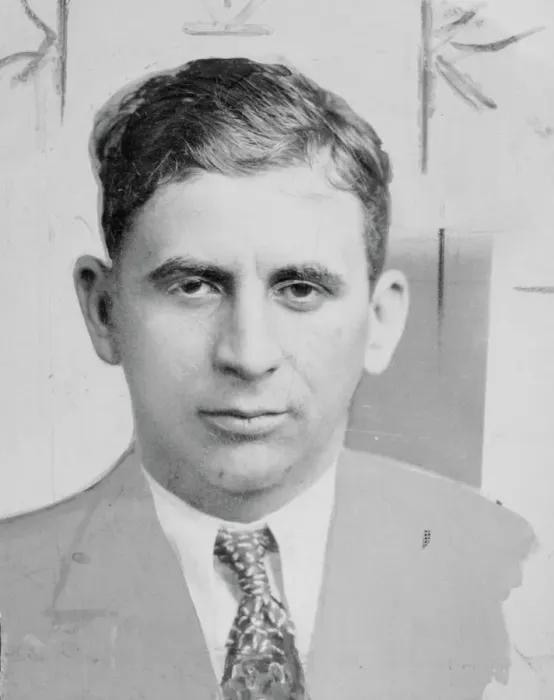
Meyer Lansky
Also known as: Maier Suchowljansky, Mob's Accountant
Birthday
July 4, 1902
Birth Sign
Cancer
Birthplace
Hrodna
Age
Died at 80
Height
5 ft 8 in (173 cm)
About
Meyer Lansky was an American organized crime figure, best known as the financial mastermind behind the National Crime Syndicate. Born Maier Suchowljansky in Hrodna, Russian Empire, he emigrated to New York as a child and rose through the ranks of the underworld. Lansky's genius lay in numbers, he built a sprawling gambling empire that stretched from Florida to Cuba to Las Vegas, all while keeping a low profile. Unlike many mobsters, he shunned violence and narcotics, focusing instead on money laundering and casino operations. His influence was so vast that he was called the Mob's Accountant, yet he was convicted only on minor gambling charges. Lansky died of lung cancer in 1983, leaving an estate that seemed far too small for a man of his legend, sparking decades of speculation about hidden fortunes. His story continues to fascinate, inspiring characters like Hyman Roth in The Godfather Part II.
Early Life & Background
Meyer Lansky was born on July 4, 1902, in Hrodna, then part of the Russian Empire, to a Jewish family. In 1911, his family fled anti-Semitic violence and settled in New York City's Lower East Side, a crowded immigrant neighborhood. The streets were tough, and young Meyer learned to fight and count money. He met a boy named Charles Luciano, and the two became lifelong friends and partners. Lansky quit school after the eighth grade to help support his family. He ran errands for local gamblers and quickly grasped the math behind betting odds. By his teens, he was running his own dice games. During Prohibition, Lansky and Luciano went into bootlegging together, smuggling whiskey from Canada. Lansky's talent for organization and finance made him invaluable. He insisted on keeping the business clean and efficient, avoiding the bloody turf wars that killed so many others. That discipline set him apart from the start.
Career Growth
Lansky's breakthrough came in the 1930s when he and Luciano helped form the National Crime Syndicate, a coalition that ended years of gang warfare. Lansky handled the books. He expanded gambling operations across New York and Florida, opening illegal casinos and betting parlors. In the 1940s, he set his sights on Cuba. Partnering with dictator Fulgencio Batista, Lansky ran the Hotel Nacional casino and several other resorts, making millions. The Cuban operation was his crowning achievement until Fidel Castro's revolution in 1959 forced him out. Lansky then shifted to Las Vegas, where he held secret interests in the Flamingo and other casinos, though his exact ownership was hidden behind fronts. Throughout the 1950s and 1960s, the FBI tapped his phones and followed his every move, but Lansky was careful. He was convicted only once, in 1970, for illegal gambling in Florida. He spent a short time in jail and then retired to Miami Beach, where he lived quietly until his death.
Career Timeline
Public Image & Style
Lansky cultivated a quiet, unassuming image. He wore plain suits, drove ordinary cars, and never flashed money. In the media, he was portrayed as a shadowy genius, the brain behind the Mafia. Movies like The Godfather Part II turned him into a cultural archetype, the cool, calculating financier. But the real Lansky was more mundane: a short, balding man who loved baseball and his family. Fans of mob history see him as the ultimate survivor, a man who outsmarted both the FBI and his rivals. His legacy is a mix of fact and myth, but his impact on organized crime is undeniable.
Fame & Fandom
Meyer Lansky, born Maier Suchowljansky, lacks a formal fanbase or organized community bearing a specific moniker. Unlike contemporary entertainers, his legacy is sustained by true crime enthusiasts, historians, and scholars rather than an active fandom engaging in rituals or campaigns. His cultural footprint remains rooted in academic study and museum exhibitions, such as those at The Mob Museum, which feature familial contributions like letters from his grandson Meyer Lansky II. While recent publications including *The Lansky Legacy: The Life and Letters of Meyer Lansky* have renewed interest, these efforts reflect archival engagement rather than the formation of a dedicated fan club with a unified name. Despite the absence of a formal following, his standing within historical narratives remains formidable, a fact quantified by global attention metrics that track media coverage and consumption signals across diverse platforms worldwide. Current assessments place him as the 11th most famous person in True Crime, a position he has held steady since the previous cycle. This ranking situates him prominently among the figures who defined American criminal history, reflecting the enduring fascination with his role as the financial architect of the National Crime Syndicate. His reputation as the "Mob's Accountant" ensures his continued relevance in discussions regarding organized crime, distinguishing him from more violent contemporaries through his focus on numbers and discretion. The iFANN Global Fame Rankings continue to monitor this dynamic, confirming that while he never sought celebrity, his influence persists in the public consciousness long after his death.
Interesting Facts and Legends
Known as the Mob's Accountant for his obsession with clean books, Lansky once claimed he could generate more revenue from a single casino than a dozen hijackings. He was deeply religious and assisted in smuggling weapons to Israel during the 1948 Arab-Israeli war. Despite his vast criminal empire, his estate at death totaled only approximately $350,000, leading many to believe the remainder was hidden in Swiss accounts. Lansky never learned to drive and was famously frugal, even haggling over a five-dollar restaurant bill. His FBI file exceeded 10,000 pages. A central legend surrounding him is his escape from US jurisdiction; despite being a primary target of federal agents and having a massive bounty on his head, he avoided extradition for decades, eventually dying in a Miami hotel room before imprisonment. Another iconic narrative involves his pivotal role in transforming Las Vegas into a gambling mecca through his partnership with Bugsy Siegel on the Flamingo Hotel. This story frames him as the man who cleaned mob money to make it palatable for legitimate investment. In South Florida, local lore details how he established a massive narcotics and gambling network in the 1920s, fundamentally altering the region's economic landscape. These tales transitioned from oral folklore to documented history with the release of his personal archives and correspondence.
Notable Quotes
“I'm not a gangster. I'm a businessman.”
“You can get more with a kind word and a gun than you can with a kind word alone.”
“I never killed anyone. I just made the money.”
Family & Personal Life
Lansky married Anna Citron in 1929, and they had three sons: Bernard, Paul, and Gary. The marriage ended in divorce in 1946. He then married Thelma Schwartz, who stayed with him until his death. Lansky was a devoted father but kept his family away from his criminal life. His sons later said he was strict about education and manners. The family lived modestly in a suburban home in Miami Beach, far from the gangster glamour of the casinos.
Notable Connections
Lansky's closest associate was Charles Lucky Luciano, his childhood friend and partner in building the National Crime Syndicate. He also worked extensively with Bugsy Siegel, whom he helped finance the Flamingo hotel in Las Vegas. Other associates included Frank Costello and Vito Genovese. His network spanned Jewish and Italian mobsters across the U.S. and Cuba.
Relationships & Dating History
Lansky was married twice. His first marriage was to Anna Citron in 1929. They had three sons together before divorcing in 1946. He then married Thelma Schwartz, who remained his wife until his death in 1983. There are no known public relationships outside these marriages. At the time of his death, Lansky was married to Thelma.
- MarriedAnna Citron1929 - 1946Divorced after 17 years of marriage.
- MarriedThelma Schwartz1946 - 1983Married until Lansky's death.
Death & Aftermath
Died
January 15, 1983 (aged 80)
Death Place
Coral Gables, Florida, USA
Cause of Death
Heart failure (cardiac arrest)
Meyer Lansky, born Maier Suchowljansky on July 4, 1902, died on January 15, 1983, at the age of 80. He passed away at his home in Coral Gables, Florida, though some accounts suggest he was transferred to a hospital shortly before death; however, official records and biographical sources consistently cite his residence in Coral Gables as the location of his passing. The officially ruled cause of death was heart failure, established through a statement from his attending physician and confirmed by the medical examiner's office in Miami-Dade County. Lansky's final days were marked by declining health, with his last public appearance occurring several months prior during a rare interview where he discussed his financial acumen and legacy.
As he had never been convicted of any major federal crime despite being investigated by the FBI for decades, and given the natural cause of death, authorities closed the matter immediately upon verification of the medical cause. The estate was handled privately, with no public probate disputes recorded in mainstream media or legal databases. The funeral service was a private affair held in January 1983 with attendance limited to close family members and a select few confidants, while the exact location of the burial site remains undisclosed. It is widely reported that he was cremated and his ashes were scattered at sea or interred in an unknown location to prevent unauthorized visits.
Posthumously, cultural attention has increased with releases such as the 2026 documentary titled "Lansky's Zionism" which examines his ties to Israel and Jewish identity. A new book, "The Lansky Legacy: The Life and Letters of Meyer Lansky," was published in 2026 by his grandson, Meyer Lansky II, offering personal insights into his grandfather's criminal empire and family history. His estate remains largely unmanaged in the public eye, with no public statements from the family regarding its disposition beyond the aforementioned literary contributions.
Net Worth (Estate Value)
$10 Million
iFANN Editorial Team estimate
As of 2026, research by the iFANN Editorial Team places Meyer Lansky's estimated net worth at $10 million, derived from his lifetime earnings in gambling and organized crime. At his death in 1983, his estate was valued at only $350,000, a fraction of the fortune many believed he had hidden. The gap between the legend and the reality has fueled endless theories about Swiss bank accounts and secret caches. Lansky's income came primarily from illegal casinos in New York, Florida, and Cuba, plus hidden stakes in Las Vegas properties. He also made money through loansharking and money laundering. Despite FBI efforts, no hidden fortune was ever found. The modest estate suggests Lansky either spent heavily, gave money away, or was far less wealthy than myth suggests. Today, his estate earns nothing, but his name remains one of the most recognized in mob history.
Awards & Accolades
View 2 records, honours and achievementsKnown For
National Crime Syndicate
1931 · Co-founder and financial adviser
Hotel Nacional Casino, Havana
1946 · Operator
Flamingo Las Vegas
1946 · Silent investor
Keywords
Sources
Quick Facts
- Profession
- gangster, rum-runner, investor
- Born
- +1902-07-04
- Birthplace
- Hrodna
- Died
- +1983-01-15
- Death Place
- Miami
- Gender
- Male
- Birth Sign
- Cancer
Personal Details
- Full Name
- Maier Suchowljansky
- Height
- 5 ft 8 in (173 cm)
- Spouse
- Anna Citron (divorced); Thelma (married until his death)
- Children
- Bernard, Paul, Gary
Frequently Asked Questions
Who was Meyer Lansky?
How did Meyer Lansky die?
What was Meyer Lansky's net worth at death?
Was Meyer Lansky ever convicted of a crime?
Did Meyer Lansky work with Lucky Luciano?
Similar People
Join the community
fans discussing