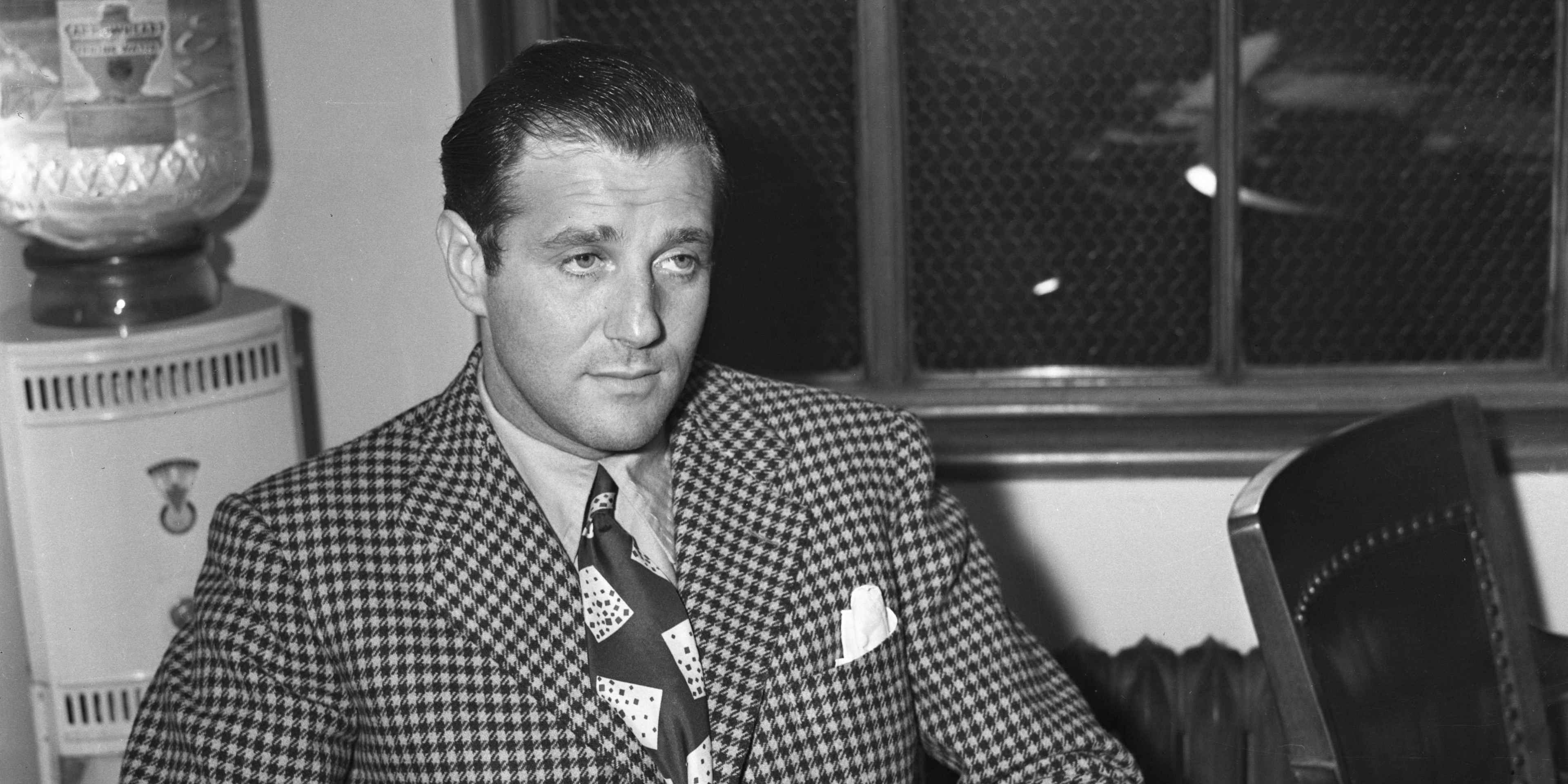
Bugsy Siegel
 United States
gangster•contract killer•rum-runner
Also known as: Benjamin Siegelbaum, Bugsy
Birthday
February 28, 1906
Birth Sign
Sagittarius
Birthplace
Williamsburg, Brooklyn, New York, USA
Age
Died at 41
Height
5 ft 10 in (178 cm)
About
Benjamin "Bugsy" Siegel stands as a pivotal figure in American organized crime history, best known as the visionary architect who transformed a remote desert town into the global entertainment capital of Las Vegas. Alongside his childhood friend and business partner Meyer Lansky, Siegel was instrumental in shaping the National Crime Syndicate, a coalition that unified Jewish-American mobsters and Italian-American Mafia families under a single organizational structure. His legacy is defined by a unique duality: he was a ruthless enforcer for Murder, Inc., yet simultaneously one of the first gangsters to achieve genuine celebrity status through his flamboyant lifestyle and media-savvy persona. Siegel's most enduring contribution remains the Flamingo Hotel, a project that introduced the concept of the luxury resort casino to the American Southwest, setting a precedent that would generate billions in revenue over the subsequent decades. Despite his early death at age 41, his strategic vision for blending high-end hospitality with organized crime financing created the blueprint for the modern Las Vegas Strip. The scale of his influence extended far beyond simple criminal enterprise; he fundamentally altered the economic and cultural landscape of Nevada, turning a small settlement into a world-renowned destination. His life story, characterized by rapid rises, violent ends, and an unyielding ambition, continues to captivate historians and true crime enthusiasts alike as a defining chapter in the narrative of 20th-century America.
Early Life & Background
Benjamin Siegelbaum entered the world on February 28, 1906, in the Williamsburg neighborhood of Brooklyn, New York, born into a family of Jewish immigrants navigating the economic struggles of the early 20th century. He attended local schools but dropped out early, a common path for children in his working-class community who sought immediate employment to support their households. His entry into the criminal underworld began in the late 1920s when, as a teenager, he joined local gangs in Brooklyn, quickly distinguishing himself through a combination of ruthlessness and natural charisma. By 1929, he had evolved from a petty thief and street enforcer into a key operative for Murder, Inc., the enforcement arm of the National Crime Syndicate, where he carried out contract killings for major crime families. During the height of Prohibition, Siegel leveraged his extensive network to become a successful bootlegger, distributing alcohol illegally across New York. When the Twenty-first Amendment repealed Prohibition in 1933, he pivoted again, shifting his focus to illegal gambling operations which offered higher profits and less volatility than liquor trafficking. In 1936, he made a strategic move to relocate to Los Angeles, California, expanding his operations into narcotics and high-stakes gambling. This relocation marked the beginning of his rise as a high-profile figure in the West Coast underworld, setting the stage for his future ventures in Las Vegas and establishing him as a formidable force before his ultimate fame.
Career Growth
Siegel's most significant achievement came in the early 1940s when he partnered with developer William R. Wilkerson to build the Flamingo Hotel and Casino in Las Vegas, a project designed to transform the desert town into a global entertainment hub. Despite severe budget overruns and financial mismanagement accusations—allegedly totaling $1 million skimmed by Siegel, his girlfriend Virginia Hill, or both—he pushed forward with an opulent opening on December 26, 1946. Although the casino initially struggled without a completed hotel wing, leading to a temporary closure from February to March 1, 1947, Siegel's gamble ultimately paid off posthumously; the Flamingo became the prototype for the Las Vegas Strip's grand resorts. Before his death, Siegel also played a crucial role in organizing gambling rackets across California and establishing ties with Italian-American Mafia leaders, often acting as a mediator between different criminal factions. His involvement in the 1941 trial for the murder of Harry Greenberg, a fellow mobster who had turned informant, further cemented his status as a formidable figure in the underworld, even though he was acquitted in 1942. The Flamingo Hotel featured amenities like a swimming pool and a nightclub, which were unprecedented at the time, creating a model that subsequent developers would follow. His approach to building the resort, blending high-end hospitality with organized crime financing, created a legacy that solidified his place in history as the architect of modern Las Vegas, with the property generating billions in revenue long after his passing.
Career Timeline
Public Image & Style
Siegel is portrayed in media as a charismatic, ruthless, and visionary gangster, often romanticized in films and literature for his role in building Las Vegas and his tragic end. The media of his time depicted him as a "front-page celebrity," a rare distinction for a criminal, highlighting his charm and appeal to the public. He was renowned for his impeccable grooming, standing approximately 5'10" (178 cm) tall, wearing tailored suits, silk shirts, and expensive hats, which contributed to his image as a "gentleman gangster." His charismatic demeanor and good looks made him a frequent subject of media coverage, earning him the moniker of one of the first celebrity criminals. Life Magazine featured him on its cover in 1947 shortly before his death, emphasizing his role in the Flamingo Hotel's opening, while Time Magazine published articles discussing the implications of his assassination for organized crime. His ability to blend into high society and maintain a glamorous lifestyle set a precedent for future mob figures like Frank Costello and Lucky Luciano. Siegel's public persona was carefully curated to project success and sophistication, masking the violence inherent in his profession. This unique blend of danger and elegance made him a cultural icon, transcending the typical boundaries of criminal notoriety to become a symbol of the American dream gone awry.
Fame & Fandom (iFAMOUS Rankings)
While there is no official "fandom" in the traditional sense, Siegel has a dedicated following among true crime enthusiasts, historians, and pop culture fans who celebrate his role in transforming a small desert town into a world-famous destination. Fans often refer to him as the "Godfather of Las Vegas" and organize campaigns including documentary screenings, book clubs focused on organized crime literature, and visits to the Flamingo Hotel to pay homage to its founder. Inside jokes among fans often revolve around the mystery of his murder and the enduring mythos of his partnership with Virginia Hill. His legacy has been further cemented by the 1991 film Bugsy, starring Warren Beatty, who won the Academy Award for Best Actor in 1992 for his portrayal of Siegel. The city of Las Vegas has honored his contribution through historical markers and museum exhibits, such as those at The Mob Museum, attracting visitors eager to learn about his life. Publications like Time and Rolling Stone frequently include him in lists of the "Greatest Gangsters" or "Most Influential Figures of the 20th Century," reflecting his enduring cultural impact. Social media accounts dedicated to true crime and Las Vegas history regularly discuss his story, keeping his legend alive for new generations. Fan discussions often highlight his quotes, such as "I'm going to make Las Vegas the Monte Carlo of America," and analyze the risks he took to achieve his vision.
Interesting Facts and Legends
Benjamin Siegelbaum adopted the nickname "Bugsy" as a child, reportedly due to his bug-eyed appearance, a moniker that stuck throughout his life and became synonymous with his notorious persona. He was known for his love of jazz music and often attended concerts in New York and Los Angeles, reflecting his appreciation for the arts despite his criminal background. The Flamingo Hotel was the first resort in Las Vegas to feature a swimming pool and a nightclub, setting new standards for the industry and influencing future designs. Siegel was a skilled marksman, which contributed to his reputation as a formidable hitman and enforcer within the syndicate. Despite his violent reputation, he was reportedly generous to friends and family, often providing financial support to those in need. The media of his time depicted him as a "front-page celebrity," a rare distinction for a criminal, highlighting his charm and appeal to the public. He was known for hosting extravagant parties for fellow mobsters, which served as both social gatherings and opportunities for business dealings. His decision to open the casino before the hotel was fully complete was considered a bold gamble that defined his risk-taking persona. The bullet that killed him was a .22 caliber round fired from outside, leaving no fingerprints or ballistic evidence linking the shooter to any specific individual. His ashes were privately cremated and scattered at sea off the coast of Long Beach, avoiding any public funeral that might draw law enforcement attention.
Notable Quotes
“I'm going to make Las Vegas the Monte Carlo of America.”
“If you want to get ahead, you've got to take risks.”
Family & Personal Life
Benjamin Siegel was raised in a Jewish immigrant family in the Williamsburg neighborhood of Brooklyn, New York. While historical records do not widely document the specific names of his parents, they were part of the large wave of Jewish immigrants who settled in the area during the early 20th century. There are no records of siblings mentioned in detailed historical accounts, suggesting he may have been an only child or that his siblings did not play a significant role in his public life or criminal career. Siegel maintained a close bond with his childhood friend Meyer Lansky, who effectively functioned as a brother-in-arms throughout their lives, co-founding the National Crime Syndicate together. Despite his notorious reputation, Siegel was reportedly a devout Jew who observed religious holidays and donated to Jewish charities, maintaining a connection to his heritage even amidst his illicit activities. He was known for hosting extravagant parties for fellow mobsters, which served as both social gatherings and opportunities for business networking within the criminal underworld. These events highlighted his love for fine food and wine, showcasing a side of his personality that valued tradition and community alongside his criminal enterprises. The lack of documented children suggests his personal legacy was carried forward primarily through his professional impact and the mythos surrounding his life rather than direct descendants.
Notable Connections
Relationships & Dating History
Bugsy Siegel's personal life was defined by his intense, often volatile relationship with Virginia Hill, which dominated his final years. There are no records of a legal marriage between Siegel and Hill; they were partners but never formally wed. Their relationship began in the late 1930s in New York, where she worked as a showgirl and he was already a prominent mobster. They met through mutual connections in the nightlife circuit, and their bond was characterized by shared wealth, criminal enterprise, and a mutual fascination with luxury. Hill was described as Siegel's "muse" and business partner in many illicit ventures, accompanying him to high-stakes events and managing aspects of his public image. While Siegel had other romantic entanglements prior to meeting Hill, none reached the level of public significance or duration of their partnership. There are no documented children born to Bugsy Siegel. After his death, Hill continued to live a lavish lifestyle, often traveling internationally, but the couple left no heirs. As of the historical record ending in 1947, Siegel was widowed (posthumously) and his last reported status was being in a long-term, unmarried partnership with Virginia Hill. Their dynamic remains one of the most famous romances in organized crime history, often cited as a catalyst for his downfall due to the trust he placed in her regarding financial matters.
- DatingVirginia Hill1938 - 1947Long-term partner and mistress; never legally married.
Death & Aftermath
Died
June 20, 1947 (aged 41)
Death Place
Beverly Hills, California, USA
Cause of Death
Single gunshot wound to the head
On the evening of June 20, 1947, Benjamin Siegel sat in the living room of his Beverly Hills home at 365 Linden Drive, dining with his mistress Virginia Hill when a single .22 caliber bullet struck him through the window. The shot killed him instantly, ending the life of the man who had helped build the modern Las Vegas gambling industry while he oversaw the financially struggling opening of the Flamingo Hotel. Police and later grand jury investigators found no evidence to identify the shooter, leaving the murder officially unresolved despite widespread belief that it was a contract killing ordered by the National Crime Syndicate due to his mismanagement of funds. No one was ever arrested or charged for the homicide, and decades of speculation regarding figures like Mickey Cohen or Meyer Lansky never resulted in a legal ruling or trial. Public reaction remained shock within the criminal underworld rather than mourning from the general populace, as memorials or tributes failed to emerge while the syndicate moved forward without his financial burdens. Following the assassination, the family kept a low profile and arranged a private cremation with ashes scattered at sea off the coast of Long Beach, avoiding any public funeral that might draw law enforcement attention. Posthumously, Siegel transformed into a mythic figure in organized crime history, becoming the subject of the 1991 film Bugsy starring Warren Beatty and appearing in Jerry Capeci's biography Bugsy: The Life and Times of Benjamin Siegel. His death marked the end of an era for the old-school mobster but the beginning of the modern Las Vegas empire.
Net Worth (Estate Value)
$0
iFANN Editorial Team estimate
As Siegel died in 1947, his net worth at the time is estimated to have been substantial but difficult to quantify precisely due to the illicit nature of his income. Contemporary estimates suggest his liquid assets and investments were in the range of several hundred thousand dollars, a significant sum for the era. His estate value today is largely tied to the ongoing success of the Flamingo Hotel and other properties he helped develop, which generate billions in revenue annually. However, no specific current estate value is publicly tracked as his assets were dispersed or absorbed into larger criminal enterprises and legitimate businesses over time. The Flamingo itself, now owned by Caesars Entertainment, continues to be a major revenue generator, indirectly reflecting Siegel's initial investment and vision. It is widely believed that Siegel skimmed approximately $1 million from the construction budget of the Flamingo, a primary motive attributed to his assassination. Despite the lack of formal financial records, his ability to fund massive projects and maintain a lavish lifestyle indicates a wealth that far exceeded his contemporaries in the criminal underworld. The financial legacy of his ventures continues to shape the economy of Las Vegas, making him one of the most financially influential figures in the city's history.
Awards Won (1)
Warren Beatty won the Academy Award for Best Actor in 1992 for his portrayal of Siegel in the film Bugsy. Siegel is frequently cited in "Greatest Gangsters" lists by publications like Time and Rolling Stone, though these are retrospective rankings rather than formal honors.
1992 · Best Actor
Bugsy
Known For
Bugsy
1991 · Subject of biopic
The Flamingo Hotel
1946 · Founder and financier
Keywords
Sources
Quick Facts
- Profession
- gangster, contract killer, rum-runner
- Born
- February 28, 1906
- Birthplace
- Williamsburg, Brooklyn, New York, USA
- Died
- June 20, 1947
- Death Place
- Beverly Hills, California, USA
- Gender
- Male
- Birth Sign
- Sagittarius
Personal Details
- Full Name
- Benjamin Siegelbaum
- Height
- 5 ft 10 in (178 cm)
- Children
- Education
- Dropped out of school early
Frequently Asked Questions
Who killed Bugsy Siegel?
How much money did Bugsy Siegel steal from the Flamingo?
Was Bugsy Siegel married?
Where was Bugsy Siegel born?
What happened to Bugsy Siegel's ashes?
Similar People
Join the community
fans discussing