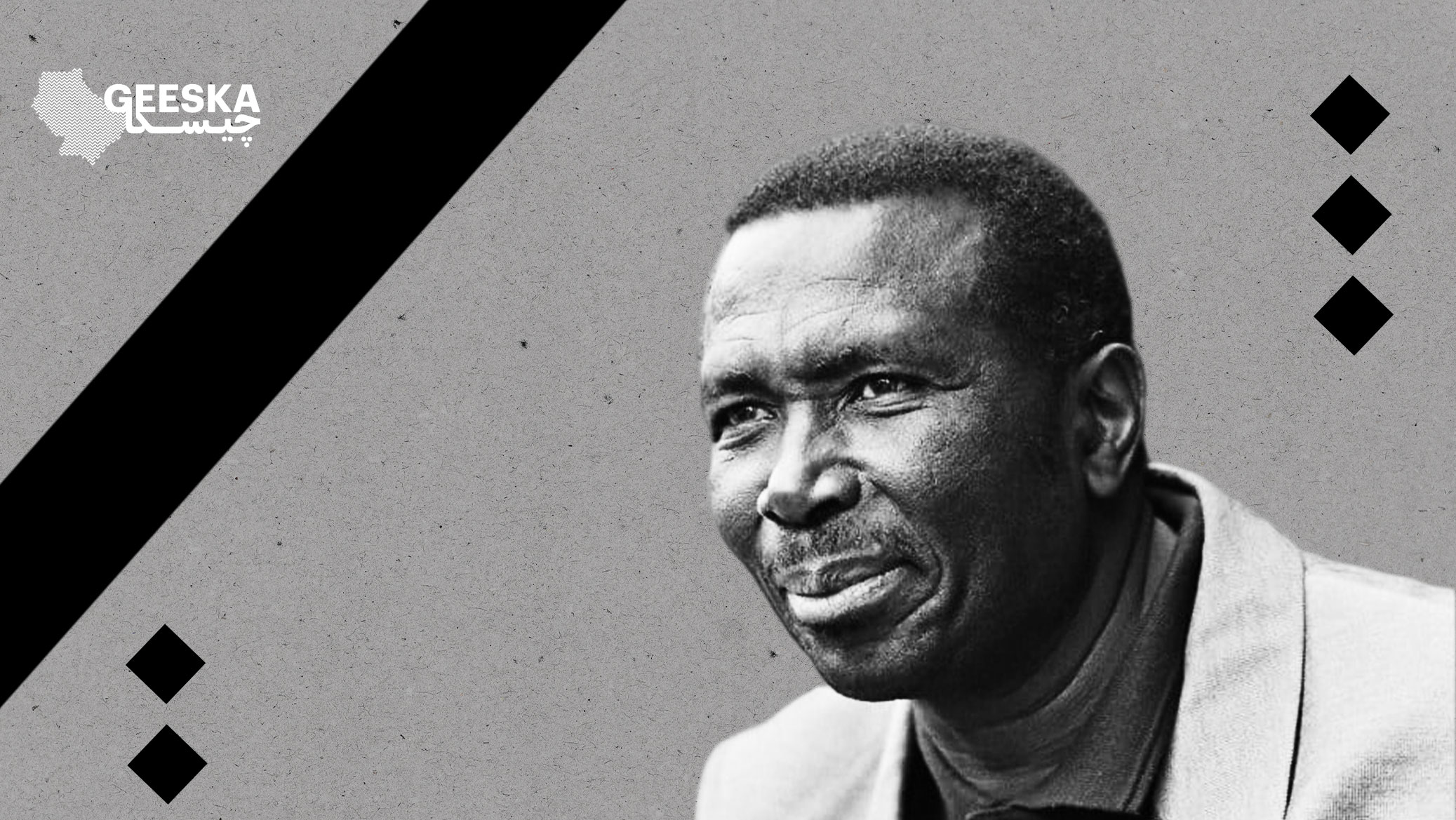
Meja Mwangi
 Kenya
KenyaAlso known as: David Dominic Mwangi
Birthday
December 27, 1948
Birth Sign
Sagittarius
Birthplace
Nanyuki, Kenya
Age
Died at 76
About
Meja Mwangi was a Kenyan novelist, screenwriter, and one of the country's first significant literary voices after independence. Born David Dominic Mwangi in Nanyuki in 1948, he spent his life documenting the realities of Kenyan society, from the Mau Mau era to the gritty streets of Nairobi. His novels, including Kill Me Quick and Going Down River Road, earned him a devoted readership and critical respect across Africa and beyond. He also worked in film, contributing to productions like Out of Africa and White Mischief.
Mwangi passed away on December 11, 2025, in Malindi, at the age of 76. His death prompted an outpouring of tributes recognizing him as a "silent giant" of Kenyan letters. He left behind a body of work that continues to be studied and cherished for its unflinching look at ordinary lives.
Early Life & Background
Mwangi was born in Nanyuki, a town in central Kenya that was deeply affected by the Mau Mau Uprising in the 1950s. That history would later shape his early novels. He grew up during the final years of British colonial rule, a period of political upheaval and social change that he absorbed as a young observer.
He attended Kenyatta College, which at the time was a teacher-training institution rather than a full university. There, he developed an interest in literature and storytelling, though he did not initially set out to become a novelist. After college, he took on various jobs, including working as a clerk and a public relations officer, experiences that gave him a close view of the urban working class that would populate his fiction.
His first published novel, Carcase for Hounds, appeared in 1974, but it was his second book, Kill Me Quick, published in 1973, that brought him early recognition. The novel, which won the Jomo Kenyatta Prize for Literature, told the story of two street children in Nairobi and immediately established his signature concern with the struggles of the urban poor.
Career Growth
After the success of Kill Me Quick, Mwangi published a string of novels that cemented his reputation. Going Down River Road (1976) followed a construction worker drifting through Nairobi's bars and streets, while The Cockroach Dance (1979) took a darkly comic look at life in a rundown apartment block. These works were praised for their raw energy and their refusal to romanticize city life.
In the 1980s, Mwangi moved into film work, taking on roles as a screenwriter and assistant director. He contributed to major international productions shot in Kenya, including Out of Africa (1985) and White Mischief (1987). This period broadened his creative range and introduced his storytelling to a global audience.
He continued writing into the 2000s, publishing novels such as The Last Plague (1997) and Mountain of Bones (2001), the latter dealing with the Rwandan genocide. His later work maintained his focus on social issues while exploring new historical and political territory.
Career Timeline
Public Image & Style
Mwangi was often described as a reclusive figure, rarely giving interviews or seeking the spotlight. In the literary world, however, he was regarded as a pioneer who brought Kenyan urban life into fiction with unflinching honesty. Critics praised his empathy for marginalized characters, and readers appreciated his vivid, sometimes brutal, realism. After his death, tributes highlighted his role as a "documenter of the downtrodden," a writer who gave voice to those often ignored by official narratives.
Fame & Fandom (iFAMOUS Rankings)
Meja Mwangi cultivated a readership defined by academic engagement rather than organized fandom, with no official collective name emerging from his audience of students and literary critics. His influence persisted through the syllabi of Kenyan schools and universities, where works like Kill Me Quick and The Cockroach Dance served as primary texts for understanding post-independence urban realities. Unlike pop stars who command mobilized fan clubs, Mwangi's legacy was maintained through organic discussion in book clubs and spontaneous tributes following his passing in December 2025, which framed him as a silent giant of African letters rather than a celebrity with a dedicated following. iFANN has evaluated his standing within the global cultural landscape, but he does not currently hold a placement in the published rankings. Meja Mwangi is currently evaluated as unranked on the Global Top 1,000 list, indicating that while his contributions to literature are significant, he does not hold a specific numerical position within the published scope of the iFANN rankings. This status reflects a period where his fame remains deeply regional and specialized rather than globally ubiquitous in the metrics used for contemporary ranking systems. The absence of a formal rank does not diminish the documented impact of his work on East African culture, but it accurately places him outside the top tier of globally active personalities measured by the engine. His career bridged the gap between local storytelling and international cinema through projects like Out of Africa and White Mischief, yet his primary resonance remains rooted in the written word. The lack of a specific fandom name aligns with his reclusive nature, as he rarely sought the spotlight or engaged in the modern mechanisms of fan interaction. Consequently, his enduring presence is felt through the continued study of his novels and the respect accorded to his role as a documenter of the downtrodden, rather than through chart-topping popularity or viral moments.
Interesting Facts and Legends
Mwangi wrote under the pen name Meja Mwangi, though his birth name was David Dominic Mwangi. His novel Kill Me Quick was translated into several languages, including French and German, extending his readership across Europe. He was one of the few Kenyan writers of his generation to work extensively in both literature and film, a dual career that remained rare. Despite his fame, Mwangi was known for keeping a low public profile, preferring to let his books speak for him. His novel Carcase for Hounds was adapted into the film Mlevi in 1984, one of the few Kenyan literary adaptations of that era. A central pillar of his literary legend is the debut of Kill Me Quick, an event that immediately established him as a leading voice on the African literary scene and earned him the Commonwealth Writers' Prize. Another enduring story involves his unflinching portrayal of Nairobi's slums in The Cockroach Dance, which cemented his reputation as the definitive truth-teller of the city's corruption and struggle. These narratives form the core of his mythology, replacing traditional crowd-based legends with the lasting power of his text.
Family & Personal Life
Details about Mwangi's family are scarce, as he guarded his private life. He was married and had children, though their names and occupations are not widely publicized. He spent his later years in Malindi, a coastal town, where he lived quietly until his death. His family was present at his passing, according to reports from Kenyan media.
Notable Connections
Henry Chakava, the influential Kenyan publisher, was instrumental in bringing Mwangi's work to readers. Chakava's East African Publishing House released many of Mwangi's early novels, and the two maintained a close professional relationship. Mwangi's work also connected him to filmmakers like Sydney Pollack, who directed Out of Africa, and to the broader circle of African writers of the post-independence era.
Relationships & Dating History
Meja Mwangi was a private man, and little is known about his romantic life. He was married, but the identity of his wife and the details of their relationship have not been widely reported. He is survived by his wife and children, who were with him in Malindi at the time of his death. Given the lack of public information, it is not possible to construct a detailed dating history, but it is clear that he maintained a stable family life away from the public eye.
Death & Aftermath
Died
December 11, 2025 (aged 76)
Death Place
Unknown
Cause of Death
Unknown
David Dominic Mwangi, known professionally as Meja Mwangi, died on December 11, 2025, at the age of 76. Born on December 27, 1948, in Nanyuki, Kenya, he was a celebrated writer and screenwriter whose passing was confirmed by multiple news outlets including The Standard and Eastleigh Voice. While reports noted he died earlier on that Thursday, no official records specify the exact city or hospital where his final moments occurred, nor is there any public record of an officially ruled cause of death such as illness or accident.
The reaction to Mwangi's death was immediate across East African media and literary circles. Tributes emerged quickly, with Malindi Kenya publishing a piece on December 13, 2025, describing him as ahead of his time, while Brittle Paper released a tribute on December 18 calling him a storyteller of rare empathy. By February 2026, Geeska characterized him as the silent giant of Kenyan literature, highlighting his focus on urban poverty. In March 2026, The Elephant published an analysis titled Meja, The Downtown Giant Kenya Lost, noting his writing drew inspiration from Nairobi's underbelly rather than salon literature. These assessments appeared alongside a surge in analytical articles and the re-evaluation of his works, including mentions of his trilogy being canonized by Professor Nicholas Kamau Goro in October 2025.
Net Worth (Estate Value)
$1 Million
iFANN Editorial Team estimate
Per iFANN's editorial analysis, the estate of the late Meja Mwangi holds an estimated net worth of $1 Million as of 2026. This figure reflects the earnings from his long writing career, including book sales, royalties, and adaptations of his work. His novels, particularly Kill Me Quick and Going Down River Road, have remained in print for decades, providing a steady stream of income. His work in the film industry, including his involvement with Out of Africa and White Mischief, also contributed to his financial standing. After his death in 2025, his estate continues to receive royalties from his books, which are still studied in schools and universities across Africa and beyond.
Awards Won (1)
Meja Mwangi won the Jomo Kenyatta Prize for Literature for his novel Kill Me Quick in 1974. This award, one of the most prestigious in East Africa, recognized his early contribution to Kenyan literature. He did not receive major international awards, but his work has been honored through inclusion in academic curricula and literary retrospectives.
1974 · Literature
Kill Me Quick
Known For
Kill Me Quick
1973 · Novel
Going Down River Road
1976 · Novel
Carcase for Hounds
1974 · Novel
The Cockroach Dance
1979 · Novel
Keywords
Sources
Quick Facts
- Profession
- writer, screenwriter, novelist
- Born
- December 27, 1948
- Birthplace
- Nanyuki, Kenya
- Died
- December 11, 2025
- Death Place
- Malindi, Kenya
- Gender
- Male
- Birth Sign
- Sagittarius
- Nationality
- Kenyan
Personal Details
- Full Name
- David Dominic Mwangi
- Education
- Kenyatta College (now Kenyatta University)
Filmography
2
Total
2
Film
0
TV
Frequently Asked Questions
Who was Meja Mwangi?
When did Meja Mwangi die?
What are Meja Mwangi's most famous works?
What was Meja Mwangi's contribution to Kenyan literature?
Did Meja Mwangi work in film?
Similar People
Join the community
fans discussing