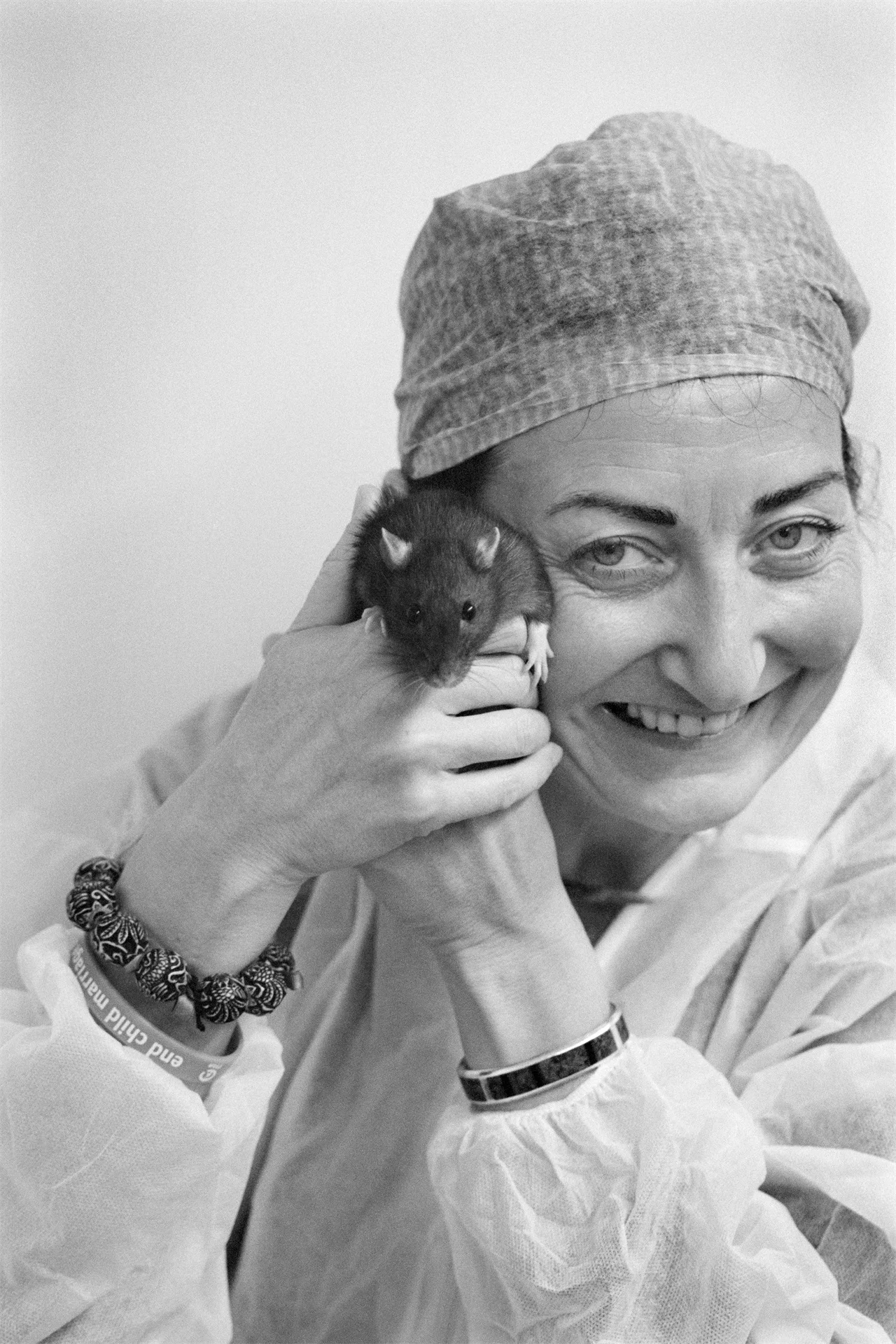
May-Britt Moser
 Norway
neuroscientist•psychologist•researcher
Also known as: May-Britt Andreassen
Birthday
January 4, 1963
Birth Sign
Capricorn
Birthplace
Fosnavåg, Norway
Age
63 years old
About
May-Britt Moser is a Norwegian neuroscientist and psychologist who, together with her former husband Edvard Moser and John O'Keefe, won the 2014 Nobel Prize in Physiology or Medicine for discovering the brain's internal positioning system. As a professor at the Norwegian University of Science and Technology (NTNU), she has spent over three decades investigating how the brain maps space and enables navigation, work that has reshaped our understanding of memory and cognition.
Her current research focuses on the entorhinal cortex and grid cells, neurons that fire in a hexagonal pattern to create a coordinate system for spatial representation. Since 2023, she has headed the Centre for Algorithms in the Cortex at NTNU, exploring how neural circuits compute information. Her contributions have earned her numerous international honors, and she remains an influential figure in neuroscience and a role model for women in science.
Early Life & Background
May-Britt Moser was born on January 4, 1963, in Fosnavåg, a small coastal town in Møre og Romsdal county, Norway. She grew up on a sheep farm on a remote island, the youngest of five children. Her father was a carpenter, and the family had no scientific background. Her isolated upbringing, surrounded by nature, fostered an early awareness of space and direction, though she never imagined it would lead to a career in brain research.
She pursued psychology at the University of Oslo, where she met Edvard Moser, a fellow student who would become her husband and research partner. After completing her undergraduate degree, she stayed at Oslo for her doctorate, earning a PhD in neurophysiology in 1995. Her thesis focused on the neural basis of spatial memory, building on John O'Keefe's discovery of place cells in the hippocampus.
Career Growth
Moser's career accelerated after her PhD. In 1996, she joined NTNU as an associate professor of biological psychology, and by 2000 she was a full professor of neuroscience. In 2002, her research group was named a 'centre of excellence,' allowing her and Edvard to establish the Moser Research Environment. The breakthrough came in 2005, when they identified grid cells in the entorhinal cortex, neurons that fire in a hexagonal grid, forming the brain's coordinate system for navigation.
On October 6, 2014, the Nobel Assembly announced that Moser, Edvard Moser, and John O'Keefe would share the Nobel Prize in Physiology or Medicine. She delivered her Nobel Lecture in Stockholm on December 7, wearing a dress patterned with neurons. Since then, she has continued to lead research at NTNU, heading the Centre for Algorithms in the Cortex since 2023. In February 2025, her team published findings on the brain's rhythmic scanning of surroundings, a discovery she described as 'absolutely shocking.'
Career Timeline
Public Image & Style
Moser is regarded as one of the most influential neuroscientists of her generation, known for rigorous experimental design and bold theoretical ambition. She is a collaborative mentor, having trained many young researchers who now lead labs worldwide. Her public persona is that of a dedicated scientist who values precision and curiosity. She has been a prominent advocate for women in science, serving as an inspiration for aspiring female researchers. Her style is understated yet distinctive, as seen in her neuron-patterned Nobel dress.
Fame & Fandom (iFAMOUS Rankings)
May-Britt Moser commands a quiet reverence within the global scientific community rather than the roar of pop culture. Her audience consists primarily of researchers, students, and science enthusiasts who follow her work on spatial navigation with intense focus, yet there is no formal fandom name attached to her legacy. The concept of a dedicated fanbase with rituals or organized campaigns does not apply to a career defined by laboratory precision and academic publication. While she has no recorded history of meet-and-greets or social media interactions typical of entertainment idols, her professional presence at events like the Starmus VIII conference draws significant attention from the world's leading thinkers. iFANN has evaluated her public footprint extensively, but the Global Fame Engine currently places her outside the published rankings. She is not currently ranked in the Global Top 1,000 nor does she hold a placement in any Top-100 scope list. This absence of a numeric rank reflects her status as a distinguished academic whose fame is measured in citations and breakthroughs rather than viral metrics or consumer consumption signals. The lack of a specific ordinal position simply indicates that while her influence is profound within her field, it does not generate the mass-market volume required for a global celebrity ranking. Her impact remains concentrated among those who study the brain's mapping systems, creating a circle of admiration based on intellectual achievement rather than celebrity worship.
Interesting Facts and Legends
Moser's Nobel ceremony dress was custom-made with neuron-inspired patterns, a playful nod to her life's work. She is only the second woman to win a Nobel Prize in Physiology or Medicine alongside her husband, after Gerty Cori in 1947. She and Edvard Moser are the third married couple to share a Nobel Prize. Moser has a Twitter account under the handle @MayBrittMoser, where she shares scientific updates. She has been an advocate for women in science, often speaking about the challenges and rewards of balancing research with family life. A widely retold story in scientific circles involves her choice of attire for the Nobel Prize ceremony, where her dress specifically mimicked the firing patterns of neurons, merging her identity with her discovery. Another iconic moment centers on the announcement of the Nobel Prize, marking a historic shift as one of the few women to receive this specific award in physiology or medicine. Recent lore within the neuroscience community tracks her ongoing evolution, such as a study regarding rats deprived of geometric experience during development and a report describing how grid cells turn the brain's searchlight from broad scanning to target-focused search.
Notable Quotes
“We were absolutely shocked that this exists.”
“The brain is like an engine that only turns off during deep sleep.”
“I never imagined that my childhood on a remote island would lead to the Nobel Prize.”
Family & Personal Life
May-Britt Moser grew up on a sheep farm in Norway, the youngest of five children. Her father worked as a carpenter, and her mother was a homemaker. She married Edvard Moser in the 1980s, and they had two children together. The couple divorced in 2016 but have continued to collaborate professionally. Moser keeps her personal life private, and little is known about her current household or family beyond her children.
Notable Connections
Relationships & Dating History
May-Britt Moser met Edvard Moser while studying psychology at the University of Oslo in the 1980s. They married and had two children, building a life and career together as research partners. Their collaboration produced groundbreaking discoveries, culminating in the 2014 Nobel Prize. The couple divorced in 2016 but continued to work together at NTNU. As of 2026, Moser's relationship status is not publicly documented; she appears to be single and focused on her research.
- MarriedEdvard Moser1985 - 2016Met as students, married, had two children, won Nobel Prize together, divorced in 2016.
Salary, Net Worth In 2026
$1 Million
iFANN Editorial Team estimate
As a Nobel laureate and leading neuroscientist, May-Britt Moser's net worth is estimated at around $1 million as of 2026. Per iFANN's editorial analysis, this figure represents her accumulated wealth derived primarily from her academic salary at NTNU, research grants, and honoraria from lectures. She has received several prestigious prizes, including the Nobel Prize, which came with a monetary award shared among the laureates. Her financial situation is modest compared to commercial scientists, reflecting the academic nature of her work. She has not engaged in major commercial ventures or endorsements.
Awards Won (5)
May-Britt Moser has received numerous prestigious awards for her work on spatial navigation. She shared the 2014 Nobel Prize in Physiology or Medicine with Edvard Moser and John O'Keefe. She also won the Louisa Gross Horwitz Prize (2011), the Brain Prize (2011), the Körber European Science Prize (2013), and the Perl-UNC Neuroscience Prize (2012), among others. She was elected a Fellow of the Royal Society and a member of the National Academy of Sciences.
2014 · Physiology or Medicine
Discoveries of cells that constitute a positioning system in the brain
2011 · Biology
Research on the brain's spatial navigation system
Known For
Discovery of grid cells
2005 · Co-discoverer
Nobel Prize in Physiology or Medicine
2014 · Co-recipient
Keywords
Sources
Quick Facts
- Profession
- neuroscientist, psychologist, researcher
- Born
- January 4, 1963
- Birthplace
- Fosnavåg, Norway
- Gender
- Female
- Spouse
- Edvard Moser (div. 2016)
- Birth Sign
- Capricorn
Personal Details
- Full Name
- May-Britt Andreassen
- Spouse
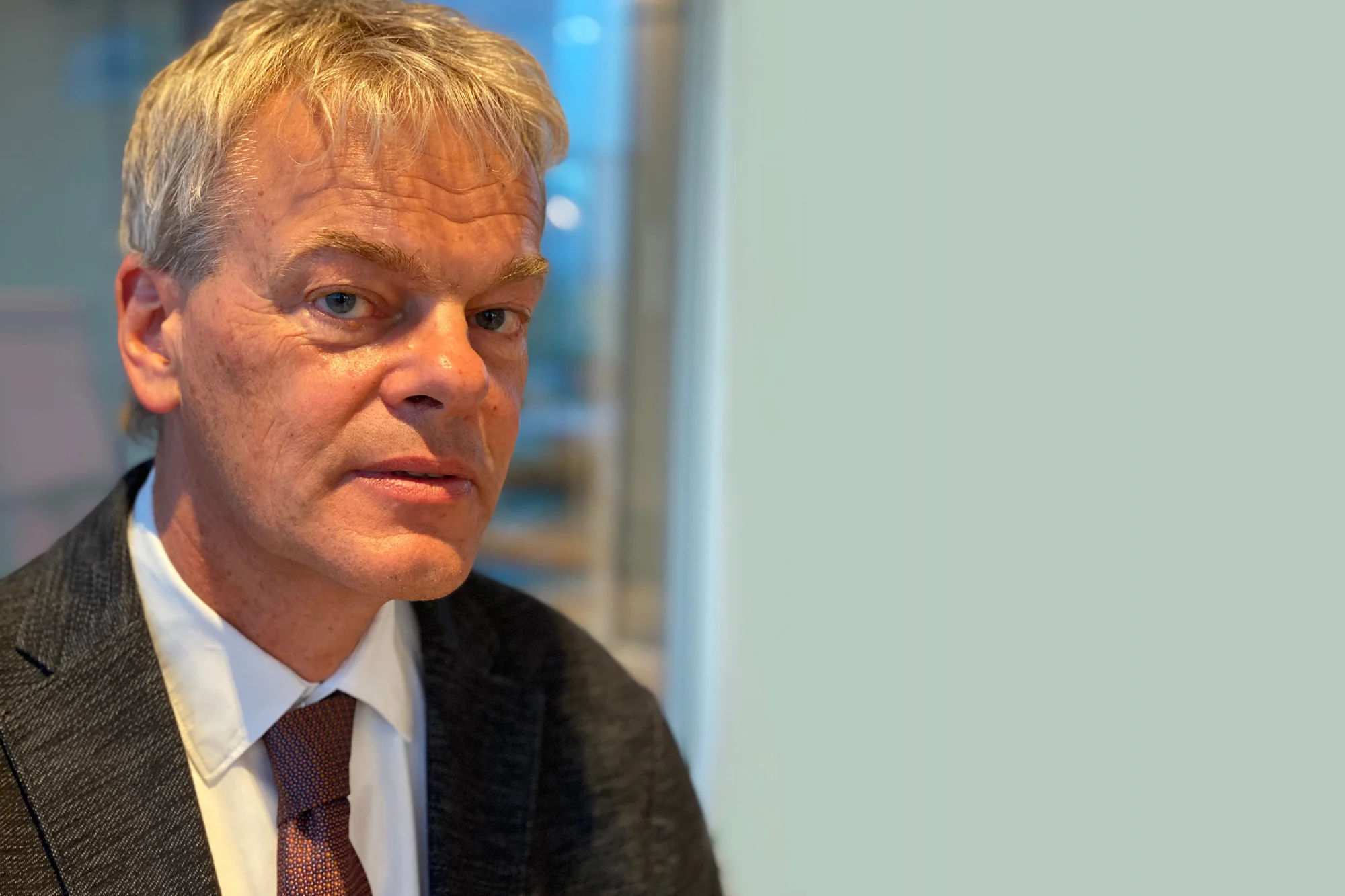
- Edvard Moser
- Children
- 2
- Education
- University of Oslo (PhD in Neurophysiology, 1995)
Frequently Asked Questions
How did May-Britt Moser and Edvard Moser meet?
What are grid cells?
Did May-Britt Moser win the Nobel Prize alone?
How many children does May-Britt Moser have?
Where does May-Britt Moser work?
Social Media
Similar People
Join the community
fans discussing