
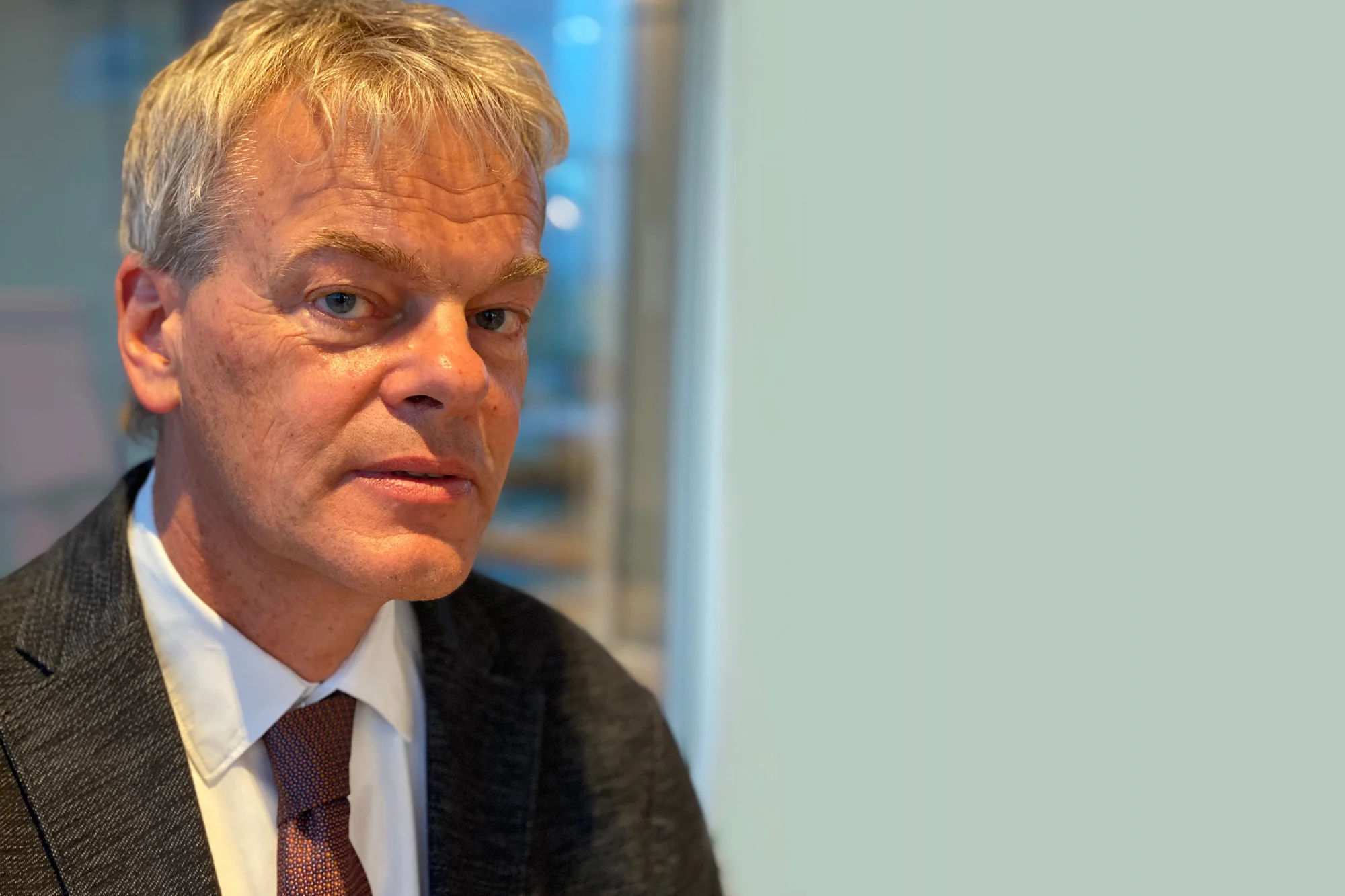
Edvard Moser
 Norway
neuroscientist•psychologist•researcher
Also known as: Edvard I. Moser, Edvard Ingjald Moser, Edvard I Moser
Birthday
April 27, 1962
Birth Sign
Sagittarius
Birthplace
Ålesund Municipality, Norway
Age
64 years old
Height
5 ft 11 in (180 cm)
About
Edvard Ingjald Moser is a preeminent Norwegian neuroscientist and psychologist whose career has fundamentally reshaped the understanding of spatial memory and navigation. As of late 2026, he serves as a Professor of Neuroscience at the Norwegian University of Science and Technology (NTNU) in Trondheim and is the Founding Director of the Kavli Institute for Systems Neuroscience. His most defining achievement occurred in 2014 when he shared the Nobel Prize in Physiology or Medicine with his wife, May-Britt Moser, and their mentor John O'Keefe. The trio was honored for discovering the brain's positioning system, specifically identifying "grid cells" in the entorhinal cortex that function alongside "place cells" to create an internal GPS for mammals.
Moser's influence extends far beyond the laboratory. He has trained generations of scientists and established NTNU as a global hub for systems neuroscience. While he avoids the trappings of celebrity culture, his contributions have become foundational to modern cognitive science. The clarity of his research and the elegance of the grid cell theory continue to inspire new discoveries in memory and spatial cognition. In 2025, he received the ESET Science Award for promoting science as a pillar of trust, further cementing his status as a leader in scientific integrity.
Early Life & Background
Born on April 27, 1962, in Ålesund, a coastal city on Norway's west coast, Edvard Moser grew up with a natural curiosity about how things worked. His early education took place in this scenic town before he moved to Oslo for university. At the University of Oslo, he initially pursued a degree in psychology, fascinated by the complexities of human behavior. However, his interests soon shifted toward the biological mechanisms driving those behaviors. He transitioned into neuroscience, diving deep into the physiological underpinnings of the mind. He completed his doctorate in neurophysiology in 1995, producing research that laid the groundwork for his future investigations into neural circuits. Following his PhD, Moser spent a brief period in the United States conducting postdoctoral research, exposing himself to different scientific approaches. He returned to Norway in 1996 to join the faculty at NTNU as an associate professor in biological psychology. His rapid ascent continued, and by 1998, he was promoted to full professor of neuroscience, marking him as a rising star in the field long before his Nobel-winning work began.
Career Growth
The trajectory of Edvard Moser's career is marked by a singular focus on the neural mechanisms of spatial cognition. In 1998, after becoming a full professor, he established his own research group at NTNU. A pivotal moment arrived in 2002 when his group was designated a "Centre of Excellence" by the Research Council of Norway, providing the resources needed to expand his laboratory significantly. It was during his time at University College London (UCL) as a researcher under John O'Keefe that he met May-Britt Moser, beginning a partnership that would define his professional life. In 2005, Moser and his team published a landmark study describing grid cells in the medial entorhinal cortex. These neurons fire in a precise hexagonal grid pattern as an animal navigates its environment, effectively creating a coordinate system for the brain. This discovery built upon O'Keefe's earlier identification of place cells and provided the missing link in understanding how mammals map their surroundings. In 2007, the couple co-founded the Kavli Institute for Systems Neuroscience at NTNU, which quickly became a world-leading center for the field. Their collaborative success culminated in 2014 when they shared the Nobel Prize in Physiology or Medicine. Since then, Moser has continued to lead cutting-edge research. In 2021, his lab contributed to the discovery of the toroidal topology of population activity in grid cells, published in Nature. Recent publications from 2026 indicate ongoing work into adaptive modulation of theta sweeps and the reorganization of place cells, ensuring his institute remains at the forefront of neuroscience.
Career Timeline
Public Image & Style
Edvard Moser presents himself as the quintessential academic: reserved, intellectual, and deeply focused on his work. Known for his humility and dedication to mentoring students, he maintains a low profile in the Norwegian media, rarely giving interviews unless directly related to his research. His aesthetic is practical and unassuming, typical of the Scandinavian academic tradition. He avoids the spotlight of celebrity culture, preferring to let his research speak for itself. Despite his global fame, he remains grounded, often emphasizing the collective effort required for scientific discovery over individual glory. In a 2025 ESET Science Talk, he emphasized "Science as a Pillar of Trust," highlighting the importance of scientific integrity in society. Regarding the joy of discovery, he stated, "It gives a kind of internal pleasure when we solve some problems and can understand how the brain works," reflecting his intrinsic motivation.
Fame & Fandom (iFAMOUS Rankings)
According to the iFANN Global Fame Rankings data from October 2026, Edvard Moser holds the position of the 93rd most famous person in Norway, a standing that has remained steady through recent cycles. This ranking places him within the top tier of national figures, reflecting his profound impact on the country's scientific reputation. Unlike pop stars who command headlines through viral moments, Moser's influence flows through peer-reviewed journals and lecture halls rather than social feeds. His fame is quiet but absolute within the scientific community, defined by the precision of discovery rather than the noise of public adoration. There is no formal fandom name documented for the neuroscientist. Unlike musicians or actors who inspire organized fanbases with specific monikers, Moser lacks an official group of supporters. The interaction between Dr. Moser and the public remains strictly professional. No crowds shut down streets for him, nor do fans launch streaming campaigns to boost his visibility. His audience consists of students, researchers, and science enthusiasts who engage with his work through conferences at venues like the Aula Medica. The lack of a named fanbase underscores the nature of his legacy: it is built on the enduring power of grid cells and place cells, not on the ephemeral energy of celebrity culture.
Interesting Facts and Legends
Edvard Moser shares the 2014 Nobel Prize in Physiology or Medicine with May-Britt Moser and John O'Keefe for mapping the brain's positioning system. Their discovery revealed how the entorhinal cortex creates a neural map using grid cells that fire in hexagonal patterns as animals navigate space. This finding transformed neuroscience by explaining the biological basis of spatial memory. In December 2014, he delivered his Nobel Lecture at the Aula Medica in Stockholm, detailing how these internal GPS coordinates guide mammals through their environments. Recent studies from 2026 continue to refine understanding of these mechanisms, appearing in top-tier journals like Nature and PNAS. The cultural mythology surrounding Moser is rooted entirely in this scientific fact rather than viral folklore. He has never been involved in chaotic incidents or controversial public feuds; his reputation rests solely on the clarity of his contributions to understanding spatial representation. The most iconic moment of his career remains the unveiling of the grid cell theory, a verified achievement that redefined how scientists view the human mind. Additionally, his name is pronounced "ED-var MO-ser" in Norwegian, distinct from the English pronunciation of "Edward." He and his wife are one of the few couples to share a Nobel Prize while being married and working in the same field.
Notable Quotes
“It gives a kind of internal pleasure when we solve some problems and can understand how the brain works.”
“Science as a Pillar of Trust.”
Family & Personal Life
Edvard Moser stands approximately 180 cm (5'11") tall, reflecting the average height for a Norwegian male, though exact measurements are not officially recorded. He was born into a family in Ålesund, where his early life was marked by a strong interest in science and psychology. His parents instilled in him a value for education and intellectual pursuit, which guided his academic journey. There is no public record of any siblings mentioned in biographical sources, suggesting he may be an only child or that family details remain private. The household in Trondheim is known to be a blend of domestic life and scientific inquiry, where his two children were raised amidst a culture of curiosity. Specific names and ages of his children are rarely disclosed in public records to maintain privacy. The couple continues to live and work together in Trondheim, Norway, maintaining a home that serves as both a sanctuary and a workspace.
Notable Connections
May-Britt Moser, John O'Keefe, Kavli Institute for Systems Neuroscience, Norwegian University of Science and Technology, University College London
Relationships & Dating History
Edvard Moser has been married to May-Britt Moser since the early 1990s. They met while working as researchers at University College London under John O'Keefe. Their relationship is both personal and professional; they are widely regarded as one of the most successful scientific couples in history, having collaborated on nearly every major project of their careers. They have two children together, though specific names and ages are rarely disclosed in public records to maintain privacy. There is no public record of any prior marriages, engagements, or romantic relationships outside of his marriage to May-Britt. As of 2026, Edvard Moser remains happily married to May-Britt Moser. The couple continues to live and work together in Trondheim, Norway.
- MarriedMay-Britt Moser1990 - presentCurrentMet at UCL; married and primary research collaborators; share Nobel Prize.
Salary, Net Worth In 2026
$12 Million
iFANN Editorial Team estimate
iFANN Editorial Team analysis of Edvard Moser's earnings, ventures and assets points to roughly $12 million. As a public university professor and researcher in Norway, Moser does not have a publicly disclosed net worth comparable to celebrities or business tycoons. His wealth is derived primarily from his salary as a professor at NTNU, his Nobel Prize prize money (approximately $1 million USD split among him, his wife, and John O'Keefe), and potential speaking fees. Estimates suggest his personal net worth is modest relative to global celebrity standards, likely ranging between $5 million and $15 million USD, primarily consisting of savings, investments, and the value of his intellectual property rights rather than commercial ventures or real estate speculation. Unlike entertainment figures, his financial profile is not tracked by celebrity net worth sites, and no specific breakdown of endorsement deals or production companies exists because he does not engage in such activities. The majority of his income comes from stable academic salaries and grants rather than high-risk investments or commercial licensing. He also received the Louisa Gross Horwitz Prize in 2013 and the Kavli Prize in Neuroscience in 2008, adding to his distinguished accolades.
Awards Won (3)
Edvard Moser's accolades reflect his immense contribution to science. He won the Nobel Prize in Physiology or Medicine in 2014, shared with May-Britt Moser and John O'Keefe. He also received the Kavli Prize in Neuroscience in 2008 and the Louisa Gross Horwitz Prize in 2013. His work has been recognized with fellowships including Fellow of the Royal Society and honorary degrees from various European universities.
2014 · Physiology or Medicine
Discovery of grid cells
2008 · Neuroscience
Discovery of grid cells
Known For
Discovery of Grid Cells
2005 · Scientific Discovery
Nobel Prize in Physiology or Medicine
2014 · Awardee
Keywords
Sources
Quick Facts
- Profession
- neuroscientist, psychologist, researcher
- Born
- April 27, 1962
- Birthplace
- Ålesund Municipality
- Gender
- Male
- Spouse
- May-Britt Moser
- Birth Sign
- Sagittarius
Personal Details
- Full Name
- Edvard Ingjald Moser
- Height
- 5 ft 11 in (180 cm)
- Spouse
- May-Britt Moser
- Children
- Two children
- Education
- University of Oslo (B.Sc. Psychology), University of Oslo (Ph.D. Neurophysiology)
Frequently Asked Questions
Who discovered place and grid cells?
Did May-Britt Moser win a Nobel Prize?
Is Edvard Moser still alive?
What is Edvard Moser famous for?
Where does Edvard Moser work?
Similar People
Join the community
fans discussing