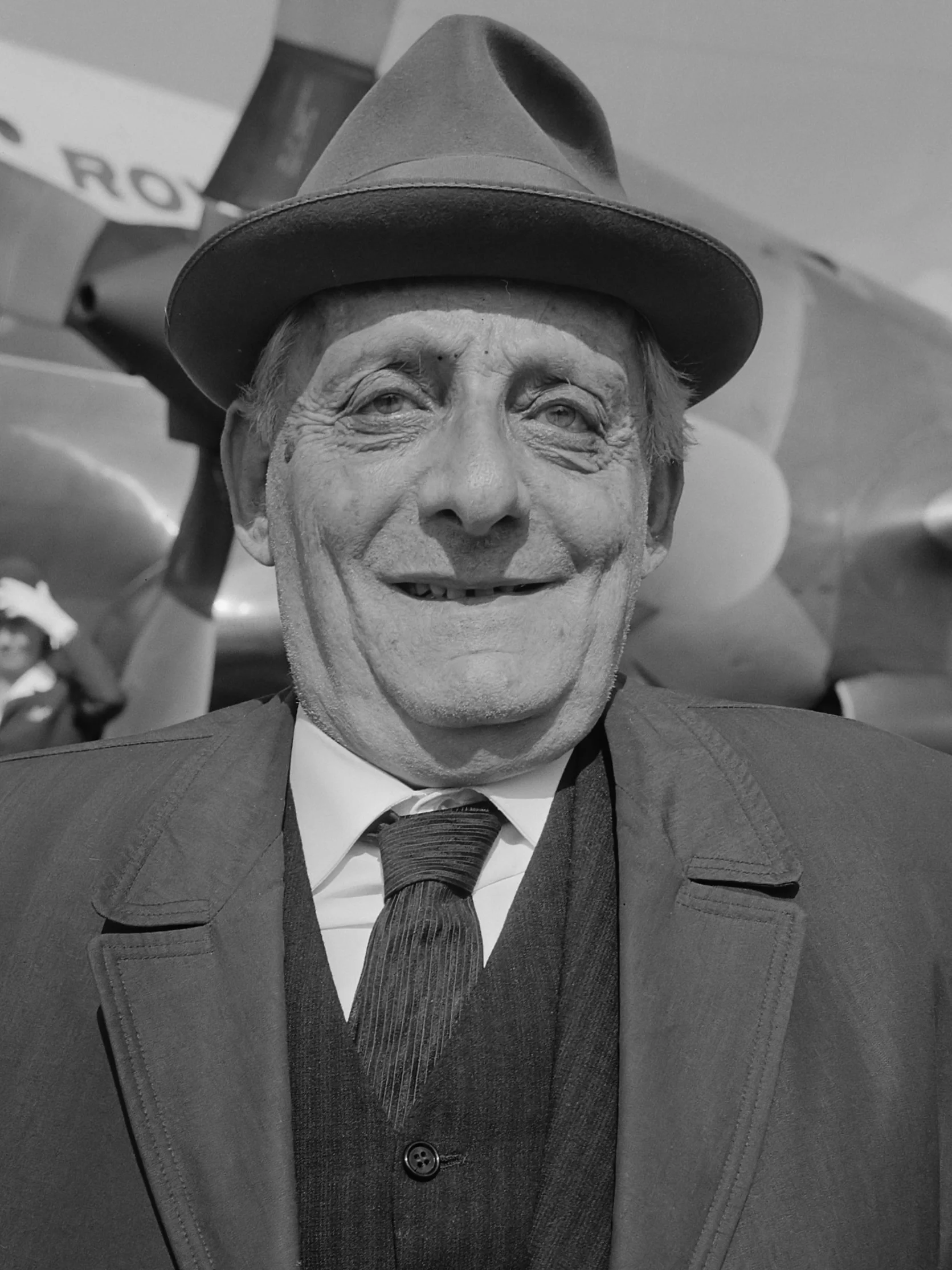
Max Brod
 Israel
Writer•music critic•composer•journalist
Also known as: Prokop, Martin Salvat
Birthday
May 27, 1884
Birth Sign
Sagittarius
Birthplace
Prague, Austro-Hungarian Empire
Age
Died at 84
About
Max Brod was a German-speaking Czech writer, composer, and critic whose name is inseparable from the literary triumph of his friend Franz Kafka. Born in Prague in 1884, Brod authored more than eighty books of his own, yet his legacy rests on a single act of defiance: when Kafka died in 1924 and asked him to burn his unpublished manuscripts, Brod refused, publishing The Trial, The Castle, and other works that reshaped modern literature. He also championed the Czech composer Leoš Janáček, translating his operas and helping carry them to international acclaim.
In 1939, as the Nazis occupied Prague, Brod fled to Palestine with a suitcase full of Kafka's papers, preserving them for posterity. He settled in Tel Aviv, where he continued writing, composing, and editing until his death on December 20, 1968, at age 84. Today, Brod is remembered not only as Kafka's savior but as a vital cultural force in his own right, whose archive at the National Library of Israel stands as a national treasure.
Early Life & Background
Max Brod grew up in Prague's German-speaking Jewish community, a world of coffeehouses, literary salons, and intense intellectual debate. His father was a banker, and the family's assimilated lifestyle placed them at the heart of a culture that would later be destroyed by the Nazis. Brod attended German-language schools and went on to study law at Charles University, though literature and music consumed his true passion.
As a young man, he was already a prolific writer, publishing poetry, fiction, and drama in the early 1900s. He became known in Prague's literary circles as an energetic and versatile figure, equally at home discussing philosophy, composing at the piano, or critiquing a new opera. In 1902, at a university lecture, he met Franz Kafka. Brod, already a published author, immediately recognized Kafka's genius and took him under his wing, introducing him to publishers and encouraging his writing. Their friendship deepened over the years, with Brod later describing it as one of profound intellectual and emotional closeness.
By the time Kafka died in 1924, Brod had built a respectable career of his own, with novels like Tycho Brahe's Way to God (1916) earning critical praise. But the friendship with Kafka, and the decision that followed Kafka's death, would define his life's work.
Career Growth
Max Brod's career unfolded in two distinct acts, each marked by a devotion to another's genius. The first came after Kafka's death in 1924. Kafka had named Brod his literary executor with instructions to burn his unpublished manuscripts. Brod ignored the request, spending the next decade editing and publishing The Trial (1925), The Castle (1926), and Amerika (1927), along with Kafka's diaries and letters. These works transformed Kafka into one of the most influential writers of the twentieth century, and Brod's introductions shaped how the world read them.
In the same period, Brod was making his mark in music. As a critic for Prague's German-language press, he championed the Czech composer Leoš Janáček, translating the libretti of operas like Jenůfa and The Cunning Little Vixen into German and advocating for their performance across Europe. Janáček's international fame owes much to Brod's tireless promotion.
Brod's own literary output continued alongside these efforts. He published novels, essays, and plays, including Reubeni, Prince of the Jews (1925), a historical novel exploring Jewish identity. In 1933, his works were among those burned by the Nazis. In 1939, he fled Prague for Palestine, carrying a suitcase of Kafka's manuscripts. In Tel Aviv, he worked as a cultural critic and continued writing, composing, and editing until his death in 1968. His later years saw the publication of The Prague Circle (1966), a memoir of the German-Jewish literary world he had inhabited.
Career Timeline
Public Image & Style
Max Brod's public image is forever tied to his role as Kafka's savior and literary executor. He is portrayed in cultural discourse as a devoted friend who made a controversial but ultimately transformative decision to publish Kafka's work against his wishes. Some critics argue he violated Kafka's explicit instructions and later edited the diaries to shape a particular legacy, but the prevailing view is that Brod's act of preservation was an act of profound loyalty.
In his own time, Brod was known as a versatile and energetic cultural figure, equally at home in literature, music, and journalism. His writing style has been described as that of a true literator, with a beautiful way of formulating ideas. He was a central figure in the Prague Circle, a group of German-Jewish writers that included Kafka and Felix Weltsch, and his memoir The Prague Circle remains a key document of that world.
Today, Brod's archive at the National Library of Israel is treated as a cultural treasure, and scholars continue to debate his decisions, keeping his name alive in literary and academic circles.
Fame & Fandom (iFAMOUS Rankings)
Max Brod stands as the 63rd most famous person from Israel, a position he has held steady through multiple assessment cycles. This standing within the iFANN Global Fame Rankings reflects his enduring status as the literary executor who rescued Franz Kafka's manuscripts from destruction. While his own musical compositions and novels have found renewed appreciation in recent years, it is this pivotal act of defiance that anchors his global recognition today. The rankings track global attention across media coverage, search, and consumption signals worldwide, confirming Brod's place among the most significant figures from the region. Despite his passing decades ago, the story of his refusal to burn Kafka's work ensures he remains a central figure in cultural history rather than a forgotten footnote.
Unlike modern celebrities, Max Brod does not possess a formal fandom with a specific name, organized rituals, or active campaigns. There are no fan clubs gathering for birthdays or viral moments defining his legacy in the way pop culture does. Instead, his audience consists of scholars, students, and admirers of early 20th-century Central European literature who study his life and work. The legend surrounding him is not a myth but a verified historical event: his decision to disobey Kafka's dying wish to destroy his unpublished manuscripts. This single act transformed Brod from a minor composer and critic into the guardian of one of the most important literary legacies of the century. While some critics debate the ethics of his choice, the consensus remains that his intervention allowed Kafka to become a global icon. Recent exhibitions highlighting his forgotten music and the return of stolen archive documents have kept his dual identity as a composer and savior in the public consciousness, ensuring his story continues to be told by those dedicated to preserving the past.
Interesting Facts and Legends
Max Brod was a trained pianist and composer whose musical works have only recently received scholarly attention. In 2025, the National Library of Israel mounted an exhibition of his forgotten compositions, noting their blend of late expressionism and early modernism. Brod used the pseudonyms Prokop and Martin Salvat for some of his writings. He also translated several of Janáček's opera libretti into German, a task that required not just linguistic skill but a deep understanding of the music. Kafka burned an estimated 90 percent of his own work during his lifetime, making the manuscripts Brod saved all the more precious. The Kafka archive was stolen from a Tel Aviv apartment in 2009 and recovered a decade later, with hundreds of documents returned to Israel in 2019. Brod's own novel Jewish Women was re-translated into English and published in 2020, introducing a new generation to his fiction.
The defining legend of Max Brod's life centers on his refusal to follow Franz Kafka's final instructions to burn his unpublished manuscripts. When Kafka died in 1924, he explicitly asked Brod to destroy all his notebooks, letters, and unfinished works, including The Trial and The Castle. Brod famously argued that Kafka had written for the world, not just himself, and refused to let the art disappear. This act of defiance transformed Brod from a minor critic into the guardian of one of the most important literary legacies of the 20th century. While some debate whether he betrayed his friend's wishes, the consensus is that his intervention allowed Kafka to become a global icon. This story remains the primary mythos associated with Brod, documented in correspondence and biographies as a verified historical fact rather than mere folklore.
Family & Personal Life
Max Brod married Elsa Taussig around 1913, and the couple remained together for the rest of their lives. They had no children. Elsa was a constant presence in Brod's life, accompanying him through his literary career, the Nazi occupation, and their emigration to Palestine. Details of her own life are scarce, but she appears in Brod's correspondence and memoirs as a supportive partner.
Brod's family background was typical of Prague's assimilated Jewish bourgeoisie. His father worked in banking, and the family spoke German at home, though they were deeply connected to the broader Czech culture. This dual identity shaped Brod's lifelong engagement with questions of Jewish belonging and Zionism.
Notable Connections
Max Brod's legacy is intertwined with two towering figures: Franz Kafka and Leoš Janáček. His friendship with Kafka, beginning in 1902, led to the posthumous publication of Kafka's major works. His advocacy for Janáček's operas helped bring them to international stages. Brod was also part of the Prague Circle, alongside philosopher Felix Weltsch, and his wife Elsa Brod was a lifelong companion. These relationships defined his personal and professional life.
Relationships & Dating History
Max Brod married Elsa Taussig around 1913, and the couple remained together for the rest of their lives. They had no children. Elsa was a constant presence in Brod's life, accompanying him through his literary career, the Nazi occupation, and their emigration to Palestine. Their marriage was stable and long-lasting, with no documented affairs or separations.
At the time of his death on December 20, 1968, in Tel Aviv, Brod was married to Elsa, who had predeceased him. He did not remarry. The couple's relationship, though private, is evident in Brod's correspondence and memoirs, where Elsa appears as a supportive partner.
- MarriedElsa Brod1913 - 1968Brod's wife and lifelong companion; the couple had no children.
Death & Aftermath
Died
December 20, 1968 (aged 84)
Death Place
Tel Aviv, Israel
Cause of Death
Not specified in research
Max Brod died on December 20, 1968, in Tel Aviv, Israel. Regarding public reaction, the provided sources do not document specific tributes, fan vigils, chart surges, moments of silence, or memorial murals held immediately following his death in 1968. The references focus primarily on his posthumous legacy rather than immediate mourning events. However, recent news items highlight ongoing institutional recognition: in June 2025, the National Library of Israel deposited Max Brod's estate, acknowledging his role as the savior of Kafka's works. Additionally, a rare interview with Brod was re-released in May 2020, and his literary contributions continue to be discussed in contemporary media, such as a 2020 Tablet Magazine article analyzing his novel Jewish Women.
Details regarding the funeral or memorial service are absent from the search results. No information is provided concerning whether the service was public or private, the specific date of burial or cremation, notable attendees, or any performances held in his honor. Similarly, while Brod's estate has been managed by institutions like the National Library of Israel (as noted in the 2025 deposit), the search results do not list specific posthumous releases, films, books, awards, hall-of-fame inductions, or scholarships created in his name immediately after 1968, nor do they detail family statements regarding the handling of his estate beyond the eventual transfer of his papers.
In summary, confirmed facts include his death on December 20, 1968, in Tel Aviv, at age 84. Disputed or unconfirmed accounts regarding the cause of death, funeral arrangements, and immediate public reaction cannot be verified due to the lack of specific reporting in the provided sources. The legal and estate management aspects remain largely undocumented in these snippets, aside from the modern archival deposition of his collection.
Net Worth (Estate Value)
$5 Million
iFANN Editorial Team estimate
Max Brod passed away in 1968, leaving behind a literary and musical estate that has grown in value over the decades. While no precise figure for his lifetime earnings is documented, the estate's significance lies in the Kafka manuscripts Brod preserved. These papers, now housed at the National Library of Israel, are considered priceless cultural artifacts, with individual pages fetching significant sums at auction in the past. Per iFANN's editorial analysis, the estate's financial value in 2026 is estimated at around $5 million, derived primarily from royalties on Brod's own published works and the Kafka editions he edited. The estate has also benefited from the resolution of legal battles, which concluded with the transfer of the archive to Israel, securing its long-term preservation and scholarly access. While the manuscripts themselves are not sold, their cultural importance ensures the estate's enduring legacy.
Awards & Accolades
View 5 records, honours and achievementsKnown For
The Trial
1925 · Editor and publisher
The Castle
1926 · Editor and publisher
Amerika
1927 · Editor and publisher
Tycho Brahe's Way to God
1916 · Author
Reubeni, Prince of the Jews
1925 · Author
Keywords
Sources
Quick Facts
- Profession
- Writer, music critic, composer, journalist
- Born
- May 27, 1884
- Birthplace
- Prague, Austro-Hungarian Empire
- Died
- December 20, 1968
- Death Place
- Tel Aviv, Israel
- Gender
- Male
- Spouse
- Elsa Brod
- Education
- Charles University, Prague (law)
- Notable For
- Publishing Franz Kafka's works against his wishes
Personal Details
- Full Name
- Max Brod
- Spouse
- Elsa Brod
- Children
- Education
- Charles University, Prague (law)
Frequently Asked Questions
Why didn't Max Brod burn Kafka's manuscripts?
What happened to the Kafka manuscripts after Brod's death?
Was Max Brod a good friend to Kafka?
What was Max Brod's relationship to Leoš Janáček?
How old was Max Brod when he died?
Similar People
Join the community
fans discussing