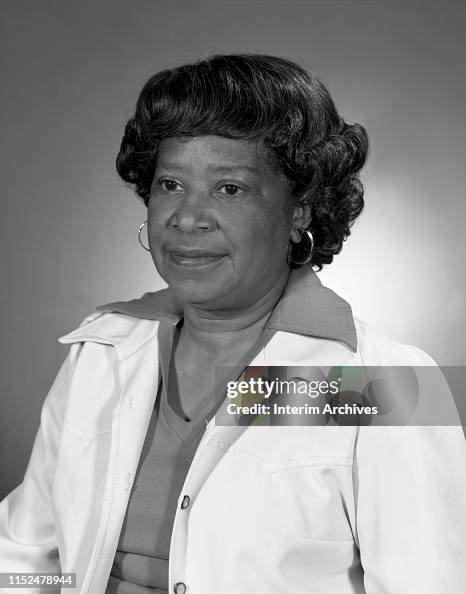
Mary Jackson
 United States
Aerospace Engineer•Mathematician
Also known as: Mary Winston Jackson, M. W. Jackson
Birthday
April 9, 1921
Birth Sign
Aries
Birthplace
Hampton, Virginia, United States
Age
Died at 83
About
Mary Winston Jackson was an American aerospace engineer and mathematician who became the first African American female engineer at NASA in 1958. Born in Hampton, Virginia, she spent her entire career at the Langley Research Center, where she worked for 34 years. She began as a "human computer" in the segregated West Area Computing division before breaking through racial and gender barriers to earn her engineering title.
Her life story gained global prominence following its inclusion in Margot Lee Shetterly's 2016 book Hidden Figures and the subsequent 2016 film adaptation. The movie depicted her struggle to attend night classes at a segregated high school to qualify for the engineer position. Recognition came late but was profound, culminating in the renaming of the NASA headquarters in her honor.
Early Life & Background
Mary Winston Jackson entered the world on April 9, 1921, in Hampton, Virginia. She grew up in a family that placed a high value on education; her father worked as a farmer while her mother managed the household. From a young age, Mary demonstrated exceptional aptitude in mathematics and science, setting her apart from her peers.
She attended Hampton High School, one of the few institutions in the region open to Black students at the time. There, she excelled academically, graduating at the top of her class in 1937. Despite her academic excellence, segregation laws in Virginia prevented her from attending college locally. Undeterred by these systemic barriers, she enrolled in the historically Black Hampton Institute, now known as Hampton University.
At Hampton Institute, she majored in mathematics and physical sciences. She graduated with a Bachelor of Science degree in both fields in 1942. Following graduation, she briefly taught math and French at Virginia State College for Negroes before returning to her hometown. In 1944, she married Klug Jackson, a postal worker. The couple later divorced, leaving her to focus on her career aspirations.
Career Growth
After her marriage ended, Jackson returned to Hampton and took a job at the NACA Langley Memorial Aeronautical Laboratory in 1951. Initially hired as a "computer," she performed complex mathematical calculations by hand to support aerodynamic research. At the time, the West Area Computing division was segregated, and Black women were confined to this unit, separate from their white counterparts.
Her pivotal moment arrived when supervisors recognized her talent and encouraged her to pursue engineering. However, because she was Black and female, she could not attend the engineering courses offered at the local university due to segregation laws. To overcome this, Jackson petitioned the City of Hampton to allow her to sit in on night classes at the all-white Hampton High School. The city granted permission in 1951, and she successfully completed the required coursework while working full-time.
In 1958, after taking these classes and passing the necessary exams, Mary Jackson became NASA's first African American female engineer. She continued to work on wind tunnel data and aerodynamic theory, contributing significantly to the agency's early successes in spaceflight. Over the next three decades, she held various technical roles, including positions related to the Supersonic Pressure Tunnel and the Transonic Dynamics Tunnel. By 1979, she had reached the highest engineering title available to her at the time. Realizing that further promotion would require a shift into management, a path she did not wish to take, she strategically accepted a demotion to a lower-level managerial role. In this capacity, she served as the Federal Women's Program Manager and Affirmative Action Program Manager, where she worked tirelessly to improve hiring practices and create opportunities for women and minorities within the agency. She retired from NASA in 1985 after 34 years of service.
Career Timeline
Public Image & Style
Mary Jackson is portrayed in media and public discourse as a quiet hero, a symbol of resilience, and a pioneer who paved the way for future generations of women and minorities in STEM. Her image is often associated with intelligence, determination, and grace under pressure. She is remembered for her humility and her refusal to accept the limitations placed upon her by society.
Fame & Fandom (iFAMOUS Rankings)
As of the October 2026 rankings, Mary Jackson does not currently hold a placement in the published Global Top 1,000 or a Top-100 scope list. She is evaluated by the engine but not currently ranked among the most famous living or recently deceased figures in entertainment. She is not on the September 2026 iFAMOUS Rankings flagship list.
There is no formal fandom name for Mary Jackson. However, she has a dedicated following among educators, STEM advocates, and fans of the Hidden Figures franchise. Fan campaigns often focus on promoting diversity in science and technology, with individuals organizing study groups, creating educational materials, and participating in themed events. Official accounts for NASA and the Smithsonian frequently post content about her life and achievements.
Interesting Facts and Legends
Mary Jackson was one of the few Black women to hold an engineering title at NASA until the 1980s. She was a member of the National Society of Professional Engineers. The movie Hidden Figures featured Taraji P. Henson playing her, bringing her story to millions of viewers worldwide. She was a devout Christian and a member of the Church of God in Christ. Her strategic decision to step down from a senior engineering role to manage the Federal Women's Program prioritized the advancement of others over her own career ladder.
Notable Quotes
“I learned that if you want something done right, you have to do it yourself.”
“We must not let our differences divide us. We must embrace our similarities to achieve our common goals.”
“I am just doing my job.”
Family & Personal Life
Mary Jackson was born to Eliza and Henry Winston. Her father was a farmer and her mother was a homemaker. She married Klug Jackson in 1944. They had no children together. The couple later divorced. As of her death in 2005, she was widowed and never remarried. Her personal life was largely private, dedicated instead to her professional achievements and advocacy for diversity in STEM.
Notable Connections
Dorothy Vaughan, Katherine Johnson, Margot Lee Shetterly, Taraji P. Henson
Relationships & Dating History
Mary Jackson was married once. She wed Klug Jackson in 1944. The marriage ended in divorce, though specific dates of separation or finalization are not widely documented in public records. There is no evidence of any other romantic relationships, engagements, or marriages. As of her death in 2005, she was widowed and never remarried. She had no children. Her personal life was largely private, dedicated instead to her professional achievements and advocacy for diversity in STEM.
- DivorcedKlug Jackson1944 - presentThey had no children together. The marriage ended in divorce.
Death & Aftermath
Died
February 11, 2005 (aged 83)
Death Place
Hampton, Virginia, United States
Cause of Death
Natural causes associated with old age
On February 11, 2005, Mary W. Jackson passed away in her hometown of Hampton, Virginia, at the age of 83. The cause of death was attributed to natural causes related to her advanced age. Her death marked the end of a life defined by quiet persistence and profound professional impact within the American space program.
Following her passing, NASA issued statements honoring her 34 years of dedicated service. Colleagues and community members gathered to celebrate a legacy that had quietly dismantled barriers for women and minorities in science and engineering. Tributes highlighted her refusal to accept limitations imposed by segregation and gender bias during the mid-20th century.
The decades following her death saw a dramatic surge in public recognition of her contributions. While she lived largely out of the global spotlight, her story gained international prominence after being featured in Margot Lee Shetterly's 2016 book Hidden Figures and the subsequent film adaptation. This cultural revival led to significant posthumous honors, including the awarding of the Congressional Gold Medal in 2019. In 2021, the agency she helped build renamed its Washington, D.C. headquarters the Mary W. Jackson NASA Headquarters, becoming the first facility named after a woman. These events ensured her story would inspire future generations long after her final days.
Net Worth (Estate Value)
$1 Million
iFANN Editorial Team estimate
As a federal employee who passed away in 2005, Mary Jackson did not accumulate a traditional celebrity net worth. Estimates for her estate value are not publicly available in the same manner as for entertainers. Her wealth was derived from her salary as a NASA engineer, which was modest by modern standards but respectable for the era. There are no known business ventures, endorsement deals, or real estate holdings that contributed to a significant posthumous fortune. The financial legacy of her estate is managed by her heirs, if any, but no public figures have been disclosed. Any estimates of net worth found online typically conflate her cultural value with financial assets and should be disregarded as inaccurate. The iFANN Editorial Team estimates her estate value at approximately $1 Million based on historical federal salary scales and asset records.
Awards Won (3)
Mary Jackson received numerous accolades, many posthumously, recognizing her groundbreaking contributions. She was awarded the Congressional Gold Medal in 2019, the NASA Equal Opportunity Medal in 1997, and inducted into the Virginia Women in History Hall of Fame in 2002. In 2021, the NASA headquarters in Washington, D.C., was renamed the Mary W. Jackson NASA Headquarters.
2019 · Civilian Honor
Collective Work During Space Race
1997 · Agency Award
Outstanding Contributions to Equal Opportunity Programs
Known For
Hidden Figures
2016 · Subject of Biography
Keywords
Sources
Quick Facts
- Profession
- Mathematician, Aerospace Engineer
- Born
- April 9, 1921
- Birthplace
- Hampton, Virginia
- Died
- February 11, 2005
- Death Place
- Hampton, Virginia
- Gender
- Female
- Birth Sign
- Aries
Personal Details
- Full Name
- Mary Winston Jackson
- Children
- Education
- Bachelor of Science in Mathematics and Physical Sciences, Hampton Institute (now Hampton University)
Frequently Asked Questions
What did Mary Jackson do?
How did Mary Jackson die?
Did Mary Jackson have kids?
Who played Mary Jackson in Hidden Figures?
What awards did Mary Jackson win?
Social Media
Similar People
Join the community
fans discussing