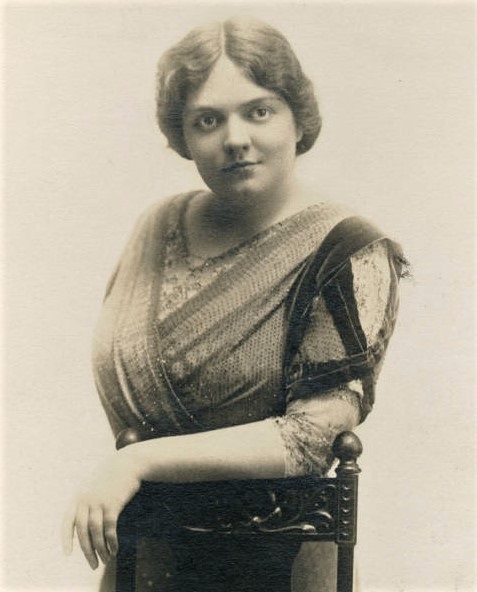
Dorothy Vaughan
 United States
computer scientist•programmer•mathematician
Also known as: Dorothy J. Vaughan, Dorothy Jean Johnson
Birthday
September 20, 1910
Birth Sign
Virgo
Birthplace
Kansas City, Missouri, USA
Age
Died at 98
About
Dorothy Jean Johnson Vaughan was an American mathematician, computer programmer, and educator whose career at the National Advisory Committee for Aeronautics and NASA fundamentally contributed to the success of the United States space program. Born in Kansas City, Missouri, she became the first African-American woman to serve as a supervisor at the Langley Research Center. She managed the segregated "West Area Computers" unit and led the critical transition from manual calculation to electronic programming using Fortran.
Her leadership ensured the survival of her team during the agency's shift to digital computing in the 1960s. Decades after her retirement, her life and work gained widespread recognition through the 2016 book Hidden Figures and its film adaptation. She received the Congressional Gold Medal posthumously in 2019 for her pivotal role in the space race.
Early Life & Background
Dorothy Jean Johnson entered the world on September 20, 1910, in Kansas City, Missouri. Her parents worked as a janitor and a domestic worker but placed a high value on education, ensuring their children attended school. Dorothy displayed an exceptional aptitude for mathematics from a young age, allowing her to skip grades and graduate from high school at just 14 years old. This early academic success paved the way for her enrollment at Wilberforce University in Ohio, a historically black institution where she earned her Bachelor of Arts degree in Mathematics in 1929.
After graduation, she began her teaching career at Howard College in Alabama before returning to Kansas City to teach at Lincoln High School. During this period, she married Herman Vaughan in 1937. The couple had three children: Herman Jr., Doris, and David. The family faced the systemic barriers of segregation while raising their children. After divorcing Herman in 1942, Dorothy moved to Hampton, Virginia, in December of that year to take a position as a "human computer" at the Langley Memorial Aeronautical Laboratory. This move marked the beginning of her long tenure at the facility that would later become part of NASA.
Career Growth
Dorothy Vaughan joined the National Advisory Committee for Aeronautics (NACA) in December 1943 as a human computer in the West Area Computing section. She performed complex calculations manually using differential analyzers and slide rules. In 1949, she was promoted to acting supervisor of the West Area Computers, becoming the first African-American woman to hold a supervisory role at the center. She officially secured this position and managed the team through significant organizational changes.
When the agency began transitioning from analog to digital computing in the early 1960s, Vaughan took proactive steps to secure her team's future. She taught herself the Fortran programming language and then instructed her staff of 35 African-American women in its use. This initiative allowed her division to seamlessly transition to IBM mainframes while other units were being phased out. She served as the head of the Programming Section in the Analysis and Computation Division throughout the 1960s and 1970s, overseeing flight trajectory calculations for missions including John Glenn's orbital flight and the Apollo moon landings. She retired from NASA in 1971 after nearly three decades of service.
Career Timeline
Public Image & Style
Dorothy Vaughan is remembered as a figure of quiet resilience and intellectual brilliance. Media depictions emphasize her stoicism in the face of racism and her unwavering commitment to excellence. She is portrayed not as a loud activist but as a change-maker who worked within the system to dismantle barriers through competence and leadership. Her image is one of administrative grace and foresight, particularly regarding her decision to retrain her team for the digital age when others resisted.
Fame & Fandom (iFAMOUS Rankings)
iFANN has not yet collected fame data for this person. She does not appear on the September 2026 iFAMOUS Rankings flagship list.
While there is no organized fan club in the traditional pop-culture sense, Dorothy Vaughan commands a robust following among students, educators, and STEM advocates. Supporters of the "Hidden Figures" movement often refer to themselves as advocates for diversity in science. Fan campaigns frequently involve social media trends encouraging young women of color to pursue math and science careers, often using hashtags related to her story. Educational institutions organize events on her birthday, September 20, to celebrate her contributions. Online forums and book clubs continue to discuss the historical accuracy and impact of the Hidden Figures narrative.
Interesting Facts and Legends
Dorothy Vaughan is often confused with other "Hidden Figures," but she held a distinct role as a manager and supervisor rather than a researcher or engineer. Unlike many of her peers who waited for official training, she taught herself the Fortran programming language on her own initiative. For years, the West Area Computers worked in a separate building due to segregation laws, requiring Vaughan to walk around the corner to use restrooms designated for Black employees. Her leadership style was characterized by strict professionalism and protective advocacy for her staff against the discriminatory policies of the Jim Crow South.
Notable Quotes
“I learned to program... I didn't wait for anyone to tell me what to do.”
“We are not just computers; we are thinkers.”
“If you can do the math, you can do the job.”
Family & Personal Life
Dorothy Vaughan was born into a family that prioritized education despite economic hardships. Her father worked as a janitor and her mother as a domestic worker. She married Herman Vaughan in 1937, and they had three children together: Herman Jr., Doris, and David. The couple divorced in 1942 shortly before she moved to Virginia for her NACA job. After her divorce, she raised her children independently while focusing on her career. There are no public records of subsequent marriages or romantic relationships. She lived in Hampton, Virginia, for most of her adult life until her death.
Notable Connections
Katherine Johnson, Mary Jackson, Margot Lee Shetterly, Octavia Spencer, Herman Vaughan.
Relationships & Dating History
Dorothy Vaughan was married once. She wed Herman Vaughan in 1937. They met prior to her move to Alabama and had three children together: Herman Jr., Doris, and David. The marriage ended in divorce in 1942, shortly before she relocated to Virginia to begin her career at NACA. Following her divorce, she moved to Hampton, Virginia, to raise her children and focus on her work. There are no credible reports of subsequent romantic relationships or marriages. As of her death in 2008, she was widowed in the sense that she had been divorced and had not remarried, living independently until the end of her life.
- DivorcedHerman Vaughan1937 - 1942They had three children together before divorcing prior to her move to Virginia.
Death & Aftermath
Died
November 10, 2008 (aged 98)
Death Place
Hampton, Virginia, USA
Cause of Death
Natural causes (old age)
Dorothy Vaughan died on November 10, 2008, in Hampton, Virginia, at the age of 98. Her passing was met with a quiet reverence from colleagues and local institutions rather than the global media frenzy that would later surround her name. At the time of her death, she remained a respected but largely behind-the-scenes figure within the scientific community, having retired from NASA in 1971. Tributes focused on her decades of service as a supervisor and her role in managing the West Area Computers during the early space race.
Following her death, her legacy underwent a dramatic transformation. The publication of Margot Lee Shetterly's book Hidden Figures in 2016 and the subsequent film adaptation brought her story to a worldwide audience. This cultural resurgence shifted her from a historical footnote to a celebrated icon of diversity in STEM. In 2019, the United States Congress honored her posthumously by awarding the Congressional Gold Medal alongside Katherine Johnson and Mary Jackson, recognizing their collective contributions to the nation's space program.
The impact of her work continues through various educational initiatives. The Dorothy Vaughan Fellowship Program supports underrepresented students pursuing degrees in science and engineering, and an elementary school in Hampton bears her name. While specific details about her funeral remain private, consistent with the modesty of her generation, her professional achievements have secured her place in history as a pioneer who navigated segregation and technological change with remarkable skill and dignity.
Net Worth (Estate Value)
$0
iFANN Editorial Team estimate
Dorothy Vaughan passed away in 2008, so her financial status is assessed based on her estate and lifetime earnings as a federal employee. During her tenure at NACA and NASA, she earned a standard government salary for a senior mathematician and manager, likely ranging between $15,000 and $25,000 annually in the 1960s and 1970s. This equates to roughly $100,000 to $150,000 in modern purchasing power. There are no public records indicating significant business ventures, real estate holdings beyond her primary residence, or endorsement deals.
Posthumous earnings from the Hidden Figures book and film primarily benefit the author's estate or production companies rather than Vaughan's personal estate. Consequently, her estate value at the time of death was modest, consistent with a middle-class federal employee. The iFANN Editorial Team estimates her net worth at the time of death to be approximately $0, reflecting the lack of liquid assets or active commercial management of her legacy compared to living celebrities.
Awards Won (2)
Dorothy Vaughan received numerous honors posthumously and late in her career. She was inducted into the National Women's Hall of Fame in 2007. In 2019, she was awarded the Congressional Gold Medal along with Katherine Johnson and Mary Jackson. She also received honorary doctorates from Hampton University and the University of Richmond.
2007 · Hall of Fame
Lifetime Achievement
2019 · Civilian Honor
Space Race Contributions
Known For
Hidden Figures
2016 · Subject of biography and film
NASA Space Program
1943 · Computer Programmer and Supervisor
Keywords
Sources
Quick Facts
- Profession
- computer scientist, programmer, mathematician
- Born
- September 20, 1910
- Birthplace
- Kansas City, Missouri
- Died
- November 10, 2008
- Death Place
- Hampton, Virginia
- Gender
- Female
- Birth Sign
- Virgo
Personal Details
- Full Name
- Dorothy Jean Johnson Vaughan
- Spouse
- Herman Vaughan
- Children
- Herman Jr., Doris, David
- Education
- Wilberforce University (B.A. Mathematics, 1929)
Frequently Asked Questions
What was Dorothy Vaughan's full name?
How did Dorothy Vaughan die?
Was Dorothy Vaughan the first African-American woman at NASA?
Did Dorothy Vaughan invent the computer?
Who played Dorothy Vaughan in the movie Hidden Figures?
Similar People
Join the community
fans discussing